







Karachi’s innovative response to its drug crisis
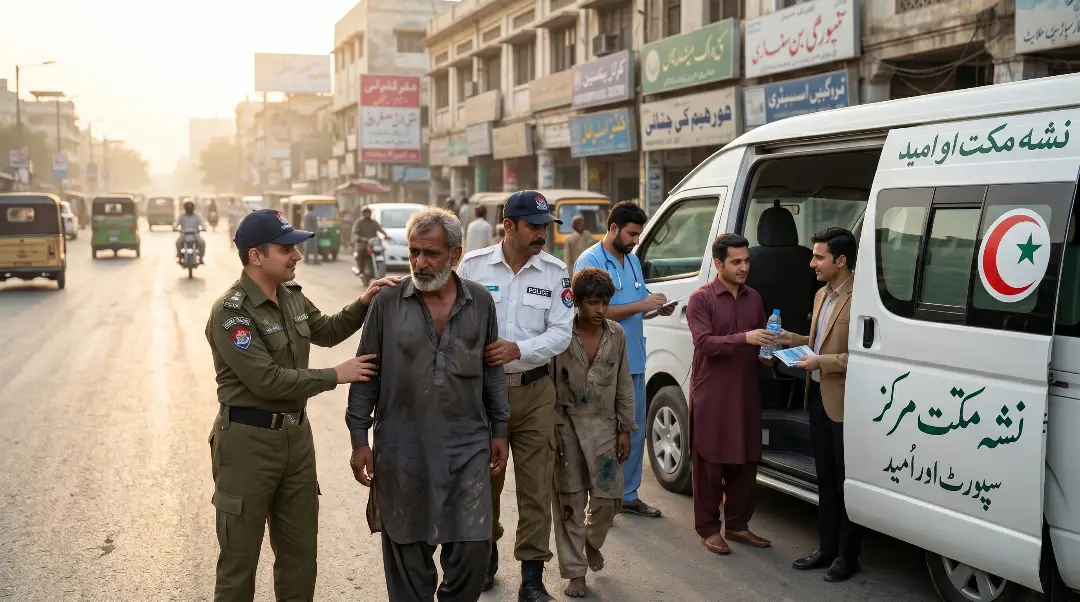
Quite frankly, the Karachi police just did something not common. Instead of summarily imprisoning 480 drug addicts, it decided to put them through drug treatment. It might be but a drop in the bucket in relation to the scale of the crisis, but it is a step nonetheless, and an indication of a paradigm shift in the city‘s approach to substance abuse.
Fact is: this issue isn’t only about the addicts. Addiction runs like a sticky web through communities. It, quite literally, hollowed out entire neighborhoods. Anyone who has seen someone close to them succumb to addiction understands that it is inescapably contagious, expanding beyond the initial patient. So when a metropolis as complex as Karachi chooses the route of treating addicts as patients, it is an issue that requires our utmost attention.
Why does this matter now?
The issue of drugs in Karachi has been on the rise for years. Its presence is visible the length of alleyways and in corners near bus stops, merely some are more overt about it. This can’t entirely be due to a lack of awareness of ills leading from a shitty economy, poverty, the general status of unemployment, broken homes and dangerous communities. The response has always been incarceration. But this hasn’t worked thus far.
What is different about this initiative?
This is a response based on its premise on an assumption that no one is born a drug addict: one becomes a drug addict due to a variety of causes, physical dependence, mental health issues, abuse, neglect, the effects of smoking, prescription drugs or among others, among them specific social circumstances, operating in tandem with individual temperaments. The poor response, then, has had its validation in an understanding that one can‘t punish a person out of an addiction, one has to treat it.
Who is contributing to this effort?
Life-saving, long-term addiction treatment is the work not only for the police. Psychologists, social workers, medical staff, non-profit organizations, and a host of faith-based institutions are involved to ensure a comprehensive, and therefore successful response. A police man may be able to apprehend the candidate off the street, but he can’t help reduce his alcohol withdrawal effects or take him to the trauma center down the street.
This illustrates the significant role of one acting body, a combination of agencies working in tandem, in order to produce sustainable, and therefore effective, results. You can’t expect one government initiative to crack an issue of this definition; perhaps a coordinated system can.
This should be the hardest piece of all
This is an effective response, but at a fundamental minimum, if the patient is just sent home, and no hospital services or psychiatric intervention follow, the addict will return to his ‘comfort zone’ and relapse in short order. Unless public investment is poured into extensive follow-up programs within the community, this cycle of addiction will persist.
This is also a society burdened by shame: addicts need to be secreted away lest they be stigmatised and pathologised. Families face social repercussions, communities ostracize those who are currently or have previously been dependent on substances, and the job market discriminates accordingly. How does one prepare an individual for independence in today’s society, much less employment, moving forward? Outreach and public awareness campaigns promote acceptance and reduce discrimination, but long-term changes in social attitudes can take generations.
What does this mean for the future?
If the initiative is at all successful, it will serve as a blueprint for any other city currently grappling with an escalating drug crisis. As Pakistan’s other additional metropolitan centers encounter the same issues, firsthand experience will prove invaluable, positive outcomes as well as failures.
This initiative needs a couple of years to prove itself; but the initiative display a conscious decision against punishing addicts and towards engaging with them. It is a step rooted in humanity, compassion and true likelihood of intervention success which must be the guiding principles for future responses to drugs across the country.