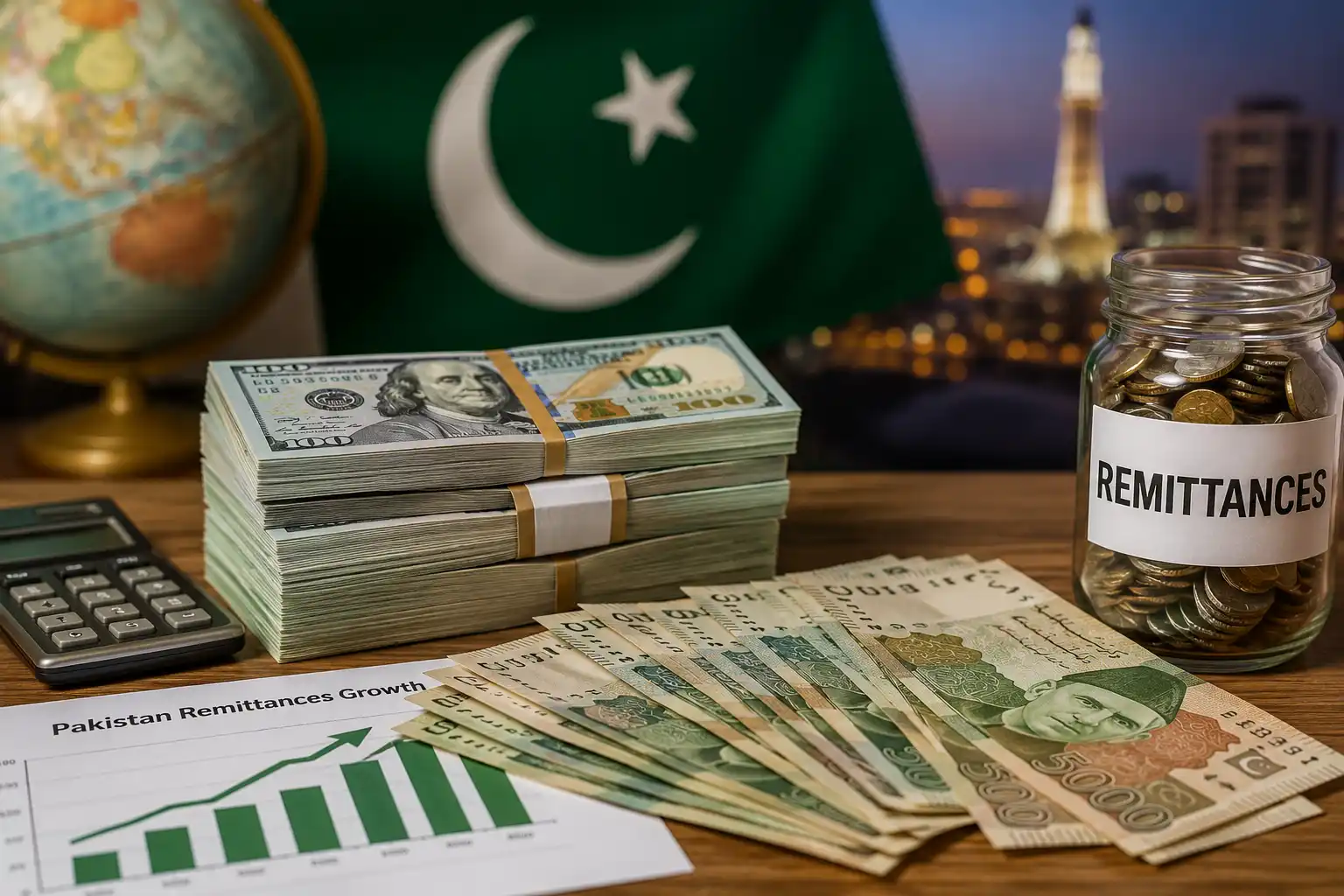
Pakistan’s remittances surge reached a remarkable $41.6 billion during the fiscal year 2025-26, marking a significant milestone in the country’s economic landscape. These remittances, primarily sent by the Pakistani diaspora, play a crucial role in stabilizing the nation’s economy and alleviating poverty. The surge highlights the continued trust and support of overseas Pakistanis, who are often referred to as the backbone of the country’s economy. As the State Bank of Pakistan (SBP) releases these figures, understanding the socio-economic implications becomes essential for policymakers and citizens alike.
The Role of Remittances in Pakistan’s Economy
Remittances have become an increasingly significant component of Pakistan’s economic framework. They function as a stable source of foreign exchange, helping to narrow the current account deficit and contributing to the country’s overall economic resilience. For many families, remittances mean better access to education, healthcare, and improved living standards. This substantial inflow of funds often serves as a lifeline for millions, particularly in the rural areas and among low-income households.
Pakistan’s reliance on remittances is rooted in its socio-economic landscape, where a significant portion of the population works overseas, predominantly in the Middle East, North America, and Europe. The consistent flow of money they send back helps stabilize the economy, particularly in times of financial uncertainty or domestic economic challenges.
The Statistical reports suggest that these remittances account for a significant percentage of Pakistan’s GDP. Beyond mere financial implications, they also represent the enduring connection between overseas Pakistanis and their homeland, fostering familial and cultural ties.
Moreover, the role of remittances extends to regional development. Many rural communities have witnessed tangible improvements in infrastructure and local amenities, funded by the remittance influx. Roads, schools, and small businesses often receive funding through these channels, allowing for grassroots economic growth.
In addition to macroeconomic stability, remittances contribute to micro-level resilience, providing households with the means to withstand personal or natural unforeseen financial shocks. This stability arguably leads to greater domestic economic performance, encouraging consumption and enabling investment in local enterprises through improved cash flow cycles.
Pandemic Impact and Recovery
The global COVID-19 pandemic initially posed challenges to remittances worldwide, including those to Pakistan. However, recovery efforts and strategic initiatives have led to a resurgence. During the height of the pandemic, many countries faced economic slowdowns, impacting the ability to send funds. Yet, remittances to Pakistan demonstrated resilience, rebounding swiftly as global economies began to stabilize.
The economic recovery in host countries, combined with digital banking advancements, has spurred remittance flows. The Pakistani government, in collaboration with financial institutions, has promoted easier transfer processes, reduced transaction costs, and ensured the safety of digital transactions, further encouraging remittances.
Additionally, special policies enacted by the SBP and favorable exchange rates have created an inviting environment for remittance senders, leveraging technology to bridge physical gaps and ensure steady financial flows.
During the pandemic, many diasporas took innovative steps to continue sending money home, using alternative channels where traditional ones were disrupted. Online platforms and financial technologies became critical, providing a precedent for future resilience even beyond pandemic conditions.
There’s also a psychological understanding that crises often reinforce the commitment of expatriates to support their family members. As witnessed during COVID-19, there was a remarkable sense of responsibility among overseas workers to ensure the financial well-being of their families despite facing uncertainties themselves.
Geographical Sources of Remittances
The sources of these remittances are diverse, with the Pakistani diaspora spread across the globe. The highest contributions come from the Middle East, particularly from countries like Saudi Arabia and UAE, followed by North America and Europe. Each region plays a distinct role in the flow of remittances, driven by factors like the size of the expatriate population and economic opportunities in host countries.
Saudi Arabia remains a key player due to its substantial Pakistani workforce in the construction and service sectors. North America also significantly contributes, given the well-established Pakistani communities who are engaged in various professional sectors.
Europe’s contribution, notably from the UK, adds to the diversity of remittance sources. Each region’s economic climate is vital in assessing the potential fluctuation of remittances, emphasizing the need for diversified engagement policies by Pakistan’s government.
In addition to the economic ties, cultural and educational exchanges between these regions and Pakistan help reinforce the bond, increasing the propensity of expatriates to send remittances home. These factors underline the importance of maintaining robust diplomatic and economic relations across the globe.
Understanding geographic remittance patterns can also enable tailored economic policies. For instance, strengthening ties with regions holding burgeoning Pakistani communities or targeting specific professional groups could optimize remittances, turning geographic diversity into a strategic economic advantage.
Government Initiatives and Policies
The Pakistani government has implemented various initiatives to encourage the flow of remittances, seeing the clear benefits to the national economy. Policies providing incentives such as tax exemptions on remitted incomes have been instrumental. Additionally, the Roshan Digital Account initiative has simplified the process for overseas Pakistanis to manage their finances and invest back home.
The SBP has also played a pivotal role by facilitating partnerships between local banks and international service providers. This collaboration has optimized the remittance channeling system, ensuring quicker and more reliable transfer mechanisms.
Such initiatives indicate the government’s recognition of the fundamental importance of remittances and the potential to leverage these funds for economic development projects and investments, reflecting an integrated approach to financial strategy.
Furthermore, the government actively works on diplomatic fronts to secure rights and favorable conditions for its expatriate labor force, which indirectly supports continued remittance flows. Engaging with host countries to improve labor rights and access to financial systems abroad can have a long-term positive impact.
Investing in financial literacy programs aimed at both remitters and recipients can ensure that funds sent are utilized more effectively, leading to sustainable economic benefits. Encouraging use in sectors like education and healthcare over mere consumption can significantly contribute to broader development goals.
Also Read this Article: FCC Overturns Nasla Tower Demolition Orders
Challenges in Maximizing Remittance Benefits
Despite the positive impact of remittances, challenges persist in maximizing their benefits. One significant issue is the cost of remitting funds, which can be prohibitive depending on the service provider and destination. The World Bank notes that reducing transaction costs could significantly increase the net inflow of remittances, presenting an opportunity for financial sector reform.
Moreover, there is a need for financial education among recipients to transform remittance inflows into sustainable investments. Many families rely on these funds for consumption needs, with little directed towards savings or investment, which could lead to long-term economic growth.
Addressing these challenges requires coordinated efforts between government bodies, financial institutions, and international partners to develop frameworks that promote cost-effectiveness and financial literacy.
Remittance flows also risk being disrupted by global economic policies or restrictions, highlighting the need for contingency planning. Diversifying the channels of remittance inflow, including non-traditional financial tech solutions, can buffer against potential future disruptions.
Sustained policy focus is needed to bridge the gap between informal and formal remittance systems, ensuring regulatory support without stifling innovation. This delicate balance will be central to preserving robust remittance flows under shifting global economic conditions.
Technology and Financial Inclusion
Advancements in technology have transformed remittance landscapes, making transfers faster, easier, and more secure. Mobile banking and fintech solutions play a crucial role in ensuring financial inclusion for recipients in Pakistan, particularly those in remote areas.
The rise of cryptocurrency and blockchain technology also presents new avenues for reducing transaction costs and improving transparency. By embracing these innovations, Pakistan can enhance its financial systems and potentially increase remittance volumes.
Promoting digital literacy, especially among rural communities, can further integrate these populations into formal financial systems, ensuring they benefit fully from remittances.
The accelerated adoption of mobile payment systems during recent years provides a favorable pretext for blockchain adaptation. Such systems, if regulated wisely, can provide swift, low-cost alternatives to traditional banking channels.
Exploring partnerships with emerging fintech companies can innovate the remittance process further, promoting not only financial inclusion but also deeper integration into global financial networks, thus adapting adeptly to evolving landscapes.
Impact on Social and Economic Development
The social implications of remittances are profound, contributing to enhanced educational opportunities, improved healthcare access, and reduced poverty levels. These funds empower families to invest in their future, fostering conditions for improved quality of life and socio-economic development.
Economically, remittances enable local businesses to thrive by increasing consumer purchasing power, fostering a multiplier effect in the economy. The added financial security can lead to greater community investments in infrastructure and services.
Moreover, the inflow of remittances plays a role in stabilizing the local currency, mitigating inflationary pressures, and serving as a buffer against external economic shocks, further emphasizing their importance in national development strategies.
This economic integration advances social cohesion as communities experience upliftment together, fostering reduced crime rates and a stronger sense of communal responsibility. Societal growth mirrors the shared economic success facilitated by remittance inflows.
Empirical evidence from regional surveys indicates that increased remittance inflows correspond with higher investment into community-driven projects, underlining a collective approach to progressive social outcomes. These patterns underscore the interlinkage between financial and societal stability through remittances.
The Future of Remittances in Pakistan
Looking forward, maintaining the upward trend in remittances will require strategic planning and adaptation to global economic shifts. As the economic landscapes evolve, so too must the methods of engaging with the diaspora.
Encouraging skilled migration can enhance remittance flows while fostering international cooperation to address regulatory challenges that may arise. The continuous adaptation and embracing new technological solutions will be essential in maintaining Pakistan’s position as a leading recipient of global remittances.
Ultimately, the future success of remittances will hinge upon effective policies capable of responding to both domestic and international shifts while fostering an environment conducive to consistent economic growth.
Strategic alliances with international entities in remittance research and policy-making can solidify best practices, providing a platform for Pakistan to lead in global remittance innovation. By focusing on equitable financial structures, mutual growth can be pursued.
Pioneering financial solutions like inclusive micro-investment opportunities for remittance capital can mark a transformative shift, empowering recipients by making them stakeholders in broader economic enterprises, effectively rooting remittances in long-term development frameworks.
Conclusion and Implications
The surge in Pakistan’s remittances to $41.6 billion during FY2025-26 underscores the pivotal role these transfers play in the economic framework of the country. From stabilizing the economy to fostering social development, their impact is extensive and multi-faceted. As such, the strategic engagement of policymakers, financial institutions, and the diaspora is essential to harness the full potential of these funds.
Looking ahead, challenges remain, particularly in maximizing the developmental potential and addressing the costs associated with remittance transfers. However, continued innovation, along with targeted policy frameworks, can further strengthen these financial lifelines.
Pakistan stands at a crossroads where strategic actions can bolster its economic future, ensuring that remittances not only support daily necessities but transform into catalysts for sustainable growth and development.
The narrative of remittances as foundational to economic foresight in Pakistan remains prominent. By effectively channeling inflows into broader developmental avenues, remittances hold the promise of reshaping the socio-economic landscape for generations.
In conclusion, the proactive measures, cultural dynamics, and financial foresight surrounding remittances will define Pakistan’s growth trajectory. Establishing a cohesive vision among all stakeholders, buoyed by innovation and cooperation, can translate current gains into legacy achievements.
Frequently Asked Questions
What are remittances, and why are they important for Pakistan?
Remittances are funds sent by overseas workers to their home country. They are crucial for Pakistan, providing significant foreign exchange and supporting millions of families economically.
Which countries contribute most to Pakistan’s remittances?
Main contributors include the Middle East, especially Saudi Arabia and UAE, followed by North America and Europe, with the UK being a notable source.
How does the government facilitate remittances?
The government promotes initiatives like the Roshan Digital Account to ease financial management for overseas Pakistanis and offers tax incentives on remitted incomes.
What challenges do remittance recipients face?
Challenges include high transaction costs and limited financial literacy, which can hinder the full economic potential of remittances.
How is technology influencing remittances?
Technology, like mobile banking and fintech, is making remittance transfers more accessible, affordable, and secure, thus boosting financial inclusion in Pakistan.




 Muhammad Abdullah |
July 11, 2026
Muhammad Abdullah |
July 11, 2026