







If you have ever stood in a market stall watching prices tick upward while your shopping budget stayed exactly the same, you already understand why Punjab’s Push for Prosperity through the new Sahulat Markets is such a significant development. In a province where millions of families navigate the daily pressure of rising food costs, the Punjab government’s decision to roll out a fresh network of Sahulat Markets is more than a policy announcement — it is a direct response to the lived reality of ordinary citizens across cities, towns, and rural areas alike.
This initiative, which builds on earlier relief frameworks but goes considerably further in scope, aims to make subsidized essential goods consistently available to the public at government-regulated rates. It is a practical, on-the-ground effort to ease the burden that inflation has placed on low and middle income households — and to do so at scale.
What Are Sahulat Markets and Why Were They Created?
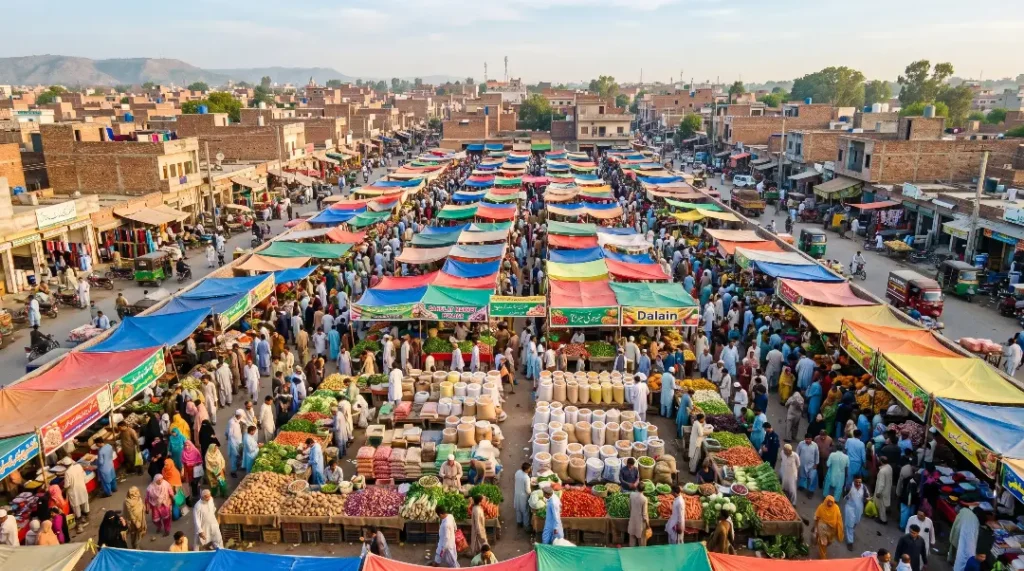
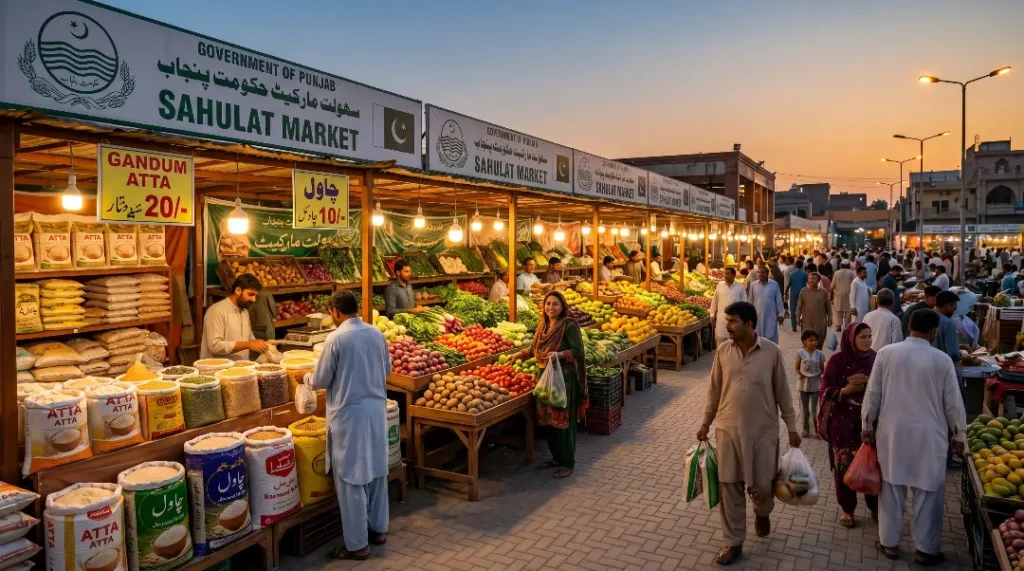
The word “Sahulat” translates from Urdu as convenience or facility, and that name is not accidental. These markets are purpose built to offer convenience in the truest economic sense — accessible pricing, reliable supply, and a fair shopping environment that does not disadvantage those with smaller wallets.
Sahulat Markets were first introduced as seasonal or temporary setups during periods of acute inflation. The original concept was simple: the government would arrange with vendors and suppliers to sell essential food items such as flour, sugar, cooking oil, pulses, and seasonal vegetables at rates lower than the open market. Over time, however, the demand for such markets did not go away once the “crisis season” passed. Families came to rely on them. Communities organized around them. And the data began to suggest that a more permanent, better structured version of the initiative could have lasting impact.
The newer iteration of Sahulat Markets takes that lesson seriously. Rather than pop-up events, the vision is for structured, regularized marketplaces that operate on defined schedules, follow transparent pricing, and are monitored to prevent profiteering or supply manipulation.
Punjab’s Push for Prosperity: The Bigger Picture
To understand why Punjab’s Push for Prosperity through Sahulat Markets matters so much right now, it helps to zoom out and look at the broader economic environment. Pakistan has faced significant inflationary pressure over the past several years, with food inflation consistently outpacing wage growth for working class families. According to government data, staple food items in open markets rose sharply in price, making everyday grocery shopping a financial strain for a large portion of the population.
Punjab, as Pakistan’s most populous province with over 110 million people, bears a disproportionate share of this burden. A significant percentage of the province’s workforce is engaged in informal labor, daily wage work, or small scale agriculture — all sectors where income tends to be irregular and price shocks hit hardest. When flour prices spike or cooking oil becomes unaffordable, these are not abstract economic indicators. They are decisions about whether families eat well that week.
The provincial government recognized that market forces alone were not going to fix this problem quickly enough. Hence the renewed and expanded commitment to the Sahulat Market model as part of a wider economic relief and social welfare framework.
What the New Sahulat Markets Actually Offer
The new generation of Sahulat Markets is not simply a rebranding of the old setup. Several key improvements distinguish the current rollout and make it a more effective vehicle for the prosperity goals the Punjab government has set.
Subsidized Essential Commodities
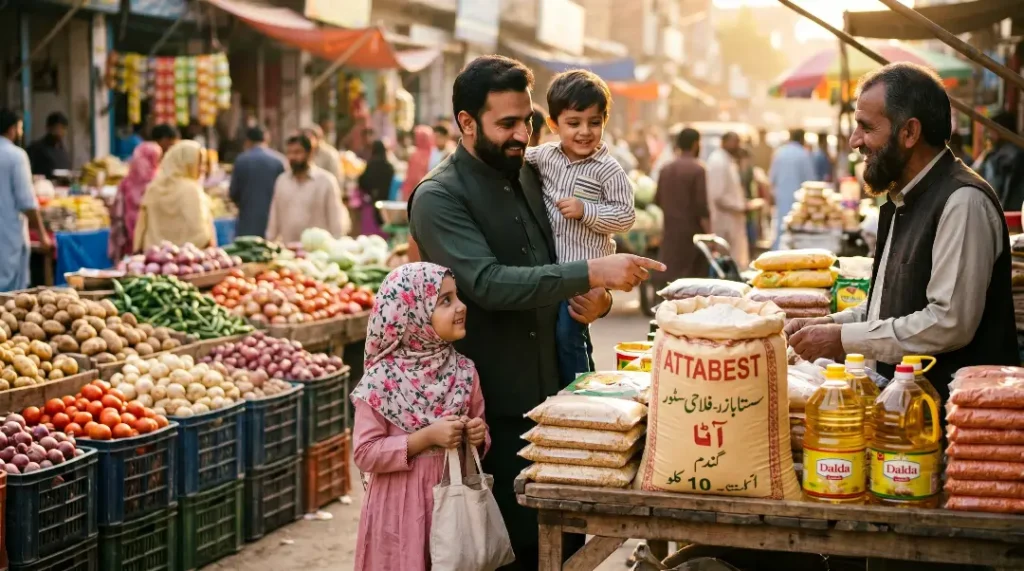
At the heart of every Sahulat Market is a basket of essential commodities sold below open market rates. These typically include wheat flour, rice, sugar, cooking oil, pulses such as lentils and chickpeas, as well as seasonal fresh produce. The subsidy structure varies by item and is regularly reviewed, but the guiding principle is that no family should be forced to forgo a nutritious meal because of artificially inflated prices.
In some markets, eligible households may also access utility items and basic household goods at regulated prices, expanding the relief beyond food alone.
Price Monitoring and Transparency
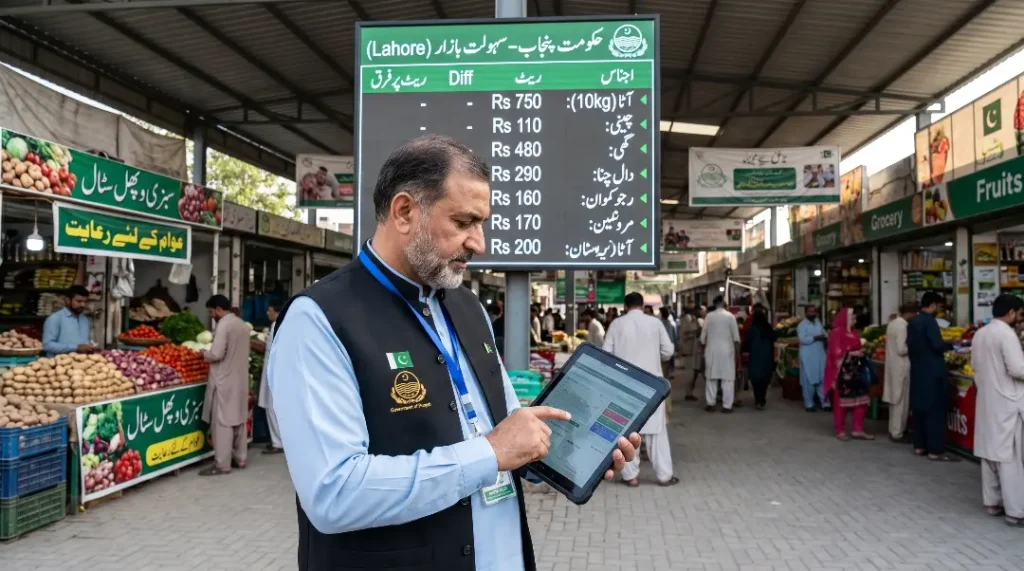
One of the more significant structural improvements in the new Sahulat Market network is a dedicated price monitoring mechanism. Government officials and price control magistrates conduct regular checks at market sites to ensure that vendors are adhering to the published rate lists. Digital price boards at market entrances make it easy for shoppers to know exactly what they should be paying before they even approach a stall.
This matters enormously. In many traditional markets, price opacity allows vendors to charge inconsistently, particularly to shoppers who are unfamiliar with going rates or who may feel less empowered to bargain. The Sahulat framework attempts to close that gap.
When people know the price before they arrive at the stall, they can shop with confidence rather than anxiety — and that shift in experience is more important than it might seem on the surface.
Geographic Spread Across Urban and Rural Areas
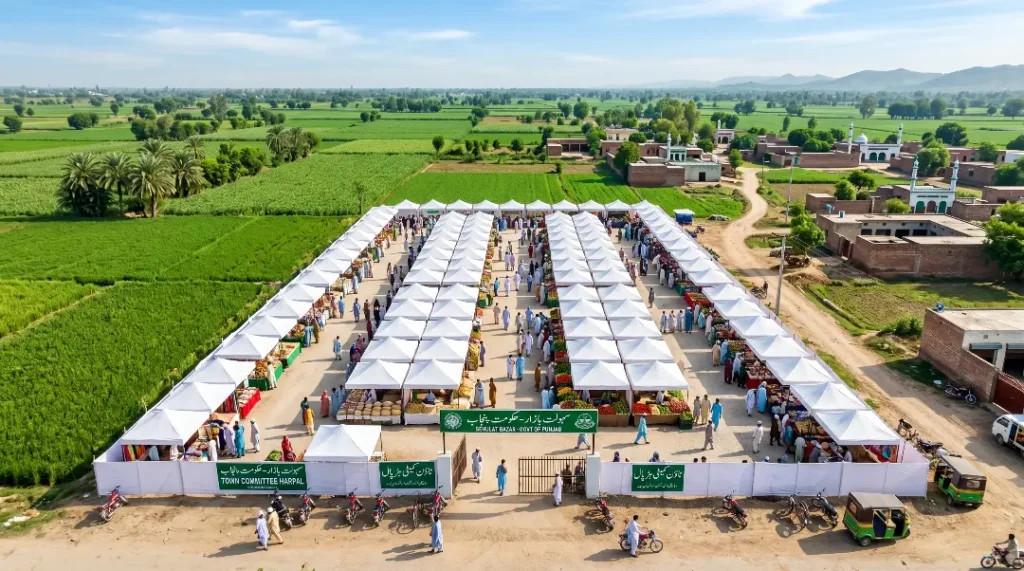
Previous relief market efforts were often concentrated in major urban centers like Lahore, Faisalabad, and Multan, which left rural and peri-urban communities largely underserved. The new Sahulat Market expansion explicitly targets a wider geographic footprint, with locations planned in smaller cities, district towns, and even large village clusters.
This is critical for equity. Rural Punjab is home to a large share of the province’s most economically vulnerable households. Bringing subsidized goods closer to where these families live, rather than requiring a long trip to the nearest city, is a practical improvement that will be felt directly.
How the Markets Are Organized and Managed
The organizational structure behind the new Sahulat Markets is worth understanding, because it determines whether the initiative succeeds in practice or merely looks good on paper.
District administrations play a central role in coordinating with the provincial government to identify suitable locations, arrange infrastructure, and oversee vendor licensing. Vendors at Sahulat Markets are not simply open market traders who opt in — they go through a registration process that commits them to selling at government rates and abiding by quality standards. Those found violating the terms risk suspension from the program.
Supply chain management is another critical pillar. The government works with procurement agencies, the Punjab Food Authority, and in some cases directly with farmers and cooperatives to ensure that goods flowing into Sahulat Markets are not just price-controlled but also of adequate quality. A subsidized product that is substandard defeats the purpose entirely.
The table below captures how the new Sahulat Market framework compares against the older setup across key dimensions:
| Feature | Old Setup | New Sahulat Markets |
|---|---|---|
| Duration | Seasonal or Temporary | Regularized and Permanent |
| Geographic Coverage | Urban Centers Only | Urban, Rural, and Peri-Urban |
| Price Transparency | Limited | Digital Boards and Published Rates |
| Quality Control | Ad Hoc | Punjab Food Authority Oversight |
| Vendor Accountability | Minimal | Licensed with Penalty Framework |
The Role of Technology in the New Sahulat System
One area where the latest iteration of Sahulat Markets shows real forward thinking is the integration of digital tools into the program’s delivery and oversight. The Punjab government has been actively developing e-governance infrastructure across various departments, and the Sahulat initiative has begun benefiting from that investment.
Mobile applications and SMS-based systems are being piloted to help citizens locate their nearest Sahulat Market, check the current day’s prices, and even lodge complaints if they observe violations. This kind of feedback loop is invaluable. It allows the government to respond quickly when problems arise and helps build public trust in the integrity of the program.
Additionally, vendor transactions at some market sites are being digitally logged, which reduces the possibility of ghost vendor fraud — a problem that has historically plagued public subsidy programs in various parts of the country. When there is a clear digital trail, accountability improves considerably.
Economic and Social Impact: Who Benefits Most?
Understanding who the primary beneficiaries of Sahulat Markets are helps contextualize just how meaningful Punjab’s Push for Prosperity can be when the policy is executed well.
The most immediate beneficiaries are low income urban households, particularly those in densely populated areas of cities like Lahore, Gujranwala, Sialkot, and Bahawalpur. These families often live in areas where local kiryana stores mark up prices considerably, and where shopping at large format retail is not economically realistic. Sahulat Markets fill a gap that neither the private retail sector nor traditional bazaars have adequately addressed.
For women who manage household budgets, the availability of predictable, lower prices at accessible market locations translates directly into more effective household planning. When a family knows that flour will be available at a fixed price on specific days, they can budget around that rather than absorbing the unpredictability of open market pricing.
Small scale daily wage workers are another group that stands to gain considerably. When food costs are lower, disposable income even if that income is modest goes further. Over time, this can have a measurable effect on household nutrition, children’s school attendance, and basic quality of life indicators.
Studies from similar subsidized market programs in South Asia suggest that sustained price relief on staple foods can reduce household food insecurity by 15 to 25 percent among the lowest income quintiles a figure that, if replicated in Punjab, would represent a genuinely significant improvement in the lives of millions.
Challenges That Need Honest Attention
A fair assessment of the Sahulat Market initiative also requires acknowledging the challenges that could undermine its potential if not addressed proactively.
Supply Consistency
One of the most common criticisms of previous government market programs has been irregular supply. Markets that run out of subsidized flour by midday, or that only have goods available on certain days of the week, cannot serve as reliable alternatives for families who depend on them. Maintaining a consistent and sufficient supply chain requires ongoing coordination and funding that must be protected even when fiscal pressures mount.
Leakage and Misuse
Subsidy programs everywhere face the challenge of ensuring benefits reach the intended recipients rather than being captured by middlemen or resold at higher prices in open markets. Strong vendor oversight, community level monitoring, and responsive complaint mechanisms are all necessary tools to keep leakage at bay. The digital systems being introduced are a step in the right direction, but their effectiveness will depend on consistent enforcement.
Long Term Financial Sustainability
Subsidizing goods at below-market rates is not a cost-free exercise. The provincial government must ensure that the fiscal framework supporting Sahulat Markets is sustainable over the medium to long term. Programs that are generous during election years and then quietly wound down are not a substitute for structural policy reform. Embedding the Sahulat Market commitment into multi-year budget allocations would help signal serious long term intent.
What Makes This Initiative Different From Past Efforts
Pakistan has a history of government market interventions, particularly around Ramazan when seasonal price control initiatives proliferate. What sets the new Sahulat Market framework apart, at least in its stated ambition, is the combination of permanence, scale, and institutional accountability.
Rather than treating the problem as a temporary crisis requiring a temporary fix, the current approach treats affordable access to essentials as an ongoing public service — one that the government has a sustained responsibility to provide. That framing matters. It shifts the political logic from reactive emergency response to proactive governance.
Whether that framing holds up in practice over time will be the real test. But the initial architecture — the price boards, the vendor licensing, the geographic expansion, the digital monitoring — at least suggests that the groundwork is being laid more seriously than before.
Community Response and Public Perception
Early public response to the expanded Sahulat Markets has been largely positive, particularly in areas where the markets have opened with consistent supply. Social media conversations in Punjab have included considerable grassroots enthusiasm, with people sharing photographs of market visits, comparing prices favorably against open market rates, and tagging family members in announcements about nearby locations.
At the same time, public expectations are high and patience is limited where supply falls short. Citizens who make a special trip to a Sahulat Market only to find empty stalls or long unmanageable queues are not shy about voicing frustration. This feedback, while sometimes harsh, is actually a healthy signal — it means people care about the program and want it to work properly.
Civil society organizations working on food security have generally welcomed the expansion while calling for independent monitoring mechanisms that operate separately from the implementing government departments. The inclusion of neutral third party observers in quality checks and price audits would go a long way toward building public confidence in the integrity of the program.
Comparison With Similar Programs Across the Region
It is useful to place the Sahulat Market model in a regional context. India’s Public Distribution System, for instance, has been operating for decades and provides subsidized grain to hundreds of millions of households through a network of Fair Price Shops. The system has had a troubled history at times, but successive reforms — particularly the introduction of biometric verification — have substantially improved its functioning in many states.
Bangladesh has experimented with its own Open Market Sales program, through which the government periodically releases subsidized commodities into local markets to cool prices during demand spikes. Sri Lanka has traditionally maintained a strong state role in food distribution, though its economic crisis of 2022 severely tested that infrastructure.
What these examples collectively teach is that subsidy programs work best when they are administratively strong, fiscally backed, and designed with beneficiaries rather than merely for them. The Punjab Sahulat Market initiative would benefit from studying both the successes and failures of these regional peers.
A Path Forward: Recommendations for Strengthening the Initiative
For Punjab’s Push for Prosperity through Sahulat Markets to reach its full potential, several steps would meaningfully strengthen the initiative as it scales.
Regular public reporting on market performance metrics — including items sold, prices maintained, and complaints received — would build trust and accountability without requiring enormous additional resources.
Integration with existing social safety nets such as the Benazir Income Support Programme or the Punjab social protection registry would help prioritize access for the most vulnerable households, even within a generally open access market setup.
Vendor capacity building — helping registered vendors understand hygiene standards, record keeping, and customer service — would raise the quality of the market experience and make vendors themselves more invested in the program’s success.
Community feedback councils at each market location, made up of regular shoppers from the neighborhood, would create a direct channel for issues to be raised and resolved locally before they escalate into larger problems.
A dedicated budget line that is protected from year-to-year discretionary cuts would signal that Sahulat Markets are a structural commitment rather than a budget line that disappears when political priorities shift.
Final Thoughts
Punjab’s Push for Prosperity: The Promise of New Sahulat Markets is not just a catchy phrase. It represents a genuine opportunity to meaningfully improve daily life for millions of families across Pakistan’s largest province.
The combination of subsidized essential goods, improved price transparency, wider geographic reach, and digital oversight tools gives this initiative a stronger foundation than many of its predecessors. The challenges are real, and success is not guaranteed. But the architecture is more serious, the intent appears to be more sustained, and the need is as urgent as ever.
For ordinary families stretching tight budgets across rising prices, Sahulat Markets represent something genuinely valuable: the sense that the government sees their struggle and is building something to address it — not just for the next election cycle, but hopefully for the long run. That promise is worth watching closely, holding accountable, and, where earned, celebrating.