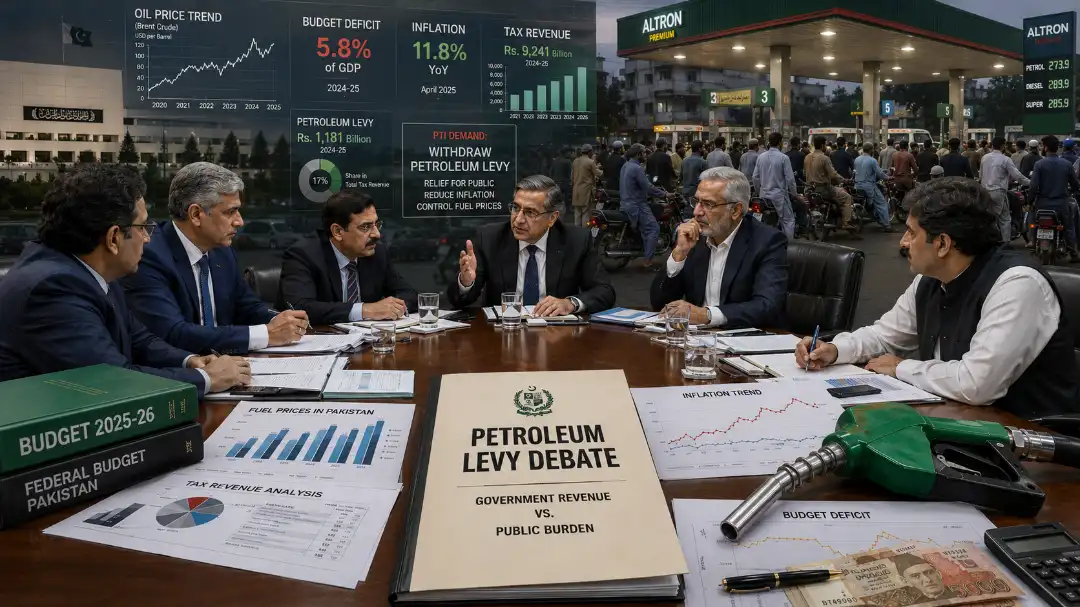
The recent budget debate has become a focal point of political and economic discussion, with the Pakistan Tehreek-e-Insaf (PTI) demanding the withdrawal of the Petroleum Levy. This demand underscores a significant policy conflict, as the levy represents a substantial source of government revenue but also places a burden on consumers. Understanding the implications of this demand requires a deep dive into the economic context, the politics surrounding the levy, and potential outcomes for the Pakistani economy.
The Economic Context of the Petroleum Levy
The Petroleum Levy is a key component of Pakistan’s fiscal policy, contributing significantly to government revenues. The levy aims to generate funds needed for developmental projects and to bridge budget deficits. However, its impact on consumer prices and inflation cannot be overlooked. As global oil prices fluctuate, the levy becomes a variable that directly affects domestic fuel prices.
The economic landscape in Pakistan is marked by high inflation and a volatile currency exchange rate. These factors exacerbate the challenges faced by consumers, making the levy a focal point for public dissatisfaction. The withdrawal of the levy, while politically popular, could destabilize fiscal projections and affect the government’s ability to fund critical projects.
The debate on the Petroleum Levy is not just about economics but also about how fiscal policies can align with the socio-economic realities of a nation. Balancing revenue generation with consumer protection remains a critical challenge for policymakers.
Moreover, considering the broader macroeconomic environment, the implementation of the Petroleum Levy has significant implications for inflationary trends that impact the purchasing power of ordinary citizens. A nuanced understanding of the levy also requires considering its role in the broader fiscal strategy of diversifying government revenues beyond volatile tariffs and varying global market dynamics.
Additionally, it is vital to consider the international market trends where oil prices have shown both upward spikes and downward trends, making budgetary dependence on such levies a potentially precarious strategy. Alternate policies might need exploration to stabilize government income against such external volatilities.
Political Implications of PTI’s Demand
The PTI’s call for the removal of the Petroleum Levy is not just a policy position—it is a strategic move that reflects broader political objectives. By positioning itself against the levy, PTI aims to align with consumer interests and position itself as a defender of public welfare.
Political leverage is a key factor in PTI’s demand, setting the stage for a broader debate on economic policies and governance. This strategy also serves to highlight dissatisfaction with the ruling government’s ability to manage the economy effectively. In a nation where fuel prices are a daily concern for millions, the issue resonates deeply with the electorate.
Moreover, the demand ties into PTI’s broader narrative of change and reform, aiming to encapsulate public sentiment and harness it for electoral gains. However, navigating the complexities of economic policy while maintaining political capital will be a test of PTI’s strategy and leadership.
Looking at historical patterns of political economy, PTI’s move can be seen within a framework of populist strategies that hinge on common touchpoints—such as fuel prices—that directly impact everyday life. The PTI’s campaign, by advocating for petroleum levy withdrawal, adds a dynamic layer to its political narrative that is likely calculated to secure voter confidence and support across varying demographics.
In addition, it’s essential to consider how such bold moves align with PTI’s long-term strategies. Whether the rhetoric will translate into concrete policy proposals and how it will manage the potential gap left by levy removal are critical questions in understanding the true political implications of PTI’s demands.
Budgetary Impact: Pros and Cons
Discussing the potential withdrawal of the Petroleum Levy involves analyzing its immediate and long-term impacts on the budget. The levy is a significant contributor to government revenues, and its removal could create a fiscal gap requiring adjustments in other areas.
The pros of eliminating the levy include easing consumer burden and potentially stimulating economic activity by increasing disposable income. This appeal to voters and consumers cannot be understated, particularly in an economy grappling with inflationary pressures. Reduced fuel prices can lead to lower transportation costs, affecting the prices of goods and services and granting broader economic relief.
Conversely, the cons involve the challenge of compensating for the lost revenue. Without the levy, alternative revenue streams must be found, which could involve tax hikes or cutting spending on essential services. These adjustments could spark further debate and affect public services.
Further complicating the picture are the budget’s projections tied to developmental goals and foreign debt commitments, which may suffer in the absence of the levy. A careful recalibration would be necessary, potentially involving international assistance or lending frameworks. The outcome of this would shape budgetary strategies and potentially alter various fiscal priorities.
Furthermore, the ripple effect of removing the levy could alter fiscal discipline, necessitating stricter monitoring of financial leakages within revenue collection frameworks and the implementation of broader economic reforms tailored towards sustaining governmental function in the face of reduced fiscal intake.
Impact on the Common Citizen
The Petroleum Levy directly affects the daily lives of Pakistani citizens. It influences fuel prices, which in turn affect the cost of transportation, goods, and services. Its withdrawal could ease daily expenses for many households struggling under economic pressures.
For the average consumer, lower fuel prices could mean more affordable transportation costs, indirectly resulting in reduced prices for commodities and services. This potential relief is particularly significant in urban areas where transportation is a daily necessity.
However, the long-term sustainability of such a measure is under scrutiny. Should the withdrawal lead to unpredictable fiscal policies or inflationary pressures elsewhere in the economy, the initially positive impact might be neutralized, affecting economic stability.
In rural areas, where the distance between essential services like schools and hospitals can be vast, reduced fuel costs might significantly alleviate the economic burdens faced by residents. Moreover, small-to-medium enterprises, often seen as the backbone of local economies, could benefit from reduced logistics and operational costs.
On a socioeconomic level, this might translate into improved access to services and goods, potentially bolstering overall national productivity. Strategic measures, therefore, must be tailored to ensure sustained leverage of these benefits through long-term policies that support underlying economic infrastructures.
Historical Comparisons and Lessons
Looking back at historical precedents, several countries have grappled with similar situations regarding fuel levies and taxation. Learning from these cases can provide valuable insights into what might unfold if the Petroleum Levy is withdrawn in Pakistan.
In neighboring India, variations in fuel levies have been used as a tool to manage economic pressures, leading to mixed results. In cases where levies were reduced, initial public enthusiasm often gave way to concerns about revenue deficits and inflation in other sectors.
Examining these scenarios offers lessons in balancing policy decisions with economic fundamentals—emphasizing the need for a comprehensive strategy that addresses both immediate consumer relief and long-term fiscal health.
Historical cases across Latin America and Africa present similar narratives, where measures to relieve fiscal pressure on consumers led to immediate economic relief but with long-term consequences that sometimes prompted drastic economic reforms or international intervention. Examining these stories provides strategic insights into comprehensive policy frameworks that honor both immediate and strategic needs.
Furthermore, in European contexts where fuel taxes often align with environmental goals, the focus shifts towards exploring the intersection of environmental policies and fiscal strategies. Such a perspective invites consideration for holistic policy approaches that weigh economic, social, and environmental factors in implementing fiscal reforms.
Government’s Counterarguments
The government argues that the Petroleum Levy is necessary for maintaining fiscal discipline and ensuring funding for crucial infrastructure projects. Removing the levy could hamper developmental goals and weaken economic growth strategies.
Officials stress the importance of the levy in achieving budgetary targets, particularly at a time when external debt obligations are significant and foreign reserves are under pressure. In this context, the levy is seen as a crucial tool in macroeconomic management.
Furthermore, the government contends that strategic subsidies and relief measures can address consumer concerns without dismantling critical revenue streams. This approach suggests a layered strategy to protect both consumer interests and fiscal stability.
Elaborating on these points, governmental strategies might include initiatives that balance levy mechanisms with targeted financial aid in sectors such as agriculture and health, thereby mitigating some of the immediate costs for vulnerable populations without perturbing overall fiscal strategy.
Moreover, the government could argue for stronger engagement with international financial entities to back infrastructure projects through loans and investments, creating a safety net for revenue shortfall in light of potential levy adjustments. Enhanced engagement may also open avenues for broader investment and strategic partnerships enhancing long-term economic development agendas.
Potential International Implications
The debate surrounding the Petroleum Levy in Pakistan could also have international implications. As global oil prices are subject to rapid changes, any shifts in domestic policy can affect international trade dynamics and investor confidence.
Regional partners and international financial institutions monitor such decisions closely, assessing potential impacts on bilateral trade, energy imports, and overall economic stability. Pakistan’s policy moves could thus influence broader economic relations and aid negotiations.
Additionally, the decision could serve as a precedent for other emerging economies facing similar challenges, influencing international economic forums and discussions on sustainable fiscal practices.
At an international level, shifts due to levy adjustments may prompt fluctuations in import agreements, necessitating renegotiation of terms with key trading partners or adjustments to energy sourcing strategies, impacting global market equilibrium.
The potential ripple effects underscore the need for robust international communication strategies, ensuring that policy changes align with stable global economic perceptions, facilitating stable foreign investment and reinforcing Pakistan’s credibility in international economic environments.
Expert Opinions on Policy Alternatives
Economists and policy analysts suggest exploring alternative strategies to reconcile consumer expectations with fiscal requirements. A diversified approach to taxation and revenue generation could mitigate the harsh impacts of Petroleum Levy withdrawal.
Proposals include enhancing tax compliance, expanding the tax base, and introducing targeted subsidies. Such alternatives aim to spread the fiscal load more evenly while maintaining essential government functions and public services.
Experts recommend a phased approach to levy adjustments, linked with broader economic reforms, as a way to navigate the intricate balance of interests involved in this issue.
Further, innovative approaches could include sectoral tax incentives or tech-driven growth initiatives that cater to specific economic sectors, encouraging broader economic participation and creating fresh sources of revenue that complement replaced levies.
By integrating data analytics and technology within tax frameworks, Pakistan could revolutionize its tax collection methods, reducing evasion, and increasing compliance while promoting fairness and efficiency within the broader economic spectrum.
The Road Ahead: Predictions and Possibilities
The path forward regarding the Petroleum Levy withdrawal is fraught with possibilities and challenges. Stakeholders are keenly watching how the government responds and what strategic decisions will be made in the coming months.
Predictions range from immediate consumer relief to longer-term fiscal challenges. In crafting a response, policymakers must weigh the short-term benefits of withdrawal against potential long-term economic consequences.
Ultimately, the decisions made will reflect broader priorities and strategic goals that could shape Pakistan’s economic and political landscape for years to come, making this an issue of profound national importance.
The scrutiny of these decisions will likely intensify, demanding transparent governance and strategic foresight in policy formulation outcomes. The decision-making processes must consider stakeholder analysis, where diverse interests are weighed and accommodated, ensuring economic resilience and sustained public trust.
Additionally, the road ahead may involve exploring cross-sectoral policy synergies that align with broader developmental plans, potentially leveraging international partnerships, and fostering innovation-embedded economic growth strategies that resonate with both domestic and global economic discourses.
Conclusion: Balancing Economic Realities and Political Objectives
The debate over the Petroleum Levy withdrawal presents a complex interplay of economic realities and political objectives. It requires a nuanced approach that considers the diverse impacts on different sectors and societal groups. While the PTI’s demand resonates with public sentiment, the broader implications for government revenues and economic stability cannot be ignored.
A potential pathway involves gradual adjustments with a clear focus on expanding the tax net, thereby securing revenue without overburdening consumers. Furthermore, transparent communication on how revenue deficits will be managed can help build public trust and confidence in economic governance.
As Pakistan navigates this critical juncture, the decisions made will serve as a reflection of its commitment to balancing fiscal health with consumer welfare, setting a precedent for future economic policies and political discourse.
The dynamics of this debate encapsulate the often intricate balance between preserving political capital and fortifying economic policies that support holistic national well-being. Undoubtedly, the lessons drawn from this scenario will echo within future policy creations, fostering dialogues for collaborative, informed, and strategic governance.
Frequently Asked Questions
What is the PTI’s stance on the Petroleum Levy?
The PTI has demanded the withdrawal of the Petroleum Levy, arguing it imposes unnecessary burdens on consumers amidst high inflation and economic challenges.
How does the Petroleum Levy affect the economy?
The Petroleum Levy is a significant revenue source for the government but also raises fuel prices, impacting inflation and consumer purchasing power.
What are potential alternatives to the Petroleum Levy?
Alternatives include enhancing tax compliance, broadening the tax base, and applying targeted subsidies to reduce reliance on the levy for revenue.
How might international stakeholders react to the levy withdrawal?
International stakeholders may closely monitor the levy withdrawal for potential impacts on economic stability, trade relations, and investor confidence.
Could removing the Petroleum Levy lead to budget deficits?
Yes, without compensatory measures, removing the levy could create fiscal gaps, necessitating alternative strategies to maintain essential government functions.



 Muhammad Abdullah |
June 20, 2026
Muhammad Abdullah |
June 20, 2026