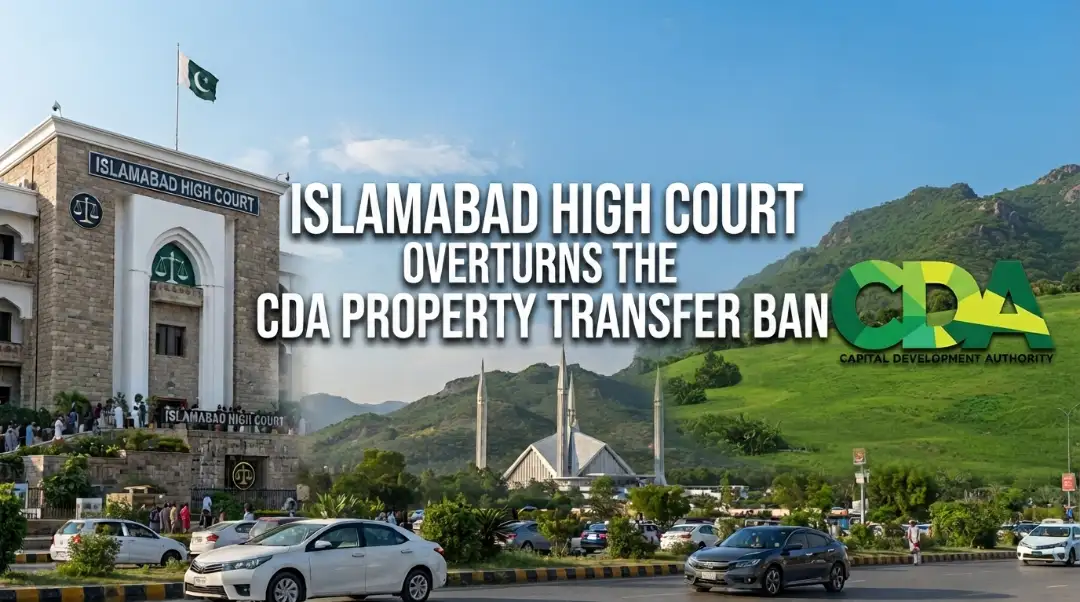
The recent decision by the Islamabad High Court (IHC) to overturn the Capital Development Authority’s (CDA) ban on property transfers in Islamabad is poised to reshape the real estate landscape in the city. This significant ruling ensures that property transactions, a critical component of Islamabad’s growth and development, can proceed unhindered. Understanding the implications of this verdict is essential for stakeholders in the real estate sector, from investors to homeowners.
The Role of CDA in Islamabad’s Urban Development
The Capital Development Authority (CDA) plays a pivotal role in the urban planning and development of Islamabad. Established to oversee city planning, the authority regulates land use, building permissions, and infrastructure development. Its decisions influence how the city expands and how property values fluctuate, making its policies crucial for all stakeholders.
CDA’s reach extends to various sectors, including residential, commercial, and infrastructural projects. By managing land allocation, the authority directly impacts housing projects, determining what is built and where. This control is essential for maintaining the city’s aesthetic and functional standards, but it also means that any changes in CDA policies can have wide-ranging effects on the property market.
Beyond just impacting construction projects, CDA’s regulations also serve to maintain environmental sustainability. The balance between development and conservation is vital in ensuring that Islamabad remains a livable city. Thus, the CDA’s influence is not merely confined to buildings but extends to parks, green zones, and public amenities.
In recent years, CDA has enacted several regulations that affect property transfers. These regulations are designed to ensure legal compliance and urban coherence, but they also add layers of complexity to property transactions. Understanding these regulations helps illustrate why the IHC’s intervention is of such significance.
As Islamabad faces rapid urbanization, the role of CDA becomes even more critical. The authority’s ability to adapt its policies in line with Islamabad’s evolving needs will be crucial for sustainable growth. This involves a consistent interaction between various governmental departments and private stakeholders to ensure holistic urban development.
Understanding the Ban on Property Transfers
The CDA’s ban on property transfers was initially instituted to address irregularities in the transfer process and curb illegal development. By halting these transfers, the authority aimed to establish better regulatory oversight and ensure compliance with zoning laws. However, this ban also stalled legal transactions, thereby affecting property values and market sentiment.
The intention behind the ban was to promote transparency and curb speculative investments that often lead to artificial inflation of property prices. Speculative buying has historically been a challenge in Islamabad’s real estate market, creating volatility that affects genuine buyers. The CDA’s approach aimed to stabilize the market but resulted in unintended consequences.
Households and businesses planning to relocate or invest in properties found themselves in a bind, as the ban made it difficult to transfer ownership, thus freezing major segments of the market. The uncertainty bred by this policy created a ripple effect that influenced everything from construction to banking sectors tied to real estate mortgages.
Moreover, this ban highlighted the critical tension between regulation and market freedom. While intending to protect urban spaces from haphazard development, the restrictive policy inadvertently stunted natural market evolution. Real estate dynamics depend heavily on reliable trading environments, and any freeze can lead to capital stagnation and lost opportunities.
The social implications were also palpable. Many citizens faced personal and financial strain due to the inability to liquidate their most significant asset. This situation emphasized the importance of balancing oversight with individual rights, pointing to the nuanced challenge of governance in rapidly developing urban spaces.
The High Court’s Ruling Explained
The Islamabad High Court’s decision to set aside the CDA’s ban was grounded in legal interpretations of property rights and administrative jurisdiction. The court examined whether the CDA had overstepped its regulatory boundaries, interfering with rights that should lawfully belong to property owners and citizens of Islamabad.
This ruling underscored the importance of maintaining a balance between regulatory oversight and individual freedoms. By overturning the ban, the court emphasized that while regulation is necessary to prevent malpractices, it should not impede legitimate business activities and citizen rights.
The decision also serves as a precedent in administrative law, highlighting how governmental bodies must navigate the fine line between authority and overreach. Future CDA policies will likely be crafted with this legal perspective in mind, ensuring they do not face similar legal challenges.
Furthermore, the ruling illustrates the role of the judiciary in safeguarding democratic principles against administrative overreach. By reinforcing the notion that governmental authority must be exercised within the bounds of law, the court has contributed to the evolution of governance in Pakistan.
This judgment could also affect future administrative decisions, particularly in ensuring a more participatory approach. Engaging stakeholders and incorporating public feedback might become more prevalent practices within regulatory frameworks, ultimately leading to more balanced and effective policies.
Economic Implications of Resuming Property Transfers
The immediate impact of the IHC’s decision is a likely increase in property market activity in Islamabad. With the ban lifted, property owners can now freely transfer their assets, re-energizing real estate transactions that had been on hold.
This resumption is expected to drive price corrections in the market. When transfer activities are stalled, market dynamics can lead to artificially deflated or inflated prices. As transfers resume, prices are expected to align more closely with true value, benefiting both buyers and sellers by reflecting fair market conditions.
Moreover, with transactions back in play, the ancillary sectors connected to real estate, such as construction, banking, and legal services, are likely to see a boost. Increased transactions often lead to a domino effect, fostering economic growth and generating employment.
The rejuvenated market also translates into increased governmental revenues through taxes and duties associated with property transfers. This influx can support further urban development and infrastructure projects, reinforcing Islamabad’s role as a modern capital city.
Also, restored confidence in the property market can attract a broader range of investors. Once wary of regulatory unpredictability, both local and foreign investors may find the clarified legal environment conducive to new projects. This fresh influx of capital could spur a new cycle of innovation and growth within Islamabad’s real estate landscape.
Social Impact on Islamabad’s Communities
The CDA property transfer ban had significant social repercussions, as it influenced community stability and residential mobility. Many families found themselves unable to move due to the ban, impacting schooling, employment, and community engagement.
With the lifting of the ban, individuals and families now have the freedom to relocate based on personal and professional needs. This mobility is crucial for social welfare and personal well-being, allowing citizens to reside closer to workplaces or educational institutions, enhancing their quality of life.
Additionally, community dynamics in rapidly growing urban areas like Islamabad often depend on fluid real estate markets. From neighborhood planning to civic engagement, the ability to buy and sell properties ensures healthy community evolution and adaptability.
This newfound freedom for families and individuals also fosters robust social integration by allowing more diverse groups to interact. By breaking barriers that trap families in certain localities, the city may witness increased cultural exchanges and enhanced communal harmony.
Furthermore, the availability of mobility could coordinate with infrastructural developments such as new schools and healthcare facilities in response to population movements. This dynamic fosters a responsive urban environment that grows and evolves in harmony with its inhabitants.
Potential Challenges and Concerns Post-Decision
While the decision to lift the ban brings several advantages, it does come with its set of challenges and concerns. One major concern is ensuring that with increased transactions, the regulatory checks are robust enough to prevent fraudulent practices.
The CDA and other regulatory bodies will need to implement stronger oversight mechanisms to ensure that the resumption of property transfers does not open avenues for corruption or legal anomalies. Ensuring transparency in transactions is paramount to maintaining public trust.
Furthermore, stakeholders must be vigilant about any sudden market fluctuations or speculative activities that might destabilize the newfound equilibrium in the property market. A balanced approach will be crucial to sustain long-term growth and stability.
Additionally, the potential for increased disparity in housing affordability must be managed. As transactions resume, there is a risk that certain segments of the population may face exclusion due to rising prices. Strategies to promote inclusive growth, like affordable housing projects, should be considered to ensure equitable access.
Furthermore, ongoing training and capacity building for CDA officials and other regulatory bodies can enhance the integrity of future property dealings. Implementing transparent and efficient frameworks requires well-informed personnel operating within proactive institutional settings.
Impact on Real Estate Investment Opportunities
The overturning of the ban is likely to reinvigorate investment interest in Islamabad’s real estate. For both domestic and international investors, the reactivation of property transfers signals stability and opportunity.
Investors who were previously hesitant due to regulatory uncertainties may now reconsider their stance. The decision provides clear legal backing for transactions, making Islamabad more attractive for real estate investments.
This could lead to a surge in development projects, particularly in underutilized areas. The availability of transferable titles ensures that developers and investors have the confidence needed to fund and advance new housing schemes and commercial projects.
The improved investment climate may encourage innovation in architectural design and sustainable building practices. As developers increasingly undertake unique and environmentally friendly projects, Islamabad stands to enhance its reputation as a forward-thinking urban hub.
Moreover, with heightened investment flows, a diversified property portfolio can emerge, catering to different income groups. This broad-based growth can provide more opportunities for citizens to engage with the housing market, uplifting general living standards.
The Role of Technology in Future Property Transactions
In the wake of the court’s decision, technology will play an increasingly vital role in streamlining property transactions in Islamabad. Digital platforms can assist in automating and ensuring the transparency of property transfers, minimizing the room for fraud and errors.
Blockchain technology, for instance, can be utilized to create immutable property records, safeguarding interests of both buyers and sellers. The increased transparency and security could facilitate smoother operations and increase investor confidence.
By integrating technology into real estate practices, Islamabad has the potential to become a model city for modern, efficient, and trustworthy property dealings, drawing comparisons with more developed urban centers worldwide.
The integration of Artificial Intelligence in assessing property values and predicting market trends provides another robust tool for stakeholders. Predictive analytics can help foresee property value shifts, assisting investors and developers in making timely, data-backed decisions.
Enhancing public access to property-related information through digital dashboards empowers citizens with the knowledge required to engage proactively in property transactions. These tools can democratize insights, broadening participation in the real estate ecosystem.
Looking Forward: Future Directions for the CDA
The CDA, in light of this decision, will need to reassess its regulatory framework to avoid future legal challenges and ensure effective urban management. A proactive approach that includes stakeholder engagement could be crucial for crafting policies that align with the practical needs of Islamabad’s property market.
Future CDA strategies could focus on smart growth principles, integrating environmental sustainability with urban development. Balancing growth with ecological considerations might set a new standard for city planning in the region.
Through collaborative efforts with tech companies, real estate experts, and community leaders, the CDA might leverage this decision as an opportunity to innovate and improve Islamabad’s urban infrastructure and policy landscape. The emphasis on adaptability and sustainability can guide the CDA in developing frameworks that encourage smarter resource use, complementing Islamabad’s natural beauty with efficient urban solutions.
Resilient policy-making should also consider the need for continual updates, ensuring regulatory frameworks remain relevant in an ever-changing urban landscape. Through learning and evolving, the CDA can build a legacy of progressive governance that addresses the needs of future generations.
Conclusion
The IHC’s ruling to lift the CDA property transfer ban is a landmark decision with widespread implications for Islamabad’s real estate market and urban development. By reinstating the right to freely transfer property, the court has paved the way for renewed economic activity, increased social mobility, and reinforced property rights.
This outcome not only reopens market avenues but also sets a precedent for how regulatory bodies should operate within the confines of law, balancing authority with the rights of citizens. The decision represents a pivotal moment for stakeholders to engage in creating a thriving, transparent, and sustainable urban environment.
As Islamabad continues to grow, navigating these changes will require cooperation among governmental bodies, investors, and the community at large. The journey toward a more dynamic and equitable property market has begun, promising a brighter future for all involved.
Amid these promising opportunities, the call for responsible and inclusive growth remains paramount. Sustained commitment by all stakeholders to fostering a balanced property market will be key in ensuring that Islamabad’s growth story benefits every segment of its society.
Frequently Asked Questions
What was the reason behind CDA’s property transfer ban?
The ban was intended to curb irregularities and illegal development, ensuring compliance with zoning laws and preventing market speculation.
How does the IHC’s decision impact property prices in Islamabad?
The decision is expected to lead to price corrections, aligning with true market conditions, which benefits both buyers and sellers.
Will the CDA introduce new regulations following this ruling?
It’s likely that the CDA will reassess and revise its regulatory framework to align better with legal standards and market needs.
What role can technology play in future property transactions?
Technology, like blockchain, can enhance the transparency and security of property transactions, supporting smoother operations.
What are the social implications of lifting the property transfer ban?
Increased mobility allows families to relocate according to personal and professional needs, thereby improving quality of life.



 Muhammad Abdullah |
July 2, 2026
Muhammad Abdullah |
July 2, 2026