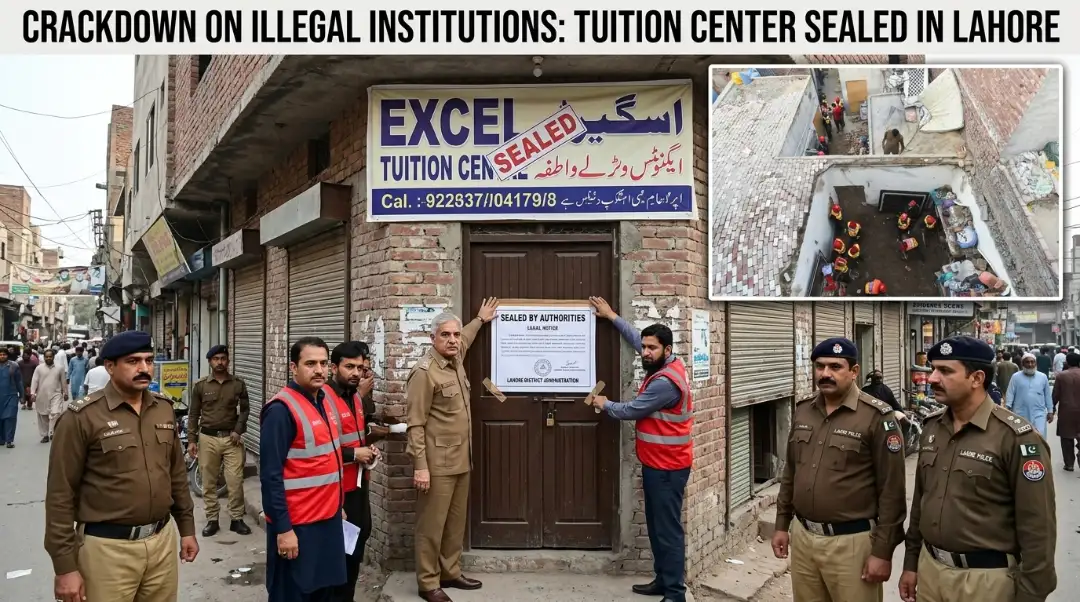
The Lahore Education Authority has introduced new rules for tuition centres in the wake of the Kahna tragedy, an event that has prompted widespread concern regarding the safety and regulation of such educational institutions. This regulatory shift aims to ensure that tuition centres operate under stringent guidelines to safeguard students and enhance educational quality. The tragedy highlighted existing vulnerabilities within the system, sparking a public outcry for reform. Thus, these new regulations represent a significant step towards addressing the community’s concerns and setting a standard for future educational practices in the region.
Background of the Kahna Tragedy
The Kahna tragedy served as a wake-up call to authorities, educators, and parents across Lahore. An unfortunate incident unfolded leading to loss of life and injury within an inadequately prepared tuition centre. This tragedy emphasized the dire need for enhanced regulations and oversight in the educational sector, particularly concerning private tuition centres which often function outside the boundaries of rigorous scrutiny.
The tragic event ignited a dialogue about student safety, revealing loopholes in how these centres are managed and held accountable. Parents, educators, and policymakers realized that the existing framework was insufficient, necessitating immediate reforms.In the aftermath, public pressure on the Lahore Education Authority to revamp its regulatory framework grew intense, accelerating efforts to bring about comprehensive and effective changes to prevent future tragedies.
The broader context of this incident indicates a long-standing challenge within Pakistan’s education system, where regulatory oversight of private educational enterprises has been inconsistent. Such gaps in regulation have often led to issues of overcrowding, inadequate facilities, and untrained staff.
The Kahna tragedy isn’t an isolated incident; it is part of a pattern observed in various cities where rapid urbanization and a burgeoning population have outpaced the quality assurance processes in education. The outpouring of community support for reform illustrates a collective desire for a more secure and accountable educational environment.
The Role of Tuition Centres in Lahore
Tuition centres have become an integral part of the educational landscape in Lahore. Many students rely on these institutions to supplement their learning outside traditional school hours, hoping to improve their academic performance and secure better future opportunities. With competitive exams and rigorous education standards, these centres offer personalized instruction that many schools may not provide.
However, the mushrooming of tuition centres has also led to concerns over quality and safety. Many operate without proper licenses or qualified staff, driven by a burgeoning demand rather than educational excellence.
The role of tuition centres, therefore, extends beyond mere academic support. They are seen as critical educational partners, yet their rapid expansion presents challenges, underscoring the necessity for regulation to ensure they contribute positively to students’ education.
Historically, tuition centres have emerged as significant contributors to academic success in competitive exams such as matriculation and college entrance tests. This prominence has cemented their role in the education system, encouraging further growth and demand.
The cultural context also plays a key role in the reliance on tuition centres. Parents perceive them as necessary for their children’s success, which has led to increased expectations and sometimes undue pressure on students to attend multiple centres simultaneously.
Details of the New Regulations
The new regulations introduced by the Lahore Education Authority are comprehensive, addressing key areas such as licensing, safety, quality standards, and accountability. By enforcing stricter rules, the Authority aims to bring all tuition centres within a regulated framework, ensuring student welfare and educational integrity.
One of the core aspects of the regulations is the mandatory licensing of tuition centres. This move is expected to curb the proliferation of unregistered institutes, requiring centres to meet specific criteria before starting their operations. Safety guidelines have also been tightened, focusing on infrastructure, emergency preparedness, and staff training to guarantee a safe learning environment for students.
Additionally, quality standards have been elevated. Centres must now employ qualified educators and provide evidence of their educational credentials to maintain transparency and trust.
The licensing process itself will involve checks on the physical infrastructure, compliance with fire safety standards, and the quality of teaching materials and methods. This rigorous evaluation aims to instill a uniform standard across all tuition centres. Furthermore, a significant aspect of the new laws includes regular audits by the Lahore Education Authority, ensuring that compliance is maintained over time. Penalties and potential closures of non-compliant centres are on the cards, adding a layer of accountability previously missing.
Safety Measures and Infrastructure Development
An essential component of the new regulations is the emphasis on safety measures within tuition centres. The tragedy in Kahna highlighted significant weaknesses in existing safety protocols, prompting the Lahore Education Authority to prioritize robust safety infrastructures.
Centres are now required to conduct regular safety drills, maintain fire safety equipment, and develop comprehensive emergency response plans. The aim is to prepare staff and students for unexpected events, fostering a secure and responsive environment.
Infrastructure development is another focal area. The regulations mandate that tuition centres maintain accessible and adequately maintained facilities, ensuring they meet specific health and safety standards conducive to effective learning.
The drive for improved infrastructure and safety is not merely about physical aspects; it extends to creating a reassuring atmosphere for learning, which is crucial for effective education. Students need to feel safe and secure to absorb and engage fully. These developments have ripple effects beyond safety. Enhanced infrastructure can offer more modern classrooms, better learning equipment, and an overall environment that encourages academic curiosity and performance.
Impact on Students and Parents
The implications of the new rules for students and their families are profound. With enhanced safety and quality standards, parents can select tuition centres with greater confidence, knowing they have met rigorous criteria established by the authorities. For students, the benefits are manifold. Attending regulated centres means access to better resources, qualified educators, and a safer environment, all contributing to improved educational outcomes.
However, these regulations could also impact the affordability and accessibility of tuition services. As centres strive to meet new standards, operational costs might rise, potentially increasing fees and affecting low-income families who rely on these services.
Furthermore, these regulations could contribute to a change in perception regarding tuition centres. As standards are enforced, reputation and trust improve, allowing students to focus more on learning than safety concerns. The involvement of parents in this transformative time is crucial. They play a strategic role in advocating for fair costs and ensuring that as stakeholders, their voices shape these reforms positively, ensuring equitable access to education remains a priority.
Challenges in Implementing the New Rules
While the objectives of the new regulations are clear, executing them presents notable challenges. Resistance from existing tuition centres is anticipated, particularly those reluctant to comply with stricter guidelines due to financial or logistical constraints. The Lahore Education Authority endeavors to balance enforcement with support, potentially offering guidance and resources to help centres transition smoothly into compliance. However, the scale of change required may pose difficulties, especially for smaller centres with limited resources.
Another challenge lies in consistent monitoring and evaluation to ensure ongoing adherence, necessitating robust inspection mechanisms and potential penalties for non-compliance to uphold the integrity of the regulations. Furthermore, the economic impact on smaller tuition centres cannot be underestimated. These centres often operate with narrow margins and may struggle with the additional financial burden imposed by the new safety and operational standards.
The Authority’s approach will need to be multi-faceted, combining judicious enforcement with strategic partnerships with stakeholders for training and development. Leveraging technology for monitoring compliance could streamline the process, though initial implementation may require careful planning and resource allocation.
Historical Context and Comparisons
Educational reforms have long been a feature of Lahore’s educational policy landscape. Historically, tuition centres have operated in a relatively unregulated space, providing essential services to students and filling gaps left by traditional education systems.
The recent emphasis on regulation echoes previous reform efforts but diverges in its intensity and scope. Comparisons can be drawn with other regions where similar tragedies prompted regulatory overhauls, leading to significant improvements in educational outcomes and safety standards.
Learning from historical precedents, the Lahore Education Authority aims to build on past experiences to create a sustainable model that can adapt and evolve as necessary, reinforcing the critical role of regulatory frameworks in education.
Globally, educational oversight has evolved in response to both innovation and crisis. The balancing act between encouraging private educational initiatives and maintaining strict quality standards resembles movements seen in countries like India and the Philippines, where educational booms have mandated intervention for quality assurance.
The lessons from these international contexts illustrate the need for continuous dialogue and adaptation of reforms. Lahore’s path is part of a larger narrative in which education systems worldwide strive to align access with excellence.
The Perspective of Educators and Centre Owners
From the viewpoint of educators and centre owners, the new regulations invite mixed reactions. While some welcome the improvements to safety and educational quality, others express concerns about the feasibility of implementing the changes without major disruptions to their operations.
Educators stress the importance of maintaining educational excellence while adapting to new standards, advocating for collaborative efforts between authorities and centres to facilitate the transition.
Centre owners, particularly those running smaller operations, are wary of potential financial implications. Concerns about increased operational costs and the stricter licensing requirements might elevate barriers to entry, impacting their economic viability.
The need for adaptability in pedagogical methods is another challenge. Educators are faced with updating and possibly overhauling how subjects are taught to meet new standards, which could be seen as an opportunity for innovation.
The broader conversation between educators and the Authority could foster a reimagination of educational strategies and methodologies. Stakeholder workshops and training initiatives might offer pathways for both compliance and advancement, ensuring regulations are met with enthusiasm rather than resistance.
Predictions for the Tuition Industry
The introduction of these regulations is set to reshape the tuition industry in Lahore significantly. In the coming months, we may witness a consolidation of smaller centres, as only those meeting the new standards will survive the stringent regulatory environment.
Larger and well-established centres might benefit from these changes, capitalizing on their resources to expand offerings and attract more students, while smaller, non-compliant centres may close or merge with compliant ones. The long-term outcome should be a healthier, more regulated industry, capable of providing high-quality education and safeguarding student welfare effectively.
Furthermore, the evolving landscape may foster innovation, with centres investing in technology and diverse educational strategies to distinguish themselves within a competitive market. This innovation could lead to more engaging and cutting-edge education that rivals traditional schooling.
The industry transition towards higher regulation may aid the overall goal of educational equity amidst diversity, creating opportunities for hybrid learning models that seamlessly integrate with students’ varied educational needs and circumstances.
Conclusion: A Step Forward for Education in Lahore
The new rules for tuition centres represent a significant leap forward for education in Lahore, responding to a universal call for reforms that prioritize student safety and optimize educational outcomes. These regulations emerge as a beacon of progress, ensuring that tuition centres operate legally, ethically, and with a commitment to quality.
While challenges lie ahead, particularly in implementation and adaptation, the potential benefits foster sustained improvements that echo beyond individual centres, reflecting positively on the larger educational ecosystem. As Lahore navigates these changes, the focus remains unwavering on creating a balanced, equitable, and excellence-driven educational landscape, promising a brighter and safer future for all students.
The collaborative effort among various stakeholders, including parents, educators, centre owners, and government bodies, will determine the success of this initiative. Effective communication and continuous adaptation to emerging educational paradigms will be paramount.
Ultimately, this regulatory overhaul signals a deeper understanding and commitment to the importance of standards and safety within education, aspiring to not only meet immediate needs but to pave the way for transformative excellence that can inspire reforms in other sectors and regions.
Frequently Asked Questions
What prompted the new rules for Lahore tuition centres?
The Kahna tragedy highlighted critical safety and regulatory gaps in tuition centres, prompting the Lahore Education Authority to implement new rules to ensure safety and quality.
How will these regulations affect tuition centre operations?
Centers must adhere to stricter licensing, safety, and quality standards, potentially increasing operational costs and necessitating infrastructural upgrades.
Will tuition fees increase due to these new regulations?
There is a possibility of tuition fees rising as centres incur additional costs to meet the new standards, which may affect affordability for some families.
How does this impact students’ educational experience?
Students will benefit from improved safety, access to qualified educators, and enhanced educational resources, fostering better learning outcomes.
Are there any challenges anticipated in enforcing these rules?
Yes, challenges include resistance from some centres, logistical issues in compliance, and ensuring consistent monitoring and evaluation.



 Muhammad Abdullah |
July 4, 2026
Muhammad Abdullah |
July 4, 2026