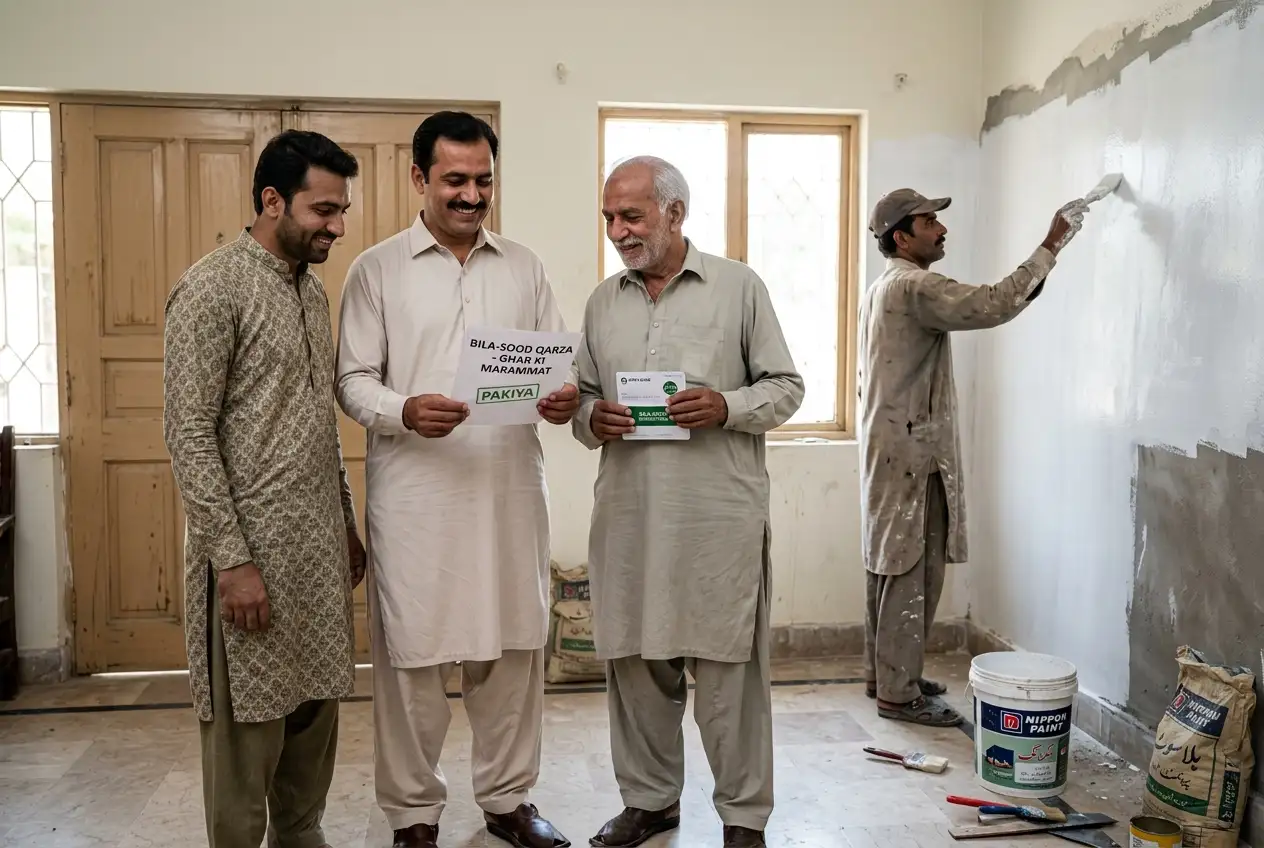
In an ambitious move to bolster housing infrastructure and support domestic welfare, the government has announced the introduction of interest-free loans up to Rs1 million specifically for house repairs. This initiative, hailed as a potential game-changer for many homeowners, seeks to address the pressing need for affordable housing improvements amid rising costs of living. Interest-free loans could significantly ease the financial burden on families who wish to undertake essential repairs and improvements, thereby fostering a more secure and stable living environment for thousands across the nation.
The Need for Interest-Free Loans
The introduction of interest-free loans comes at a time when the housing market is under considerable strain. Many homes, especially older structures, are in desperate need of repair, and the associated costs can be prohibitive for average families. Conventional loans often come with high-interest rates, making it difficult for many to afford necessary repairs without plunging into debt.
This new loan scheme aims to eliminate these financial barriers, enabling homeowners to address critical structural issues and improve their living conditions without the burden of accruing interest a common deterrence in typical banking scenarios.
Furthermore, by facilitating these loans, the government is reinforcing its commitment to improving the quality of life for its citizens, recognizing that a safe home is a cornerstone of public welfare.
Additionally, with living costs steadily rising, even minor home repairs can become financially draining. The introduction of this scheme reflects a deeper understanding of the socioeconomic challenges many families face. It represents a proactive measure to enhance domestic life, offering a reprieve from financial strains while promoting community stability. By supporting home repairs, the government indirectly reduces other social costs, such as healthcare and emergency shelter needs that stem from inadequate housing conditions.
An important aspect to consider is the psychological and physical health impacts of living in poor housing conditions. Without a safe and stable home environment, individuals and families may experience increased stress and health problems, further emphasizing the necessity of financial pathways like interest-free loans to undertake vital repairs.
How the Loan Process Works
The mechanics of the loan process have been designed to ensure accessibility and ease of application. Homeowners interested in applying will need to provide documentation, including proof of home ownership and a detailed repair plan that outlines the intended use of funds.
This verification step is crucial to ensure funds are used specifically for repairs, adhering to the government’s goal of improving housing standards. The aim here is not only accessibility but also accountability, ensuring the process remains transparent and effective.
The application process is streamlined via an online portal, minimizing bureaucratic delays and enabling quicker disbursement of funds. This move towards digitalization reflects a broader trend of incorporating technology to enhance public service delivery.
Moreover, the digital portal represents a significant move towards transparency and efficiency in government processes. By centralizing applications online, the initiative reduces paperwork and processing times, making it more user-friendly and approachable for those less familiar with governmental procedures. The use of automated systems and algorithms helps in quickly verifying applications, ensuring that funds are released to genuine candidates who need them most.
However, while digitalization offers many benefits, it also necessitates robust cybersecurity measures to protect applicants’ personal information. Thus, proper safeguards must be in place to maintain the trust of citizens in handling sensitive data.
Impacts on the Housing Market
Interest-free loans are expected to have a significant impact on the housing market. By facilitating more affordable repairs, homes are likely to see an increase in value, prompting a positive ripple effect throughout the residential real estate sector. Not only will homeowners benefit from improved property conditions, but the overall housing market may experience an upsurge in transactions as improved home values stimulate buying and selling activities.
Additionally, this initiative could spur job creation within the construction and home improvement sectors, as increased demand for repair and renovation services mandates more skilled labor.
The renovation boom fueled by these loans is poised to invigorate the local economies, particularly in neighborhoods with older housing stock. As properties are upgraded, area’s desirability may increase, attracting new buyers and investors, which in turn supports local businesses and boosts tax revenues. This ripple effect can significantly contribute to community revitalization efforts, creating more vibrant and economically stable neighborhoods.
In a broader economic context, the enhanced market activity resulting from improved housing quality could lead to increased fiscal stability. As property values rise, so do property tax revenues, providing local governments with more resources to reinvest in community services and infrastructure. Such a symbiotic relationship between housing improvements and economic growth underscores the strategic importance of interest-free loan initiatives.
Benefits for Homeowners
The benefits of this initiative for homeowners are multifaceted. Firstly, the alleviation of financial strain through interest-free loans allows for a reallocation of family budgets towards other essential expenses, such as education and healthcare. Second, the opportunity to improve home conditions directly correlates with enhanced safety and well-being for residents. Better housing reduces risks associated with inadequate infrastructure, such as leaks, structural instability, and inefficient energy use.
Thus, this program not only meets immediate repair needs but also contributes to long-term health and safety improvements for families.
An often-overlooked advantage is the psychological peace of mind that financial security and a well-maintained home bring. Families can avoid the anxiety of mounting debt and instead focus on other life-enhancing activities. Financial stability also empowers homeowners to make better long-term decisions, whether they pertain to work, family, or education, fostering an environment where aspirations can be pursued without the constant pressure of financial duress.
Beyond financial relief, the program promotes inclusivity by offering financial support to those who might otherwise be marginalized. By investing in home improvements, families not only increase their sense of belonging within a community but also contribute to the overall aesthetic and functional integrity of their neighborhoods, creating safer, more cohesive living spaces.
Challenges in Implementation
Despite its promising outlook, the program is not without potential challenges. Ensuring fair and equitable access across diverse socioeconomic groups remains a critical concern. There is a risk that those most in need may not have sufficient knowledge or access to online application processes.
Another challenge is preventing misuse of funds, which requires strict enforcement of loan use stipulations. The government must maintain rigorous monitoring to ensure loans are utilized strictly for intended repair purposes. Lastly, sustaining long-term interest-free options may strain government resources, requiring careful fiscal planning to ensure the program’s viability over the years.
To better reach populations less familiar with digital applications, educational campaigns and support centers can be established to guide applicants through the process. Collaboration with community leaders and local organizations can also aid in disseminating information, ensuring wider reach and participation. Effective communication strategies are crucial in bridging the gap between policy and practice, making policy intent a tangible reality for all demographic segments.
Moreover, to minimize potential misuse of funds, the inclusion of a clear oversight mechanism with periodic audits and evaluations is essential. Implementing such measures will not only secure the integrity of the program but also improve public confidence in government initiatives.
Environmental Considerations
Another compelling aspect of this loan initiative is its potential contribution to environmental sustainability. Home repairs often include upgrades to energy systems, improving insulation, and the installation of energy-efficient appliances each of which helps reduce the carbon footprint of households.
Interest-free loans provide the means for homeowners to make eco-friendly improvements that might otherwise be unaffordable, aligning economic relief efforts with environmental responsibility.
As more homes incorporate green technology, the broader impact on national energy consumption and environmental health could be profound, positioning the country as a leader in sustainable housing practices.
Integrating eco-friendly solutions into home repairs not only supports environmental goals but also offers long-term financial savings for homeowners through reduced utility bills. The initial investment necessary for sustainable improvements such as solar panels and high-efficiency heating and cooling systems becomes more feasible under the interest-free loan model, spurring wider adoption and innovation of green technologies.
In the larger context, promoting environmentally responsible housing can lead to improved public health outcomes by contributing to cleaner air and reducing greenhouse gas emissions. An emphasis on sustainable home repair initiatives aligns with global efforts to combat climate change, reinforcing national, as well as individual, commitments to nurturing a more sustainable planet.
Historical Context of Housing Policies
This initiative reflects an evolution in housing policies that have historically balanced between providing affordable housing and encouraging homeownership. Traditionally, programs focused on subsidies for low-income housing developments; however, the current scheme shifts focus to upgrading existing structures.
By prioritizing enhancements to residential infrastructure, the program builds on past housing policies, integrating them into a modern framework that addresses both acute and long-term living conditions. This approach acknowledges the historical lessons of phased development and urban planning, incorporating these insights to foster cohesive, sustainable growth.
Throughout history, housing policies have evolved to meet the changing needs of society. From the initial focus on post-war reconstruction to addressing urban sprawl and developing affordable housing units, each phase has built upon its predecessors to reflect emerging societal priorities. Today’s policies underscore a commitment to quality and sustainability, representing the next logical step in housing evolution while addressing contemporary issues such as urban density, environmental sustainability, and economic accessibility.
Further, this initiative mirrors international shifts towards more integrated and comprehensive development strategies where housing policy is seen not just as a standalone effort but as a crucial element in broader economic and social planning frameworks. By learning from both past local policies and international contexts, this program aims to create a resilient housing future that meets diverse needs and adapts to fluctuating demands.
A Global Perspective
Globally, subsidies and interest-free loans for home improvements are not new, but they vary significantly in structure and scale. Countries like Germany and the Netherlands have pioneered comprehensive energy-efficient housing programs with great success.
The adopted interest-free loan scheme can draw upon global examples, leveraging best practices and adaptive strategies that meet local demographic and economic needs. Understanding these international successes provides a blueprint for refining and expanding the local program to maximize its effectiveness and sustainability.
In places such as Scandinavian countries, proactive housing policies have often emphasized sustainability and innovation, adopting a holistic view that incorporates economic well-being, environmental impact, and social equality. Drawing lessons from these models, the local implementation of interest-free loans can be fine-tuned to address specific challenges such as climate nuances, economic disparities, and social diversity that characterize the particular national landscape.
By fostering international collaborations and sharing expertise, the local program not only gains from external insights but contributes to the global discourse on sustainable housing. This bidirectional exchange of ideas enhances the formulation of adaptable and effective policies that can respond swiftly to unforeseen challenges while maintaining core objectives of public welfare and environmental stewardship.
Future Developments and Policy Implications
Looking ahead, this initiative could set a precedent for future housing policies. Its success may inspire more comprehensive legislative action aimed at addressing housing inadequacies on a broader scale.
The ripple effect of such a program could extend far beyond home repairs, potentially influencing national standards for living conditions and sparking broader reforms in urban development and resource allocation. Continual assessment and iteration of the program’s framework will be crucial as the government seeks to build resilience and adaptability within its housing agenda.
The potential for scaling initiatives like these is significant. By carefully monitoring outcomes and conducting impact studies, the government can harness data-driven insights to refine strategies and expand the reach of interest-free loans. This iterative approach ensures that evolving housing needs are met, and adjustments are made in real-time to policy nuances, enhancing flexibility in response to socio-economic shifts.
A successful implementation could motivate cross-sector partnerships, inviting private entities to invest in community improvement efforts, thereby diversifying funding sources and promoting public-private collaboration. Such synergy will be essential in fortifying the future housing landscape, ensuring the availability of quality, affordable living spaces for generations to come.
Conclusion
The government’s innovative introduction of interest-free loans for house repairs marks a significant step towards improving national living standards. This initiative exemplifies a commitment to sustainable development, economic relief, and enhances resident quality of life. By alleviating financial burdens and facilitating crucial home repairs, the program not only benefits individuals and families but also contributes to broader economic and community well-being.
While challenges remain, the potential successes of this interest-free loan scheme position it as a model program that could lead to more comprehensive policy reforms in the future.
Holistic and inclusive in its approach, this loan initiative represents a forward-thinking stride in the public welfare arena, emphasizing the importance of secure, sustainable, and healthy living environments for all citizens.
Ultimately, the program’s ability to adapt to emerging trends and incorporate stakeholder feedback will determine its lasting impact. By fostering open dialogues and promoting stakeholder engagement, the government can ensure the program evolves in line with public needs and expectations, solidifying its role as a cornerstone of housing policy moving forward.
The potential to reshape housing markets, enhance community cohesion, and contribute significantly to the national agenda underscores the transformative capacity of interest-free loans. By continuing to explore innovations and strengthen frameworks, this initiative has the capacity to significantly influence the socioeconomic fabric, setting a benchmark for comprehensive and sustainable public welfare strategies worldwide.
Frequently Asked Questions
What are interest-free loans?
Interest-free loans are financial products that allow borrowers to use funds without paying interest over the loan period. In this program, the government offers up to Rs1 million for home repairs.
Who is eligible for these loans?
Eligible applicants must be homeowners and provide necessary documentation, including proof of ownership and a proposed repair plan, to qualify for these interest-free loans.
How can I apply for the interest-free loan?
Applications can be submitted through an online portal designed to streamline the process and ensure quick access to funds.
What kinds of repairs are covered by the loan?
The loan can be used for various home repairs, focusing on essential structural improvements and safety installations.
Are there any restrictions on the use of the loan?
Yes, the funds must be used specifically for repairs as outlined in the submitted repair plan, and misuse of funds can result in penalties.



 Muhammad Abdullah |
July 4, 2026
Muhammad Abdullah |
July 4, 2026