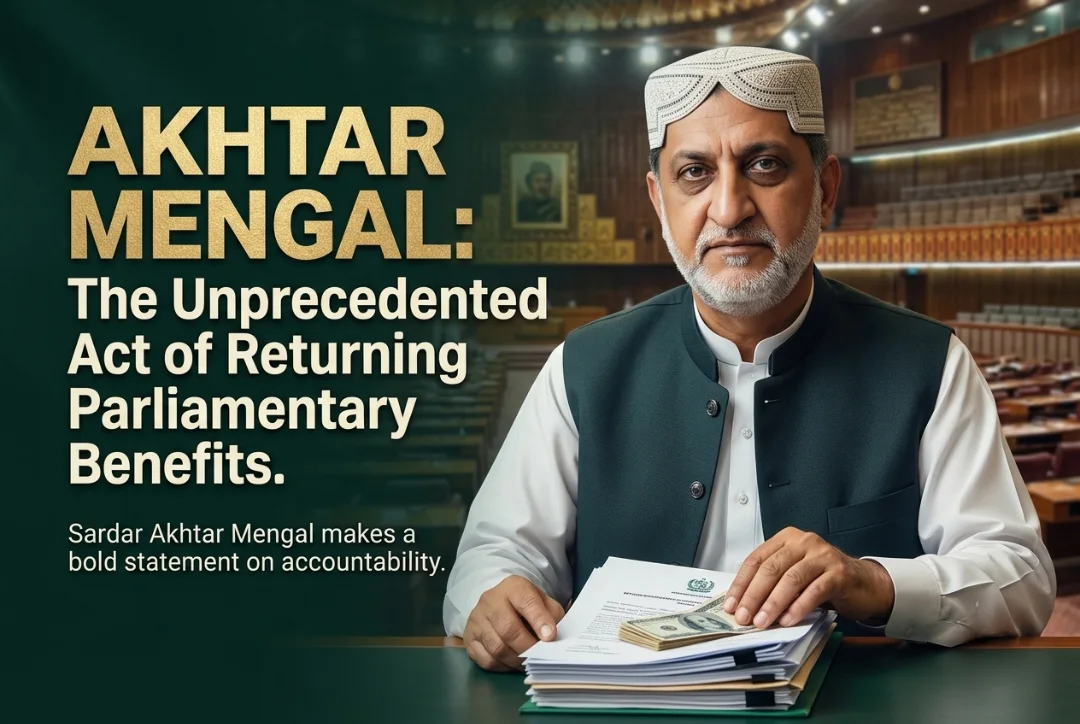
In a significant move highlighting integrity in politics, Akhtar Mengal, a distinguished political leader, has returned all benefits received following his resignation from the National Assembly (NA). This action underscores his commitment to transparency and responsibility, setting a benchmark for public service. In a political landscape often criticized for its lack of accountability, Mengal’s decision emerges as a beacon of hope and an example of principled leadership. This revelation has sparked widespread discussions about ethical governance, the role of elected officials, and the nature of benefits provided. As observers evaluate the implications of Mengal’s actions, it becomes essential to explore the broader context, underlying motives, and potential impact on political norms and practices.
Background of Akhtar Mengal’s Political Career
Akhtar Mengal, a key figure in Pakistani politics, hails from a lineage of influential leaders. As the chief of the Balochistan National Party (BNP), he has been a relentless advocate for the rights and autonomy of the Baloch people. His political journey has been characterized by a strong emphasis on provincial rights, resource allocation, and federal responsibilities. Mengal’s leadership style is deeply influenced by his father’s legacy, Sardar Ataullah Mengal, a prominent nationalist leader and the first Chief Minister of Balochistan. Over the years, Akhtar Mengal has championed various causes, often at great personal and political risk, to ensure his province’s voice is heard on the national stage.
Mengal’s tenure in the National Assembly was marked by consistent advocacy for the devolution of power and resources. His resignation from the NA was a result of longstanding grievances regarding federal policies and their impact on Balochistan. By leading protests and voicing concerns, Mengal has repeatedly underscored the need for political reforms and equitable governance. His decision to return all post-resignation benefits serves as an extension of his principled approach to politics.
This background sets the stage for understanding why Mengal’s recent actions are noteworthy and why they resonate with many who seek transparency and accountability in governance. It also illuminates how deeply ingrained his values are within his political agenda, reflecting a commitment to ethical standards and the people he represents.
Furthermore, exploring Mengal’s history and motivations reveals a dedication to systemic change, beyond the optics of political gestures. His leadership approach exemplifies a commitment to challenging entrenched norms and pursuing honest representation for the Baloch community, even when faced with formidable challenges from both regional and national power structures.
The Impact of Benefits in Parliamentary Roles
Parliamentary positions come with a myriad of benefits and perks that are designed to enable representatives to perform their duties effectively. These include salaries, allowances, official residences, and other logistical supports. However, the allocation and utilization of these benefits often embroider discussions on ethics and responsibilities. For many politicians, these perks symbolize power and privilege and for others, a necessary means to fulfill their roles efficiently.
In the case of Akhtar Mengal, the return of these benefits post-resignation effectively challenges the traditional perception of political perks. By voluntarily returning these benefits, Mengal showcases a rare political gesture that could redefine expectations from public officials. This move emphasizes that such benefits are not entitlements but should be seen as tools for public service, subject to ethical considerations and public scrutiny.
The implications of Mengal’s decision are significant. It could prompt other politicians to re-evaluate their approach to public resources and foster a culture of accountability. Additionally, it raises questions about the criteria and justifications for the allocation of parliamentary benefits, potentially leading to discussions on reforms and policy adjustments aligned with public interest.
This unprecedented decision might inspire a wider discourse on how benefits align with the roles and responsibilities of parliamentary positions. It could pave the way for a reevaluation of the ethical frameworks that define the limits and expectations surrounding political roles, urging a shift towards a more responsible and service-oriented approach to governance.
Additionally, Mengal’s action poses a critical inquiry into the sustainability and fairness of the existing benefits system for parliamentarians, urging policymakers and civil society to scrutinize and potentially reform how public resources are allocated and managed.
Ethical Leadership and Political Accountability
Ethical leadership is fundamental to demystifying governance and fostering trust within the electorate. Akhtar Mengal’s decision transcends routine political rhetoric and ventures into a territory reserved for actions that speak louder than words. By returning benefits, Mengal addresses public concerns about accountability, setting an unparalleled example of integrity in politics.
This act of accountability is pivotal in an age where political scandals and misappropriations frequently dominate headlines. Mengal’s actions reflect a conscious effort to distinguish ideal leadership traits sacrifice, transparency, and responsibility from mere political posturing. His approach demonstrates that leaders can choose to uphold higher principles, thereby inspiring others within the political arena to reflect on their commitments to their constituents.
Ultimately, Mengal’s return of benefits highlights the enduring relevance and necessity of ethical behavior in governance. It serves as a reminder that true leadership is not about the power wielded but about the responsible stewardship of the responsibilities entrusted by the electorate. This sets a transformative benchmark for public service in Pakistan and possibly beyond.
Furthermore, this initiative challenges other leaders to reassess their practices, ensuring they resonate with the ethical aspirations of their positions. Mengal’s stand becomes an empowering narrative that redefines what it means to lead ethically, effectively illustrating that accountability can drive progress in political systems marred by cynicism.
Challenges in Implementing Transparent Practices
Despite instances of ethical leadership, implementing transparent practices in politics remains fraught with challenges. Bureaucratic inertia, vested interests, and an entrenched culture of opacity often impede efforts toward accountability and transparency.
For leaders like Akhtar Mengal, translating personal integrity into systemic reforms requires navigating complex political landscapes coupled with opposition from various quarters. The intricate balance of power within political circles can either facilitate or hinder the adoption of transparent systems. Mengal’s initiative is a testament to the hurdles faced in reinforcing ethical governance norms and implementing reforms that align with public interest.
Success in this domain requires a concerted effort from multiple stakeholders, including civil society, media, judiciary, and fellow politicians. Mengal’s actions may serve as a catalyst for creating dialogue and partnerships necessary to integrate transparency. His decision represents a stepping stone that could inspire the wider adoption of transparent practices and policies to revolutionize the way politics operate in Pakistan.
The challenges are amplified by the existing structures that resist change due to fear of losing established privileges. To overcome these obstacles, effective strategies for embedding transparency must be developed, including public awareness campaigns, collaborative policy-making, and leveraging technology for greater oversight and citizen engagement.
An inclusive dialogue among stakeholders could also be facilitated, mapping out actionable pathways toward achieving transparent governance, and ensuring genuine reform is not only initiated but sustained.
Historical Context of Political Resignations in Pakistan
The history of political resignations in Pakistan is replete with instances that reflect underlying tensions in the political fabric. Political resignations, more often than not, are prompted by disagreements over policies, principles, or power dynamics.
There have been numerous instances where political leaders resigned on account of principled stances. Such resignations often symbolize a rejection of prevailing practices that are incongruent with ethical governance. Akhtar Mengal’s resignation and subsequent return of benefits signify a broader trend where individual actions challenge the status quo and ignite public discourse on transparency and accountability.
Analyzing these historical patterns provides insight into the evolution of political accountability in Pakistan. It underscores the complexities and motivations behind political resignations and the potential they hold in catalyzing systemic changes within governance frameworks. The historical narrative of resignations like Mengal’s is often a prelude to long-term reforms, illustrating a gradual progression towards institutional maturity.
Understanding these dynamics offers a window into the forces that drive political change in Pakistan and highlights the potential for individual actions to serve as transformative influences. Mengal’s resignation fits within a broader tradition of impactful, principle-driven decisions that signal deeper shifts within the political landscape.
These historical precedents underscore the power of individual agency in reform contexts, reminding us that transformative change often begins with introspective courage and action, which has the capability to generate ripples that extend far beyond immediate outcomes.
Influence of Political Culture on Leadership Decisions
The prevailing political culture significantly shapes leaders’ decisions, affecting the implementation and reception of policies. Political culture encapsulates the shared beliefs, practices, and values that define governance and civic engagement within a society.
In Pakistan, the political culture is characterized by power hierarchies, patronage systems, and loyalty to political dynasties. However, amidst these elements, there is a burgeoning desire for reform and accountability, echoed in the decisions of leaders like Akhtar Mengal. Mengal’s choice to return benefits defies conventional political wisdom, showcasing a departure from entrenched norms towards ethical leadership.
The decision sends ripples through the political environment, potentially inspiring change within the political culture. It challenges stakeholders to reconsider the intersections of power, responsibility, and morality in governance, providing an available template for emerging leaders striving to enact transformative change.
This departure from tradition signals to other political figures and the electorate that a shift toward new paradigms is not only possible but essential for sustainable governance. The shift can be seen as part of a larger movement calling for transparency and ethical boundaries within Pakistani politics.
By disrupting the status quo, Mengal’s decision catalyzes conversations about the need to evolve political norms, grounding future leadership in principles that prioritize public welfare over partisan gains and reinforcing the importance of adaptive, reform-centered governance.
The Role of Media and Public Perception
The media plays a pivotal role in shaping public perception and influencing political narratives. By providing platforms for discourse, analysis, and critique, media entities can elevate stories of ethical leadership, like Akhtar Mengal’s, to elevate public consciousness.
Mengal’s decision to return benefits has been widely covered, prompting discussions about ethics, accountability, and governance. The media’s role is crucial in maintaining momentum around such topics, holding public figures accountable and ensuring issues remain at the forefront of national conversations.
By spotlighting stories of integrity and ethical leadership, the media fosters an environment where transparency is valued, and public expectations of leaders are elevated. These portrayals shape the political climate, creating pressure for systemic reforms and encouraging leaders to align actions with ethical standards and public-interest mandates.
Furthermore, media coverage can accelerate the demand for change and reform, amplifying public voices and perspectives that prioritize ethics over expediency in governance. Media acts not only as a mirror reflecting current realities but as a catalyst shaping future political landscapes, emphasizing the role of informed citizenry in sustaining democratic ideals.
Potential Long-Term Impacts on Governance
Akhtar Mengal’s exemplary act may have lasting implications for governance, potentially redefining the role of benefits and transparency in political life. Such actions can instill greater accountability among officials, influencing policy reforms and enhancing public trust.
If further embraced by other politicians, Mengal’s decision could lead to institutional changes, where financial and policy responsibility become integral to political roles. This can transform governance practices, encouraging the reevaluation of benefit structures and alignment with ethical norms.
In the long run, these developments may contribute to a political ecosystem where ethical leadership is standard, not exceptional—strengthening democracy by fostering a culture of trust, responsibility, and service orientation in public life.
Moreover, Mengal’s initiative invites a critical reassessment of how political systems in Pakistan are structured and function, urging a new generation of leaders to prioritize transparency and ethical decision-making as foundational elements of their political identities.
The potential ripple effects of such reforms are vast, promising to usher in an era where sustained democratic engagement, robust policy frameworks, and genuine political accountability become the hallmarks of governance, reflecting the true will and needs of the people.
Conclusion: The Future of Ethical Politics in Pakistan
Akhtar Mengal’s return of benefits post-resignation is a landmark moment in Pakistani politics. It challenges established norms and reinforces the significance of ethical leadership and accountability. As the political landscape audits these developments, it sets a precedent for integrating ethical values into the framework of governance.
Looking forward, Mengal’s actions could inspire other leaders to rethink the role of benefits and embrace transparency as a governance tool. This empowerment of ethical principles has the potential to significantly impact political behaviors, fostering a more accountable and mature political discourse.
Thus, as we reflect on the implications of Mengal’s decision, it serves as a crucial reminder of the enduring power of integrity in politics. His actions exemplify that true leadership transcends position and privileges, anchoring firmly in the commitment to serve the public good.
The momentum generated by Mengal’s bold step could become a critical inflection point, leading to expansive change that transforms the political environment into one where ethics and transparency are not merely aspirations but the foundational realities of governance.
Frequently Asked Questions
What benefits did Akhtar Mengal return?
Akhtar Mengal returned all financial and logistical benefits received after his resignation from the National Assembly. This act reflects his commitment to ethical governance.
Why did Akhtar Mengal resign from the National Assembly?
Akhtar Mengal resigned due to long-standing grievances related to federal policies affecting Balochistan, emphasizing the need for political reforms and provincial rights.
What is the significance of returning these benefits?
Returning the benefits signals a commitment to transparency and challenges conventional political norms concerning entitlements, setting a precedent for accountability.
How does this action influence other politicians?
Mengal’s decision may inspire other politicians to re-evaluate the ethics surrounding the use of benefits, promoting transparency and responsible governance.
What impact could this have on Pakistan’s political culture?
This act introduces an ethical benchmark, encouraging reforms and fostering a political culture that prioritizes accountability and transparency.




 Muhammad Abdullah |
July 9, 2026
Muhammad Abdullah |
July 9, 2026