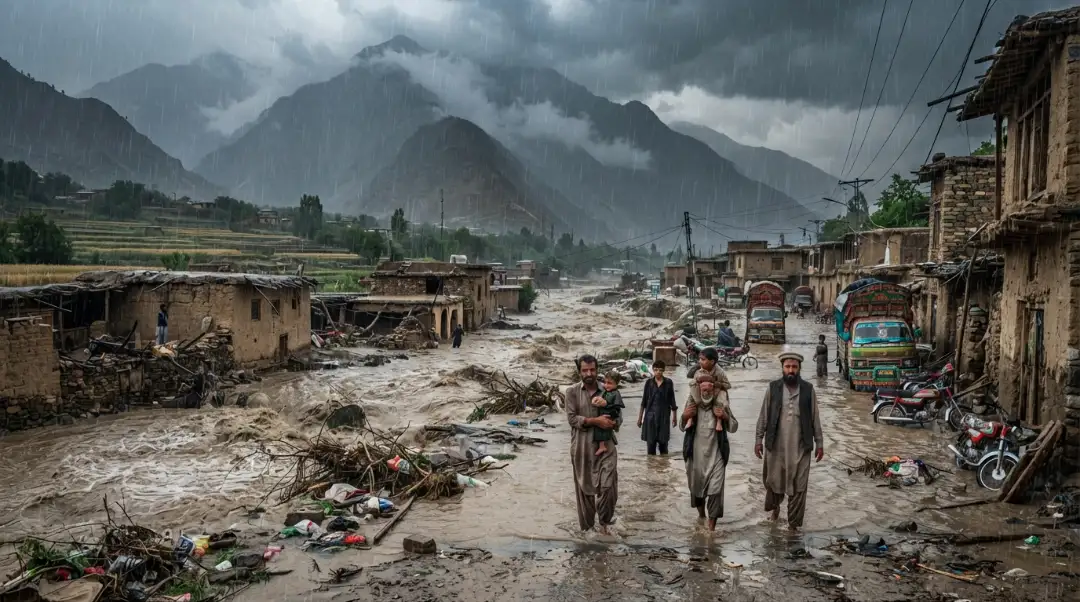
Rain and flash floods in KP have tragically resulted in the loss of six lives and injuries to 19 individuals. This natural calamity has sparked a discussion on the vulnerability of the region and the coping mechanisms that need to be reinforced to handle such disasters. Both government agencies and local communities must focus on understanding the patterns and implementing effective strategies to minimize future risks associated with rain and flash floods.
Understanding Rain and Flash Floods
Rain and flash floods are sudden weather events that can cause significant destruction. In KP, these events are caused by intense rainfall over short periods. Flash floods happen when the ground cannot absorb the excess water, leading to rapid water accumulation in low-lying areas.
The region of KP is prone to such events due to its topographical characteristics and unpredictable weather patterns. With climate change becoming an increasingly concerning issue, incidents of flash floods have become more frequent, necessitating robust environmental management and disaster preparedness.
Historical data illustrates that these floods can disrupt daily life, uproot communities, and cause severe economic losses. Therefore, understanding their occurrence is crucial to developing effective prevention and response strategies.
Geographically, KP’s mountainous terrain often funnels rainwater rapidly towards valleys, exacerbating the flooding. Such characteristics require tailored strategies that take into account the unique landscapes and meteorological conditions of the region. Moreover, the traditional understanding of these phenomena needs to incorporate scientific advancements to accurately predict events and prepare accordingly.
Research into the hydrological cycle in KP also reveals that human activities such as deforestation and poor land management practices have exacerbated the problem, leading to increased surface runoff. Therefore, sustainable environmental practices must be integrated into flood management plans.
The Impact on Communities
The human toll from rain and flash floods can be devastating. The recent incidents in KP highlight the vulnerability of communities living in flood-prone areas. Loss of life and injuries are the most immediate consequences, but the aftermath extends to the displacement of people, loss of homes, and destruction of infrastructure.
Economic activities come to a standstill in affected areas, affecting livelihoods. Agricultural losses are significant, impacting food security and income for local residents. The emotional and psychological impact of losing loved ones and homes cannot be understated.
Community resilience is severely tested during these times, as resources are stretched thin. It’s crucial for local governments to implement immediate relief measures and provide long-term support to mitigate these impacts.
The social fabric of communities is often strained as well. The displacement leads to cultural disintegration and challenges in maintaining community bonds. Moreover, schools and healthcare facilities are often among the structures damaged, further delaying recovery and affecting long-term well-being.
Additionally, marginalized groups, such as women and children, suffer disproportionately during such disasters. Their needs and voices must be prioritized in relief efforts to ensure inclusive recovery. Addressing these issues holistically involves not just rebuilding structures but also restoring lives by addressing social and psychological impacts.
The Role of Government Agencies
In the wake of such disasters, government agencies play a critical role. They are responsible for coordinating rescue operations, providing relief materials, and rehabilitating affected populations. The effectiveness of their response can significantly influence recovery times and the overall impact on communities.
In KP, the coordination between various governmental bodies, including the National Disaster Management Authority (NDMA) and local agencies, is crucial. Their preparedness plans must be regularly updated to include early warning systems and efficient evacuation strategies.
The government must also invest in infrastructure improvements to withstand such natural calamities, such as constructing proper drainage systems and reinforcing embankments around vulnerable areas.
Policy formulation and implementation are other critical areas where governmental bodies must focus. Legislation that supports sustainable development and risk reduction can play a significant role in mitigating future impacts. Additionally, engaging local authorities and communities in planning ensures that efforts are well-aligned with on-the-ground realities.
Moreover, transparency and accountability in the deployment of resources and in the execution of disaster management plans are essential. Public trust and cooperation are vital for effective disaster response, and this can only be achieved through clear communication and responsible governance.
Community Preparedness and Resilience
Building community resilience is essential for reducing the risks associated with rain and flash floods. Local communities should be actively involved in disaster preparedness efforts, including participating in training sessions and awareness programs.
Community-based disaster risk management (CBDRM) can be an effective approach in KP. This involves educating residents about the signs of impending floods, teaching them how to respond effectively, and organizing local task forces for rapid response.
Communities with a high level of preparedness are more likely to respond effectively, thus minimizing losses and speeding up recovery processes. Empowering these populations to take proactive measures is vital for sustainable disaster management.Grassroots movements and local leadership can be potent forces in building resilience.
Communities that leverage traditional knowledge along with modern practices often find themselves better equipped to handle emergencies. Training sessions should be regular and inclusive, ensuring every community member is informed and capable of taking appropriate action.
Furthermore, fostering a culture of preparedness can extend into everyday life, where communities routinely practice emergency drills, maintain emergency supply kits, and cultivate cooperation among neighbors. This preparedness not only helps in emergencies but strengthens community ties and collective problem-solving capabilities.
Climate Change and Its Influence
Climate change is a major contributing factor to the increased frequency and severity of rain and flash floods in KP. Alterations in weather patterns have made rainfall more unpredictable, and global warming is causing more intense and heavier downpours.
This necessitates a shift in how these disasters are managed. Long-term climate adaptation strategies must be adopted to deal with these changes. Planting trees and conserving natural habitats help reduce the impact of floods.
Understanding the link between climate change and weather anomalies is crucial for policymakers, who must implement policies that mitigate the long-term effects of these environmental changes.
The importance of addressing climate change at both local and global levels cannot be overstated. Localized adaptation, including improvements in water management and agricultural practices, can mitigate some effects. However, global cooperation in reducing greenhouse emissions is critical to addressing the root causes of climate instability.
Research and education on climate-resilient crops and agriculture can also support communities in adapting to changing weather conditions. Policies encouraging sustainable agricultural practices not only help mitigate the impact of floods but also contribute to economic stability and food security.
Infrastructure Development
The role of infrastructure cannot be overstated in managing rain and flash flood impacts. In KP, outdated or insufficient infrastructure is a significant factor in the damage caused by these floods.
Investing in modern infrastructure that can withstand severe weather conditions is necessary. This includes developing better drainage systems, flood barriers, and maintaining roads and bridges that are crucial during evacuations.
Proper urban planning and zoning are also critical to ensure that new constructions are safe and do not contribute to further ecological degradation, which can exacerbate flood risks.
Beyond physical infrastructure, digital infrastructure for communication and data analysis can improve preparedness and response. Building resilient communication networks ensures continuous connection and coordination during disasters, which is essential for effective disaster management.
Collaborative efforts between engineers, ecologists, and urban planners can lead to innovative solutions that not only protect against floods but also enhance the overall quality of urban environments. By incorporating green spaces and permeable surfaces, cities can better manage stormwater naturally, benefiting both the ecosystem and the urban population.
The Role of Technology
Advancements in technology provide new tools in the fight against natural disasters. In KP, utilizing technology for early warning systems can save lives and minimize damage. Weather prediction models, geographic information systems (GIS), and remote sensing are valuable in tracking and responding to rain and flash floods.
Mobile applications and alert systems can keep residents informed and ready to evacuate if necessary. These technologies must be integrated into the existing disaster management frameworks to enhance response capabilities.
Encouraging the use of technology in both pre-disaster and post-disaster situations helps in efficient recovery and rehabilitation processes, allowing for a quicker return to normalcy for affected communities.
Further integration of artificial intelligence in data analysis can enhance the prediction and visualization of flood events, allowing for more accurate forecasting. Innovations in sensor technologies also offer real-time data monitoring, providing valuable information on water levels and environmental conditions.
Additionally, technology can facilitate community-driven information sharing, where citizens contribute real-time data through mobile networks, enhancing situational awareness and helping authorities prioritize response efforts more effectively.
Case Studies and Lessons Learned
Analyzing past incidents can provide invaluable insights. Several regions worldwide, similar to KP, have experienced rain and flash flood disasters. Lessons learned from these can help in formulating better strategies.
For example, countries that have invested in robust dam systems and early warning alerts have successfully minimized their impact. Communities that actively engage in preparedness programs often report lower casualty numbers.
These case studies underscore the importance of learning from past experiences to build a resilient infrastructure and a proactive community that can mitigate future risks.
Consider the example of Japan, where precision in planning and a culture of preparedness have greatly reduced the impact of natural calamities. Their community drills and well-established alert systems serve as inspiring models for regions like KP.
In contrast, comparisons with regions struggling with inadequate infrastructure or response mechanisms highlight the weaknesses that can be addressed through investment and policy changes. Collaborating with expert organizations to study these examples in detail can catalyze improved local practices and systems.
International Collaboration and Support
Natural disasters know no boundaries, and international collaboration is essential in managing them. KP can benefit from partnerships with international bodies and neighboring countries to exchange knowledge and resources.
Collaborative projects focusing on weather forecasting, flood control engineering, and disaster management training can enhance local capabilities. Financial and technical support from international aid organizations can also assist in recovery efforts.
Strengthening global partnerships is a step forward in building a comprehensive network to tackle environmental challenges, ensuring that regions like KP are not left vulnerable to the whims of nature.
Sharing research findings and collaborative technology development can offer profound benefits. Access to international expertise helps in devising solutions that are innovative and culturally acceptable, thus enhancing their effectiveness and adoption locally.
Humanitarian aid must be fluid, adapting to the immediate and evolving needs of affected communities. Transparent, accountable partnerships can ensure that resources reach those most in need, with an emphasis on developing self-reliance over time.
Moving Forward: Strategies for the Future
As KP grapples with the aftermath of rain and flash floods, creating future strategies is paramount. These should include a combination of technology, community involvement, infrastructure development, and policy-making to mitigate the risks associated with such disasters.
Establishing a resilient framework that accommodates climate change adaptations, promotes sustainable development, and strengthens community engagement is essential. Continuous assessment and adjustment of these strategies will ensure they remain effective.
The path forward involves not only addressing immediate needs but also preparing for long-term challenges. By integrating lessons learned and fostering collaboration, KP can build a safer and more resilient future against natural calamities.
A critical component of future strategies is policy integration, where national plans align with local needs and resources. Developing comprehensive risk assessment studies and incorporating them into urban planning and economic development initiatives can guide investment in the most needed areas.
Moreover, community involvement is crucial in the iterative process of planning and implementation. Continuous dialogue, feedback mechanisms, and inclusivity will help develop adaptive strategies that are dynamic, transparent, and widely supported.
Frequently Asked Questions
What causes rain and flash floods in KP?
Rain and flash floods in KP are caused by intense and prolonged rainfall that the ground cannot absorb quickly, leading to rapid water accumulation.
How do these floods impact local communities?
These floods lead to casualties, displacement, destruction of homes and infrastructure, and can severely disrupt local economies and livelihoods.
What role does climate change play in these incidents?
Climate change contributes to unpredictable weather patterns and more intense rainfall, increasing the frequency of flash floods.
How can technology aid in managing these disasters?
Technology aids through early warning systems, weather prediction models, and mobile alerts to prepare and protect communities.
What strategies can be implemented to prevent future incidents?
Strategies include infrastructure improvement, community preparedness, climate adaptation, and international collaboration to enhance disaster resilience.




 Muhammad Abdullah |
July 2, 2026
Muhammad Abdullah |
July 2, 2026