





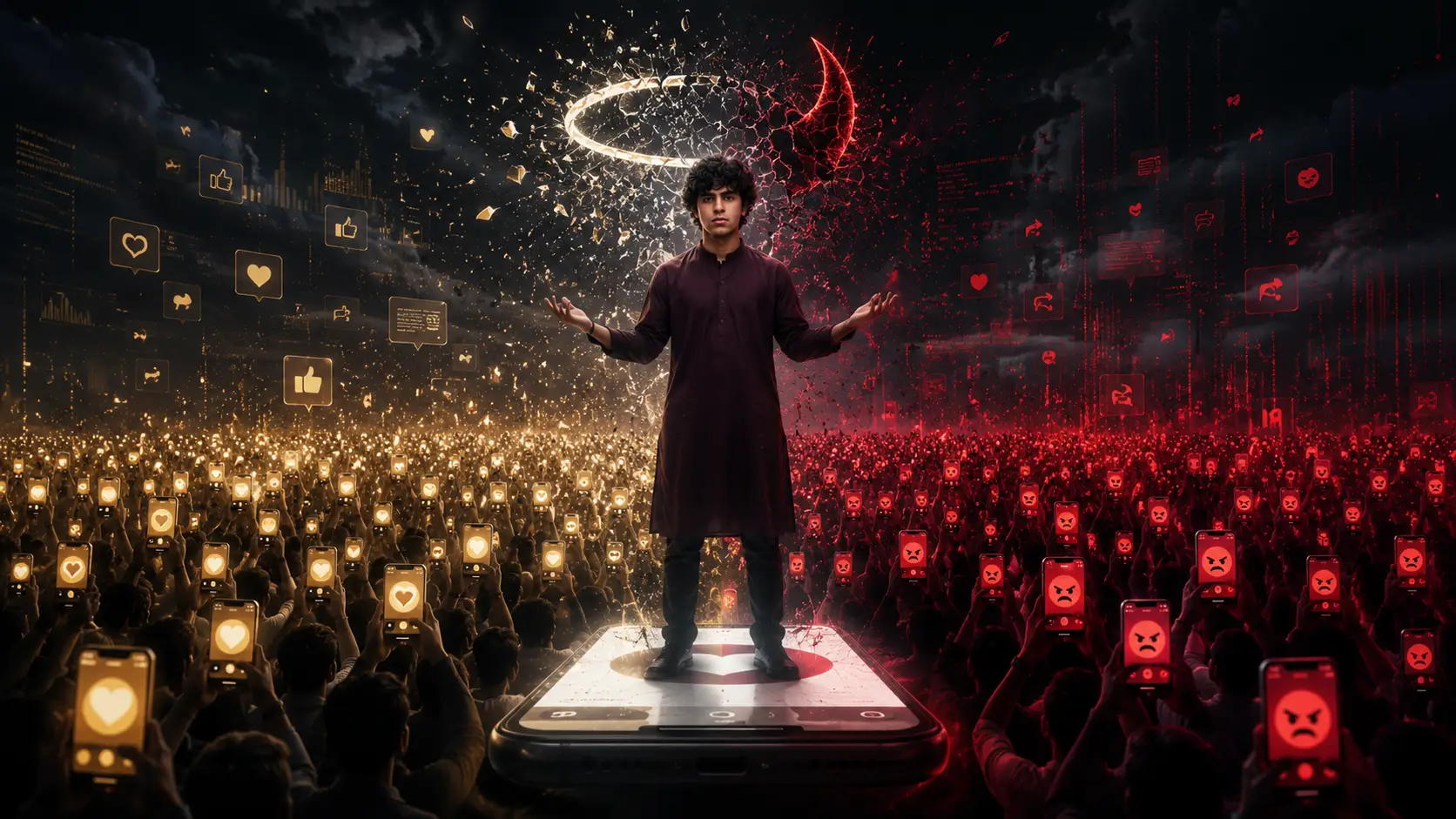

In the digital age, the concept of “alternative truth” has all but vanished. We no longer occupy the middle ground. We either elevate a person to the status of an angel overnight, or we drag them through the streets as a villain by morning. There is no nuance, no patience, no due process only the violent swing of a public pendulum that rewards spectacle and punishes complexity. The recent Salman Sohail controversy is not just the story of one individual; it is a living, breathing case study of our society’s Collective Psychological Collapse.
The most uncomfortable question this incident raises is this: How did an ordinary man, made famous by a single viral video, manage to collect somewhere between 20 to 25 lakh rupees in donations without any audit, without a registered trust, without a legal framework, and without a single institutional safeguard? Was this his brilliance, or was it our collective failure to think critically before we tap “send”?
The Halo Effect, When One Brave Act Becomes a License to Trust
Psychology offers a clean explanation for what happened in the first phase of this saga: The Halo Effect. This cognitive bias, first studied by psychologist Edward Thorndike nearly a century ago, describes the way our brain takes a single positive trait and unconsciously projects it onto every other dimension of a person’s character. If someone is good-looking, we assume they are also intelligent. If someone is athletic, we assume they are also disciplined. And if someone shouts back at a rude waiter on camera, we assume they must also be honest, trustworthy, and fit to handle public money.
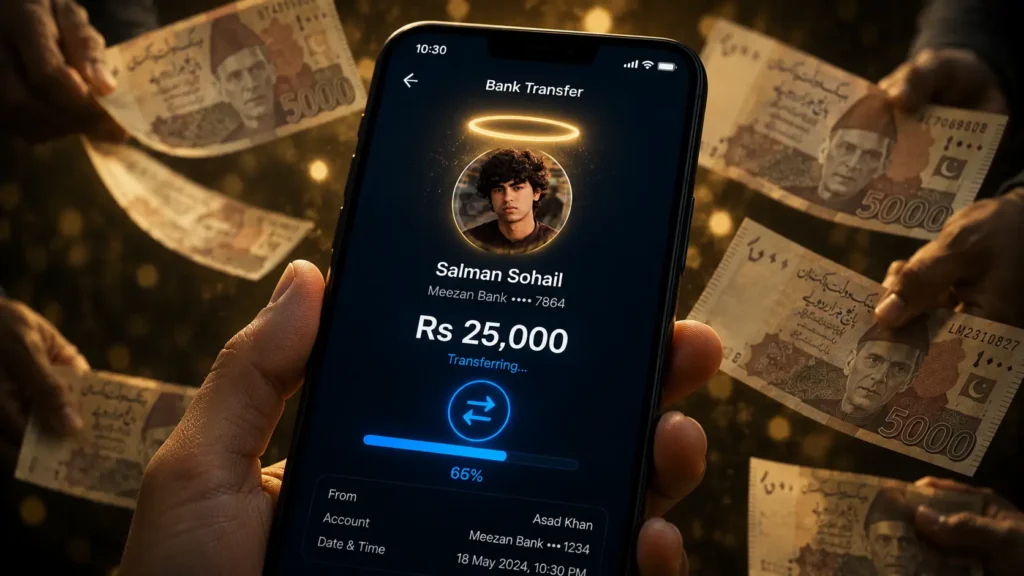
When Salman Sohail raised his voice in that viral confrontation, the public did not just praise him they crowned him. They placed a halo on his head and decided, on the basis of thirty seconds of footage, that he was a “Masiha,” a savior figure worthy of their hard-earned savings. The first rule of financial transparency is brutally simple: public money should never enter a personal bank account. It must move through registered organizations, audited trusts, or regulated platforms. Yet thousands of people transferred their money directly to him, because they had already decided his character was settled. They chose sensation over legitimacy, emotion over verification.
The Horn Effect and the Mechanics of Social Identity
Then the tide turned. A few chats leaked. A few accusations surfaced. And in a single afternoon, the same man who was hailed as a hero became the most hated face on Pakistani social media. This phenomenon is the inverse of the Halo Effect psychologists call it The Horn Effect. The moment we discover one negative trait, our brain rewrites the entire narrative. The same voice that sounded “brave” yesterday now sounds “arrogant.” The same confidence that seemed “righteous” now seems “manipulative.”
But to understand why an entire population flipped at once, we need a second concept: Social Identity Theory, developed by Henri Tajfel in the 1970s. Human beings are wired to belong. We derive our sense of self not just from who we are, but from which tribe we belong to. When everyone around us is praising someone, joining the praise feels like membership. When everyone is condemning someone, joining the condemnation feels like loyalty. Yesterday you were applauding because the crowd applauded. Today you are throwing stones because the crowd is throwing stones. And in both cases, you have done very little independent thinking.
Research on social media behavior is even more alarming. Studies from MIT have shown that outrage and morally charged content spreads roughly six times faster than neutral information online. Our problem is no longer a lack of information it is the overload of information that paralyzes our ability to discern, verify, or reflect. The algorithm doesn’t reward truth; it rewards intensity.

The Hard Questions We Refuse to Ask Ourselves
The most important question is not about Salman Sohail. It is about us. Why don’t we think before we donate? Why don’t we ask basic questions about psychology, ethics, and financial law before participating in viral movements? Why don’t we know that legitimate public fundraising in Pakistan requires registration with the SECP, or at minimum a recognized trust with audited accounts and a public board?
Why do we keep forgetting that the person screaming the loudest into a camera is not necessarily a leader they may simply be an attention seeker who has learned how to weaponize emotion? We have stopped reading ethics. We have stopped studying law. We have stopped questioning sources. And precisely because we have abandoned the basic tools of critical reasoning, we have become puppets in the hands of so-called influencers who understand our psychology far better than we understand it ourselves.
The Salman Sohail incident is not a one-off scandal. It is a warning. It is a flare shot into the night sky telling us that something is deeply broken in how we form opinions, how we extend trust, and how we hand over our wallets to strangers on the basis of a thirty-second clip.
The way forward is not complicated, but it requires discipline. Pause before you praise. Verify before you donate. Question before you condemn. Read before you react. And most importantly — never outsource your judgment to an algorithm, because the algorithm does not care about truth. It only cares about engagement, and engagement is fueled by your emotion.

Final Thought
The next time a viral hero appears on your timeline, ask yourself one question before you tap, share, or transfer: Am I responding to evidence, or am I responding to a feeling? Because as long as you remain emotional, you remain usable. And in the digital economy, being usable is the most expensive thing you can be.
The choice between trend and truth is now a daily one. Choose wisely.