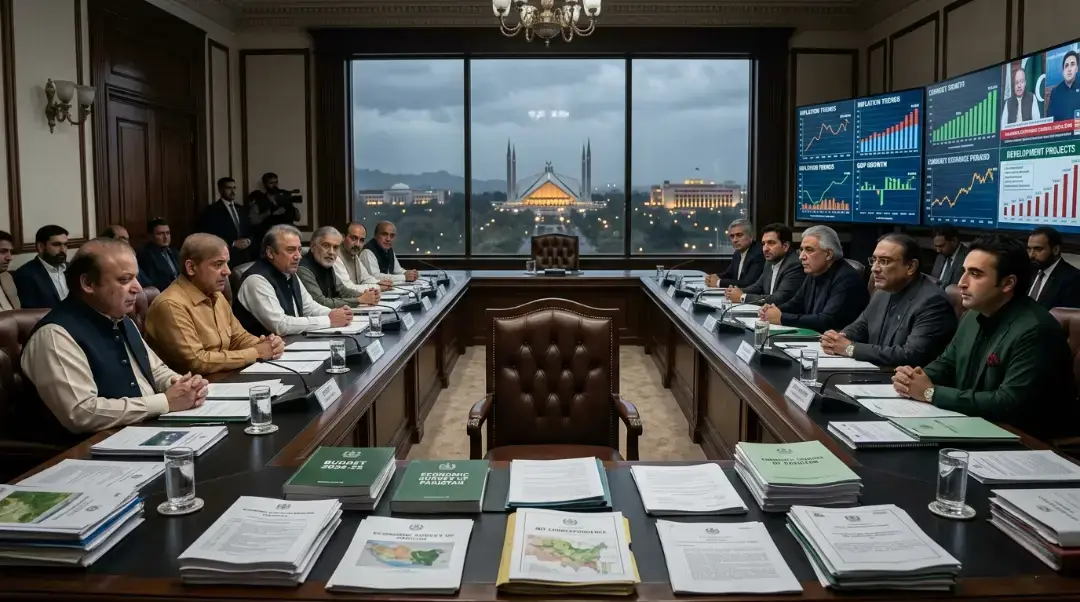
The recent postponement of the National Economic Council (NEC) meeting has shone a spotlight on the ongoing tensions between Pakistan’s major political entities, the Pakistan Muslim League-Nawaz (PML-N) and the Pakistan Peoples Party (PPP). This delay underscores the challenges facing coalition politics in Pakistan, where historical rivalries and differing agendas can impede governmental progress. In this context, it’s critical to explore the implications of these unresolved issues and what it means for the future of political stability and economic planning in the country.
The Heart of the Dispute
At the center of the current postponement are disagreements and unaddressed conflicts between the PML-N and the PPP. Though alliances in Pakistani politics are not new, the dynamics within this particular coalition highlight a broader struggle for influence and policy direction. Each party has diverse priorities; the PML-N tends to focus on infrastructure and macroeconomic stability, whereas the PPP often prioritizes social welfare and grassroots development. These differences, while not insurmountable, have proved to be a sticking point, preventing consensus on crucial economic decisions that the NEC is tasked with overseeing.
The Broader Implications
The NEC’s inability to meet as planned is more than just a political squabble it’s a significant roadblock to addressing Pakistan’s economic challenges. The council is crucial for setting the strategic direction for economic policies, and its inaction could stall progress on important issues like inflation control, employment, and fiscal consolidation. Moreover, investors and international partners closely watch these developments, and prolonged instability could discourage foreign investment, thereby compounding existing financial woes.
Historical Context and Future Outlook
The history of the PML-N and PPP’s contentious relationship is rich with examples of cooperation and conflict. Past alliances have often been marked by short-term collaboration overridden by long-standing ideological and policy differences. Looking ahead, the current impasse might serve as a catalyst for reassessing coalition strategies. Effective mediation, perhaps from a neutral entity, could realign priorities while ensuring that pressing economic needs are met. This requires political maturity and a commitment to transparent negotiation processes, aiming for sustainable governance beyond political gains.
The Way Forward: Navigating Political Challenges
As Pakistan grapples with this political stalemate, the way forward involves embracing dialogue and compromise. Leaders from both parties must recognize the overarching need for unity in economic policymaking, essentially prioritizing national prosperity over party politics. This might include setting up interim committees to address specific issues, thereby reducing the load on the NEC and enabling focused discussions. With a strategic approach, these unresolved tensions could transform into opportunities for strengthening democratic processes and fostering a more resilient political environment.
Conclusion: A Turning Point for Pakistani Politics?
The postponement of the NEC meeting is not just a political hiccup but a critical indicator of the need for reform in coalition dynamics. Pakistan stands at a crossroads where the decisions made today will influence both its economic vitality and the robustness of its democratic institutions. By addressing these unresolved issues thoughtfully and strategically, Pakistan has the opportunity to not only resolve current tensions but also build a more unified and forward-looking political structure.
Frequently Asked Questions
What is the significance of the NEC in Pakistan’s government?
The National Economic Council (NEC) plays a vital role in shaping Pakistan’s economic policies and strategies. It serves as a platform for key economic decision-making, bringing together different stakeholders to discuss and approve developmental frameworks.
Why was the NEC meeting postponed?
The meeting was postponed due to unresolved disputes between the Pakistan Muslim League-Nawaz (PML-N) and the Pakistan Peoples Party (PPP). These disagreements have created a deadlock, preventing consensus on economic policy matters.
How could this postponement affect Pakistan’s economy?
The delay in the NEC meeting could stall important economic decisions, potentially affecting inflation control, job creation, and fiscal policies. This could also impact investor confidence and foreign investment in the country.
What can be done to resolve the disputes between PML-N and PPP?
Efforts to resolve these disputes could involve setting up mediation processes or interim committees to specifically address contentious issues. Dialogue and compromise are essential to finding common ground and moving forward collaboratively.
Is this issue indicative of larger problems in Pakistani politics?
Yes, the current stalemate reflects broader challenges in coalition governance in Pakistan, including ideological differences and power struggles. Addressing these issues is crucial for ensuring stable political and economic governance in the country.


 Muhammad Abdullah |
June 8, 2026
Muhammad Abdullah |
June 8, 2026