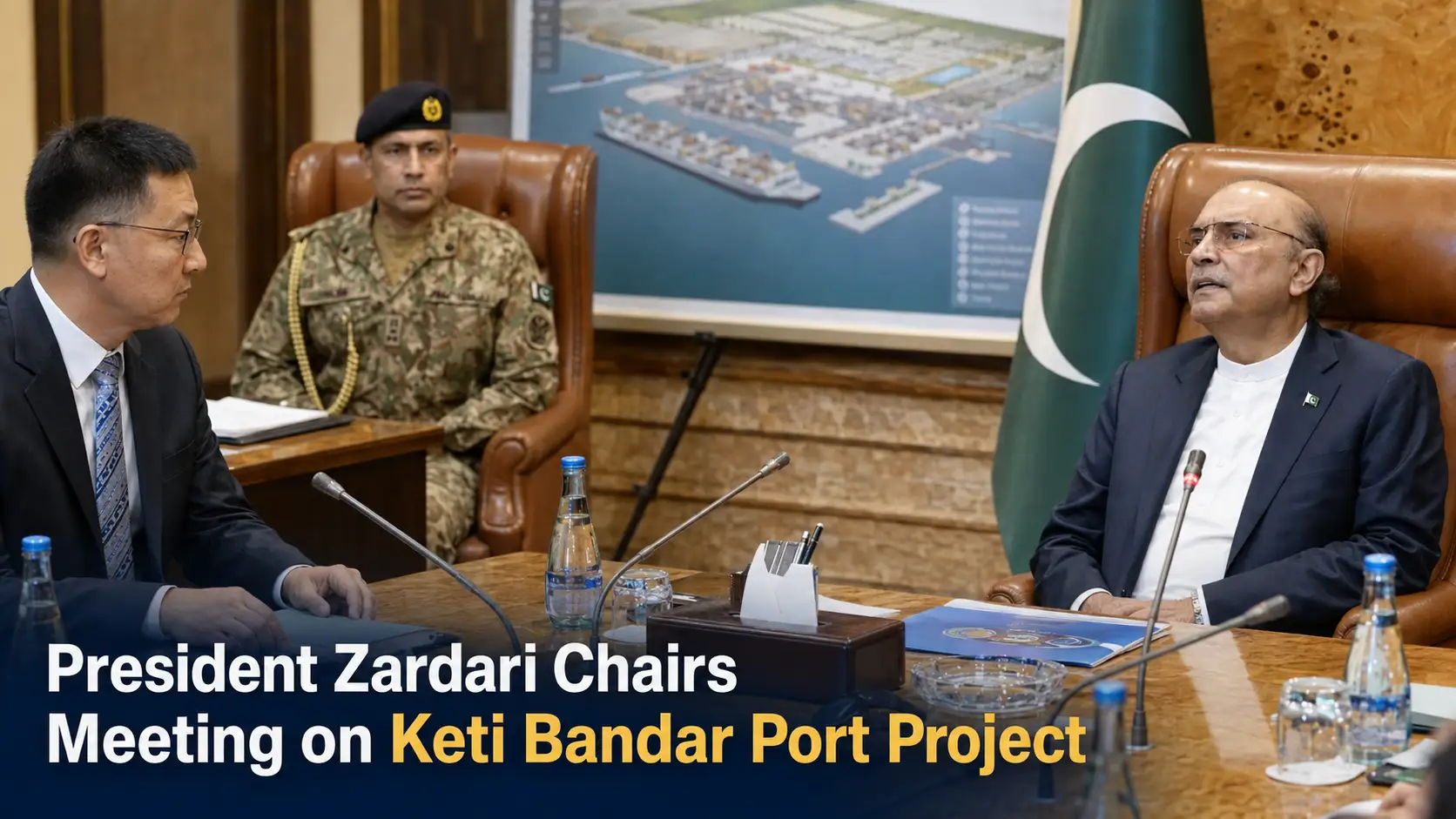
The Keti Bandar Port project is a vital initiative that has captured significant attention in Pakistan’s development landscape. Recently, President Zardari chaired an important meeting to discuss various aspects of the Keti Bandar Port project, aimed at enhancing Pakistan’s maritime trade capabilities. This venture not only aims to facilitate shipping but also intends to boost economic activities in the region, potentially creating thousands of jobs and spurring local development.
The meeting gathered key stakeholders, including government officials, maritime experts, and investors, all of whom shared insights and concerns about the ongoing and future phases of the port development. This article delves deep into the intricacies of the Keti Bandar Port project, its historical context, the current goals set by the government, and the broader implications for Pakistan’s economic future.
The Historical Context of Keti Bandar Port Project
To fully appreciate the Keti Bandar Port project, it is essential to understand its historical backdrop. The concept of developing Keti Bandar has been a part of economic discussions in Pakistan for several decades. Located on the Arabian Sea, Keti Bandar was initially identified as a strategic location due to its deep water capabilities. However, despite its potential, various political and administrative hurdles delayed its development.
The early discussions around Keti Bandar often highlighted the need for a port that could complement Karachi’s existing port facilities, which are frequently overwhelmed by increasing shipping traffic. The project’s relevance has only intensified, particularly in light of emerging economic challenges and the need for alternative trade routes. A modernized Keti Bandar Port could alleviate pressure from Karachi Port, enhancing efficiency and reliability within the country’s maritime operations.
Moreover, the port’s development fits within the context of broader regional initiatives, including China’s Belt and Road Initiative (BRI). The nexus between local projects like Keti Bandar and international partnerships could redefine Pakistan’s geopolitical standing, paving the way for increased trade and investment flows.
Historically, Keti Bandar was once envisioned not just as a commercial hub but also as a cultural and economic center that could rival other major ports in the region. Early colonial records show that this area held prominence due to natural resources and its strategic maritime location, yet political instability in the region hindered consistent development. Revisiting historical integration plans and designing them into future strategies can offer invaluable insights not just for economic gains but for preserving cultural heritage and fostering regional pride.
Key Objectives of the Keti Bandar Port Project
The meeting chaired by President Zardari identified several key objectives of the Keti Bandar Port project. First and foremost, the aim is to enhance maritime trade capabilities. By developing world-class facilities, the project seeks to accommodate larger vessels, thereby improving Pakistan’s competitiveness in international shipping.
Another objective is the promotion of local infrastructure development. Alongside the port, ancillary facilities such as roads, rail links, and logistics hubs are planned to ensure seamless connectivity between the port and inland destinations. This infrastructure upgrade is projected to stimulate local economies, as improved transportation will facilitate the movement of goods and create numerous job opportunities.
Lastly, the Keti Bandar Port project aims to minimize the environmental impacts typically associated with large-scale developments. Engaging with environmental experts during the planning phases will ensure compliance with sustainable practices. This holistic approach aligns with global standards and mitigates adverse effects on local communities and ecosystems.
Furthermore, the project serves as a catalyst for technological advancement within the maritime sector. It aims to integrate advanced logistics and automated systems for better cargo handling and operations management. By focusing on technological integration, the port can enhance its operational efficiency and reduce costs, setting a benchmark for future infrastructure projects in the region.
A critical, yet often unstated, objective is fostering regional socio-economic equity. By providing access to new economic opportunities and alleviating traffic at existing ports, Keti Bandar aims to bolster smaller enterprises and empower local stakeholders, ensuring that economic benefits extend beyond monopolistic entities and reach a broader base.
Stakeholders Involved in the Keti Bandar Port Project
The Keti Bandar Port project brings together a diverse array of stakeholders, all of whom play crucial roles in its development. Government agencies, including the Ministry of Maritime Affairs and local municipal authorities, are key players in the planning and execution phases. Their involvement ensures that the project aligns with national policies and local regulations.
Private sector stakeholders, including logistics companies and construction firms, are also pivotal. Their expertise and investment capabilities will be instrumental in bringing the project to fruition. Public-private partnerships (PPPs) are expected to facilitate this collaboration, allowing for streamlined operations and resource allocation.
Lastly, international investors are keenly interested in the Keti Bandar Port project due to its potential for high returns. Attracting foreign direct investment (FDI) will not only add financial resources but also bring in global best practices. The collaborative nature of this project can set a precedent for future public-private ventures in Pakistan.
In addition to these groups, local communities are essential stakeholders whose inputs are crucial for sustainable development. Engaging local populations early in the planning process ensures that their needs and concerns are addressed, reducing potential conflicts and enhancing the project’s long-term viability. This inclusion creates a sense of ownership among local residents, which can drive civic pride and support.
Academia and research institutions also play influential roles in the project by contributing research on logistics optimization, environmental impact assessment, and technological innovations. By partnering with universities and think tanks, the Keti Bandar Port project can access cutting-edge research and innovation, creating a dynamic ecosystem of learning and growth.
Economic Impact of the Keti Bandar Port Project
Upon its completion, the Keti Bandar Port project is set to have a far-reaching economic impact. By enhancing maritime trade capabilities, it promises to increase Pakistan’s export volume, particularly in industries such as textiles, agriculture, and electronics. Boosted export activities could help Pakistan improve its balance of trade, contributing to economic stability.
The port’s development is also expected to create thousands of direct and indirect job opportunities. From construction roles during the initial phases to long-term employment in operations and logistics, the job creation aspect holds significant promise for local communities. This will not only reduce unemployment rates but also elevate living standards in the region.
Furthermore, the increased economic activity surrounding Keti Bandar Port is anticipated to stimulate ancillary industries. Logistics, manufacturing, and services will likely flourish as businesses seek to capitalize on the improved trade routes. This ripple effect will help diversify the local economy and reduce reliance on a limited number of industries.
Beyond immediate economic gains, the port project is poised to enhance trade competitiveness on a global scale. By offering efficient and modern facilities, it can attract multinational companies and shipping lines, thereby increasing Pakistan’s integration into global supply chains. International collaborations fostered through the port can potentially lead to trade agreements that benefit multiple sectors of Pakistan’s economy.
Increased trade activities could also boost government revenues through taxes and tariffs, providing additional resources for public services and infrastructure development. These fiscal improvements can support broader national objectives, such as education and health, by redirecting economic benefits towards holistic societal growth.
Also Read This Article : Government Perfectly Shuts Down Rumour Mill About Imran Khan
Challenges and Risks Associated with the Keti Bandar Port Project
Despite its promising prospects, the Keti Bandar Port project is not without challenges. One major concern revolves around funding. While the project has attracted interest from various investors, securing reliable and sustained funding is critical to ensuring that all phases are completed in a timely manner.
Another significant challenge is navigating bureaucratic hurdles. Delays in obtaining necessary permits and clearances can stall progress. Efficient project management will be essential in addressing these challenges and ensuring that all stakeholders can work cohesively towards shared objectives.
Environmental concerns also pose challenges. While efforts toward sustainability are being prioritized, unforeseen ecological impacts could prompt backlash from local communities and environmental agencies. Addressing these concerns transparently will be crucial in maintaining public support and trust in the project.
Furthermore, geopolitical tensions in the region can affect the project’s trajectory. Political instability or strained international relations may impede investor confidence and supply chain logistics. Strategic risk planning and diplomatic engagement will be crucial in mitigating these potential threats.
The risks associated with technological integration, too, are noteworthy. Adoption of new technologies might face resistance due to lack of familiarity, and potential cyber-security risks could target critical infrastructure. Proactive measures, including robust training programs and investments in cybersecurity, will be necessary to navigate these challenges successfully.
The Role of Technology in the Keti Bandar Port Project
In today’s rapidly evolving maritime sector, technology plays a pivotal role in modern port development. The Keti Bandar Port project will not only rely on traditional methods but will also incorporate cutting-edge technologies. Automation and digital tracking systems, for instance, can be integrated to enhance efficiency and reduce operational costs.
Smart logistics solutions can facilitate real-time monitoring of shipping activities, improving supply chain management. By fostering a technology-driven environment, the port can attract tech-savvy investors and businesses, creating a more competitive landscape.
Additionally, the integration of sustainable technologies, such as renewable energy sources and waste management systems, can set a benchmark for environmentally responsible port operations. By leveraging modern technology, Keti Bandar Port can position itself as a leader in trade while adhering to global sustainability goals.
Digital transformation can also enhance customs and administrative processes, reducing wait times and increasing the port’s efficiency. Implementing blockchain technology for transparent and secure transactions can revolutionize how documentation and tracking are managed, providing a seamless flow of trade through digital ledgers.
Furthermore, leveraging big data and analytics can enable predictive maintenance and smart decision-making. This data-driven approach can enhance operational planning, prevent downtime, and optimize resources, ensuring that Keti Bandar Port remains at the forefront of innovation in the maritime industry.
International Collaboration and the Keti Bandar Port Project
International collaboration is expected to significantly enhance the Keti Bandar Port project’s development. Bilateral agreements with countries looking to invest in Pakistani trade infrastructure can facilitate knowledge sharing and resource pooling. These collaborations could include technical expertise for port management and operational efficiencies.
Additionally, collaboration with countries along key shipping routes will help enhance regional connectivity. For instance, partnerships with Gulf nations could improve cargo transit times and reduce shipping costs, making Pakistan a more attractive trade partner.
Global trade organizations are likely to play a role as well, providing support in the form of funding and policy advisory services. By fostering a spirit of collaboration, Keti Bandar Port can aspire to become a strategic hub in international trade, enhancing Pakistan’s economic profile.
Moreover, engaging international partners in joint environmental initiatives can elevate the standard of project sustainability and community accountability. Creating forums for cross-border environmental agreements will ensure collective responsibility towards ecological preservation.
Strategic partnerships with global ports and logistical hubs can enhance learning and expertise sharing, fostering global best practices within Keti Bandar Port operations and ensuring alignment with international standards.
The Future of the Keti Bandar Port Project
Looking ahead, the future of the Keti Bandar Port project appears bright, contingent upon overcoming the outlined challenges. With strong political backing from leaders like President Zardari, along with the collective effort of stakeholders, the project has a clear trajectory toward completion. Timely execution of phases and effective stakeholder engagement will be crucial to building momentum.
In a broader sense, the successful development of the Keti Bandar Port project could transform Pakistan’s economic landscape. By driving growth in trade, infrastructure, and job creation, it can set the foundation for sustainable development. Furthermore, integration within global supply chains can give Pakistan a more prominent role in international markets.
The future also holds an opportunity for innovation. As industries continue to evolve, Keti Bandar Port can adapt to meet changing demands. By staying ahead of technological trends and industry standards, the project can maintain relevance and significance for years to come.
The port’s impact will likely extend beyond economic measures, influencing social and cultural domains as well. It has the potential to drive urban development in nearby regions, creating vibrant cultural and commercial centers that mirror world-class port cities globally.
By embracing a visionary approach, the Keti Bandar Port project can serve as a model for other regional port developments. Its evolution could transform not only the local marine economy but also the socio-political tapestry of South Asia, rendering Pakistan a world-class hub of maritime excellence.
Conclusion: A New Era for Pakistan’s Maritime Trade
The Keti Bandar Port project represents much more than just a development initiative; it signifies a pivotal shift in Pakistan’s maritime trade dynamics. Under the leadership of President Zardari, the potential for transformative change becomes apparent as stakeholders unite with shared objectives. This venture is critical not only for enhancing shipping capabilities but also for stimulating regional economic growth and improving the livelihoods of countless individuals.
The synergistic effects anticipated from this project underscore its importance. Job creation, infrastructure improvements, and enhanced international trade relationships can align with Pakistan’s broader economic goals. Moreover, the commitment to sustainability ensures that this development will respect environmental considerations while promoting growth.
As the Keti Bandar Port project moves forward, monitoring its progress and addressing challenges will be essential. By focusing on collaboration, innovative practices, and a long-term vision, Pakistan can aspire to enhance its geopolitical standing and strengthen its economic foundations. The Keti Bandar Port project is indeed a landmark initiative setting the stage for a prosperous maritime future.
Frequently Asked Questions
What is the Keti Bandar Port project?
The Keti Bandar Port project is an ambitious initiative aimed at developing a new deep-sea port in Pakistan to enhance maritime trade capabilities and boost regional economic activities.
Who is leading the Keti Bandar Port project?
President Zardari recently chaired a meeting evaluating the Keti Bandar Port project, highlighting its significance within Pakistan’s development agenda.
What are the main objectives of the Keti Bandar Port project?
The primary objectives of the Keti Bandar Port project include enhancing maritime trade capabilities, promoting local infrastructure development, and minimizing environmental impacts.
How will the Keti Bandar Port impact the local economy?
The Keti Bandar Port project is projected to create thousands of jobs, stimulate local industries, and contribute to economic stability through increased trade activities.
What challenges does the Keti Bandar Port project face?
Challenges facing the Keti Bandar Port project include securing funding, navigating bureaucratic hurdles, and addressing potential environmental concerns that may arise during development.




 Muhammad Abdullah |
August 24, 2026
Muhammad Abdullah |
August 24, 2026