





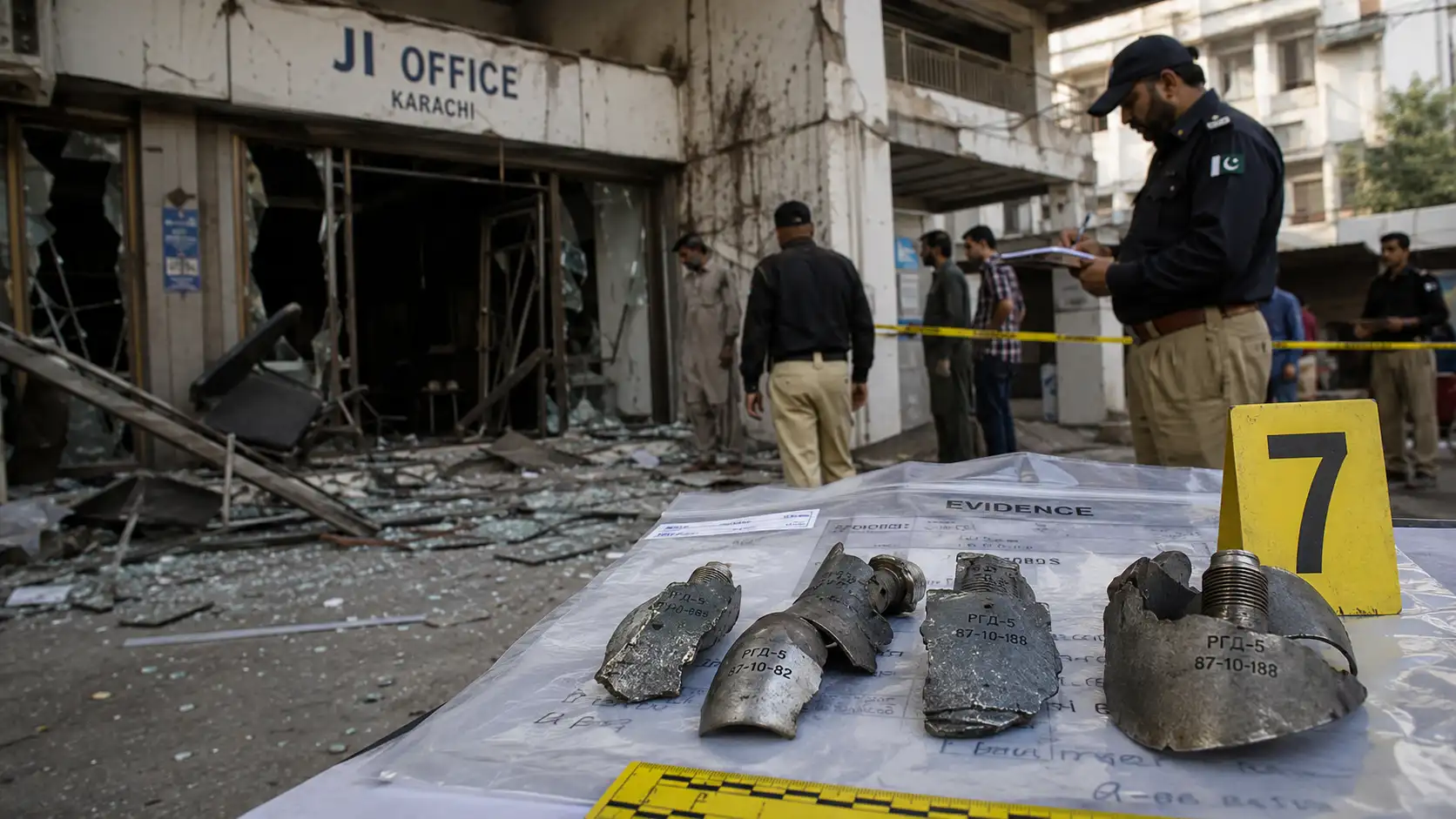

The recent attack on the JI Karachi office has unveiled a disturbing discovery: the presence of Russian grenade fragments. This revelation not only raises significant security concerns in the region but also points to larger geopolitical implications. The use of foreign-made weaponry in such attacks can suggest possible involvement of international elements or illicit arms trafficking networks. As authorities delve deeper into the investigation, understanding the roots and ramifications of this incident becomes paramount.
Overview of the JI Karachi Office Attack
The Jamaat-e-Islami (JI) Karachi office recently witnessed a violent attack that shook the local populace and ignited a nationwide outcry. Initial reports suggest that the assault was both strategic and well-coordinated, resulting in multiple casualties and significant property damage. The attackers targeted the office during peak hours to maximize impact, reflecting both audacity and a well-planned operation.
The discovery of Russian grenade fragments at the attack site has added a complex layer to the investigation. Bomb Disposal Units (BDU) meticulously gathered evidence, leading to suspicions of foreign involvement or advanced procurement networks. Stakeholders are now focused on deciphering the motives behind the attack and understanding its wider implications for the region.
The attack is being viewed in the context of rising political tensions and security challenges in Karachi. The city has witnessed various acts of violence in recent years, linked to political parties and criminal organizations. This incident further underscores the vulnerability and security risks within such political nerve centers.
Furthermore, this attack has generated significant dialogue among analysts and policymakers regarding the motivations underlying such acts. There is growing concern about the possible escalation of violence in the region and its impact on political stability. The choice of target, timing, and the weaponry used suggest calculated efforts to send a broader message, possibly intended to destabilize political dynamics or undermine specific factions.
In navigating these concerns, there’s an emphasis on examining historical precedents of violence in Karachi. Past attacks have often involved elements that seek to capitalize on the city’s socio-political pressures, thereby exacerbating underlying tensions. Thus, the importance of pinpointing exact motivations and understanding the broader socio-political undercurrents cannot be overstated in addressing this crisis.
Understanding Russian-Made Weapons in Global Conflicts
Russian-made weapons have a long history of being used in conflicts worldwide. Russia, as one of the largest arms exporters, distributes a wide range of military equipment, including grenades, firearms, and missiles. These weapons often find their way into volatile regions, either through legitimate government channels or via black markets.
In the context of the JI Karachi office attack, the presence of Russian grenade fragments suggests that the perpetrators had access to sophisticated weaponry. This access might have been facilitated through various means, including arms smuggling or illicit trading networks, which remain robust in many conflict-prone areas.
The implications of using foreign-made armaments in local conflicts are profound. It indicates potential external influence or support and raises questions about the sources these groups access. Moreover, it puts a spotlight on international arms control efforts and the challenges they face in curbing the spread of such weaponry.
Historically, Russian arms have played crucial roles in conflicts from the Middle East to South America. They often signify the presence of either direct or indirect geopolitical interests. By analyzing these patterns, experts discern the nuances of international relations, especially in regions where political or military tensions are prevalent.
In South Asia, where regional dynamics are already complex, the introduction of any foreign element considerably shifts the power equations. The discovery of Russian grenade fragments in Karachi echoes these global patterns, suggesting broader geopolitical maneuvers or intent. This aspect further necessitates a comprehensive investigation of arms trafficking networks that proliferate across borders, exploiting porous national security boundaries.
Potential Motivations Behind the Attack
Identifying the exact motivations behind the attack on the JI Karachi office involves examining multiple layers of political, social, and geopolitical factors. One potential reason could be the destabilization of Karachi’s political scene, where various factions vie for power and influence.
Another possible motivation might be to project dominance and convey a message of strength to rival factions. Such attacks are often used as tools in broader strategies to assert control or instigate fear among adversaries.
The involvement of foreign-made weaponry, like Russian grenades, also suggests possible international influences or backing. This raises questions about the potential geopolitical benefits that might arise from destabilizing a specific region within Pakistan.
On a broader scale, these motivations may be aligned with ongoing geopolitical tensions, where external elements aim to leverage regional instabilities for tactical gains. By undermining political entities or instigating chaos, these actors can accomplish strategic goals without directly engaging. This modus operandi aligns with various historical precedents where indirect involvement created decisively impactful outcomes.
The socio-economic context also plays a crucial role. Karachi, being an economic hub, naturally attracts divergent interests aiming to control financial and political assets. The tussle for such prized control often manifests in violent assertions, such as the attack in question. Understanding these intricate dynamics requires a deep dive into city-specific political alliances, economic hierarchies, and historical grievances, each of which can act as a potential catalyst for violence.
The Role of the Bomb Disposal Unit (BDU)
The Bomb Disposal Unit plays a crucial role in situations such as the JI Karachi office attack. BDU experts are trained to handle complex explosive devices and conduct thorough investigations of attack sites to gather valuable intelligence.
In this case, the BDU’s discovery of Russian grenade fragments was a key breakthrough in the investigation. This finding provided not only evidence of the attack’s nature but also pointed towards potential connections to external elements.
The expertise of the BDU is indispensable in piecing together such incidents. Their methods include detailed analysis of explosive residues and the study of blast patterns, all vital for forming a comprehensive picture of how the attack was executed.
Beyond the immediate investigation, the BDU’s role often involves preemptive measures, focusing on defusing potential threats before they culminate in attacks. This preventive strategy depends heavily on intelligence and collaboration with other enforcement agencies. By creating profiles of plausible threats, integrating technological advancements, and following trails of illicit networks, the BDU can preemptively ‘disarm’ prospective dangers.
Moreover, the BDU’s findings contribute significantly to the broader counterterrorism narrative. By identifying weapon origins, they point investigators towards obscure trafficking routes and networks. This investigative clarity helps refine both local and international strategies against arms smuggling, indicating pathways for policy formulations and regulatory enhancements aimed at tackling such global security threats.
Also Read this Article: Irregularities in Sindh Welfare Board Appointments
Implications for Regional Security
The use of Russian grenade fragments in the JI Karachi office attack has extensive implications for regional security. First and foremost, it highlights the ongoing vulnerability of political spaces to violent attacks and the challenges inherent in securing them.
The incident raises alarms regarding the influx of foreign-made weaponry into the region. It demonstrates how international arms trafficking continues to pose significant security threats, potentially escalating local conflicts.
Additionally, the attack could lead to an intensification of security protocols and generate discussion about the need for enhanced international cooperation to prevent illicit arms flows. This scenario underscores the importance of robust intelligence-sharing and diplomatic initiatives aimed at controlling the proliferation of such weapons.
Moreover, this incident necessitates reviewing regional security alliances and diplomatic relations. Ensuring the safeguarding of political spectrum requires coherent strategies involving regional allies who share the threat perception. Countries looking to stabilize the South Asian milieu must consider forging or strengthening existing partnerships centered on security and intelligence cooperation.
Given Karachi’s pivotal role in national and regional economics, any security lapse not only affects local dynamics but also extends to the wider economic and political spheres. International stakeholders, especially investors and strategic partners, closely monitor these realignments, understanding that regional instability directly impacts economic ventures and geopolitical interests.
Historic Context of Foreign-Born Conflicts in Pakistan
Paving the backdrop to the JI Karachi attack is a history of conflicts influenced by foreign elements in Pakistan. Over the decades, the nation has found itself as a battleground for various proxy wars tied to global geopolitics.
During the Cold War, Pakistan became embroiled in conflicts fueled by rivalries between superpowers, leading to long-term consequences still felt today. Taliban and Al-Qaeda influences further complicated the security landscape, often involving foreign support and funding.
This historic context primes Karachi and other volatile locations in Pakistan for ongoing threats, where international agendas sometimes clash violently with local dynamics, resulting in incidents like the attack in question.
Historically, Pakistan’s strategic location has rendered it a focal point in broader geopolitical debates. Its proximity to volatile regions has consistently attracted external powers aiming to exert influence, often resulting in proxy conflicts. These confrontations tend not only to engender immediate threats but also catalyze internal fissures, entangling the country in protracted wars and political upheavals.
The residual effects of past conflicts, such as the Soviet-Afghan War, continue to linger, echoing through present-day security challenges. Militant ideologies, fragmented political alliances, and a vibrant cadre of armed groups mark the current landscape, illustrating how foreign-induced conflicts previously shook and continue to ripple across Pakistan’s security sphere.
Global Reactions and Responses
The report of Russian grenade fragments found at the JI Karachi office attack site attracted global attention, prompting reactions from different stakeholders. This includes diplomatic exchanges between Russia and Pakistan as leaders express their concerns over the implications of such discoveries.
International observers and organizations have called for thorough investigations and transparency in uncovering the truth behind the attack. There’s also been a push for widening international coalitions to address global arms trafficking more effectively. This global reaction underscores a shared interest in countering terrorism and promoting stability in regions prone to conflict, with countries expressing willingness to support Pakistan in tackling such sophisticated threats.
Global discourse around the attack highlights a renewed focus on the vulnerabilities within geopolitical frameworks. In an increasingly interconnected world, singular disturbances reflect wider security cracks. As countries globally convene on the challenges revealed by such incidents, the need for collective action and shared intelligence deepens, underscored by common threats and mutual interests.
Such collective efforts often involve revisiting arms treaties, revising intelligence-sharing protocols, and pledging support for regional anti-terrorism initiatives. The concerted response toward this attack could serve as a model for dealing with similar future threats worldwide, showcasing the power of diplomatic and political unity in global security strategies.
Strengthening Counterterrorism Measures
With the attack underscoring the region’s vulnerabilities, there’s an immediate need to bolster counterterrorism strategies. This involves a multi-faceted approach combining intelligence, community policing, and technological advancements.
Investments in security infrastructure, particularly in political hubs, are crucial. Additionally, enhancing inter-agency coordination will help bridge gaps in response and preparedness for future incidents. Moreover, Pakistan can benefit from international cooperation in intelligence sharing and adopting best practices in counterterrorism that have proven effective in other regions. This collaborative effort is pivotal to ensuring long-term security and stability.
Counterterrorism efforts must also be attuned to emerging technological realities. Enhancing digital surveillance, employing predictive policing models, and integrating artificial intelligence into threat detection systems can significantly augment existing frameworks. These advancements connect on-ground realities with virtual oversight, creating a formidable counteracting mechanism against nefarious threats.
Local community involvement, too, plays an indispensable role in this strategy. Building trust with local populations, ensuring awareness of potential risks, and encouraging public cooperation can serve as a frontline deterrence against terror activities. Civic leaders, religious authorities, and community influencers must align with official efforts to create a cohesive security fabric that addresses threats from roots upwards.
Future Implications for Karachi’s Political Landscape
The discovery of Russian grenade fragments following the JI Karachi office attack will likely have far-reaching implications on the city’s political landscape. It highlights the continuing presence of security threats that can disrupt political activities.
Political entities may need to reassess their security protocols and strengthen collaboration with law enforcement to prevent future attacks. This scenario might also cause shifts in public trust and support, affecting political dynamics. As Karachi continues to navigate these challenges, assessing potential vulnerabilities and risks remains vital for ensuring the safety and resilience of its political fabric.
Moreover, in the aftermath of such an attack, there is likely to be heightened scrutiny on political parties and their affiliations, leading to strategic realignments within the power corridors. Future campaigns might witness a pivot toward security-centered narratives, where political entities emphasize resilience, security protocols, and counterterrorism prowess in their manifestos.
These implications extend beyond short-term political maneuverings, potentially reshaping Karachi’s long-term political ethos. An increased focus on reformative practices aimed at strengthening governance, enhancing transparency, and establishing equitable political structures could emerge. This evolution indicates that the current security challenges could inadvertently catalyze a broader movement toward an enhanced, conscientious political society.
Conclusion: The Path Forward
The JI Karachi office attack, marked by the discovery of Russian grenade fragments, serves as a stark reminder of the complex security challenges that Karachi and the broader region face. It underscores the necessity for comprehensive counterterrorism strategies and strengthened international cooperation to address the proliferation of foreign-made weaponry.
Going forward, robust policy initiatives and multi-faceted approaches are needed to tackle these intricate security threats. Enhancing arms control measures and fostering diplomatic dialogues will be essential in mitigating similar incidents.
Ultimately, ensuring peace and stability in Karachi and the wider region requires concerted efforts at both the national and international levels, aiming to curb illicit arms flows and secure vulnerable political spaces.
Integrating lessons learned from this incident into broader strategic frameworks ensures adaptability and foresight in anticipating future threats. Leveraging technological innovations alongside traditional strategies, fostering regional alliances, and nurturing societal trust are keys to enduring resilience. This holistic paradigm reflects a vision capable of generating long-term peace, harmonizing Karachi’s political landscape amidst contemporary global challenges.
Frequently Asked Questions
What are Russian grenade fragments?
Russian grenade fragments refer to pieces of explosive devices manufactured in Russia, often used in military and conflict settings worldwide.
How were the Russian grenade fragments discovered?
The Bomb Disposal Unit (BDU) discovered the fragments during an investigation at the JI Karachi office attack site, indicating advanced explosive use.
Why is the discovery of Russian grenades significant?
It suggests potential foreign involvement or the use of sophisticated trafficking networks, raising security concerns in the region.
What impact does this have on Karachi’s security policies?
The incident will likely lead to stricter security measures and enhanced counterterrorism efforts to prevent future attacks.
Is there a history of foreign-made weapons in Pakistan conflicts?
Yes, Pakistan has a history of conflicts influenced by foreign elements, often involving illicit arms and international geopolitical agendas.