






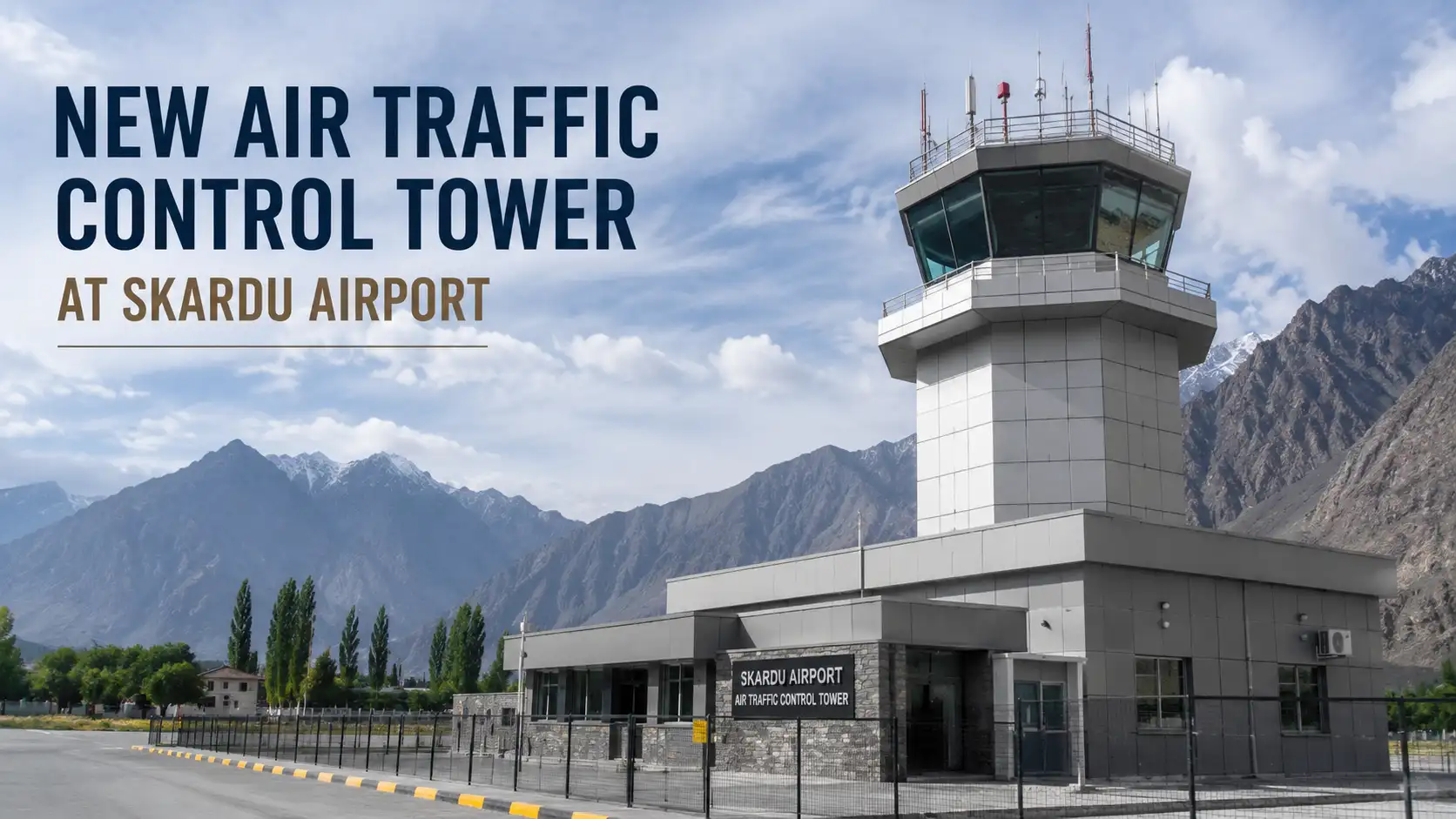

In an exciting development for aviation infrastructure, the Pakistan Airport Authority (PAA) has announced that it is inviting bids for the construction of a new air traffic control tower at Skardu Airport. As a critical component of the aviation network in the region, this project is anticipated to significantly enhance operational safety and efficiency at the airport. Located in the stunning and rugged terrain of Gilgit-Baltistan, Skardu Airport serves as a vital link for both domestic and potential international flights. With this new initiative, the PAA aims to modernize the facilities to meet growing aviation demands and improve air traffic management in this strategically important area.
The Importance of Skardu Airport
Skardu Airport plays a crucial role in connecting the Gilgit-Baltistan region to the rest of Pakistan. It serves as a gateway for tourists attracted to the breathtaking landscapes and adventurous trekking routes of the Karakoram and Himalaya ranges. The airport’s strategic location makes it a critical hub for both commercial and military operations, contributing to the region’s economic and strategic dimensions.
The need for an updated air traffic control system at Skardu Airport has grown increasingly apparent. With a rise in tourist traffic, the demand for improved infrastructure has never been higher. As the region opens up to more visitors, ensuring safe and efficient air traffic management becomes a top priority for the authorities.
Another key aspect of Skardu Airport’s importance is its role in regional connectivity. By improving airport facilities, the PAA aims to enhance Skardu’s accessibility, not only within Pakistan but, potentially, as a connecting point for international flights in the future.
For local residents, Skardu Airport acts as a lifeline, providing access to essential services, including medical facilities. In emergencies, the airport enables swift transportation, which can be lifesaving in the remote and rugged terrain of the region. As infrastructure improves, these services will become more reliable, further benefitting the local population.
Emphasizing Skardu’s strategic importance, the airport also helps in the integration of the region with national defense strategies. Its location plays a pivotal role in the country’s ability to respond to strategic needs, highlighting the significance of keeping the facilities modern and fully functional.
Why a New Control Tower Is Necessary
The current air traffic control facilities at Skardu Airport are outdated and require significant upgrades to meet modern standards. As air travel demand increases, the need for a more sophisticated control tower becomes essential to maintain safety and efficiency in airport operations.
Safety is of paramount importance at any airport, and the construction of a new control tower will provide better visibility, advanced technology, and enhanced communication systems. This upgrade will help in adapting to adverse weather conditions, which are frequent in this mountainous region.
Furthermore, the new control tower will allow for better coordination of air traffic, reducing the risk of delays and conflicts between aircraft. This improvement is vital to managing the expected growth in passenger numbers and flight operations effectively.
The existing facilities lack the latest technological integrations that are standard in newer control towers. For example, the implementation of real-time data analysis systems can dramatically improve response times and decision-making capabilities, which is crucial for handling the increased volume of air traffic.
The tower’s enhanced capacity for dealing with emergencies swiftly and effectively is another compelling reason for its reconstruction. Whether dealing with natural weather phenomena like heavy snowfall or technical failures, a robust control tower enhances the airport’s crisis management capabilities significantly.
The Impact on Local Economy
The construction of a new control tower at Skardu Airport is likely to have a positive impact on the local economy. By improving airport infrastructure, the project will create job opportunities, both during the construction phase and once the tower becomes operational.
The enhanced airport facilities are expected to attract more tourists to the region, which will boost the hospitality, transport, and retail sectors. Local businesses, such as hotels, tour operators, and restaurants, will likely see an increase in customers as more visitors arrive in Skardu.
The development will also support local suppliers and contractors, contributing to economic stability in the area. As the airport becomes more accessible, there may be a surge in commerce and trade activities, further strengthening the local economy.
Moreover, enhancing airport facilities will likely attract foreign investments, stimulating further economic growth. By presenting itself as an attractive destination, Skardu has the potential to become a major player in international tourism, translating to a stable source of income for the local communities.
The multiplier effect of these developments can significantly uplift the socio-economic fabric of the Gilgit-Baltistan region. As income flows into the area, improved public infrastructure, healthcare, and educational facilities often follow, thereby elevating the overall standard of living for local residents.
Technological Advancements in Air Traffic Control
The proposed control tower at Skardu Airport will incorporate state-of-the-art technology to enhance air traffic management. This technology will provide air traffic controllers with advanced tools and systems to monitor and manage flights safely and efficiently.
Modern radar and navigation systems will be integrated into the new tower, offering improved tracking and communication capabilities. These upgrades will help controllers to handle more flights simultaneously and ensure smoother operations.
Additionally, the implementation of advanced software solutions will allow for proactive management of air traffic, minimizing delays, and enhancing the overall passenger experience. These technological advancements are vital for adapting to evolving aviation demands and standards.
Further technological inclusions, like automated weather monitoring systems, will enable the proactive management of evolving weather patterns, ensuring enhanced safety and regularity of flight operations. These systems allow controllers to preemptively adjust flight paths, preventing disruptions and reducing flight times.
Integration of AI and machine learning technologies can further revolutionize air traffic management. Predictive analytics could offer insights into potential congestion and assist in streamlining operations, while virtual reality could be employed in training scenarios, preparing controllers for various real-world situations, thereby boosting effectiveness and confidence in handling complex situations.
Also Read This Article: LA-2 Mirpur, Chakswari: Complete Unofficial Election Result Analysis
Environmental Considerations
When planning the construction of a new control tower, environmental impact assessments are essential to minimize ecological disruption. Skardu Airport is situated in a region known for its pristine natural beauty, making it paramount to consider environmental sustainability in the project’s design and execution.
Measures such as eco-friendly construction materials, energy-efficient designs, and sustainable waste management practices will be prioritized to minimize the environmental footprint. The aim is to align the development with broader environmental conservation efforts in the region.
The PAA plans to engage with environmental experts and local communities to ensure that the project is not only efficient but also sustainable and respectful of the natural surroundings.
Additionally, incorporating green spaces around the airport and leveraging renewable energy sources like solar power can significantly lessen the project’s carbon footprint. By establishing benchmarks for sustainable airport development, Skardu Airport can serve as a model for future infrastructure projects in sensitive ecological zones.
The commitment to minimizing light and noise pollution will also preserve the surrounding wildlife habitats, ensuring the ecological balance is maintained. The promotion of biodiversity-friendly construction practices showcases an effort to keep Skardu in synchronicity with global environmental and sustainability trends.
Challenges and Solutions
Constructing a new air traffic control tower in Skardu presents several challenges, ranging from logistical to environmental. The remote location of the airport, coupled with harsh weather conditions, can pose significant hurdles in transporting materials and executing construction plans.
However, the PAA is committed to overcoming these challenges by implementing robust logistical strategies and ensuring careful planning. Collaboration with local authorities and experts will be crucial in addressing these challenges effectively.
Innovation in construction techniques and material usage will also play a key role in overcoming logistical constraints, ensuring that the project is completed on time and within budget.
Employing modular construction techniques may expedite building phases while ensuring high-quality standards, thus accelerating timelines and making economic sense. It minimizes the need for extended on-site work, lowering the risk of delays due to adverse weather conditions.
Investing in local workforce development ensures the availability of skilled labor needed to tackle the highly technical tasks required in the project. Training programs could equip locals with the necessary skills, consequently ensuring steady project momentum and safeguarding against potential workforce shortages.
Future Prospects for Skardu Airport
The development of a new control tower is just one step in a broader plan to upgrade Skardu Airport’s facilities. The PAA envisions Skardu Airport becoming a significant hub for both domestic and international travel, positioning it as a key player in regional aviation.
With improved facilities, Skardu Airport will be better equipped to handle increased flight operations, potentially opening routes to international destinations. This expansion will further stimulate tourism and economic activities in the region.
The strategic location of Skardu makes it a prime candidate for future investments and developments as the PAA explores opportunities for further growth and innovation.
Beyond just expanding routes, the airport’s development could eventually include building cargo facilities or partnering with international airlines to increase flight options, enhancing Skardu’s standing on the global aviation map. This vision promises a multiplier effect, bringing sustained growth and economic prosperity to the region.
The efforts extended beyond infrastructure are equally essential, such as strengthening management and operational practices to match international standards. This alignment will prepare Skardu Airport as a competitive entity attractive to foreign partnerships and collaborations in the aviation industry.
Community Engagement and Benefits
Engaging with local communities is an essential component of the control tower project. The PAA plans to conduct consultations and feedback sessions to ensure that local voices are heard, and their needs are considered throughout the project’s implementation.
The development will bring numerous benefits to the local community, including increased employment, skill development, and improved infrastructure. By fostering a sense of involvement and ownership, the project aims to create a legacy of positive community impact. The PAA is dedicated to ensuring that the benefits of this development extend beyond the airport, contributing to the overall wellbeing and prosperity of the Skardu region.
The fostering of local partnerships ensures that development gains are shared equitably and that a framework is established for sustained economic and social growth. Community-centered approaches build trust and strengthen the partnership between the PAA and local stakeholders, pivotal for long-term regional success.
Educational programs that arise out of this collaboration could mean students gaining access to specialized training and learning opportunities, especially in aviation and related fields. This initiative can inspire the next generation of aviation professionals, contributing to the industry’s skilled workforce.
Lessons from Global Examples
Globally, upgrades to airport infrastructure have shown significant positive effects on regional development. Airports such as Changi in Singapore and Incheon in South Korea demonstrate how strategic upgrades can transform regional connectivity and economic growth.
Skardu can draw valuable lessons from these examples, focusing on integrating technological advancements and prioritizing sustainability. By learning from global best practices, the PAA can ensure the success of the Skardu project.
Investing in infrastructure not only enhances operational capacity but also opens doors to international collaboration and partnerships, offering a roadmap for sustainable growth in the aviation industry.
Similarly, examining smaller airports in Alpine regions might provide insights into how to manage infrastructure and operations amidst challenging terrains and weather conditions. By aligning these strategies with their objectives, the PAA strengthens its strategic vision for Skardu.
Involving seasoned planners and engineers in this venture can help translate international expertise into local solutions, enhancing productivity, efficiency, and sustainability while embracing Skardu’s unique cultural and geographic characteristics.
Conclusion
The invitation for bids to construct a new air traffic control tower at Skardu Airport marks a significant stride toward modernizing aviation infrastructure in the region. This project holds the promise of improved operational safety, enhanced passenger experience, and significant economic benefits. It aligns with broader goals of boosting regional connectivity and positioning Skardu as a strategic aviation hub in the future.
Thoughtful planning, technological integration, and community collaboration will be key to the project’s success. As the PAA advances this exciting development, it sets the stage for a transformative impact on Skardu’s economy and tourism industry, while respecting the delicate ecological balance of the region.
Looking forward, the Skardu airport control tower development not only embraces current aviation needs but also anticipates future growth, ensuring that Skardu is well-equipped to meet the challenges and opportunities of a rapidly evolving industry.
The collaboration between government, industry stakeholders, and local communities underscores the commitment to building a sustainable future for Skardu. Through persistent dedication and effort, Skardu’s emergence as a world-class airport becomes not only plausible but achievable, propelling the region into a new era of opportunity and achievement.
Frequently Asked Questions
What is the purpose of the new control tower at Skardu Airport?
The new control tower aims to enhance safety and operational efficiency at Skardu Airport, accommodating increasing flight operations and improving air traffic management.
How will the project impact the local community?
The project is expected to create job opportunities and boost the local economy by attracting more tourists, which will benefit local businesses and the community overall.
What technological advancements will the new tower incorporate?
The control tower will feature modern radar, navigation systems, and advanced software to enhance tracking, communication, and air traffic coordination capabilities.
What are the environmental considerations for this project?
The PAA is committed to minimizing the environmental impact by using eco-friendly materials, energy-efficient designs, and sustainable waste management practices.
Why is Skardu Airport important strategically?
Skardu Airport is crucial for connecting Gilgit-Baltistan to other regions, promoting tourism, and serving as a strategic hub with potential for international flight routes.