





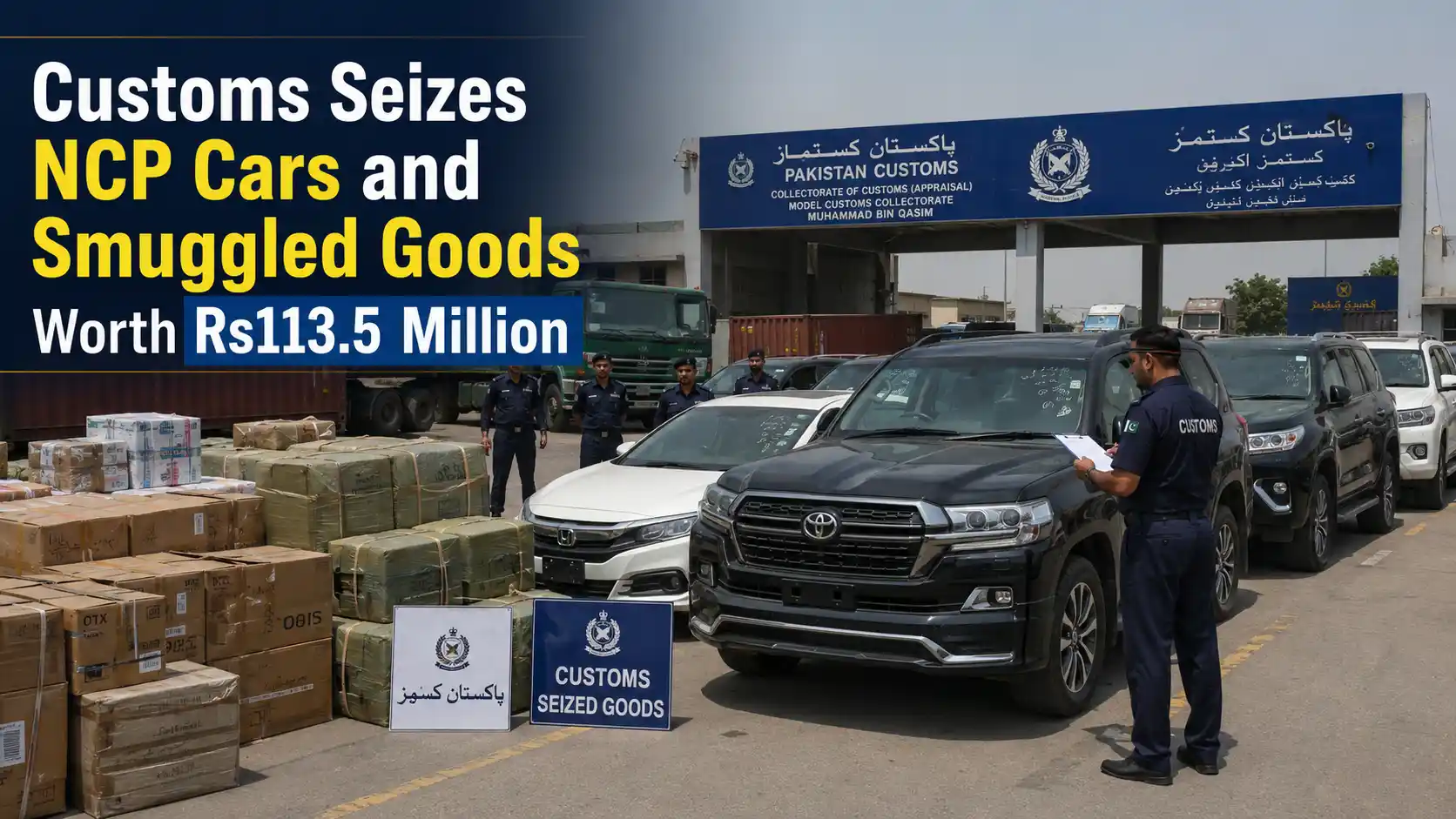

The Customs department in Islamabad has taken a significant step in curbing illegal trade by seizing non-customs paid (NCP) cars and other smuggled goods valued at Rs113.5 million. This operation highlights the ongoing efforts of customs officials to battle against smuggling activities, a persistent issue that undermines the local economy and threatens national security. By intercepting these goods, customs not only uphold legal trade practices but also deter future smuggling attempts, protecting the nation’s revenue and industry.
The Significance of Customs Operations
Customs operations are a critical aspect of border control and economic regulation. By monitoring and inspecting goods, customs officials play a vital role in preventing the entry of illegal items, ranging from luxury cars to everyday goods. The recent seizure of smuggled goods worth Rs113.5 million in Islamabad demonstrates the ongoing battle against black market activities.
Such operations emphasize the importance of customs in supporting the legal economy. By enforcing customs regulations, authorities ensure compliance with trade laws and the proper collection of duties, which are essential for national infrastructure and development projects.
This seizure also serves as a robust message to would-be smugglers. By demonstrating their capability and readiness to tackle illegal activities, customs authorities bolster their deterrence strategies, making potential offenders think twice before engaging in smuggling.
With a global rise in trade, the role of customs operations has expanded beyond traditional borders. They now encompass cyber trade and digital transactions, which are crucial in modern commerce. This broadening scope requires an equally robust expansion in customs methodologies, including more focus on digital monitoring and international regulatory frameworks that harmonize practices across borders. This ensures a coherent strategy in combatting smuggling globally.
Challenges Faced by Customs Authorities
Customs authorities worldwide confront multiple challenges in their quest to curb smuggling activities. One prominent issue is the ever-evolving tactics employed by smugglers who continually adapt to new methods of evasion. This dynamic nature of smuggling requires customs to constantly innovate and improve their strategies.
In nations like Pakistan, border control is complicated by geographical and political factors. The extensive and often rugged borders can be difficult to monitor, providing smugglers with opportunities to bypass controlled points. This increases the need for well-coordinated intelligence and inter-agency collaboration to effectively manage these vast areas.
Moreover, technological advancements have equipped smugglers with sophisticated tools, thereby escalating the level of threat. Customs authorities must invest in the latest technology and training to counteract these developments effectively.
Additionally, the integration of global supply chains demands vigilant monitoring of both imports and exports to prevent illegal goods from entering or leaving the country. This has led to increased pressure on customs departments to process shipments quickly while maintaining thorough inspections, challenging them to balance efficiency with enforcement.
The human element also presents challenges; recruiting, training, and retaining skilled employees is essential for performing complex inspections and managing sophisticated technology. Customs departments often grapple with budget constraints that limit these investments, intensifying the importance of strategic allocation of resources.
The Economic Impact of Smuggling
Smuggling poses a significant threat to the economy. By undermining the local market, it creates unfair competition for legally operating businesses. The influx of non-customs paid goods can lead to reduced sales for domestic manufacturers, ultimately affecting employment and wages in the legitimate economy.
Additionally, smuggling prevents the state from collecting valuable revenue in the form of taxes and duties. These funds are crucial for maintaining public services and infrastructure. Each instance of smuggling thus directly impacts the quality and availability of these essential services.
In the long run, smuggling can lead to inflation and an unbalanced economic structure, further complicating fiscal management and planning for the government.
Furthermore, the economic impact extends to the erosion of consumer trust. When smuggled goods, often of lower quality or safety, become widespread, consumers may lose confidence in market products. This can have a long-term detrimental effect on domestic producers who strive to maintain quality and safety standards.
Smuggling also reduces the incentive for local innovation and product development, as the influx of cheaper, potentially illicit goods diminishes market share for locally produced items. Over time, this stifles economic growth and innovation.
Policy Measures and Regulations
To combat smuggling effectively, stringent policy measures and regulations are essential. Governments need to devise comprehensive plans that enhance border control capabilities while ensuring smooth legal trade processes. This includes investing in technology, such as surveillance systems and advanced scanning equipment, to efficiently monitor and inspect goods.
Regular updates to trade laws and customs duties can also help in addressing emerging challenges and closing existing loopholes exploited by smugglers. Enhanced penalties for smuggling-related offenses act as a deterrent, discouraging individuals and groups from engaging in illegal trade.
International cooperation plays a crucial role in tackling smuggling, as cross-border collaborations allow for shared intelligence and resources, facilitating more effective operations.
Policy measures must also consider the socio-economic factors that drive individuals towards smuggling. Economic incentives for border communities, along with educational and skill development programs, can provide legitimate economic opportunities. By addressing the root causes, policy can reduce the prevalence of smuggling.
Moreover, precise regulatory frameworks can foster improved compliance and efficiency. Clear guidelines and transparent processes enhance the capability of customs to impose regulations swiftly and effectively, while also reducing corruption by minimizing discretionary power.
Also Read this Article: Russian Grenade Fragments Found in JI Karachi Office Attack
Community Involvement and Awareness
Engaging communities in anti-smuggling initiatives is vital for success. Public awareness campaigns can educate citizens about the negative impacts of smuggling on the economy and society. By fostering a sense of shared responsibility, communities can become active participants in identifying and reporting illicit activities.
Moreover, developing support networks for local businesses can strengthen the legal market, thereby reducing dependency on smuggled goods. Community involvement also helps build trust between citizens and law enforcement agencies, creating a cooperative environment where people feel motivated to assist in anti-smuggling efforts.
Educational programs in schools and community centers can provide insights into the legal and ethical aspects of trade, shaping informed and responsible citizens who are conscious of their role in maintaining economic integrity.
Social media platforms can also serve as powerful tools for spreading awareness and mobilizing community involvement, reaching a wider audience quickly and efficiently.
The Role of Technology in Customs Operations
Technology plays an increasingly significant role in customs operations. The use of cutting-edge systems such as Artificial Intelligence (AI) and Machine Learning (ML) enables customs to identify unusual patterns and suspicious activities effectively.
Digital platforms for data sharing improve collaboration between different agencies, ensuring a coordinated response to smuggling threats. Investments in high-frequency communication devices, drones for surveillance, and biometric systems for secure identification are transforming the way customs operate, making them more efficient in their endeavors to seize illegal goods.
Blockchain technology offers a promising future, with its potential to provide immutable records of transactions, thereby increasing transparency and reducing manipulation of records. This can strengthen customs operations by facilitating real-time tracking and verification of goods.
Furthermore, technology can streamline processes, reducing the time required for inspections and paperwork, thus enhancing operational efficiency and facilitating smoother legal trade.
Historical Context of Smuggling in the Region
Smuggling in South Asia has a long history, deeply intertwined with trade and commerce routes that have existed for centuries. The region’s strategic position has made it a hotspot for various forms of illicit trade, ranging from textiles to narcotics.
In Pakistan, historical conflicts and political tensions have often exacerbated smuggling issues. Economic disparities and regional instabilities further fuel this illegal activity, necessitating continued vigilance and comprehensive strategies from customs authorities.
Understanding this historical context is crucial for developing informed and effective measures to combat smuggling today. The history of smuggling is as complex as the routes themselves. Over centuries, these routes have shifted, adapting to political shifts and technological advances. Understanding these changes provides valuable insights into why certain regions remain affected, allowing for targeted anti-smuggling measures.
Moreover, the social acceptance of smuggling in certain communities, owing to its historic role as a primary means of livelihood, poses challenges that require culturally sensitive approaches to change perceptions and behaviors.
Case Study: Successful Anti-Smuggling Initiatives
Looking at successful initiatives worldwide can provide valuable insights into strategies that work. For example, countries that have employed technology-focused approaches have seen significant reductions in smuggling activities.
Projects that integrate community engagement, transparent enforcement policies, and international cooperation have proven to be effective in countries like Singapore and Hong Kong, setting benchmarks that can be adapted to other regions facing similar challenges.
By learning from these cases, customs authorities in Pakistan and beyond can refine their tactics to better address the local smuggling landscape. The use of data analytics and AI in Singapore to predict and prevent smuggling has set a precedent for a modern approach to border control. Such case studies illustrate the effectiveness of proactive rather than reactive measures.
Collaborative programs that include risk assessment procedures and international intelligence sharing serve as blueprints for multilateral trade compliance. By adopting similar strategies, countries can foster environments conducive to legal trade and economic growth.
Future Directions for Customs and Trade
As the global trade landscape continues to evolve, customs must adapt to new challenges and opportunities. Increasing reliance on digital systems for trade management and customs processing presents both efficiencies and risks.
Future directions could involve the integration of blockchain technology to ensure transparent and tamper-proof customs records, promoting trust and accountability in international trade systems.
Furthermore, enhancing cybersecurity measures to protect customs data and operations will be paramount as digital threats continue to grow. By proactively embracing these innovations, customs can maintain robust defenses against smuggling while facilitating legitimate trade.
The growing importance of e-commerce necessitates new customs measures that deal specifically with the digital economy. Developing niche expertise and regulatory frameworks that encapsulate this rapidly advancing landscape will be crucial.
Emerging markets and evolving trade corridors require dynamic customs strategies that accommodate these shifts. By remaining flexible and value-driven, customs departments can align themselves with global economic trends while safeguarding against illegal activities.
Conclusion
The recent seizure of NCP cars and smuggled goods valued at Rs113.5 million by customs authorities in Islamabad underscores the ongoing battle against illegal trade. As smuggling poses significant economic and security challenges, comprehensive strategies involving policy improvements, technological advancements, and community engagement are essential for effective resolution.
By understanding the history and implications of smuggling, customs authorities can refine their approaches, ensuring a safer and more prosperous future for legitimate trade. Innovations in technology and international cooperation will continue to be central to overcoming these challenges, paving the way for economically secure and well-regulated borders.
Frequently Asked Questions
What are non-customs paid (NCP) cars?
Non-customs paid (NCP) cars are vehicles that have entered a country without the requisite customs duties being paid. They are often smuggled to avoid taxes.
Why is smuggling a significant issue in Islamabad?
Islamabad, like many border areas, faces smuggling issues due to its geographic location and the challenges in effectively monitoring all entry and exit points.
How do customs authorities track smuggled goods?
Customs authorities use a combination of intelligence gathering, surveillance technology, inspections, and international cooperation to track and seize smuggled goods.
What economic impact does smuggling have?
Smuggling undermines local economies by creating unfair competition, reducing state revenue through lost taxes, and impacting employment and legal businesses.
How can communities help reduce smuggling?
Communities can assist by staying informed, reporting suspicious activities, supporting local businesses, and engaging in public awareness initiatives against smuggling.