






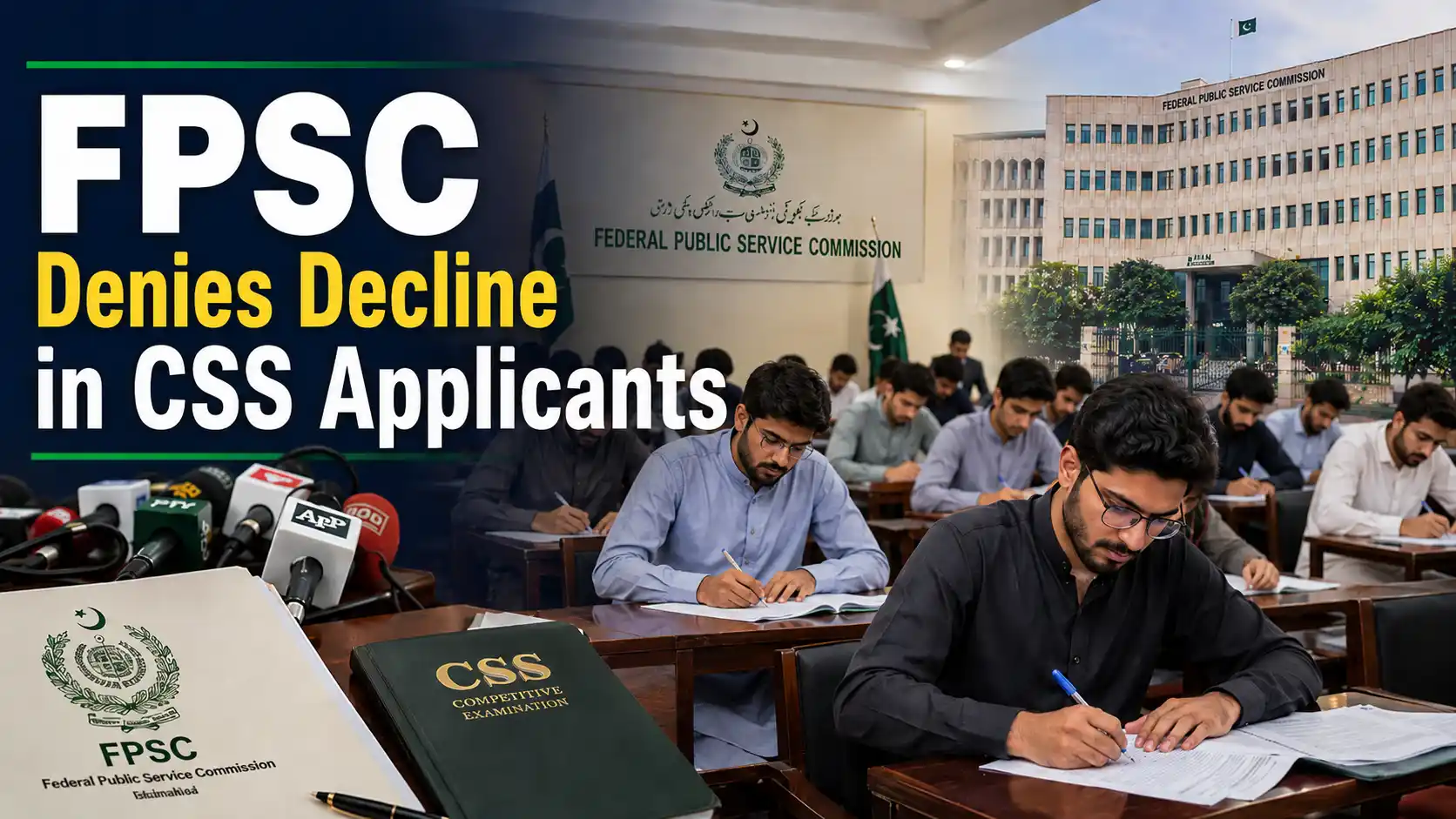

The Federal Public Service Commission (FPSC) has firmly rejected claims of a 45% decline in CSS applicants. This denial has brought attention to the complexities of recruitment processes and the challenges surrounding the perception versus reality of application numbers and trends in civil services examinations. The CSS (Central Superior Services) exam is a prestigious competitive exam in Pakistan, and any shifts in the number of applicants carry significant implications for the bureaucratic system. The FPSC’s clarification sheds light on the broader aspects of governmental operations and the strategies employed to attract and retain talent in public service.
The Importance of the CSS Examinations
The Central Superior Services (CSS) examination holds significant importance in Pakistan. It serves as the gateway for recruitment into the federal government, where successful candidates are appointed to various civil services departments. This exam attracts thousands of enthusiastic individuals each year, presenting them with opportunities to serve the nation in public capacities.
The rigorous nature of the CSS examination highlights its prestige. The selection process is designed to ensure that only the most capable and dedicated individuals make it through. This process requires potential applicants to undergo extensive preparation, covering a wide range of subjects that test their analytical skills, knowledge, and leadership abilities.
The perceived decline in applicants could raise concerns about the future pool of talent ready to enter public service. However, the FPSC’s statements aim to assure stakeholders that such fears are unfounded, maintaining the integrity and allure of the CSS exams.
Furthermore, the significance of the CSS exams extends beyond individual aspirations. They represent a systematic approach to fostering leadership within the public sector. By training and testing candidates across various functions, from economics to international relations, the CSS exam ensures that the government is staffed by individuals well-prepared to tackle complex national challenges.
The CSS exams also reflect global standards of civil service recruitment. Countries worldwide recognize the necessity of rigorous selection processes to maintain efficient, merit-based public sectors. In this way, the CSS exam is not isolated in its function but rather a part of a broader international commitment to excellence in governance.
Analyzing the Alleged Decline
The reports of a 45% decline in CSS applicants have sparked discussions across various platforms. Such a significant drop, if true, could indicate several underlying issues, from a lack of interest in public service careers to potential barriers in the application process.
A decline in applicants would pose challenges for the FPSC as it seeks to fill critical roles across the nation’s bureaucracies. Whether stemming from misinformation or misunderstood data, acknowledging and addressing these claims is crucial for maintaining public confidence in the recruitment process.
By refuting these claims, the FPSC reinforces the stability of the application numbers, aiming to dispel any misconceptions that could deter potential applicants from pursuing a career in civil services.
Additionally, it’s essential to understand the dynamics that could lead to such claims. Economic pressures, societal shifts, and educational changes are factors that can influence the perceptions of potential candidates. A decline in interest might not reflect a single causative factor but rather a combination of multiple influences that need careful consideration.
Furthermore, analyzing these reports provides an opportunity to examine broader trends in employment and educational aspirations. Are young people in Pakistan looking towards more lucrative careers in technology or entrepreneurship? Are there significant societal shifts altering the appeal of a stable government job, traditionally viewed as prestigious and secure?
Historical Context of CSS Applicants
The CSS examinations have been a longstanding part of Pakistan’s civil service landscape. Historically, they attract a robust pool of applicants due to the prestigious nature of the posts involved. Over the years, despite economic and social challenges, the allure of serving in powerful governmental positions has consistently drawn in individuals from diverse educational backgrounds.
Exam trends over the past decades have shown fluctuations in the number of applicants for various reasons, including changes in educational infrastructure and the availability of alternative career options. However, these changes have rarely signified a significant decline such as the one recently alleged.
Understanding these historical patterns allows analysts and policy makers to better comprehend the dynamics influencing current applicant numbers and to devise strategies to maintain or increase interest in public service careers.
Historically, shifts in applicant numbers often correlate with broader societal trends. During periods of national crisis or economic instability, the CSS exams have often seen a surge in interest, as individuals seek the stability and honor associated with civil service roles. Conversely, during economic booms or when alternative career paths become more attractive, a decrease may be observed.
In the broader scope, the evolution of educational opportunities, both domestically and internationally, also plays a significant role. With more universities and courses now available than ever before, the pathways into various careers have diversified, impacting traditional sectors like civil services.
The Role of FPSC in Ensuring Transparency
The FPSC plays a pivotal role in maintaining transparency and trust in the civil service recruitment process. As an autonomous body, it is responsible for administering the CSS examinations and ensuring fair access to governmental positions based on merit.
Transparency in communication, especially in dispelling rumors or false claims, is essential. The FPSC’s prompt rebuttal of the alleged decline demonstrates its commitment to accountability and openness. By directly addressing the public and stakeholders, the FPSC aims to uphold its reputation as a transparent and reliable institution.
Such actions are critical not only in preserving the integrity of the examination process but also in ensuring continuous enthusiasm for public service roles.
Moreover, ensuring transparency involves leveraging technology to create open, accessible platforms where potential candidates can gather accurate information. This includes enhancing online resources, engaging with prospective applicants via social media, and holding informational webinars.
Furthermore, the FPSC’s transparent operations serve as an example for other institutions within Pakistan and globally. By standing as a beacon of accountability, the FPSC encourages other organizations to adopt similar standards, further stabilizing the sector and building public trust in governance.
Also Read The Article: Afnan Ullah Khan’s Call to Address Internet Issues in AJK
Influence of Economic and Social Factors
Numerous economic and social factors can influence the number of CSS applicants. Economic downturns often lead individuals to seek stable employment opportunities, potentially increasing interest in government positions. Conversely, booming private sectors can occasionally draw talent away from public service.
Social factors, including educational opportunities and societal perceptions of government roles, also play a part. Initiatives aimed at enhancing the public perception of civil service, as well as providing financial and educational support to potential applicants, can significantly impact application numbers.
The FPSC’s denial of a decline suggests resilience against such factors but also highlights the need to continually adapt to shifting economic and social environments.
While traditional career motivations remain, the new generation often seeks jobs that offer not only stability but also fulfillment and personal growth. The public sector’s ability to adapt to these aspirations, by offering diverse roles with varying responsibilities and career progression opportunities, can influence future applicant numbers.
Moreover, international comparisons reveal that economic factors universally play a pivotal role in job selection. Similar patterns have been observed in countries with strong civil services, like Japan and Canada, where economic cycles significantly affect public sector interest.
Global Comparison of Civil Service Exams
The competition and prestige associated with civil service examinations are not unique to Pakistan. Similar exams in countries like India and the United Kingdom also serve as gateways to government service. In India, the IAS (Indian Administrative Service) exams are equally rigorous, attracting hundreds of thousands of applicants annually.
Comparing these systems can provide insights into the common challenges faced by civil service recruiters globally. In many nations, demand for civil service roles remains high, motivated by employment stability, prestige, and the opportunity to influence national policy.
The contrast between global trends and localized reports of decline in CSS applicants prompts a deeper exploration of nation-specific factors that may influence interest in public service roles.
Other countries offer perspectives on how civil service exams adapt over time. For instance, in France, the prestigious École nationale d’administration (ENA) has been recently reformed to become the Institut national du service public (INSP), reflecting evolving governance and public service needs.
The UK’s civil service, while not requiring a singular examination like the CSS, incorporates a series of tests and interviews to assess a candidate’s fit for various governmental roles. This multi-dimensional approach caters to diverse skill sets, reflecting an adaptation to modern employment demands.
Strategies to Boost Interest in Civil Services
To sustain or increase the number of CSS applicants, strategic initiatives may be necessary. Efforts to demystify the application process, provide better preparatory resources, and actively engage with potential candidates can yield significant benefits.
Collaborating with educational institutions to create awareness and interest in civil services as a viable career path is essential. Outreach programs that connect successful civil service professionals with students can inspire and provide valuable insights into the benefits and challenges of government roles.
The FPSC can further enhance its reach by leveraging technology and social media platforms to engage with younger audiences, ensuring they recognize the value and potential of a public service career.
Furthermore, creating mentorship initiatives where experienced civil servants can guide and encourage candidates may foster a supportive community to assist aspiring public servants. Such direct engagement can nurture a personal connection and clearer path towards these roles.
Additionally, promoting diversity within civil services through tailored recruitment drives emphasizes inclusivity, attracting a wider demographic, and enriching the bureaucracy with various perspectives and ideas.
Addressing Misconceptions and Misinformation
Misinformation and misconceptions can have long-lasting impacts on the reputation of examinations like the CSS. Addressing these proactively through clear and open communication is vital.
The FPSC’s denial of a 45% decline in applicants serves as a reminder of the importance of verifying claims before they shape public perception. This emphasizes the need for robust communication strategies to correct misinformation swiftly and effectively.
Ongoing efforts to improve information dissemination will help reinforce the credibility of governmental processes and the attractiveness of civil service roles.Ensuring accurate information reaches potential candidates is not only about correcting false narratives but also about empowering individuals with the resources they need to make informed decisions regarding their careers.
Innovative approaches, like interactive Q&A sessions and public service campaigns, can dismantle myths about the application process, fostering transparency and trust while simultaneously increasing institutional credibility.
Implications for Future Governance
With the FPSC denying a decline in applicants, the focus shifts to future governance and the role these recruits will play in shaping policy and administration. It highlights the importance of continued efforts to attract passionate and talented individuals to these critical roles.
The potential challenges facing civil services, from technological advancement to socio-political shifts, require adaptive governance strategies while ensuring an influx of capable personnel through examinations like the CSS.
Future policies and strategies must adapt to these evolving conditions, ensuring the civil service is well-equipped to meet the demands of a modern, dynamic society. As future governance will likely demand adaptability and technological savvy, civil service roles may need not only stringent academic qualification assessments but also evaluations of digital proficiency, emotional intelligence, and innovative thinking.
The evolving global political landscape and environmental challenges further underline the importance of a well-prepared civil service; one that is not only reactive but proactive in crafting policies that address both current issues and anticipate future demands.
The Significance of Public Perception
Public perception plays a crucial role in shaping the appeal of civil service roles. The public’s trust in the system often translates to higher motivation among potential candidates to seek such positions. Properly addressing claims of declining interest is vital, as it influences the perception of stability and reliability in public service jobs.
Public perception is molded not just by the public service itself but also by media portrayals, societal narratives, and personal networks. Enhancing the image of public service careers involves showcasing success stories, highlighting transformative governmental projects, and ensuring fair, transparent practices.
Moreover, aligning public service goals with the values and aspirations of younger generations can enhance the sector’s appeal. Emphasizing the impactful nature of public service work, particularly in areas like environmental protection, education reform, and healthcare, resonates with a generation keen on social responsibility.
Conclusion: A Steady Path Forward for CSS
In conclusion, the FPSC’s rejection of a significant decline in CSS applicants underscores the stability and appeal of civil service roles within Pakistan. Despite rumors, the institution remains steadfast in its mission to recruit a dedicated and capable workforce to lead the nation forward.
By addressing these claims head-on, the FPSC demonstrates a commitment to transparency and accountability, essential traits for maintaining public trust. Looking ahead, strategies to enhance interest in civil services, address potential misinformation, and adapt to changing societal needs will be crucial.
The continued attraction of talent through the CSS examinations signifies hope for future governance, ensuring Pakistan’s public service remains strong, effective, and responsive to contemporary challenges.
Frequently Asked Questions
What is the CSS exam?
The CSS (Central Superior Services) exam is a competitive examination in Pakistan conducted by the FPSC for recruiting individuals into top government positions.
Why was there a report of a decline in CSS applicants?
Reports emerged claiming a 45% decline, potentially stemming from misinterpreted data or misinformation. The FPSC has refuted these claims.
How does the FPSC address these claims?
The FPSC dismissed the reports of a decline in applicant numbers, maintaining that there has been no such decrease. The focus keyword is ‘CSS applicants decline’.
What steps can boost interest in CSS exams?
Increasing awareness through educational outreach, improving preparatory resources, and leveraging technology can enhance interest in CSS exams.
Is there global interest in civil service roles?
Yes, globally, civil service roles remain coveted due to job stability, prestige, and the ability to influence national policies.