





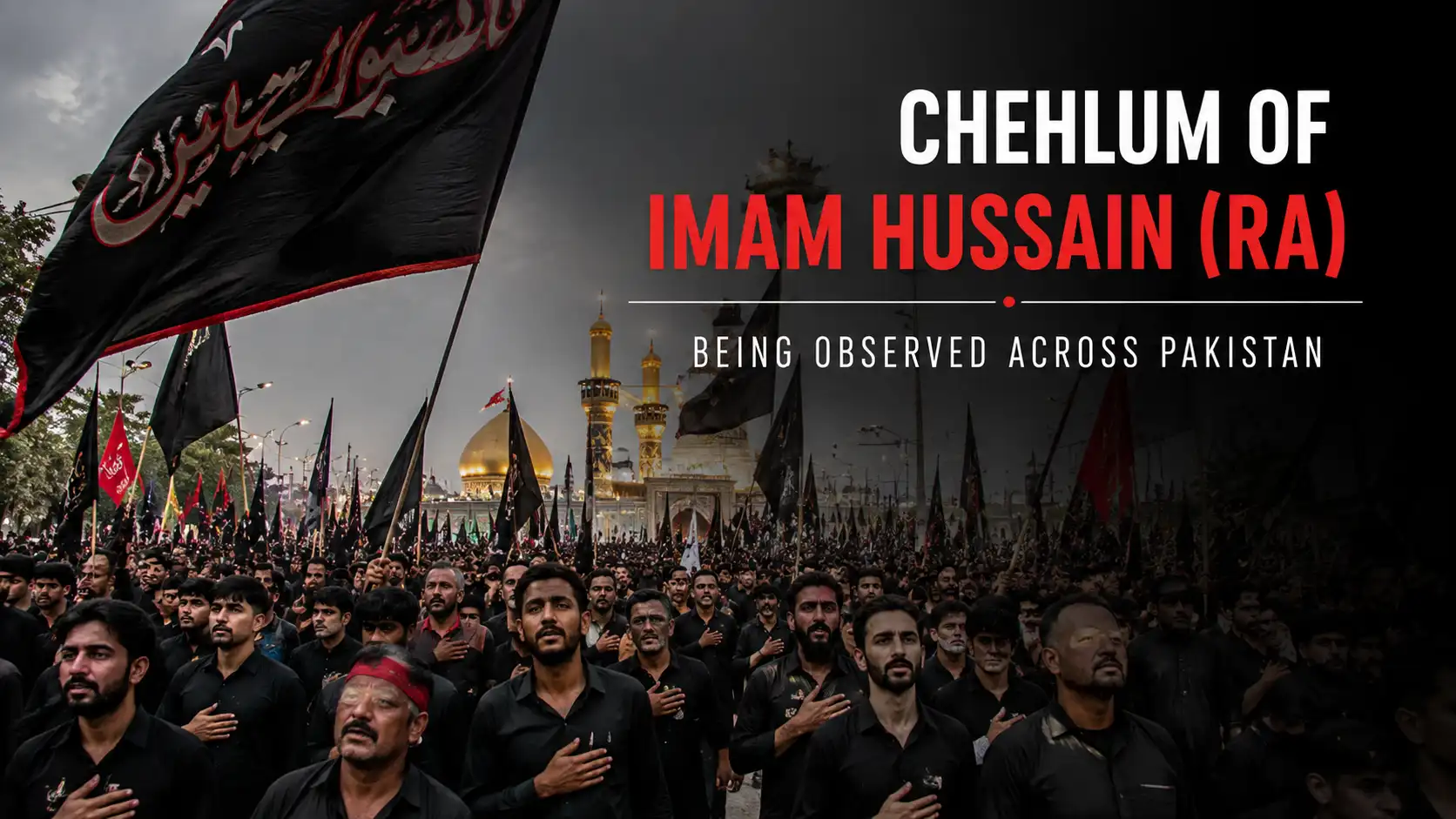

The Chehlum of Imam Hussain (RA) is being observed across Pakistan, bringing together millions of followers in a powerful display of faith and solidarity. This observance marks the 40th day after Ashura, commemorating the martyrdom of Imam Hussain (RA) at the Battle of Karbala. As one of the most significant events in the Islamic calendar, Chehlum serves as a poignant reminder of the principles of justice, sacrifice, and steadfastness in the face of oppression. In cities across Pakistan, processions, prayers, and rituals take place, demonstrating the deep reverence that the community holds for Imam Hussain (RA) and the values he represented. This occasion fosters a sense of unity among the Shia community, promoting remembrance and reflection on the enduring legacy of Imam Hussain (RA). The events leading to Chehlum allow us to delve deeper into the historical context, societal impact, and spiritual journey of millions centered around this momentous occasion.
The Historical Significance of Chehlum of Imam Hussain (RA)
The Chehlum of Imam Hussain (RA) holds immense historical significance within the context of Islamic traditions. The commemoration stems from the tragic events that unfolded at Karbala in 680 CE, when Imam Hussain (RA), the grandson of the Prophet Muhammad (PBUH), stood against tyranny and oppression. His martyrdom was not just an event; it was a profound statement against injustice that resonates through the ages. The Chehlum, occurring 40 days after Ashura, serves to mark the end of the mourning period initiated during the first month of Muharram. This period has historically been a time for reflection, mourning, and prayer.
The word ‘Chehlum’ itself means ‘forty’ in Arabic, highlighting the importance of this time span. It reflects the Islamic belief in the spiritual significance of the number forty, which is often associated with completion and maturity. By gathering during this time, communities reaffirm their dedication to the values Imam Hussain (RA) espoused, including courage, moral integrity, and self-sacrifice in the pursuit of justice.
The historical observance of Chehlum has evolved, yet its essence remains intact. Modern-day processions and gatherings serve as powerful reminders of the enduring legacy of Imam Hussain (RA). They also reinforce the values of solidarity and unity within the Shia community, encouraging members to connect with their spiritual heritage. Over the centuries, these observances have become a testament to the resiliency of faith amid trials and tribulations.
The profound impact of Imam Hussain’s (RA) martyrdom extends beyond religious history and delves into universal themes of justice and resistance against tyranny. The historical narrative surrounding Karbala is often discussed in educational settings and theological discussions, emphasizing its significance in the broader context of human rights and moral philosophy. This pivotal moment in Islamic history serves as a rich source of inspiration for advocates of justice worldwide, who view the sacrifice at Karbala as a timeless symbol of standing firm against oppression, despite overwhelming odds.
Cultural Practices During Chehlum of Imam Hussain (RA)
The cultural landscape during the Chehlum of Imam Hussain (RA) is rich with various practices that vary by region yet retain a core of shared values. In Pakistan, this event is not only a religious observance but also a cultural phenomenon that unites diverse communities under the banner of devotion.
Many districts host elaborate processions, known as ‘azadari,’ where mourners march while chanting elegies and reciting from the Quran. These processions often include replicas of the tomb of Imam Hussain (RA), symbolizing the pilgrimage and emotional connection to the martyrdom.
Food plays an integral role in these solemn events, as communities prepare ‘Niaz’ (food offered in the name of Imam Hussain). It is common to see large kitchens set up in mosques and community centers that serve free meals to participants. This gesture of sharing reflects the spirit of community and charity promoted by Imam Hussain (RA) and emphasizes brotherhood among participants. The act of serving food during this observance not only nourishes the body but also serves as a form of spiritual nourishment.
Moreover, artistic expressions during Chehlum enhance the emotional experience. From poetry and music to theatrical re-enactments of the Karbala tragedy, these artistic forms allow participants to engage deeply with the themes of sacrifice, love, and loss that defined Imam Hussain’s (RA) martyrdom. Arts become a conduit for both mourning and celebration, creating an atmosphere of remembrance and homage that is palpable in every gathering.
Another significant element of the cultural practices during Chehlum involves the use of symbols and attire. Participants often wear black clothing as a sign of mourning and solidarity, creating a visual connection to the historical events of Karbala. The display of banners and flags with inscriptions of messages of peace and justice further amplifies the cultural narrative, ensuring the story and its values are visible and accessible to all.
Furthermore, the inclusion of media and technology in modern-day Chehlum observances has introduced new dimensions to traditional practices. Documentaries, films, and podcasts explore the themes of Karbala, providing diverse perspectives and stories that resonate deeply with audiences, both young and old. These modern interpretations keep the cultural practices fresh and engaging, allowing the messages of Imam Hussain (RA) to reach a global audience, transcending geographic and cultural boundaries.
Spiritual Reflections on Chehlum of Imam Hussain (RA)
The Chehlum of Imam Hussain (RA) provides an opportunity for deep spiritual reflection among its observants. For many, participating in this memorial is a journey of faith that allows them to reconnect with the core principles of Islam, such as justice, courage, and integrity. Imam Hussain (RA) is often regarded as a symbol of ultimate sacrifice, representing the struggle against evil forces. Thus, his life and death serve as a blueprint for personal conduct, encouraging followers to aspire to high moral standards in their daily lives.
During Chehlum, many individuals engage in prayers that seek forgiveness, guidance, and strength. The collective recitations often include prayers for peace and harmony in society, reflecting a commitment to upholding justice and challenging wrongdoing in daily life. This moment is akin to a spiritual retreat where followers articulate their hopes and fears, seeking solace and courage through the memory of Imam Hussain’s (RA) unwavering stance against oppression.
The moments of silence and reflection apparent in the gatherings serve as poignant reminders of the pain and suffering experienced during the Battle of Karbala. The observance symbolizes not only mourning for the loss of Imam Hussain (RA) but also a commitment to carrying forth his legacy in today’s world. Integrating this reflection into daily life can manifest as acts of kindness, advocating for justice, and supporting those who are marginalized.
Spiritual reflection during Chehlum also involves a deeper understanding of the concept of martyrdom and its significance in Islamic theology. Many scholars and religious leaders use this time to discuss the philosophical and mystical aspects of the events at Karbala, offering insights into the nature of human suffering, divine will, and the eternal struggle between good and evil. These discussions often lead followers to contemplate their roles in their communities, inspiring proactive engagement in social and religious justice.
Furthermore, the spiritual traditions of Chehlum reinforce the importance of community support and collective consciousness. Engaging in shared rituals and prayers fosters a strong sense of community, where individuals feel part of something greater than themselves, bound together by shared beliefs and values. This collective spiritual experience becomes a source of strength and inspiration, reinforcing the unity and continuity of the faith community.
The Role of Women in Chehlum of Imam Hussain (RA)
Women play a pivotal role during the Chehlum of Imam Hussain (RA), contributing significantly to both the observance and the broader cultural context of the event. Traditionally, women engage in organizing gatherings, preparing food, and leading rituals that honor the memory of Imam Hussain (RA). Many women recount their perspectives through poetry and storytelling, capturing the emotional weight of the Karbala story and passing it down to future generations.
The involvement of women also nurtures community bonds and highlights their essential role in maintaining the fabric of faith and culture. In many localities, women lead discussions and seminars that delve into the principles of justice and sacrifice, emphasizing the relevance of Imam Hussain’s (RA) positioning in contemporary society. Their voices not only echo the sentiments of love and loss but also become channels for imparting knowledge and wisdom to younger generations.
Furthermore, the presence of women during processions is a powerful visual demonstration of solidarity. Dressed in black, many women participate with zeal, carrying flags and banners intended to evoke the spirit of resistance and resilience modeled by the women of Karbala. The active participation of women during Chehlum is integral to keeping the memory of Imam Hussain (RA) alive and creating a space where women’s voices are heard and valued in the context of spirituality and activism.
The impact of women’s participation extends beyond the individual, influencing broader societal perceptions and gender roles within the community. The narratives and contributions of women during Chehlum highlight their resilience and leadership, challenging traditional roles and fostering gender equality within religious observances. Over time, this has encouraged more inclusive participation in spiritual and community activities, emphasizing the role of women as key contributors to religious and cultural preservation.
Additionally, women’s involvement in Chehlum has a profound impact on intergenerational transmission of cultural values. By actively participating, women serve as mentors to younger generations, ensuring that the history, values, and teachings associated with Imam Hussain (RA) are passed down effectively. This continuity helps maintain the cultural and religious identity of the community, ensuring that the principles of justice, sacrifice, and integrity remain integral to future generations.
Also Read This Article: LESCO’s Financial Achievement: A Deep Dive into Rs. 58 Bln Savings
The Social Impact of Observing Chehlum of Imam Hussain (RA)
The Chehlum of Imam Hussain (RA) event transcends mere religious observance; it has profound social implications that ripple through communities across Pakistan. Participating in the rituals fosters a sense of belonging and community, crucial for collective healing and empowerment. As individuals come together to commemorate a shared tragedy, they also create a robust network of support that can be invaluable in times of personal and societal challenges.
Moreover, the gathering serves as an educational platform, raising awareness about the significance of justice and the consequences of social injustice. The narratives shared during Chehlum encourage critical discussions about contemporary issues affecting society. Participants often reflect on the lessons learned from Karbala and aim to apply these teachings to address injustices current in their environment, thereby transforming a historical observance into a catalyst for social change.
The gatherings often invite interfaith dialogues and discussions about common values among different communities. This means the teachings of Imam Hussain (RA) regarding peace, tolerance, and coexistence resonate well beyond the boundaries of sectarianism, fostering unity among diverse groups. Chehlum transcends cultural distinctions, bringing together individuals from various backgrounds, thereby fostering an inclusive atmosphere where collective aspirations for peace and justice can flourish.
The social impact of Chehlum is also seen in its ability to motivate charitable activities and community service initiatives. Participants often take the spirit of service demonstrated during the observance into their daily lives, organizing food drives, blood donation camps, and other social services to support those in need. This extension of community service reflects the values taught by Imam Hussain (RA) and strengthens social bonds by providing tangible support to those less fortunate.
Additionally, the social dynamics of Chehlum observance serve as a microcosm of broader societal structures, highlighting issues of inclusion, equality, and justice within the community. Discussions and reflections during this time offer opportunities to address social inequalities and challenge oppressive systems, empowering individuals to become change-makers in their environments. By focusing on collective aspirations for justice and well-being, Chehlum helps cultivate a more just and equitable society.
The Global Observance of Chehlum of Imam Hussain (RA)
While Chehlum of Imam Hussain (RA) holds special significance in Pakistan, it is observed globally among the Shia Muslim communities in various countries. From Iran and Iraq to India and beyond, millions gather to pay their respects and honor the legacy of Imam Hussain (RA). For many expatriate communities, this observance serves as a vital connection to their roots and cultural identity.
In places like Iraq, where the city of Karbala becomes a focal point during these days, the sheer numbers and diverse nationalities reflect the universal appeal of Imam Hussain’s (RA) message. Pilgrims travel thousands of miles to observe the Chehlum, reinforcing the bond among diverse Shia communities worldwide. Such global observance also serves as a reminder of the universal struggle against oppression, inspiring solidarity among those fighting social injustices across the globe.
As technology continues to bridge distances, social media platforms play a crucial role in disseminating information about Chehlum events and gathering participation from the diaspora. People share their experiences, thoughts, and memories, creating a virtual space for collective mourning, reflection, and celebration. Online platforms allow united reflections, discussions, and sharing sacred texts or experience, which enhances the spirit of community during Chehlum.
The global nature of Chehlum observance highlights the interconnectedness of the world’s Muslim communities, demonstrating the ability to transcend national and cultural boundaries in pursuit of spiritual and ideological unity. As people from different backgrounds come together, they exchange cultural and religious practices, enriching the collective experience and reinforcing shared values. This global observance becomes a testament to the diverse yet unified nature of the Islamic community, rooted in a common commitment to justice and peace.
Moreover, global observance of Chehlum has the potential to influence diplomatic and intercultural relations, encouraging mutual understanding and respect among different nations. By showcasing the principles of justice, sacrifice, and resilience from Imam Hussain’s (RA) legacy, the global community is reminded of the profound impact that principles of peace and integrity can have on international relations and human rights advocacy.
The Impact of COVID-19 on Observance of Chehlum of Imam Hussain (RA)
The COVID-19 pandemic had significant repercussions for the observance of Chehlum of Imam Hussain (RA) around the world, including Pakistan. Lockdowns and social distancing regulations disrupted traditional gatherings and processions, presenting challenges to maintaining communal bonds. In many places, the atmosphere of mourning had to adapt to public health guidelines, changing the ways in which rituals were conducted.
Despite these restrictions, the resilience of faith became evident as communities found alternative methods to honor Imam Hussain (RA). Virtual gatherings emerged as a way for individuals to connect, recite prayers, and share experiences, emphasizing the adaptability of community practices. People utilized online platforms for spiritual reflections, teaching, and collective mourning, showcasing the role of technology in bridging the divide during a health crisis.
This shift also led to intensified discussions around public safety, along with the social responsibilities of the faithful. The period of mourning became not only a demonstration of loyalty to Imam Hussain (RA) but also a call for collective well-being and care of the community. As conditions improve, many community leaders are reflecting on the significant lessons learned during this time, considering the potential evolution of observances in the future.
The pandemic also emphasized the importance of inclusivity and accessibility in religious observances, encouraging communities to think critically about how to ensure participation for all, regardless of physical location or health status. The experience has prompted innovative thinking about virtual participation, enabling broader access to Chehlum rituals for those who may not be able, due to health or geographic barriers, to physically attend.
Moreover, the impact of COVID-19 on Chehlum has fostered a renewed focus on the health and safety of community gatherings, prompting organizers to implement new protocols and guidelines that prioritize public health without compromising the spiritual essence of the observance. These adaptations reflect a commitment to balancing faith with responsibility, ensuring that future observances remain sustainable and accessible.
The Future of Chehlum of Imam Hussain (RA)
Looking forward, the Chehlum of Imam Hussain (RA) is poised to evolve further while retaining its core principles. As societies change and face new challenges, the observance will likely adapt to reflect contemporary issues while remaining rooted in tradition. The upcoming generations will play a crucial role in shaping how this significant event is celebrated, fostering conversations about how to maintain its relevance in a rapidly changing world.
Educational institutions are increasingly incorporating teachings of Imam Hussain (RA) and the values of justice and sacrifice into curricula, inspiring youth to engage meaningfully with their cultural heritage. Interactive and digital technologies offer opportunities for communities to connect, educate, and share experiences in ways not previously possible.
Moreover, the quest for social justice inspired by Imam Hussain’s (RA) values has become a beacon for movements worldwide. As current global challenges, such as inequality and systemic injustice, pose ongoing threats to communities, the Chehlum can serve as a rallying point for collective action and advocacy. This observance can transition from a moment of reflection to a more proactive engagement with today’s pressing issues, ensuring that the spirit of Imam Hussain (RA) continues to guide individuals in their quest for justice and peace.
Technological advancements and digital platforms will likely play an integral role in the future of Chehlum, facilitating widespread participation and expanding the reach of its message. Online education modules, multimedia presentations, and virtual reality experiences offer new avenues for exploration of the themes central to Chehlum, making the observance accessible to global audiences like never before. These innovations will help engage younger generations and newcomers, ensuring the continued relevance of Imam Hussain’s (RA) legacy in an increasingly digital world.
The evolving nature of Chehlum observance presents an opportunity to foster a more inclusive and comprehensive understanding of justice, community, and spirituality. Integrating contemporary issues such as environmental sustainability, social equity, and global peace initiatives within the context of Imam Hussain’s (RA) teachings can innovate the observance, aligning it more closely with modern societal concerns. This adaptation will ensure that Chehlum remains a vibrant, living tradition that continues to inspire transformative change.
Conclusion
The Chehlum of Imam Hussain (RA) being observed across Pakistan is not merely a ritual but a profound deepening of faith for millions. It encapsulates rooted traditions, community bonding, and a commitment to the fundamental Islamic principles of justice, sacrifice, and integrity. The shared mourning, cultural practices, and spiritual reflections during this time reinforce a sense of identity and purpose among participants, reminding them of the eternal lessons associated with the legacy of Imam Hussain (RA).
This observance offers a unique perspective on the challenges contemporary society faces, positioning the values inherited from Imam Hussain (RA) in a current context of conflict and injustice. As communities unite in solidarity, they reflect on their determination to uphold these values in their daily lives, creating a ripple of change that extends far beyond the days of mourning.
While the Chehlum commemorates the tragic martyrdom of Imam Hussain (RA), it also allows for the celebration of hope and resilience. It nurtures a collective vision for unity, compassion, and justice, inspiring participants to act on the teachings of this paramount figure in Islamic history. As the world evolves, so too will the observances surrounding Imam Hussain (RA), ensuring that his message continues to inspire and guide generations to come.
Frequently Asked Questions
What is the significance of Chehlum of Imam Hussain (RA)?
The Chehlum of Imam Hussain (RA) is significant as it commemorates the martyrdom of Imam Hussain (RA) and represents values of justice, sacrifice, and integrity. Observing this day serves as a collective reminder of standing against oppression.
How is Chehlum celebrated in Pakistan?
In Pakistan, Chehlum of Imam Hussain (RA) is celebrated with processions, prayers, and communal meals. It involves significant participation from communities, showcasing their devotion and solidarity.
What are the traditional practices during Chehlum of Imam Hussain (RA)?
Traditional practices include organizing processions, reciting elegies, preparing Niaz (food), and engaging in spiritual reflections. These practices aim to honor the memory of Imam Hussain (RA) and foster community bonds.
How has COVID-19 affected the observance of Chehlum of Imam Hussain (RA)?
COVID-19 led to alternative methods of observance for Chehlum of Imam Hussain (RA), including virtual gatherings and strict adherence to safety protocols. Communities adapted their rituals while maintaining spiritual connections.
What does the future hold for Chehlum of Imam Hussain (RA)?
The future of Chehlum of Imam Hussain (RA) will likely involve evolving traditions that maintain relevance in contemporary society. Educational initiatives and online platforms will play a role in keeping this observance alive.