






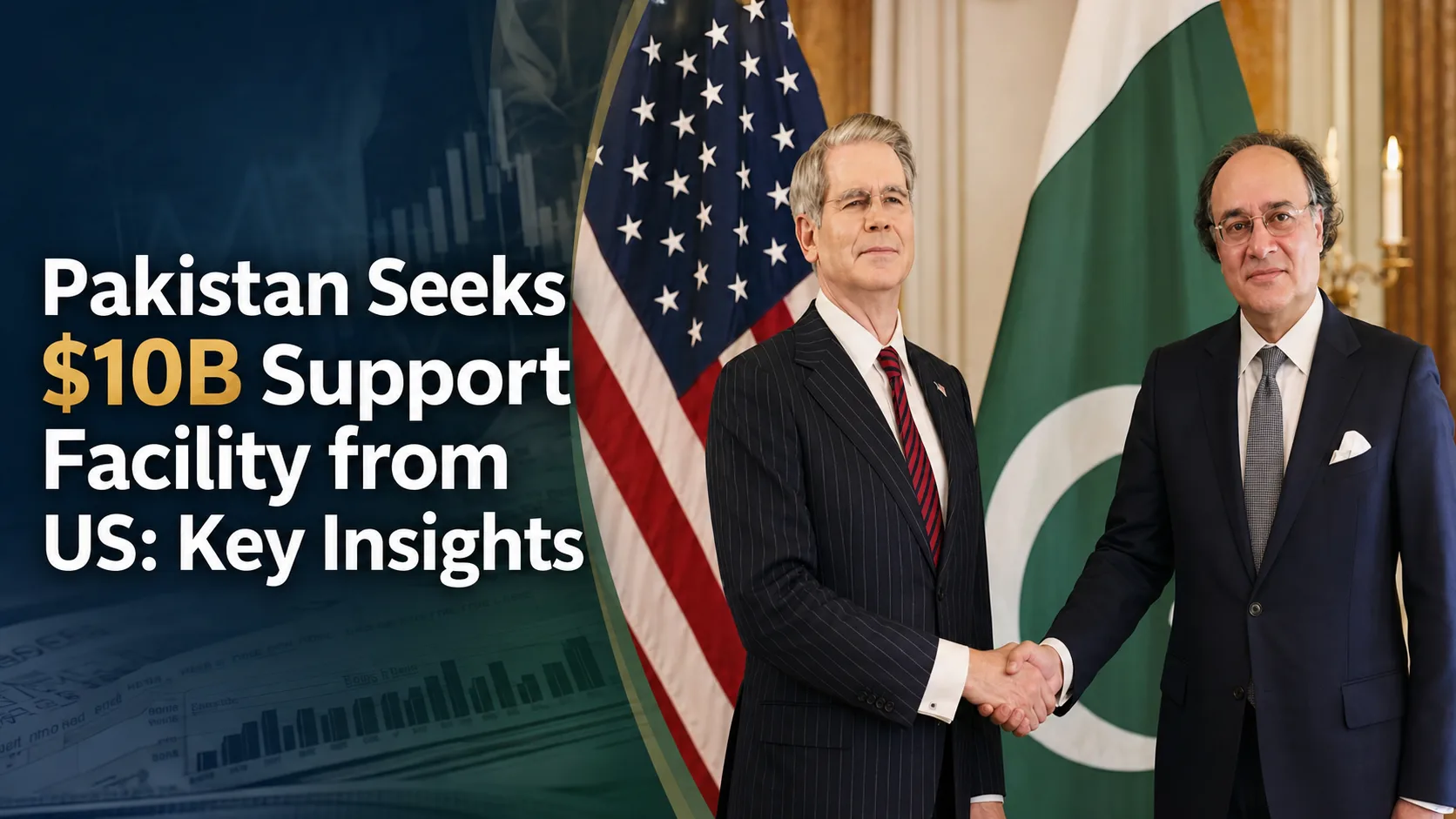

Pakistan $10B support facility is on the horizon as the country seeks financial assistance from the United States. With the aim of stabilizing its economy, Pakistan’s finance minister has confirmed expectations for a $10 billion Exchange Stabilization Support Facility from Washington. This move comes at a critical time when the nation is grappling with various economic challenges, including inflation, dwindling foreign reserves, and mounting debts. The anticipated support facility not only represents a potential lifeline for Pakistan but also indicates the intricate relationships and dependencies within global economic systems.
Understanding the Pakistan $10B Support Facility
The Pakistan $10B support facility is designed to provide the country with immediate liquidity to help stabilize its financial standing. As one of the largest sums being sought by Islamabad in recent memory, this support could significantly affect currency stability, allowing the Pakistani rupee to regain some strength against the US dollar. With monetary policies failing to mitigate inflationary pressures, the need for external assistance has become increasingly pressing.
The mechanism of an Exchange Stabilization Support Facility provides countries with funds that can be employed to bolster foreign exchange reserves. In Pakistan’s case, the crumbling reserves have led to severe economic implications, including elevated inflation rates and a diminishing ability to import essential goods. By securing this support, Pakistan aims not only to stabilize its currency but also to create a more controlled economic environment, thereby encouraging local and foreign investments.
Moreover, this assistance may serve as reassurance to international investors, suggesting that Pakistan’s economic policies are aligned with global standards. Securing this facility could result in increased confidence among stakeholders, prompting them to reassess their investment strategies within the Pakistan market.
It’s important to recognize the scale of this financial support in comparison to Pakistan’s previous assistance packages. Historically, Pakistan has not sought external assistance of this magnitude, highlighting the severe nature of the current economic crisis. This move signals Islamabad’s recognition of the gravity of the situation, where economic stabilization is not just a choice but a necessity for survival.
The successful deployment of these funds could also have socio-political ramifications, potentially bringing about a new era of economic reform that addresses systemic issues like tax evasion and inadequate industrial growth. However, challenges in execution remain, particularly given Pakistan’s history of economic mismanagement. Therefore, the potential effectiveness of the $10 billion facility is deeply intertwined with the country’s political will and administrative competence.
The Economic Context Behind the Request
The backdrop of Pakistan’s appeal for a $10 billion support facility from the US is a complex web of economic challenges. Currently, the nation is experiencing a financial crisis characterized by a ballooning deficit, escalating inflation, and reduced foreign exchange reserves. According to the State Bank of Pakistan, foreign reserves have dwindled to alarming levels, which raises red flags regarding the country’s capacity to honor its international financial obligations.
Pakistan’s economy has been severely impacted by a combination of factors including political instability, ineffective governance, and external shocks like global inflation rates. These issues have culminated in a high cost of living and a decline in the standard of living for many Pakistanis. The urgency of addressing these economic challenges has driven the government to seek foreign assistance, particularly from its longstanding ally, the United States.
This appeal is not merely an isolated incident; it reflects a broader trend among developing nations that often rely on foreign aid to manage their economic stability. Pakistan’s current predicament emphasizes the interconnectedness of global financial systems, where the economic downturn in one country can have rippling effects across borders.
The economic context is further complicated by factors like rapid population growth and a lack of diversification in the country’s industries. Agriculture, a significant component of Pakistan’s economy, faces its own set of challenges, including outdated farming methods and climate change impacts. These underlying structural issues hinder comprehensive economic recovery, even when external financial support is forthcoming.
Additionally, regional trade restrictions and geopolitical tensions also play a role in exacerbating the economic crisis. While Pakistan has the potential to be a trade hub due to its strategic location, ongoing conflicts and disputes limit this potential. Thus, the request for the US financial facility underscores not only the need for immediate relief but also the long-term overhaul required for a sustainable economic future.
Historical Precedent for US Financial Support
Pakistan has a historical precedent of seeking financial assistance from the United States, which has often been contingent on geopolitical factors. From military spending during the Cold War to civil aid in times of crisis, the relationship between Pakistan and the US has evolved while remaining rooted in financial interdependence.
Over the decades, Pakistan has received billions in aid from the US, aimed at both fostering stability and promoting development projects. Particularly after events like the 9/11 attacks and the War on Terror, US aid has been critical for Pakistan. While the nature of assistance has varied from humanitarian aid to military support the importance of fiscal backing to Pakistan’s economy cannot be overstated.
However, the approval of aid has often come with specific conditions, including economic reforms and improvements in governance. Past experiences indicate that while financial support can provide immediate relief, it also carries the obligation of implementing changes that may be difficult and contentious.
Pakistan’s reliance on US support has also been a double-edged sword, serving as both an economic necessity and a point of criticism. While US aid has undoubtedly helped Pakistan through various crises, it has also been perceived as fostering dependency and inhibiting self-reliance. This complexity makes the current support facility request part of a larger narrative about Pakistan’s economic sovereignty and its capacity to operate independently within the global economic framework.
The historical context also highlights the role of bilateral agreements and how they are shaped by the changing nature of international relations. Previous aid packages were influenced by shifts in global politics, and the current request is no different. Pakistan must navigate these dynamics carefully, ensuring that it can align its economic goals with broader geopolitical interests without compromising its own strategic autonomy.
Potential Political Implications of Seeking Aid
The request for a $10 billion support facility from the US does not exist in a vacuum; it has significant political ramifications within Pakistan. The government’s credibility is on the line as it approaches the US for assistance during a tumultuous period. This economic request may be perceived as a sign of weakness, raising questions about the effectiveness of domestic economic policies.
Opposition parties are likely to leverage this situation as a political point, questioning the government’s capability to manage the economy independently. The narrative that Pakistan is reliant on foreign aid can fuel nationalistic sentiments, potentially destabilizing the current administration’s public support.
Moreover, Pakistan’s appeal for US support may also influence its geopolitical dynamics in the region. Relationships with neighboring countries and ongoing disputes can become more complicated, particularly if the US requests certain geopolitical concessions in return for financial assistance. This strategic balancing act underscores the multifaceted nature of Pakistan’s financial dealings with global powers.
Internally, the optics of foreign aid can incite debates about national identity and economic strategy. Citizens and leaders alike question whether such dependencies undermine the nation’s autonomy, creating a fertile ground for populist rhetoric. This discourse extends to how the public perceives international partnerships, shaping foreign policy directions based on domestic sentiments rather than pure economic rationale.
Externally, the political implications stretch into broader security alliances and diplomatic relations. The terms and conditions of aid often align with broader strategic interests, adding layers to an already complex geopolitical canvas. As Pakistan navigates these waters, the political landscape will continue to evolve, impacting everything from domestic legislation to international treaties.
Also Read This Article : Imran Khan’s Health Issues escalated
Investment Climate Post-Support Facility
Assuming that Pakistan successfully secures the $10B support facility, the investment climate within the country may change dramatically. Many investment analysts argue that a robust support system can create a favorable atmosphere for business development. Stability in foreign reserves can help in securing loans and promoting foreign direct investment (FDI).
However, the long-term benefits will largely depend on whether the government implements the necessary reforms that are often tied to such assistance. Foreign investors are wary of political instability and economic mismanagement, and any perceived failure to address these issues could deter potential investments in the future.
The positive effects on the investment landscape could manifest in various sectors, ranging from technology to infrastructure, provided that the funds are utilized effectively. Strategic investments backed by a stable currency can lead to economic growth, job creation, and improved living standards, making the attraction of international capital more feasible.
The facility could also act as a catalyst for local entrepreneurship, empowering small and medium enterprises (SMEs) through improved access to credit and business-friendly policies. This support can energize the local market and create ripple effects across various domains, from agriculture to services, thereby generating a more balanced and robust economic ecosystem.
Conversely, potential risks include over-reliance on foreign capital, which may lead to unsustainable debt levels. Ensuring that inflows are channeled into productive projects is crucial. A delicate balance must be maintained between attracting foreign investment and nurturing homegrown industries, aligning both with national economic priorities to achieve sustainable development.
International Perspectives on Pakistan’s Financial Challenges
The international community’s perspective on Pakistan’s financial challenges is vital for understanding the full scope of the $10 billion support facility. Institutions such as the International Monetary Fund (IMF) and World Bank closely monitor Pakistan’s financial status, often providing assessments that guide foreign aid and assistance.
Both the IMF and the World Bank have expressed concerns regarding Pakistan’s fiscal discipline, governance issues, and structural deficits. They often urge the government to undertake reform measures that boost economic productivity and fiscal responsibility. The perception of Pakistan as a reliable partner will determine the extent to which international actors are willing to extend financial support.
A favorable view could lead to a host of other financial opportunities beyond the US support facility, including loans and grants from other nations and development agencies. Conversely, a negative perception could result in hesitancy to offer assistance, culminating in a deeper financial downturn for the country.
Other countries and international organizations are also observing how Pakistan navigates its economic recovery. Successful management of the support facility could enhance Pakistan’s reputation as a reform-minded and stable nation, potentially drawing more diversified investments and opening avenues for technological collaborations.
However, scrutiny is relentless, and Pakistan must commit to transparency and accountability. How these funds are managed will be an international case study in financial governance, impacting the country’s standing in global economic forums and its ability to negotiate future aid packages.
Socioeconomic Ramifications of Financial Assistance
The socioeconomic impacts of receiving a $10 billion support facility from the US could be profound. If used effectively, these funds could alleviate some of the pressing issues facing the populace, such as unemployment and inflation. The potential for increased government spending in sectors like health and education could lead to improvements in quality of life.
Lowering inflation and stabilizing the economy can break the cycle of poverty for many families. A more stable economic environment sets the stage for long-term development initiatives aimed at building infrastructural capacities and securing jobs. However, it is crucial that these financial injections lead to sustainable development rather than temporary fixes.
The challenge lies in ensuring that funds are transparently allocated without falling prey to corruption or mismanagement. Public pressure for accountability will increase, and successful implementation could lead to a renewed faith in governmental institutions.
Healthcare and education are often at the forefront of socioeconomic initiatives, and efficient allocation of funds could address longstanding inequalities in these critical sectors. Investments in public health can mitigate challenges posed by both emerging diseases and long-term health issues, while educational improvements can enhance literacy rates and workforce readiness.
Moreover, a successfully managed fund can serve as a model for future domestic and international investor confidence. This could potentially lead to more initiatives focusing on sustainability, environmental concerns, and innovation, paving the way for a modernized economy that is more inclusive and equitable.
Future Outlook: Navigating Economic Recovery
The future outlook for Pakistan hinges on multiple factors, especially its handling of the anticipated $10 billion support facility. If the government can demonstrate its ability to manage these funds effectively, it can create a robust framework for economic recovery. Successful utilization of external funding could set a precedent for future fiscal engagements.
Additionally, ongoing dialogue with international financial institutions and strategic partnerships with developed nations will be imperative. By fostering more cooperative relationships, Pakistan stands a chance to turn a critical financial situation into an opportunity for greater economic resilience.
No recovery is devoid of challenges. Implementing effective policies to curtail inflation while stimulating growth will require astute economic management. The proactive steps taken in the coming months will likely lay the groundwork for Pakistan’s long-term recovery trajectory.
This outlook is equally dependent on political stability and public sentiment. Collaborative governance that involves various stakeholders, including the private sector, NGOs, and civil society, can bolster policy measures aimed at economic recovery. Such inclusivity can promote transparency, accountability, and efficiency in handling financial aids.
Ultimately, the journey toward economic recovery is a test of Pakistan’s resilience and adaptability. The effective harnessing of this support facility could redefine the nation’s economic narrative, transforming challenges into opportunities that benefit both current and future generations.
Conclusion: The Broader Implications of Seeking US Support
The request for a $10 billion facility serves as a pivotal moment in Pakistan’s economic landscape. This financial support could provide much-needed stability amid tumultuous economic conditions. However, it also highlights the complexities and intricacies of international aid and relations, especially between allies.
Pakistan’s future will be heavily determined not only by the financial support it aims to secure but also by how well it navigates the subsequent obligations associated with that aid. The relationship between economic health and political stability is delicate; disregard for either aspect could lead to adverse consequences nationally and regionally.
As the nation waits with bated breath for a response from the United States, all eyes will be on Islamabad’s next steps. Will the government manage to turn this financial request into a stepping stone toward a more stable economic environment? The implications of this financial aid go beyond mere currency stabilization, potentially influencing investment decisions, international perceptions, and ultimately, the quality of life for millions of Pakistanis.
Frequently Asked Questions
What is the significance of Pakistan seeking a $10B support facility?
The Pakistan $10B support facility is crucial for stabilizing the country’s economy amid growing financial challenges, including inflation and dwindling reserves.
How will the $10B support facility impact Pakistan’s economy?
If secured, the $10 billion support facility could stabilize the Pakistani rupee and instill confidence among investors, potentially revitalizing the economy.
What historical contexts influence this aid request?
Pakistan’s request is rooted in a long history of US financial assistance, often linked to strategic geopolitical interests and financial crises.
What political ramifications could arise from seeking US aid?
Seeking US aid could spark political controversy domestically, with potential backlash from opposition parties questioning the government’s economic management capabilities.
How can the $10 billion in aid lead to future investments?
The Pakistan $10B support facility can create a more stable investment climate, encouraging foreign direct investment and economic growth if managed effectively.