






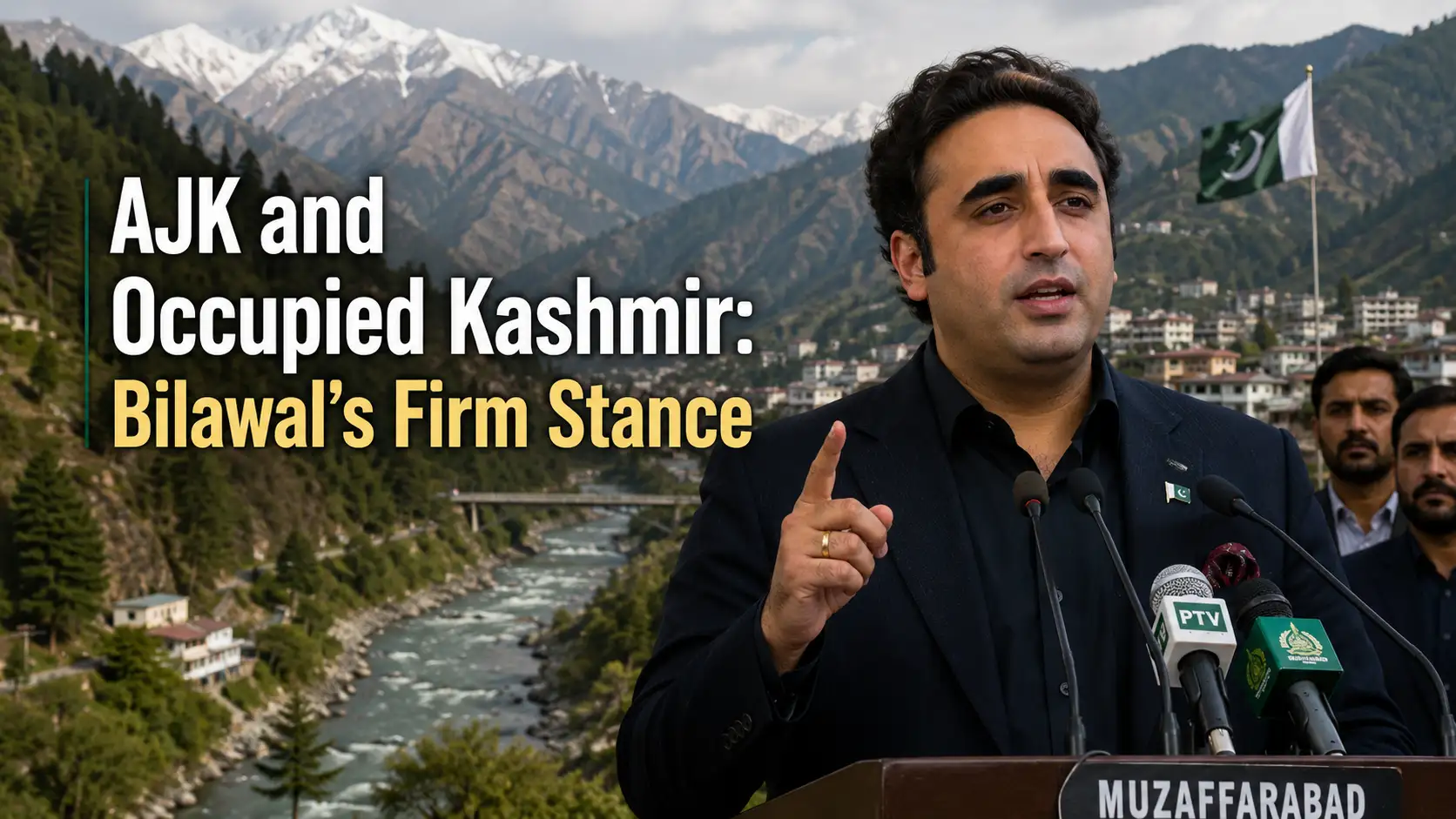

Bilawal Bhutto-Zardari, Pakistan’s Foreign Minister, has emphatically stated, “We will not let AJK become Occupied Kashmir.” This declaration resonates deeply within a region long embroiled in complex geopolitical dynamics. By emphasizing the distinctiveness of Azad Jammu and Kashmir (AJK) from Occupied Kashmir, Bilawal highlights a commitment to safeguarding the rights and autonomy of AJK amidst escalating tensions. His statement is more than political rhetoric; it signifies Pakistan’s broader diplomatic strategy and historical stance on the Kashmir issue. With ongoing disputes over territory marking South Asia’s political landscape, Bilawal’s words signal Pakistan’s firm resolve in the face of potential threats.
Understanding AJK and Occupied Kashmir
To fully grasp the significance of Bilawal’s statement, it’s essential to understand the distinction between Azad Jammu and Kashmir (AJK) and what is termed Occupied Kashmir. AJK, a self-governing administrative division of Pakistan, though part of the larger Kashmir conflict, functions with its own political and legal systems. In contrast, Occupied Kashmir, also known as Indian-administered Kashmir, is a region heavily militarized and marked by political unrest.
The contrasting realities of these regions stem from historical and political experiences. AJK enjoys relative peace and political autonomy with its own legislative assembly and prime minister. This autonomy is a source of national pride for Pakistan, seen as an outcome of historical struggles and diplomatic engagements.
In contrast, Occupied Kashmir faces severe restrictions, human rights violations, and a lack of self-governance. These issues have reverberated internationally, leading to increased diplomatic tensions and calls for intervention. The stark disparity between these regions accentuates the weight of Bilawal’s commitment to protecting AJK.
The historical narratives of AJK and Occupied Kashmir illustrate their divergent paths. While AJK has developed a relatively stable governance structure, Occupied Kashmir struggles under stringent control, with restrictions on freedom of speech and movement. This distinction serves as a backdrop to the resilience and resolve Bilawal articulates in his declaration, underscoring the ongoing commitment of Pakistan to ensure that AJK does not experience similar turmoil seen in Occupied Kashmir.
Furthermore, Bilawal’s message reaches beyond immediate political implications. It evokes emotional and ideological support from Pakistanis and those in the diaspora who have generational ties to the Kashmir dispute. This is not just a struggle for territory but a fundamental issue of identity and autonomy pervading national consciousness.
Historical Context of the Kashmir Conflict
The Kashmir conflict began with the partition of British India in 1947. Kashmir, a princely state at the time, faced the dilemma of choosing between joining India or Pakistan. The Maharaja of Kashmir’s decision to accede to India sparked a series of conflicts, leading to the first India-Pakistan war. The conflict resulted in the establishment of the Line of Control (LoC), dividing Kashmir into regions administered by India and Pakistan.
The historical complexities of Kashmir are underscored by multiple wars and skirmishes, reflecting the deep-seated animosity between the two nuclear-armed neighbours. The question of Kashmir has remained a bone of contention in bilateral relations, with each side holding resolute positions and claiming territorial rights.
Bilawal’s statement must be understood against this backdrop of historical trepidations. The ongoing struggle for self-determination by the people of Occupied Kashmir and Pakistan’s unwavering support for their cause form the crux of this conflict, shaping regional geopolitics.
Historically, the region’s strategic significance has drawn in various global powers, each seeing echoes of their interests in the Kashmir narrative. During the Cold War era, Kashmir was a focal point in the broader geopolitical chess game, with influence extending from regional borders to international arenas. Bilawal’s statement taps into this dense history, aspiring to carve a path that distinguishes Pakistan’s efforts to protect AJK from external interferences.
The Kashmir dispute also intertwined with religious and ethnic identities, further complicating any potential resolutions. Various peace efforts, including the Simla Agreement and the Lahore Declaration, have attempted to bridge divides but often fell short due to the intricate web of underlying issues. Understanding these historical layers is crucial in appreciating Bilawal’s recent declarations.
Pakistan’s Foreign Policy on Kashmir
Pakistan’s foreign policy regarding Kashmir has largely been consistent since the country’s inception. It seeks the resolution of the Kashmir issue through dialogue, according to UN resolutions, advocating for the right to self-determination for Kashmiris. Bilawal’s declaration fits into this broader framework.
Over the decades, Pakistan has sought international intervention and raised the Kashmir issue on various global platforms, aiming to garner support for a plebiscite. Pakistan’s diplomatic engagements are strategically tailored to counter India’s narrative and highlight human rights concerns in Occupied Kashmir.
Bilawal’s statement reinforces Pakistan’s diplomatic stance and emphasizes the importance of AJK’s self-governance. This approach is instrumental in differentiating AJK’s status, ensuring it isn’t conflated with the crisis faced by Kashmiris under Indian control.
This foreign policy is not merely reactive but has elements of proactivity. By continuously pushing the Kashmir narrative on international forums, Pakistan attempts to keep it a part of international discourse, actively seeking resolutions that involve dialogue. Here, Bilawal’s statement signifies ongoing efforts to reinvigorate international interest and encourage a balanced dialogue, which includes stakeholders from global communities.
Additionally, within Pakistan’s broader foreign policy framework, engagement with international bodies like the United Nations underscores a strategic necessity. This engagement serves to not only press for the Kashmir cause but also showcase Pakistan’s commitment to international norms and human rights a diplomatic balancing act requiring both firmness and accommodation.
The Significance of Bilawal’s Statement
Bilawal Bhutto-Zardari’s stance conveys several layers of political, diplomatic, and symbolic significance. Firstly, it underlines Pakistan’s commitment to preserving the autonomy and peace of AJK. By distinguishing AJK from Occupied Kashmir, Bilawal aims to alleviate regional concerns about potential conflicts.
Secondly, it acts as a strategic diplomatic move to counterbalance India’s position in the international arena. By drawing a clear line between the two regions, Pakistan attempts to focus international attention on human rights issues in Occupied Kashmir.
This assertion also serves a domestic purpose, consolidating national unity and affirming Pakistan’s sovereignty and territorial integrity. In times of regional turmoil, maintaining a coherent and united front is crucial for national morale.
More deeply, Bilawal’s statement aligns with a narrative of strength, security, and resilience. By taking a public stance, he not only addresses international stakeholders but also appeals to domestic audiences who have invested familial, emotional, and political capital in the Kashmir issue. It confronts years of regional insecurity by affirming Pakistan’s clear intentions for AJK.
Moreover, Bilawal’s assertion illustrates a commitment to not let external forces dictate the realities of the region’s political landscape. This reinforces a narrative of self-reliance and dedication towards upholding democratic principles within AJK, setting an example for other conflict-ridden regions globally.
Regional Implications and Geopolitical Impact
The implications of Bilawal’s statement extend beyond domestic boundaries, influencing regional and global geopolitics. South Asia remains a volatile region, and any potential shift in the status of AJK or Occupied Kashmir could have far-reaching consequences.
India and Pakistan, being nuclear nations, have pivotal roles in regional stability. Bilawal’s assertion reinforces Pakistan’s stance against any aggression or territorial redefinition attempted by external forces. This stance aligns with a broader push for diplomatic interventions and stability in the region.
The international community watches closely, aware that tensions in Kashmir could lead to broader conflicts. Bilawal’s firm stance thus contributes to ongoing peace efforts, seeking to deter escalation and promote dialogue.
Furthermore, by taking a steadfast position on AJK, Pakistan seeks to project stability and reliability as a regional power broker. This has implications for its relations with neighboring countries, making it an essential stakeholder in South Asian diplomacy. Bilawal’s declaration underscores Pakistan’s intent to be perceived not just as a military power but as a strategic player in peace negotiations.
The geopolitical landscape surrounding Kashmir also has wider implications. The influence of countries like China, through investments and infrastructure projects in neighboring regions, further complicates decisions surrounding the region’s future. Bilawal’s clear articulation of Pakistan’s stance is, thus, aimed at reinforcing a clear threshold in regional interactions.
Public and Political Reactions
The response to Bilawal’s declaration has been mixed, encompassing both domestic and international reactions. Within Pakistan, his statement is largely seen as a reaffirmation of traditional policies and a reassurance of governmental resolve.
For the political opposition, whether inside Pakistan or outside, the focus remains on tangible actions taken to address the situations at hand. Critics often argue that statements need to be followed with concerted international diplomacy for substantial results.
Globally, the response varies with geopolitical interests at play. Countries with vested interests in South Asia, such as China and the United States, often navigate their alliances accordingly. Bilawal’s statement reasserts Pakistan’s position, ready to engage diplomatically for regional stability.
Moreover, in local discourse, there’s an appreciation for Bilawal’s rhetoric that resonates with regional identity and history. His words echo a shared sentiment of resilience and hope for peace, fostering a collective motivation to support diplomatic avenues. The message reaches communities who feel connected to the region’s socio-political fabric, strengthening Pakistan’s internal dialogue on conflict resolution.
Externally, international reactions are also seen through the lens of regional alliances. Bilawal’s stance potentially influences key decision-makers in multilateral discussions, seeking to transform political rhetoric into actionable diplomatic engagements. The challenge lies in converting domestic affirmations into substantive international progress.
Possible Future Scenarios
The future of Kashmir, underpinned by complex historical grievances and geopolitical calculations, remains uncertain. Bilawal’s assertion about preventing AJK from becoming Occupied Kashmir previews possible diplomatic scenarios.
In one scenario, international interventions could elevate peace talks, with renewed discussions on Kashmir’s status and the rights of its people. Such diplomatic avenues, if pursued sincerely, could foster sustained peace in the region.
Conversely, entrenched positions could lead to further stalemates, especially if regional tensions continue to escalate. Bilawal’s firm stance is pivotal in laying a groundwork for peace, despite the challenges inherent in such geopolitical maneuvering.
Potential peace processes might involve trilateral discussions among India, Pakistan, and representatives from both AJK and Occupied Kashmir. Organizations like the United Nations could play crucial mediation roles, aiming to ensure that peoples’ rights and aspirations are central to conflict resolution approaches.
Alternatively, continuing geopolitical alignments and realignments within South Asia could cause ripple effects across global political and economic stability. As stakeholders navigate these complexities, the importance of carefully calibrated diplomatic language, as seen in Bilawal’s statement, becomes ever more crucial in setting the stage for future negotiations.
Comparisons with Historical Statements
When viewed historically, Bilawal’s statement on AJK aligns with a legacy of rhetoric from various Pakistani leaders. From Zulfikar Ali Bhutto’s impassioned speeches to Benazir Bhutto’s diplomatic initiatives, the emphasis on Kashmir has remained consistent.
Such continuity reflects Pakistan’s commitment to a stated foreign policy, portraying a united front irrespective of internal political changes. Bilawal’s declaration is inherently a continuation of this historical dialogue, echoing past leadership while navigating present-day realities.
These historical parallels highlight the longevity and depth of the Kashmir issue, framing Bilawal’s stance within a broader narrative of national commitment.
Moreover, these statements highlight the critical role of leadership in shaping national and international perspectives. By revisiting historical rhetoric, current leaders like Bilawal are able to solidify existing policy directions while adapting them to contemporary challenges, thereby ensuring that past commitments continue to inform strategic decisions across generations.
This continuity offers reassurance not just internally but also in international diplomatic circles, reinforcing Pakistan’s dedication to its foreign policy objectives. Bilawal’s declaration demonstrates the perpetuation of a diplomatic heritage that influences policy decisions even today.
The Role of International Organizations
International bodies like the United Nations hold critical roles in the Kashmir conflict. Bilawal’s statement indirectly calls upon these organizations to heed the Kashmiris’ plight and act as mediators.
The efficacy of such organizations has been subject to scrutiny, often impeded by geopolitical interests and veto power dynamics. Nonetheless, global forums remain vital for facilitating dialogue and advocating human rights.
Pakistan’s call for international intervention reinforces its diplomatic strategy and emphasizes the importance of multilateral engagements in resolving the Kashmir issue. Bilawal’s statement is a strategic reminder of these potential avenues for international diplomacy.
Furthermore, while institutional efficacy may be challenged by political constraints, the focus remains on leveraging these platforms to create a globally recognized narrative for Kashmir. Engaging the international community through multilateral forums could serve as a catalyst for bilateral negotiations, drawing attention to the humanitarian aspects that underpin the dispute.
Moreover, Bilawal’s emphasis on international intervention aligns with a broader objective to promote peace and counter global complacency on Kashmir, urging the world to acknowledge the ongoing complexities in the region and actively participate in formulating a resolution strategy.
Concluding Thoughts on Bilawal’s Declaration
Bilawal Bhutto-Zardari’s resolute statement underscores a complex interplay between regional dynamics, historical legacies, and diplomatic strategies. This remark is not merely a national stance but a reaffirmation of Pakistan’s enduring commitment to Kashmir’s plight and regional stability.
The statement serves multiple purposes: reinforcing Pakistan’s domestic and international policies, advocating for Kashmiris’ right to self-determination, and ensuring AJK’s autonomy remains intact. As tensions fluctuate, Bilawal’s words will likely resonate through ongoing dialogues and potential peace negotiations.
In the realm of international diplomacy, where words often pave the way for action, Bilawal’s declaration marks a crucial step in fostering dialogue, urging governmental and international bodies to work together towards a peaceful resolution.
The ripple effects of Bilawal’s declaration extend beyond immediate political contexts, influencing long-term regional narratives. This statement stands as a testament to Pakistan’s ongoing efforts to seek equity and justice for Kashmir, emphasizing a structured, fair approach to resolving persistent conflicts.
As the world continues to engage with the intricate realities of South Asia, statements like Bilawal’s remain vital tools in navigating the path towards stability and harmony a journey defined not just by political will but a deep-rooted aspiration for peace and coexistence.
Frequently Asked Questions
What is the difference between AJK and Occupied Kashmir?
AJK, or Azad Jammu and Kashmir, is a self-governing administrative region in Pakistan, whereas Occupied Kashmir, also known as Indian-administered Kashmir, is heavily militarized and faces political unrest.
Why is Bilawal’s statement significant?
Bilawal’s statement is significant as it reaffirms Pakistan’s commitment to preserving AJK’s autonomy and highlights its diplomatic stance on the Kashmir issue, countering international perceptions.
How has the international community responded?
The international response varies, with geopolitical interests influencing alliances. Bilawal’s statement reiterates Pakistan’s position on the international stage, aiming for dialogue and regional peace.
What role do international organizations play in this context?
International organizations like the UN can mediate the Kashmir conflict, but their effectiveness is often challenged by geopolitical interests. Bilawal’s statement calls for increased engagement from these bodies.
What could be the future implications of this statement?
The future implications may include renewed diplomatic efforts for peace talks or continued tension if entrenched positions persist. Bilawal’s statement aims to foster dialogue and encourage peaceful resolution.