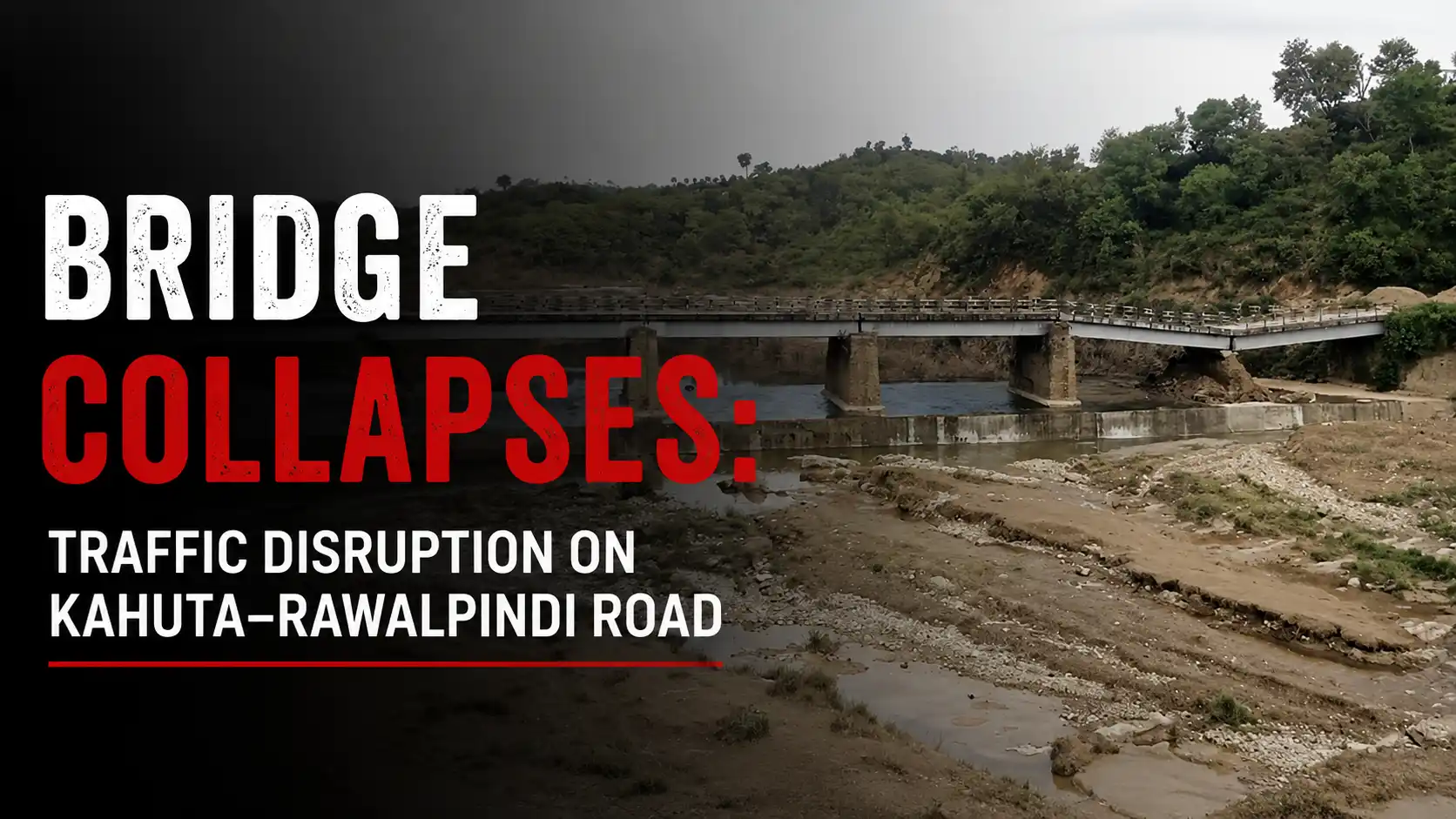
The recent incident where a bridge collapses near Bewor on the Kahuta–Rawalpindi road has sent shockwaves through the region, highlighting significant concerns regarding infrastructure integrity. This bridge not only served as a vital connection between Rawalpindi and Azad Kashmir but also facilitated commercial activities and local transport, making its sudden demise particularly disruptive. Such infrastructure failures can have far-reaching implications, impacting daily commutes, emergency services, and economic activities in the affected areas.
The event has raised questions about maintenance practices and safety standards for critical transportation links in the region, fueling discussions among residents, local authorities, and government officials alike. In this article, we will delve into the implications of this collapse, explore its causes, and examine the historical context of bridge safety in Pakistan.
Understanding the Incident: What Led to the Bridge Collapses?
The bridge collapses occurred in the Bewor area, a site known for its heavy traffic and strategic importance. Experts point to several factors that may have contributed to this unfortunate event, including deteriorating infrastructure, heavy vehicle loads, and inadequate maintenance. Local authorities have been urged to conduct thorough inspections and assessments of similar structures to prevent further incidents.
Deterioration of bridges is often a slow process, but various external factors can accelerate the decline. In this case, the heavy traffic between Azad Kashmir and Rawalpindi plays a significant role in the wear and tear of such structures. Additionally, geological and weather conditions in the region may also render bridges more susceptible to failure, especially when combined with excessive load-bearing. Efforts to fortify existing structures against these conditions may have been insufficient in this case, resulting in a tragic collapse.
The consequences of a bridge collapses go beyond the immediate disruption; they can lead to long-term ramifications for local communities. The halted traffic not only impedes daily commutes but also delays emergency services, creating a ripple effect that can worsen other pre-existing challenges. Observers have called for an urgent review of region-wide infrastructure to ensure that such tragedies do not reoccur.
The bridge’s location is crucial, acting as a key arterial route for both personal and commercial transportation. Beyond individual commuters, freight and delivery services heavily rely on this bridge for efficient logistics. When such a critical junction fails, the ramifications are not just localized. The reduction in connectivity can have a cascading effect on economic activities as businesses may struggle to meet demands, resulting in financial losses that could stretch well into the future. Additionally, the psychological impact on local communities, who must now adapt to new routes and increased travel times, cannot be ignored.
The Immediate Aftermath: Traffic Disruptions and Local Reactions
In the wake of the bridge collapses, traffic along the Kahuta–Rawalpindi road has ground to a halt. Vehicles have been rerouted, creating a backlog on alternate routes that were not designed to handle such heavy traffic. Commuters and local businesses are feeling the effects acutely, leading to frustration and uncertainty about how long these disruptions will last.
Local residents, many of whom rely on this vital roadway for their livelihoods, have expressed their concerns over safety and maintenance practices. In public forums and social media platforms, people have shared their experiences and frustrations, emphasizing the need for immediate action from local authorities. Calls for accountability have intensified, as residents demand transparency about maintenance schedules and funding allocations for infrastructure projects.
The local government is likely facing mounting pressure to address the immediate effects of the bridge collapses. Community leaders are advocating for emergency measures, which could include temporary alternative routes or expedited repairs. However, restoring normalcy will also necessitate long-term strategies to enhance the safety and reliability of existing infrastructure.
Interestingly, the collapse has become a catalyst for solidarities and alliances among various stakeholders. Community groups have emerged, advocating for better oversight and more involvement in local governance. These groups are demanding not just short-term fixes but comprehensive plans that assure long-lasting solutions. In addition, discussions have started circulating about applying global best practices, such as those seen in countries with advanced infrastructure resilience strategies.
Historical Context: Infrastructure and Safety in Pakistan
This bridge collapses is not an isolated incident; it fits into a broader narrative concerning infrastructure safety in Pakistan. Over the years, numerous reports have indicated that many bridges across the country are in dire need of repair or replacement. These concerns often stem from a combination of inadequate funding, poor maintenance practices, and a lack of engineering oversight in the construction phases.
An examination of past incidents reveals a pattern of negligence that has led to infrastructure failures throughout the nation. For instance, the collapse of several other bridges in previous years each with its own unique circumstances serves as a stark reminder that the issue is systemic rather than isolated. The current state of infrastructure plays a significant role in determining the safety of residents who depend on these essential connections.
When examining the history of infrastructure investment in Pakistan, it’s clear that external factors including economic challenges and political instability have hindered meaningful progress. As a result, public infrastructure has often been viewed as a secondary concern, despite its critical role in fostering national development and safety.
Historical apathy towards infrastructure improvement can also be attributed to discrepancies in project prioritization. Often, political agendas and short-term visions overshadow essential projects. For example, funds meant for bridge repairs or reinforcements might get redirected to newer, high-visibility projects, leaving older structures vulnerable. This shortsightedness is not just financially imprudent but dangerously neglectful, allowing potential risks to accumulate without adequate intervention.
Safety Regulations and Maintenance Practices: A Critical Review
The unfortunate bridge collapses has amplified discussions about the safety regulations governing infrastructure in Pakistan. Regulations exist, but their implementation often falls short due to a lack of resources, enforcement, and political will. Without rigorous inspections and timely repairs, the already vulnerable infrastructure stands at even greater risk.
Experts argue that outdated regulations and a lack of standardization in construction practices further exacerbate the problem. To understand how these failures can persist, we must consider the various stakeholders involved, including government agencies, construction firms, and civil engineers. Each has its role to play, but without robust accountability mechanisms, the existing practices will not improve.
The time has come for authorities to take a more proactive approach in addressing infrastructure concerns. Rather than waiting for a disaster to occur, stakeholders need to invest in preventive measures and accountability frameworks. A well-maintained infrastructure is not only essential for safety but also for boosting local economies and improving the quality of life for residents.
Moreover, there’s an urgent need to digitalize monitoring systems to keep real-time tabs on infrastructure health. By deploying sensors and integrating them with central monitoring hubs, authorities can receive instant feedback on structural stresses or weaknesses, allowing for rapid intervention before failures occur.
Systemic training for personnel involved in maintenance operations can also significantly reduce risk levels. By learning from international benchmarks and modernizing training modules, the skill levels of local teams can be uplifted to meet global standards, further preventing incidents like this.
Also Read This Article : Mir Raza Ali Case: Police Surgeon Says Photos and Post-Mortem Do Not Match
Community Impact: Social and Economic Consequences
The socio-economic repercussions of a bridge collapses extend far beyond the immediate traffic disruptions; they can alter local economies and community dynamics significantly. Local businesses that rely on transportation such as logistics, services, and retail are already feeling the pinch as customers find it increasingly difficult to access their services.
Furthermore, transport delays can elevate costs for suppliers and consumers alike. Businesses that depend on timely deliveries may face penalties and lose customers, leading to ripple effects throughout the local economy. Industries such as agriculture and manufacturing may also experience disruptions, as their supply chains depend heavily on stable transportation links.
Socially, the collapse of a bridge has ramifications as well; community members may face difficulties in accessing essential services such as healthcare and education. In an emergency, delays in accessing medical facilities can have life-threatening consequences. Schoolchildren may find themselves unable to travel safely, affecting their education and overall well-being.
There’s also an undercurrent of psychological stress that community members experience. The uncertainty about what infrastructure might fail next creates a pervasive sense of insecurity. Families might contemplate relocation, schools might lose enrolments, and major events might be canceled until normalcy is restored, affecting the social fabric in myriad ways.
No less important is the potential impact on property values in areas affected by the failure. As confidence in local infrastructure wanes, potential buyers might shy away, causing property prices to dip, further impacting the local economy and affecting homeowners’ financial stability.
Environmental Considerations: Impact of the Collapse
The environmental implications of bridge collapses deserve attention as well. While immediate traffic disruptions often take center stage, other consequences may linger. The Kahuta–Rawalpindi area is surrounded by a delicate ecosystem that could be adversely affected by the failure of such a critical structure.
In addition to immediate fallout, there could be longer-term environmental issues. For example, the collapse may lead to increased erosion in surrounding areas or even impact local habitats. With heavy machinery brought in for repairs, the ecological balance could be disrupted unless careful planning and responsible practices are employed.
The bridge collapses also prompt a broader reflection on how infrastructure projects consider environmental sustainability. When planning and maintaining public structures, authorities must weigh both human and ecological costs. Fostering sustainable practices may not only help avoid disasters like this but also promote a healthy coexistence between development and nature.
Furthermore, the remediation process if not managed correctly can introduce pollutants into the soil and water systems. Chemical run-offs and debris from repair works can degrade local flora and fauna if containment measures aren’t strictly adhered to.
A future-oriented approach needs to integrate green engineering solutions, such as ecological verge maintenance, eco-friendly materials, and biodiversity-focused urban planning. These measures will not only minimize environmental footprint but also ensure that man-made structures synergize more harmoniously with natural landscapes.
Future Infrastructure Plans: Need for Reassessment
In light of the bridge collapses, immediate reactive measures must be supplemented with a broader strategic vision for future infrastructure. Policymakers and engineers must collaborate to reassess existing structures and invest in new, more resilient designs that take into account not only current traffic demands but also long-term sustainability. The challenges posed by climate change, population growth, and geographic conditions necessitate a forward-thinking strategy.
Many experts advocate for the adoption of modern engineering practices and materials that promise greater durability. The opportunity exists to employ data analytics and monitoring technologies to assess structural integrity on an ongoing basis, ensuring proactive measures before issues escalate. Learning from past mistakes can also help steer future investments in infrastructure.
Moreover, a focus on community engagement can ensure that infrastructure development meets the needs of the people who will utilize it. By involving local communities in the planning process, authorities can address their unique concerns and preferences, fostering a sense of ownership and responsibility.
Seeking global partnerships and collaborations with countries excelling in infrastructure might offer insights previously overlooked. International expertise could guide local strategies, introducing innovative materials, techniques, and technologies to bolster resilience and adaptability against future challenges.
In tandem, authorities might consider formalizing public-private funding models. By incentivizing private sector involvement, the financial burden can be shared, facilitating larger, more robust infrastructure projects that could have been unfeasible under public budgets alone.
Lessons Learned: A Call for Action
The recent bridge collapses serves as a clarion call for decisive action—not only for immediate repairs but for a comprehensive reevaluation of how infrastructure is perceived and managed in Pakistan. Lessons learned from this incident can pave the way for informed decision-making that prioritizes safety and sustainability.
Engaging stakeholders from various sectors including government bodies, civil society, and private firms might result in collective solutions that address the root causes of infrastructure failures. This incident has highlighted that investing in infrastructure goes hand-in-hand with investing in community resilience and safety.
Ultimately, the bridge collapses must catalyze dialogue about accountability, community involvement, and the necessity of modern infrastructure standards. As strategies are formulated to deal with the aftermath, authorities and residents alike must remain vigilant and ensure that safety considerations remain at the forefront of future infrastructure projects.
This situation also underscores the need for establishing formal mechanisms for transparent public dialogues post-crisis. By creating platforms where citizens can freely express concerns, share affluent information, and co-create solutions, trust and collaboration between government entities and communities can be strengthened.
More than anything, the tragedy underscores an urgent necessity for sustained vigilance. In a rapidly evolving world, infrastructures must adapt, systems must review, and communities must iteratively engage to ensure the balance of safety, functionality, and growth.
Frequently Asked Questions
What caused the bridge collapses near the Bewor area?
The bridge collapses near Bewor were likely due to multiple factors including structural deterioration, heavy vehicle loads, and insufficient maintenance over time.
How has the collapse affected transportation between Azad Kashmir and Rawalpindi?
The bridge collapses have severely disrupted traffic flow, causing significant delays and rerouting of vehicles, leading to increased congestion on alternate routes.
What measures are being taken to address the impact of the bridge collapses?
Local authorities are assessing the situation and considering emergency measures to restore traffic flow while planning for long-term infrastructure improvements.
What are the implications for local businesses after the collapse?
Local businesses relying on transportation are experiencing delays, impacting customer access and supply chains, which can lead to economic downturns in the area.
Will such infrastructure issues be addressed in the future?
Yes, the bridge collapses have intensified calls for better maintenance practices and investments in new infrastructure to prevent similar incidents from occurring in the future.




 Muhammad Abdullah |
August 6, 2026
Muhammad Abdullah |
August 6, 2026