







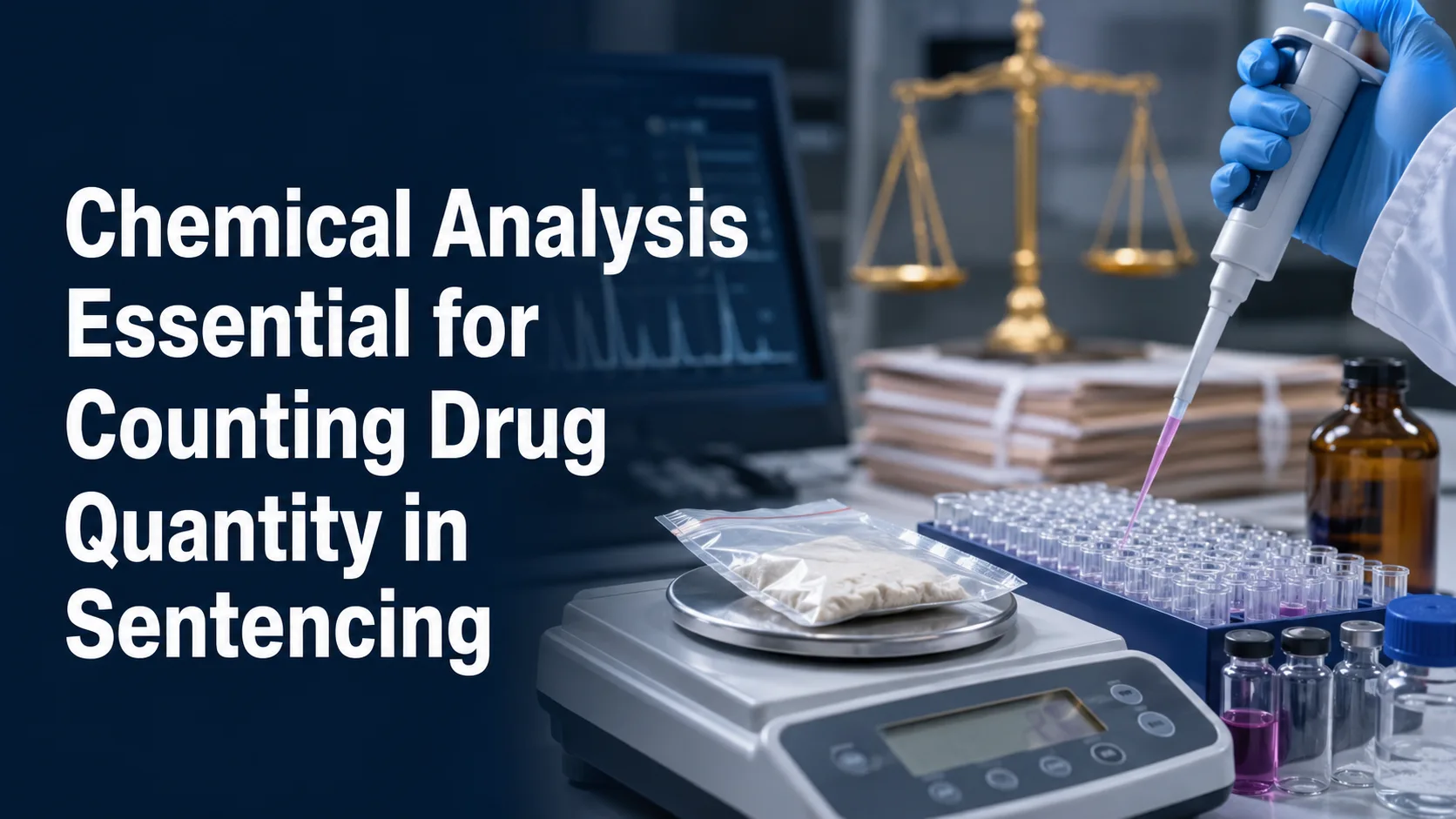

Chemical analysis in sentencing has recently become a pivotal focus following the Supreme Court’s ruling that only narcotics quantities subjected to forensic examination can be legally acknowledged in court for determining sentences. This ruling underscores the intricate relationship between chemical analysis and legal protocols in narcotics cases. It sets a precedent that insists on robust scientific methodology as a cornerstone of justice, emphasizing that quantities not analyzed cannot be factored into convictions or penalties.
The Significance of the Supreme Court’s Ruling
The Supreme Court’s decision marks a significant leap in the legal landscape surrounding narcotics. By mandating chemical analysis as a prerequisite for sentencing, the court is pushing for a higher standard of evidence in drug-related cases. Historically, many drug convictions have relied on estimates or initial field tests that are not as definitive as comprehensive forensic analyses. This can lead to inaccuracies in determining guilt or the severity of sentences. A judicial system that emphasizes thorough chemical analysis reduces the risk of wrongful convictions and ensures fairness in sentencing.
This ruling addresses critical flaws in previous judicial processes, where the absence of chemical analysis allowed for considerable discrepancies in sentencing. The court’s insistence on reliable evidence through chemical analysis aligns with broader efforts to improve legal standards. Moreover, it possibly cultivates a more extensive reliance on forensic science, enhancing the integrity of legal outcomes and encouraging the use of modern, accurate methodologies in law enforcement.
As a consequence, this ruling opens the floor for discussions around the responsibilities of law enforcement when handling narcotics. It not only transforms how evidence is collected and evaluated but also raises questions about the training and resources available for forensic analysts. The increased emphasis on scientific methods represents a move toward a more evidence-based legal framework.
This decision by the Supreme Court highlights a necessary evolution within law enforcement and judicial systems. By insisting on scientific accuracy and validity, it reflects a growing awareness of the need to balance legal practices with scientific advancements. This transformative approach not only uplifts judicial reliability but also modernizes practices to ensure the efficacy and credibility of legal proceedings.
Furthermore, this ruling could serve as a catalyst for other countries grappling with similar issues to reevaluate their legal standards regarding drug offenses. It sets a standard that transcends national borders, promoting a universal inclination toward more scientifically sound approaches within judicial settings. This global resonance may lead to more harmonious international cooperation in combatting drug trafficking and related crimes.
Understanding Chemical Analysis
Chemical analysis refers to the set of processes employed to determine the composition and quality of substances. In the context of narcotics, it involves detailed examinations using sophisticated techniques to ascertain the precise nature and amount of a controlled substance. These methods include chromatographic techniques, mass spectrometry, and spectroscopic techniques, which provide reliable data crucial for legal proceedings.
The importance of these analyses cannot be overstated. Field tests used by law enforcement may provide preliminary indications of the substance present; however, they can lead to inconclusive or erroneous implications regarding the narcotic’s nature and quantity. In contrast, comprehensive chemical analyses conducted under controlled conditions ensure the legitimacy and reliability of the data presented in court. This not only fosters justice but also aids the judicial process in establishing culpability with more accuracy.
Moreover, chemical analysis supports the wider criminological understanding of drug markets. By systematically analyzing seized substances, law enforcement can gain insights into the trends and patterns of drug trafficking, contributing to more effective law enforcement strategies. This dual utility of chemical analysis enhances law enforcement capability, making it a vital element of contemporary crime-fighting methodologies.
One of the most critical aspects of chemical analysis is its ability to discern between various chemical compounds, some of which may appear visually identical but have vastly different legal classifications and effects. For instance, substances like fentanyl and heroin may look similar but have different legal implications. Chemical analysis provides the conclusive evidence needed to distinguish between such substances, ensuring that legal outcomes are appropriate to the substances involved.
Beyond the courtroom, the reliable data generated from chemical analysis can aid public health officials in understanding the landscape of drug abuse and addiction. By tracking the prevalence and distribution of certain narcotics, public health interventions can be better tailored to address emerging trends, leading to more effective prevention and rehabilitation programs. This adds another layer of utility to chemical analysis, extending its benefits beyond the realm of law enforcement into broader societal well-being.
The Implications for Law Enforcement
The Supreme Court’s ruling that only chemically analyzed drugs can be considered in court has far-reaching implications for law enforcement agencies. It compels these agencies to refine their procedures for collecting and handling evidence. Officers must prioritize the integrity of narcotic samples and ensure they are sent for extensive chemical analysis. Such changes may necessitate increased training and the allocation of resources towards forensic analysis.
In many jurisdictions, this ruling could lead to a surge in the number of cases being revisited or appealed due to previous convictions based on untested samples. Law enforcement agencies may find themselves facing increased scrutiny regarding how they acquire and handle narcotics. This shift in focus could foster stronger partnerships between law enforcement and forensic labs, creating a more effective framework for managing drug-related evidence.
Ultimately, this ruling underscores the need for a revisitation of existing protocols to raise the bar for evidence admissibility in drug cases. It can promote the development of standardized procedures for responding to drug-related offenses, resulting in a more cohesive approach across different jurisdictions and improving the overall effectiveness of drug enforcement strategies.
To adapt to these changes, law enforcement agencies might need to engage in significant restructuring, particularly in terms of personnel training and equipment acquisition. The introduction of advanced forensic technologies and methodologies necessitates continuous learning and adaptation within the force. Officers on the ground and analysts in laboratories must be well-versed with the new standards and requirements to maintain the chain of custody and evidence integrity.
Moreover, the partnership between law enforcement and scientific institutions may deepen as a result of the ruling. Such collaborations can be instrumental in advancing the forensic sciences, as practical field experiences inform scientific research, leading to innovations that further refine analytical techniques. This bi-directional flow of knowledge ensures that both scientific and enforcement communities remain at the forefront of tackling narcotic-related challenges.
Forensic Science and the Legal System
Forensic science plays a critical role in the legal system, acting as a bridge between scientific inquiry and judicial processes. The Supreme Court’s emphasis on chemical analysis underscores the necessity for forensic validity in the courtroom. Forensic experts are responsible for interpreting complex scientific data, making it essential for them to communicate their findings clearly to judges and juries.
The path from crime scene to courtroom requires meticulous attention to detail, as any mishap in the analysis or presentation of evidence can result in the dismissal of critical data. Forensic specialists must maintain their credibility by conforming to rigorous professional standards. This includes adhering to protocols during the analysis and ensuring that results are not only accurate but can withstand legal scrutiny.
Moreover, the integration of forensic science into the legal system fosters a symbiotic relationship between law and science. This interplay allows for a more nuanced understanding of drug offenses, as it provides a scientific basis for legal arguments. Greater reliance on forensic analysis encourages continuous learning and adaptation within the judicial process, promoting a culture of accountability that elevates the legal standards applied in drug-related cases.
The role of forensic science extends beyond the simple presentation of data. Experts often serve as educators within the legal setting, explaining complex methodologies and their implications to a lay audience. This requires a unique blend of rigorous scientific training and the ability to translate findings into understandable language. Such expertise ensures that justice remains accessible and comprehensible, bridging potential gaps between scientific and legal interpretations.
Additionally, an increased reliance on forensic sciences may foster more robust legal precedents over time. As judicial systems grow more accustomed to employing scientific methodologies consistently, case law will evolve, reflecting an enriched understanding of how scientific evidence should be interpreted and weighed. This evolution stands to benefit not only current legal proceedings but also sets the stage for a more scientifically informed judicial system in the future.
Also Read This Article: PM Welcomes Google’s First Office in Pakistan
The Role of Public Awareness
Public awareness around the importance of chemical analysis in sentencing is crucial for the effective implementation of the Supreme Court’s ruling. As citizens become more informed about their rights and the judicial process, they will demand greater accountability from law enforcement and judicial actors. This increased scrutiny can drive systemic reforms, pushing governmental agencies to adopt best practices in forensic science implementation.
A well-informed populace can affect how drug policies are structured and implemented. Advocacy groups and civil society organizations can leverage public knowledge to influence legislation that mandates comprehensive chemical analysis in drug cases. The greater the demand for transparency and accountability, the more likely law enforcement agencies are to prioritize scientific methodologies in their operations.
Furthermore, public discourse can also aid in demystifying forensic science. Many individuals have a limited understanding of the complexities involved in forensic evaluations. Through education and advocacy, communities can gain insights into how essential scientific methodologies underpin judicial processes. This public understanding can play an active role in shaping drug policies that resonate with broader societal values, ensuring that justice is served more equitably.
Raised public awareness also has the potential to bolster community relations with law enforcement. When citizens understand and support the principles guiding drug policies and enforcement, the resulting trust can lead to more cooperative relationships. Communities that are well-informed and engaged are better positioned to offer constructive feedback and collaborate on initiatives aimed at improving public safety and legal fairness.
Moreover, the ripple effect of public awareness in matters of forensic science and sentencing can extend to educational institutions, prompting curriculum developments that prioritize this field. As more students are exposed to the critical role of forensic science in real-world legal scenarios, the field may attract a new wave of professionals motivated to advance scientific standards within judicial processes. Such educational initiatives can have long-lasting impacts on the landscape of forensic science and justice.
Challenges in Implementing the Ruling
While the Supreme Court ruling represents a significant advancement in how drug-related cases are prosecuted, it does not come without complications. One of the primary challenges facing law enforcement is the capacity to handle increased workloads resulting from mandatory chemical analysis. Laboratories are often under-resourced and may struggle to keep pace with the influx of samples needing evaluation.
Moreover, variations in resources and access to advanced analytical technologies can lead to disparities in the quality of analyses conducted across different jurisdictions. Some regions might have state-of-the-art facilities, while others may lack basic analytical capabilities, leading to inequalities in the judicial process. These inconsistencies could inadvertently cause differences in sentencing outcomes, contradicting the very intent of the Supreme Court ruling to create a fairer system.
Finally, there remains a potential for legal challenges regarding the interpretation and implementation of this ruling. As defendants and their counsel seek to exploit ambiguities, courts may find themselves faced with complex legal questions that could stall the progress envisioned by this decision. Ongoing dialogue between legal experts, law enforcement, and forensic scientists will be essential to navigate these challenges and ensure that the full implications of this ruling are realized.
To address these challenges effectively, the judicial system may need to advocate for increased investment in forensic sciences, ensuring that all jurisdictions possess the capabilities required to perform accurate chemical analyses. Government and private sector partnerships could be explored to revitalize under-resourced laboratories, thereby ensuring more equitable access to scientific methodologies.
Additionally, developments in technology might offer a lifeline in overcoming some of the logistical hurdles associated with increasing workload demands. The adoption of automated systems and artificial intelligence in laboratories could help streamline processes, reduce manual errors, and expedite sample analysis, addressing capacity issues while maintaining the integrity and precision of forensic examinations.
The Future of Drug Policy
The Supreme Court’s ruling on chemical analysis in sentencing can herald a transformative era for drug policy in Pakistan. A rigorous approach to forensic analysis not only impacts legal proceedings but implies a shift in the broader approach to drug control. With a focus on solid, scientifically validated evidence, policymakers can develop more effective strategies to tackle drug-related offenses.
Investing in forensic science not only enhances the justice system but also opens avenues for public health strategies. By understanding the quantity and composition of narcotics involved in drug offenses, authorities can better target prevention and rehabilitation efforts. Enhanced data collection can inform public policies that address the root causes of drug addiction, focusing resources on treatment and education rather than solely punitive measures.
In conclusion, the emphasis on chemical analysis catalyzed by the Supreme Court ruling can inspire a balanced, well-informed approach to drug policy in Pakistan. The fusion of forensic science with legal processes promises a more equitable outcome for those involved in drug cases, paving the way for a system rooted in fairness and accountability.
This shift toward evidence-based policy making can have a domino effect on related sectors, such as healthcare and education, where integrated strategies could be developed. By aligning drug control efforts with public health policies, a more holistic approach to addressing the challenges of narcotics can be undertaken, ultimately benefiting society as a whole.
The evolving landscape of drug policies may also necessitate changes in international relations and cooperation. By establishing robust practices at the national level, Pakistan could position itself as a leader in aligning regional efforts toward a more cohesive and scientifically grounded strategy for combating drug trafficking and abuse. Such collaborations could potentially reshape regional dynamics in the fight against narcotic crimes, leading to more unified, cooperative measures across borders.
Conclusion
In summary, the Supreme Court ruling that mandates chemical analysis in sentencing has significant implications for the legal landscape concerning drug offenses in Pakistan. By emphasizing the necessity for scientific verification of evidence, this decision enhances the integrity of the judicial process, promotes fairness, and ensures that sentences are based on reliable data. The ruling calls for a reevaluation of law enforcement practices, compelling agencies to refine their methods of collecting and analyzing evidence.
Moreover, public awareness and the role of forensic science become increasingly crucial. As communities become more informed about these legal shifts, they can advocate for better practices and accountability in drug enforcement. While challenges such as resource limitations and potential disparities in laboratory capabilities will need careful navigation, the ruling serves as a robust foundation from which a more just approach to drug policy can evolve. Ultimately, the integration of rigorous scientific methodologies into the judicial process not only protects individual rights but also equips society at large with a more fortified framework for addressing drug-related challenges.
The evolution towards an evidence-based and scientifically validated legal system signifies new horizons for justice and fairness. By bridging the gap between legal imperatives and scientific inquiry, this ruling sets the stage for an era where decision-making processes are transparent and reasoned, fostering a legal culture grounded in integrity and accountability.
Frequently Asked Questions
What does the Supreme Court’s ruling entail regarding drug sentencing?
The Supreme Court ruled that only quantities of narcotics that have undergone chemical analysis can be considered during sentencing. This emphasizes the importance of reliable forensic evidence in the legal process.
Why is chemical analysis important in drug cases?
Chemical analysis provides definitive evidence regarding the composition and quantity of narcotics, ensuring that convictions are based on scientifically validated data, which enhances the overall integrity of the judicial system.
What are the implications of this ruling for law enforcement?
The ruling requires law enforcement agencies to improve their evidence handling procedures, ensuring that all seized narcotics undergo chemical analysis before court proceedings, potentially leading to greater accountability and resource allocation.
How might this ruling affect public perception of drug policies?
The emphasis on scientific validation can increase public trust in the judicial process, motivating communities to demand accountability and advocate for better drug laws and enforcement practices.
Will this ruling lead to changes in drug policy in Pakistan?
Yes, the ruling may encourage policymakers to develop more informed and evidence-based drug policies, focusing on prevention and rehabilitation rather than solely punitive measures, which are integral to effective drug control.