






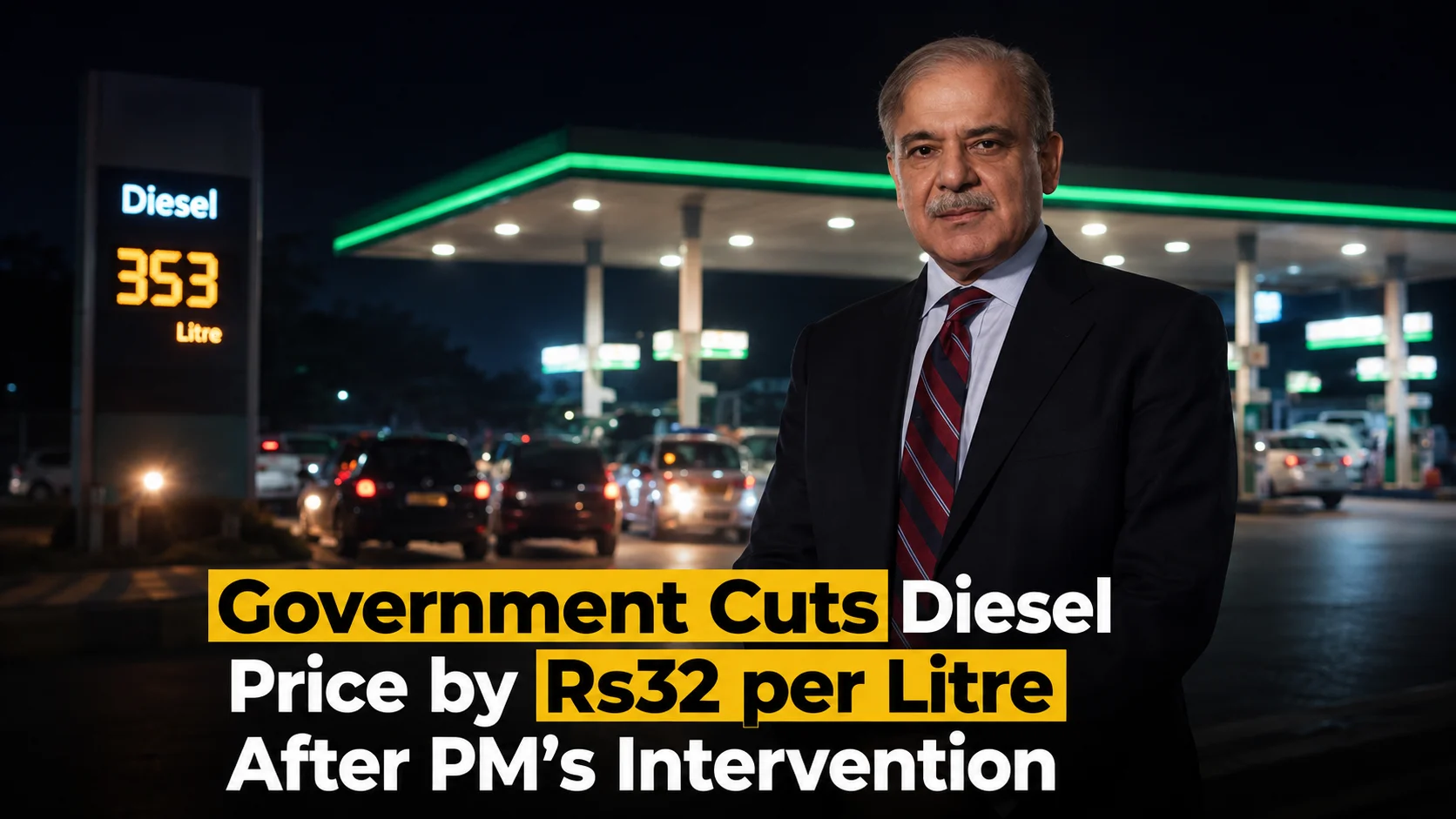

The recent announcement concerning the diesel price cut marks a significant shift in the government’s approach to fuel pricing in the country. The diesel price cut of Rs32 per litre came after direct intervention from Prime Minister Shehbaz Sharif, who directed the petroleum minister to take immediate action in providing relief to the public. This move, primarily aimed at easing the economic burden on consumers struggling against rising inflation, is expected to have a multifaceted impact on the economy, consumer behavior, and the overall market dynamics.
The government’s negotiation with oil refineries and their eventual agreement to lower diesel prices opens doors for discussions on fuel pricing, energy policies, and the broader economic landscape. As we delve deeper, we will explore the implications of this decision and how it aligns with the government’s broader objectives of easing financial pressures on citizens.
Understanding the Context Behind the Diesel Price Cut
To fully grasp the significance of the diesel price cut, one must first understand the broader economic context. Rising fuel costs have been a substantial source of strain for households and businesses alike. With inflation rates soaring, many citizens find it increasingly challenging to make ends meet. Diesel, a crucial fuel for transportation and agriculture, plays a pivotal role in the economy. The spike in fuel prices often translates into higher costs for goods and services, perpetuating a cycle of inflation and discontent. The Prime Minister’s intervention showcases a proactive approach aimed at mitigating these rising costs, appealing to the citizens who have been vocal about their struggles.
This diesel price cut also comes during a time when global oil prices are highly volatile, influenced by geopolitical tensions, supply chain disruptions, and fluctuating demand post-pandemic. The effectiveness of domestic fuel pricing and government responses to these changes are under scrutiny, making this current reduction significant in establishing trust between the public and the government. Furthermore, it invokes conversations about sustainability and the need to explore alternative energy sources alongside conventional fuels.
Moreover, the negotiations between the government and oil refineries reveal a concerted effort to collaborate for public welfare rather than purely profit-driven motives. This sets a precedent for how future negotiations regarding fuel and energy prices might be approached, putting consumer welfare at the forefront. The ripples of this strategy may influence companies to reconsider their pricing strategies in alignment with government efforts on social responsibility.
Beyond immediate economic relief, the cut in diesel prices can be seen as an opportunity for the government to enhance its global image. Internationally, the move suggests a commitment to stabilizing essential commodity prices, a vital factor in maintaining sustainable development goals. This proactive stance might attract international investors looking for economic environments where consumer interests are actively protected. Additionally, countries grappling with similar fuel issues may watch and potentially model elements of this approach, aiming to mitigate domestic inflations and improve general economic resilience.
Domestically, the cut in diesel prices serves as a catalyst for in-depth discussions around the country’s energy policy. Beyond merely focusing on current prices, it raises questions about long-term strategies for energy security, diversification of energy sources, and reduction of greenhouse gas emissions. Such discussions are particularly pertinent in the face of global climate change initiatives where countries are expected to decrease reliance on fossil fuels. Therefore, utilizing this cut as a stepping stone towards innovative energy solutions could yield wide-ranging benefits and position the country as a leader in sustainable energy practices.
The Socioeconomic Implications of the Diesel Price Cut
The decision to cut diesel prices has far-reaching socioeconomic implications that can enhance or impede market dynamics. Firstly, for consumers, the diesel price cut offers immediate financial relief. Families that depend primarily on diesel for transportation or those who run small businesses using diesel generators are likely to experience a reduction in their monthly expenses. Lower fuel prices can potentially increase disposable income, allowing citizens to allocate more resources toward other essential needs.
Additionally, reduced transportation costs can lead to a decrease in the prices of goods and services, particularly in sectors reliant on diesel for logistics and distribution. By lowering operational costs, businesses may find it viable to either maintain their prices or even provide discounts to customers, contributing to economic activity resurgence. As consumers spend more, the overall demand in the economy may revive, fostering a more robust market environment.
However, while the diesel price cut aims to relieve immediate financial pressures, it risks setting a precedent for future dependency on government intervention for fuel pricing. Continuous fluctuations in prices may lead to uncertainty in the market, where businesses and consumers alike cannot predict future costs. It raises critical discussions around fiscal policies, market regulations, and the government’s long-term strategy regarding energy and fuel pricing.
The socioeconomic benefits also present challenges that revolve around striking a balance between short-term relief and sustainable economic policy. The current decision to lower prices should not overshadow the need for comprehensive measures addressing systemic economic issues. There is a risk of increasing dependency on subsidies, which could distort market mechanisms and deter private sectors from optimizing efficiency in production and distribution. Policymakers need to be wary of such biases while crafting future economic strategies.
Moreover, this reduction must be leveraged as an opportunity to enhance financial inclusivity and ensure equitable distribution of economic benefits. Targeting funds and incentives toward lower-income demographics most affected by fuel prices could ensure that the relief is felt across all social strata. Integrating such considerations into the wider economic framework would help amplify the positive outcomes expected from the diesel price reduction, fostering a more equitable society.
How the Diesel Price Cut Affects Various Industries
Different industries will respond distinctly to the diesel price cut, exemplifying the interconnectedness of fuel costs with overall economic health. The transportation sector, one of the most directly impacted, stands to gain significantly. Lower fuel costs will ease transportation expenses for logistics companies and public transport services, potentially leading to more favorable consumer prices.
For the agricultural sector, which is heavily reliant on diesel-powered machinery, farmers could see an increase in profit margins. As input costs decrease, they may have the potential to enhance their production capabilities or diversify crops, ultimately benefiting the market with a broader supply of goods. However, the savings could also be viewed skeptically, with concerns about whether farmers will reinvest savings or pass on benefits to consumers.
The construction industry will also likely benefit from the diesel price cut. Heavy machinery often runs on diesel, and with costs decreasing, construction firms may tackle projects at a lower overhead. This could lead to increased productivity and a quicker turnaround on projects, potentially stimulating job growth. However, businesses need to remain vigilant regarding eventual price recoveries that may erase these benefits, underscoring the need for strategic financial planning.
Industries focusing on supply chain management may also experience reverberating effects due to the diesel price cut. Lowered logistics costs can result in enhanced efficiencies and reduced complexities in delivering products from manufacturers to retailers. This ripple effect can be significant for retail sectors where slender margins can benefit greatly from reduced operational costs. Such catalytic changes may lead to increased competitiveness and innovation, further positioning domestic industries against global players in the international arena.
Furthermore, the hospitality industry, which indirectly relies on oil prices for transportation of goods and services, could soon witness favorable outcomes. Reduced transportation costs can permeate through raw material supply chains, affecting various aspects from food sourcing to guest logistics. This may allow the sector to offer competitive offerings and promotions, drawing more customers and increasing profit margins. Therefore, understanding and strategizing around these indirect benefits is crucial for maximizing industrial gains from this price cut.
Political Ramifications of the Diesel Price Cut
The political landscape inevitably intertwines with economic decisions, and the diesel price cut is no exception. The government’s move to lower diesel prices can be perceived as a strategic maneuver to foster goodwill among constituents, particularly during challenging economic times. It may be viewed as a political play aimed at winning public favor ahead of upcoming electoral cycles.
Moreover, the reduced diesel price can serve as a rallying point for the ruling party, showcasing their responsiveness to public concerns and economic hardships. Given the intensified polarization in the political arena, swift actions like these can act as both a shield and a sword in political discourse, used to defend against critiques while fortifying support bases.
However, the decision also opens avenues for criticism, especially from opponents who may argue about the sustainability of such interventions. Questions around the economic implications of continually subsidizing fuel prices may arise, prompting debates among policymakers, stakeholders, and experts regarding strategic fiscal management. The validity of these concerns amplifies the importance of transparent communication from the government to ensure public trust regarding current and future economic policies.
This decision also signals an emerging trend where economic policies are directly linked with electoral prospects. Amid rising global awareness and demand for economic accountability, political careers are increasingly bound to economic performances and citizen welfare. While governmental efforts to slash fuel costs may offer short-term relief, they must be consistently backed by comprehensive policy measures that align with broader economic growth strategies.
Another critical element is international perception and diplomatic relations. Initiatives like the diesel price cut can project an image of political stability and responsive leadership, potentially enhancing international goodwill and reputation. These actions might lead to strengthened foreign relations and partnerships, benefiting diplomatic engagements and economic assistance programs which are essential during times of fiscal constraint and require a delicate blend of pragmatic and visionary leadership skills.
Also Read This Article : PM Welcomes Google’s First Office in Pakistan
The Role of Oil Refineries in Price Negotiations
The diesel price cut hinges significantly on negotiations with oil refineries, which raises pertinent questions about their role and responsibilities in pricing strategies. Oil refineries are pivotal players in the energy sector, as they influence the supply and consequently the pricing of fuels across the board. The recent agreement to lower diesel prices demonstrates a unique collaboration not often seen, where profit motives are momentarily set aside for public welfare.
This negotiation provides critical insights into how refineries could balance both corporate interests and societal expectations moving forward. It marks an essential step in fostering an environment where businesses adapt to consumer needs and potential governmental policies effectively. The sustained dialogue between the government and these refineries could pave the way for future collaborations in energy pricing mechanisms.
Furthermore, oil refiners’ willingness to adjust pricing is indicative of their recognition of the larger economic picture and the potential risk posed by constant public discontent arising from rising fuel prices. Stakeholders should encourage this model of cooperation, potentially leading to more sustainable energy practices and pricing stabilizations that incorporate community well-being rather than solely focusing on profit margins.
These collaborative efforts can also serve as a model for multi-sector engagement across the economy, including partnerships with renewable energy firms and technological innovators. Encouraging a diversified market underpinned by cooperative competition could trigger a domino effect, creating incentives for groundbreaking research, cleaner production technologies, and optimized distribution networks. Ultimately, such synergy will ensure that energy market stability becomes an engine for overall economic prosperity.
Moreover, improving transparency and accountability in the negotiations process can further the public’s understanding and confidence in decisions affecting daily life. Creating open channels for information sharing and stakeholder engagement underscores the importance of inclusive policy-making where refineries, government bodies, and communities jointly work towards sustainable solutions. Upholding these values can prove mutually beneficial in fostering shared prosperity and stability across the board.
Consumer Sentiments and Reactions to the Diesel Price Cut
The consumer sector’s reaction to the diesel price cut reveals critical insights into the public’s sentiment regarding government interventions and economic strategies. Many individuals celebrate the cut as a much-needed relief amidst ongoing economic pressures, with sentiments evident across social media platforms and community discussions. The atmosphere reflects an appreciation for the government’s responsiveness to their concerns and acknowledges the immediate financial impacts.
However, consumer reactions also reveal an underlying layer of skepticism regarding the sustainability of this relief measure. Many fear that this diesel price cut may prove temporary, raising questions about the government’s long-term strategies in managing fuel pricing, and its ability to maintain affordability over time. Concerns about potential backsliding to higher prices once relief measures are exhausted create a dichotomy between immediate gratitude and apprehension of future economic stability.
The challenge lies in transforming these sentiments into actionable feedback for policymakers, ensuring that they consider public concerns for the sustained well-being of citizens. Mechanisms for improved communication between consumers and government agencies will prove pivotal in fostering stronger communal ties and building trust during economic challenges.
Building on consumer insights, the government can take further steps to instill confidence among the populace. This involves not only disseminating information about current efforts but also laying out clear, transparent plans for future energy plans and budget allocation. Providing avenues for public involvement in decision-making processes through participatory platforms could empower communities, providing a sense of ownership and acceptance over policy directions.
Moreover, educational campaigns aimed at raising awareness about energy conservation and efficient usage could augment this price cut measure. By coupling financial relief with insights on sustainable practices, the government can capitalize on immediate benefits while setting a trajectory towards greener habits and informed consumerism. As society grapples with cascading economic challenges, embedding these practices within broader societal consciousness could reinforce communal solidarity and resilience.
Exploring Long-Term Impacts of the Diesel Price Cut
While the diesel price cut undoubtedly has immediate effects, it is critical to engage in conversations surrounding its long-term consequences. A temporary relief usually requires careful management to prevent adverse outcomes, such as delayed recovery costs or rising future prices. Consequently, experts suggest that policymakers stand ready to engage in predictive analysis to gauge potential shifts in consumer behavior, industry operations, and economic resilience.
This predictive approach can include examining historical trends whenever fuel price cuts transpire, allowing for informed decisions moving forward. Another aspect involves encouraging research and striking a balance between addressing short-term consumer relief and strategic long-term energy planning. Stakeholders should remain vigilant over the next few months to observe how the diesel price cut affects economic indicators and consumer behavior, preparing for subsequent steps based on data and real-world experiences.
Moreover, discussions about transitioning to alternative fuels should persist vigorously, as reliance on diesel and fossil fuels remains unsustainable in the long term. The diesel price cut presents an opportune moment to advocate for research into renewable energy, thereby encompassing broader socioeconomic objectives beyond immediate financial concerns.
The government should consider leveraging this momentum to invest in infrastructure improvements that can accommodate more flexible energy systems, such as smart grids and electric vehicle charging stations. These investments set the stage for a diversified energy portfolio where future price mechanisms can be modulated dynamically, ensuring a resilient energy economy adaptable to changing conditions and innovative solutions.
Lastly, engaging in diplomatic dialogue with other nations around energy cooperation can bolster shared learning and collaborative ventures. Collaborations on renewable energy technology, shared research initiatives, and strategic trade agreements can amplify national efforts towards securing energy independence and economic stability. This systemic change advocates for a holistic approach, recognizing the interconnected nature of global energy markets and the importance of maintaining diplomatic engagement in enhancing national resilience.
Conclusion: Balancing Relief with Fiscal Responsibility
The government’s decision to cut diesel prices by Rs32 per litre after Prime Minister Shehbaz Sharif’s intervention reflects both a necessary relief measure for overwhelmed citizens and a pivotal economic strategy aimed at stabilizing the market. The implications of this diesel price cut reverberate across multiple industries, societal structures, and political landscapes, exemplifying how interconnected these facets of life truly are.
While consumers may experience this price cut as an immediate economic relief, it remains imperative for stakeholders to recognize the challenge of maintaining fiscal stability amidst such subsidies. Presently, the government has a unique opportunity to establish trust with the public by ensuring that this relief does not come at the expense of long-term economic sustainability.
Engaging all sectors collaboratively becomes essential in crafting policies that balance immediate consumer needs with the overarching goals of economic health. Looking forward, the necessity to evaluate fuel expenditures continually, invest in alternative energy sources, and encourage public discourse remains paramount. As we navigate this economic landscape, resilient strategies must be fortified that not only address present challenges but also secure a stable future for generations to come.
Ultimately, the diesel price cut represents more than fiscal relief; it embodies a collective push towards societal rejuvenation, economic stability, and sustainable progression. The path laid forth requires dedication to balanced governance, where short-term strategies are seamlessly integrated with long-term vision, continually nurturing the delicate balance between economic support and fiscal prudence. Future policies should echo this ethos of inclusion, sustainability, and robustness, galvanizing communities and ensuring shared prosperity across all segments of society.
Frequently Asked Questions
What is the recent diesel price cut announced by the government?
The government announced a diesel price cut of Rs32 per litre, following the Prime Minister’s intervention aimed at providing relief to citizens facing economic hardships.
How will the diesel price cut impact consumers?
The diesel price cut is expected to reduce transportation costs for consumers, potentially leading to lower prices for goods and services. This can improve overall disposable income and increase spending.
What led to the diesel price cut in Pakistan?
The diesel price cut was facilitated by negotiations between the government and oil refineries, with a shared goal of economic relief for consumers amidst rising inflation and economic pressures.
What are the long-term implications of this diesel price cut?
While providing immediate relief, the long-term implications may involve discussions around sustainability, market strategies, and fiscal responsibility that aim to prevent future economic instability.
How can this diesel price cut affect various industries?
This diesel price cut may benefit industries reliant on diesel, such as transportation, agriculture, and construction, potentially decreasing operational costs and encouraging growth.