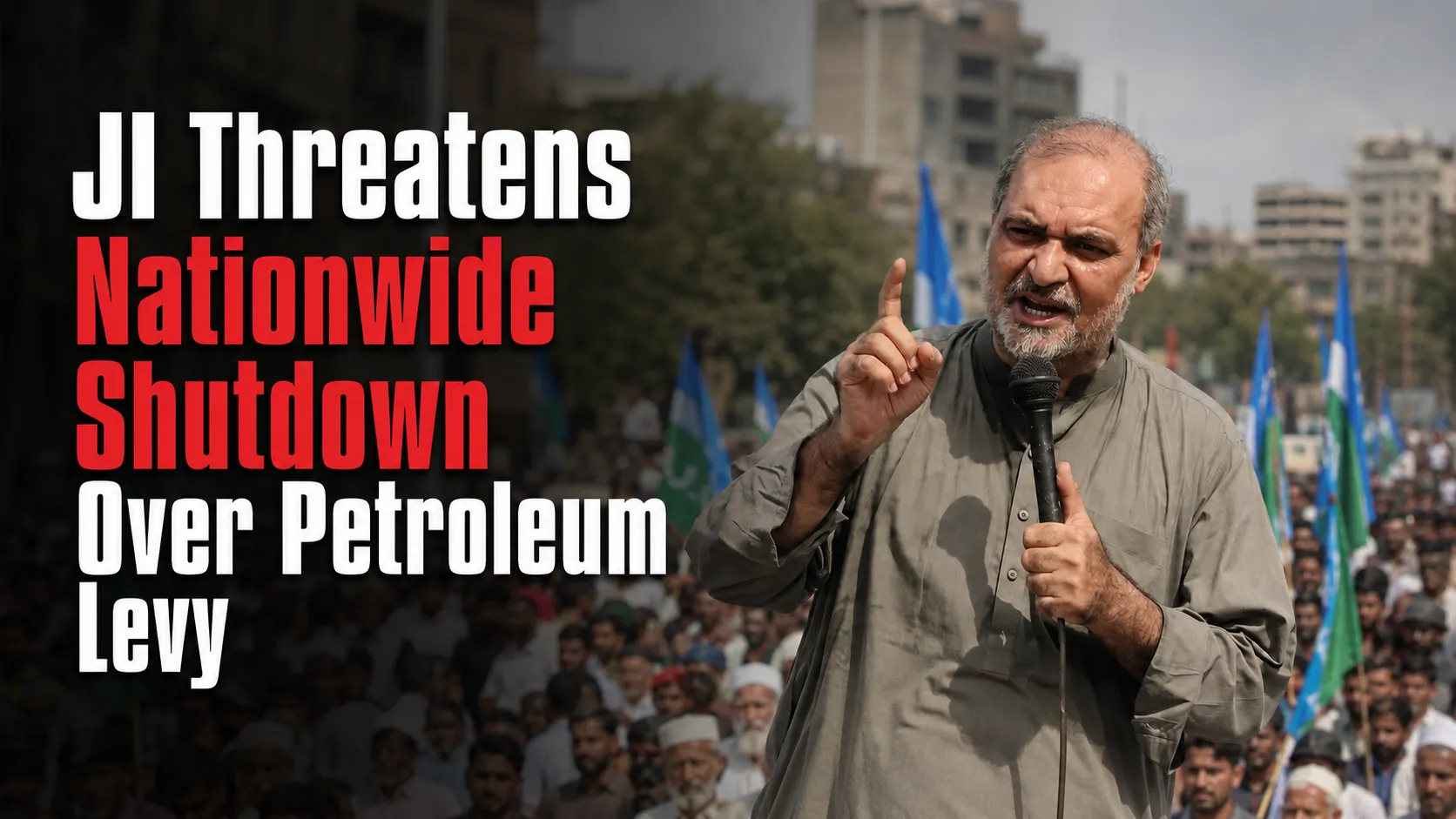
JI nationwide shutdown petroleum levy has become a rallying cry for the Jamaat-e-Islami party in Pakistan, as they make strong claims against the government’s decision to impose an Rs80-per-litre petroleum levy on fuel. The Emir of Jamaat-e-Islami, Hafiz Naeemur Rehman, has issued grave warnings regarding this controversial tax, stating that if it is not rescinded, the party will escalate their current protests into a full-scale national movement.
This could include a shutter-down strike and even a march on Islamabad. The alarming reactions from Jamaat-e-Islami are indicative of broader societal discontent towards economic policies that appear to disproportionately impact the common citizen. Given the ever-increasing fuel prices, the sentiment among the public is ripe for discussion on the implications of such governmental decisions and their role in shaping future political landscapes.
Understanding the Petroleum Levy
The Rs80-per-litre petroleum levy is not just an arbitrary figure it’s a part of a larger fiscal strategy employed by the Pakistani government. The rationale behind this levy is often presented as a necessity for generating additional revenue to manage the country’s debts. While some may argue that taxation is integral for any government’s financial stability, the implications of such levies can be severe, especially for lower and middle-income families. For many, this increased cost acts as a regressive tax that disproportionately affects those with limited financial flexibility. Furthermore, it begs the question: Is there a concrete plan from the government on how these funds will be utilized to benefit the public?
There is also a broader historical context at play here. Oil prices are subject to international market fluctuations; therefore, the dependency on a petroleum levy intends to cushion the economic shocks faced by the country. However, this method places an additional burden on citizens who are already grappling with inflation, food price hikes, and increased utility costs. Thus, the question emerges whether reliance on petrol taxes is a sustainable measure or merely a temporary fix to satisfy short-term fiscal needs.
Moreover, with an increasing global move towards renewable energy, such heavy dependence on oil revenues raises questions about the viability of sustaining this taxing model. The socio-economic consequences of petroleum levies can set a precedent for future policy formulations in Pakistan, indicating a need for lawmakers to do a thorough analysis of their economic strategies moving forward.
Many experts believe that while levies like these might solve immediate economic challenges, they can also stifle long-term growth. Incentives for renewable energy investment should be considered, potentially offsetting the reliance on such traditional taxation methods. This could herald a shift towards a more diversified energy sector, ultimately benefiting the national economy in the broader scheme.
The Role of Jamaat-e-Islami
As the voice of protest against the petroleum levy, Jamaat-e-Islami holds a critical position within the broader socio-political landscape in Pakistan. Founded in 1941, the party promotes Islamic principles blended with socio-economic justice. Over the years, it has taken a firm stance on various issues afflicting the Pakistani populace, including inflation and employment rates. The rise of the petroleum levy has equipped Jamaat-e-Islami with a poignant issue to rally the citizens around.
Hafiz Naeemur Rehman, as the party’s Emir, has galvanized supporters by stressing how the additional costs related to fuel can lead to further hardships in their daily lives. His rhetoric emphasizes moral responsibility on the part of the government, urging it to prioritize the welfare of its people rather than merely aiming to fill budgetary gaps through new taxes. By framing the levy as an attack on the poor, Jamaat-e-Islami aims to amplify its base and strengthen grassroots movements that focus on governmental accountability.
This strategy is particularly effective as the party has roots in numerous communities across Pakistan, providing a ready-made platform for articulating collective dissatisfaction. More than just political noise, the envisioned nationwide movement could become a significant force if citizens feel economically squeezed by the current state of affairs. The call for a march on Islamabad indicates that Jamaat-e-Islami seeks to channel this anger into tangible political pressure.
Moreover, Jamaat-e-Islami’s approach is not isolated from historical patterns where political entities capitalize on economic distress to forge stronger connections with the populace. This is a classic example of how economic discontent can morph into a powerful political movement, with entities rallying around widespread societal grievances to foster change. The effectiveness of such movements often rests on the ability of leaders to translate discontent into actionable political strategy, creating long-lasting change.
Economic Impacts of the Levy
The economic implications of the Rs80 petroleum levy cannot be overstated. To understand the various ramifications, one must consider the ripple effects that fuel prices have on the overall cost of living. Increased petroleum costs lead to elevated prices for goods and services as transportation costs rise, causing inflation to spike further. For families already juggling multiple economic pressures, the added burden of increased fuel costs can have dire consequences.
In sectors heavily reliant on transportation, such as agriculture and logistics, the burden becomes exponential. Farmers, for instance, face increased costs of fuel when transporting their goods to markets, leading to higher prices for consumers. This cycle can often perpetuate poverty levels as those who can least afford the hikes are affected the most.
Moreover, businesses that can pass on the costs to consumers risk losing customers who are driven away by the increased prices. Therefore, it could lead to a contraction within the economy as consumer spending decreases. The long-term impacts could manifest as a slowdown in economic growth, further eroding the purchasing power of the middle class and below. An examination of these cascading consequences reflects the urgent need for the government to reassess its fiscal policies, especially well within the context of public dissatisfaction and protests.
Furthermore, economic analysts have raised concerns over how these levies might deter foreign investment. High operational costs can make the region less attractive to potential investors, prompting a reconsideration of financial commitments in the Pakistani market. Therefore, revisiting and potentially revising such fiscal policies could prove vital in ensuring economic resilience and fostering an investor-friendly climate.
The Political Landscape in Pakistan
The political landscape in Pakistan has always been tumultuous, characterized by regional, religious, and economic divides. This makes the country particularly susceptible to protests regarding taxation, particularly when they threaten the livelihoods of ordinary citizens. In this context, the response of Jamaat-e-Islami to the petroleum levy must be recognized as a symptom of deeper issues plaguing Pakistan’s governance.
How the political parties react to protests and movements can often determine their electoral fortunes. The present government, facing dissent from constituents, may find itself in a precarious position. Political parties are often forced to reassess their strategies in the face of grassroots movements, especially if there’s an articulation of wide-scale dissatisfaction as witnessed with various protests in recent years.
The emergence of Jamaat-e-Islami as a vocal opponent to the levy adds another layer to this complex political tapestry. Whether they can harness citizen discontent effectively might hinge on their ability to build coalitions with other dissenting voices. This is a vital aspect to watch as the situation unfolds, revealing how alliances could shape the future landscape of governance in Pakistan.
Furthermore, the history of political movements in Pakistan suggests a pattern where social and economic unease rapidly translates into significant political shifts. This setting allows Jamaat-e-Islami to strategically position itself as a key player, further influencing policymaking and governance by forging alliances that might set new norms in the political arena.
Also Read This Article : Decision Taken to Transfer CAA, PAA Headquarters from Karachi to Islamabad
Public Sentiment and Mobilization
Public sentiment in Pakistan is increasingly agitated, largely due to various economic pressures in recent years. With inflation rates soaring, basic necessities have become unaffordable for significant portions of the population. The threat of a JI nationwide shutdown over the petroleum levy comes at a moment when citizens are already feeling overburdened. This helps create a fertile ground for protest and mobilization.
The combination of heightened social media engagement and the rise of local activism has made it increasingly easier for movements to gain traction and visibility. Many citizens are willing to share their experiences related to the rising cost of living, effectively humanizing the political rhetoric and drawing more people to the cause. Jamaat-e-Islami’s potential nationwide movement has a unique opportunity to tap into this growing discontent.
Additionally, local protests across provinces have demonstrated that frustrations with the government are not localized but widespread. If Jamaat-e-Islami can capitalize on these sentiments and channel them into a unified movement, it could amplify the collective voice of the populace, potentially leading to more substantial political ramifications.
Public discontent often acts as a conduit for broader political discourse. Jamaat-e-Islami can harness this by aligning with other social and political entities facing similar economic challenges. The effective use of digital platforms can aid in creating a cohesive network of voices, forming a robust front against fiscal policies perceived to be unjust. This interconnectedness can redefine protest dynamics, making them more strategic and impactful.
The Logistics of a Nationwide Shutdown
If Jamaat-e-Islami carries through with their threat of a nationwide shutdown, several logistical considerations must be taken into account. Coordinated efforts across the nation would require significant planning and resources to ensure maximum participation. Community mobilization would be essential to ensure that citizens understand the gravity of the situation and the perceived injustices linked to the petroleum levy.
Additionally, engaging leaders from various sectors and communities can facilitate broader collaboration, increasing the volume of demonstrators. Using social media effectively can also help in amplifying messages and organizing events, making it easier for citizens to join the movement. Crafting clear, concise messaging that communicates the necessity of the protests is vital for attracting participation.
The ramifications of a well-organized shutdown can extend beyond mere visibility. Coordinated strikes and public mobilizations could impact the functioning of commerce and daily life. This makes it even more crucial for Jamaat-e-Islami to approach this with strategic foresight and ensured accountability within leadership to prevent chaos.
The logistics of such a vast movement reflect the importance of resource allocation, strategic planning, and inter-entity coordination. The fallout of an effective shutdown would extend internationally, possibly affecting trade relations and foreign policy considerations. Thus, Jamaat-e-Islami must meticulously plan each stage, ensuring that the message and intent remain visible, consistent, and potent.
Potential Government Response
The government’s potential response to the looming threat of a JI nationwide shutdown over the petroleum levy will be closely scrutinized. Historically, the government has had mixed reactions to protests, ranging from negotiations to robust crackdowns. Their strategy could significantly affect the political climate, either stabilizing or further destabilizing an already fragile situation.
One possible approach could involve reopening dialogues with Jamaat-e-Islami to understand their grievances and potentially consider revising the petroleum levy. If effective, such negotiations could help prevent a substantial escalation and ease public discontent. Alternatively, a heavy-handed response could result in widespread resentment and an even more substantial outcry from citizens.
This dilemma emphasizes the importance of tactical decision-making by the government. Engaging with the citizens through public forums and acknowledging their economic struggles is essential for rebuilding trust. Addressing citizens’ apprehensions about rising prices through transparent communication could also help the government mitigate dissent.
The government’s actions now could either regain public trust or escalate existing tensions. Effective negotiation could lead to a win-win scenario, reassuring investors and fostering social stability. Conversely, forceful responses might raise international concern, affecting Pakistan’s global image. Thus, the government’s approach to this situation will be pivotal in determining its future domestic and international standing.
Long-Term Implications for Governance
Whatever the outcome of this situation may be, the long-term implications for governance in Pakistan cannot be overlooked. A successful protest movement could recalibrate the balance of power, particularly if Jamaat-e-Islami manages to galvanize widespread public support. This could change how future tax policies are introduced or revised, forcing the government to consider public sentiment more closely.
Moreover, if citizens feel empowered through public protests, this could lead to increased political engagement and even voter turnout in future elections. The struggle against the petroleum levy may be a catalyst for a larger movement focusing on economic justice, transparency, and accountability. By effectively mobilizing the citizenry, Jamaat-e-Islami has an opportunity to reposition itself as a pivotal party in Pakistan’s political spectrum.
In light of ongoing political turmoil, historical comparisons can be drawn with past movements in Pakistan that have reshaped its governance structures. If managed effectively, the current unrest could catalyze significant shifts within political dynamics, placing more emphasis on citizen accountability and government responsibility.
Crucially, successful movements have historically heralded political paradigm shifts, potentially transforming how governance is perceived and conducted. By fostering a politically conscious society, Jamaat-e-Islami might introduce more inclusive, representative decision-making, creating a template for alternative governance models rooted in transparency and accountability. As citizens become more engaged and vocal, policymakers will be urged to align strategies more closely with public welfare initiatives, fostering sustainable, inclusive growth.
Conclusion
The threat of a JI nationwide shutdown over the petroleum levy highlights a critical inflection point in Pakistan’s socio-political landscape. As citizen anger is mobilized, the implications stretch beyond just the immediate economic concerns surrounding the petroleum levy. This ongoing discourse reflects broader sentiments regarding governance, accountability, and citizens’ rights within the realm of economic justice.
Citizens are increasingly finding ways to articulate their grievances and mobilize against governmental decisions that adversely affect them. By focusing on the petroleum levy, Jamaat-e-Islami is carving a niche as a representative of these sentiments, potentially leveraging public dissatisfaction into an organized movement. How the government responds will be essential in determining the political trajectory and could set precedents for future engagement with social issues.
As the political climate remains fluid, it is vital to continue monitoring how this situation develops. The ramifications of the petroleum levy will not only impact current governance but could also influence Pakistan’s economic policy landscape for years to come.
Frequently Asked Questions
What is the main issue behind the JI nationwide shutdown over the petroleum levy?
The JI nationwide shutdown over the petroleum levy stems from the government’s decision to impose an Rs80-per-litre tax on fuel, which Jamaat-e-Islami argues disproportionately impacts the lower and middle classes.
How might the protests affect the government?
The protests could escalate public dissatisfaction, putting pressure on the government to reconsider its policies and potentially leading to a shift in political dynamics and governance in the country.
What are the long-term implications of a successful protest movement?
A successful protest movement could lead to increased political engagement, changes in governance, and greater emphasis on accountability. It could also reshape the nature of tax policies in the future.
How can citizens participate in the movement?
Citizens can participate by joining organized protests, engaging in discussions on social media, and spreading awareness about the implications of the petroleum levy.
What would be the government’s potential responses to protests?
The government might engage in dialogue with Jamaat-e-Islami or conduct a crackdown. The actual response will significantly influence the public’s ongoing sentiment towards the administration.



 Muhammad Abdullah |
August 24, 2026
Muhammad Abdullah |
August 24, 2026