







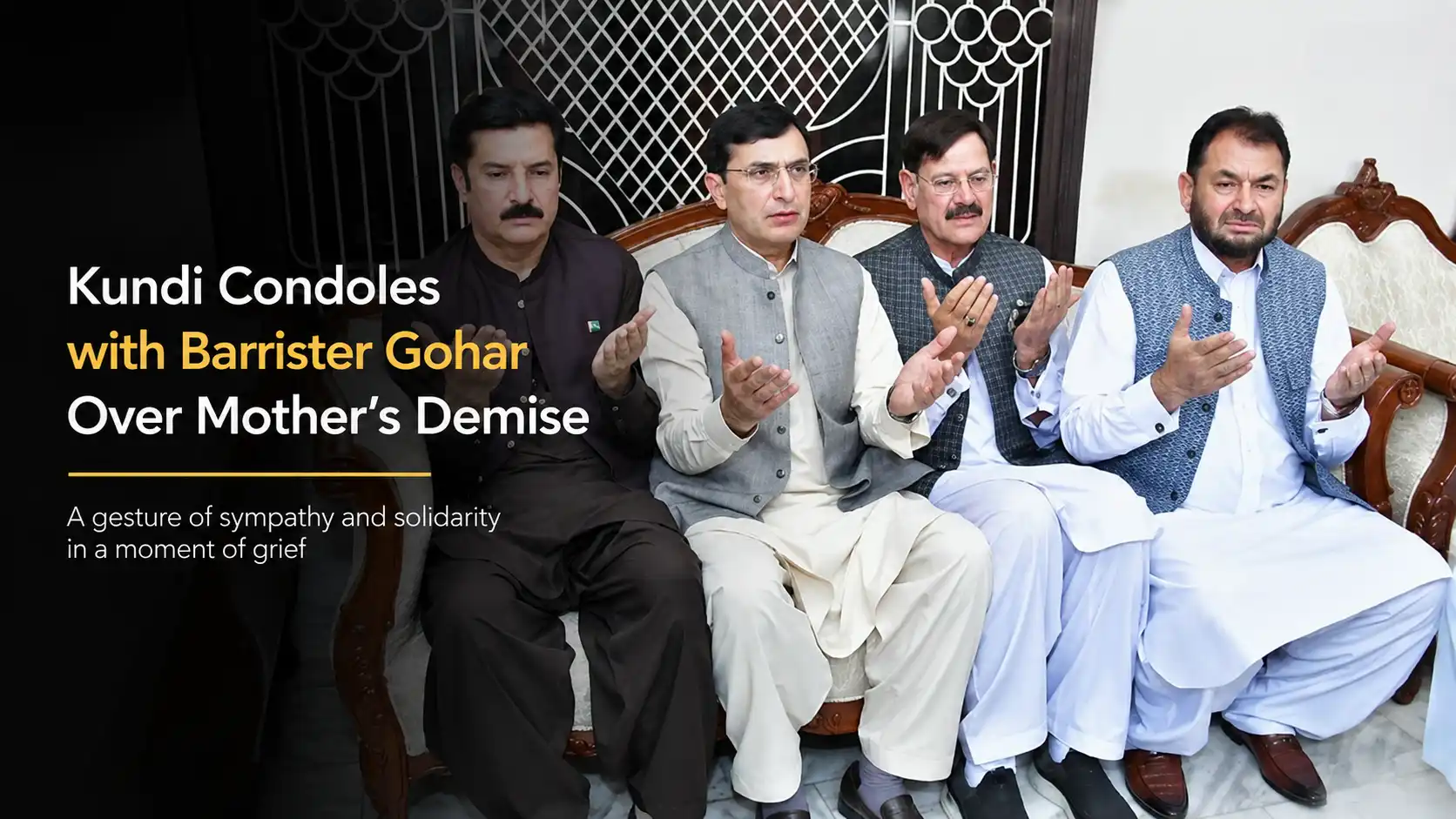

Kundi condoles with Barrister Gohar over the unfortunate loss of his mother in a heartfelt gesture of solidarity. On Sunday, Governor of Khyber Pakhtunkhwa, Faisal Karim Kundi, made a poignant visit to the home of Barrister Gohar Khan, the Chairman of Pakistan Tehreek-e-Insaf (PTI), to express his condolences and empathy in a time of profound grief. Such interactions highlight the human facet of politics, where personal relationships transcend political divide, showing that even amid tumultuous political landscapes, shared sorrow can foster unity. The death of a parent is one of the severest pains anyone can endure, and Kundi’s visit serves as a reminder of the compassion needed in leadership roles. This event exemplifies how political figures can come together, despite differing ideologies, to provide emotional support during personal tragedies.
Kundi Condoles with Barrister Gohar: A Political Context
The interaction between Kundi and Barrister Gohar is a significant emblem of the interconnectedness within Pakistan’s political framework. Undoubtedly, each visit between politicians often conveys deeper meanings beyond mere civility; it can symbolize political reconciliation, especially in polarized environments like Pakistan. Politicians are often scrutinized for their actions, but such gestures of condolence remind the public that they are also humans experiencing personal losses and emotional turmoil.
Governor Kundi’s visit can be viewed as an opportunity for healing, not only for the individuals involved but potentially for the larger political spectrum as well. The political climate in Pakistan is often filled with intense rivalry, and moments like these showcase how empathy can build bridges amid ideological gaps. This visit encapsulates how compassion can act as a peace-building mechanism, fostering a sense of shared human experience.
Moreover, the act of condoling within political circles often serves as an essential aspect of social etiquette. Following the death of a close family member, it is customary for fellow politicians and leaders to express their condolences, which in many ways helps the grieving family feel supported. It reflects a broader understanding of the importance of community and solidarity within the socio-political fabric of the nation.
In the backdrop of this significant act, we must consider the symbolic nature embedded in such gestures. Political gestures often carry profound connotations, which can contribute towards altering perceptions and potentially easing tensions. This specific act of condolence is not just a tribute to personal loss but a statement against the divisiveness that can plague political entities, offering a beacon of hope for reconciliation.
Furthermore, interactions such as these can receive extensive media coverages that highlight inherent political values. They provide a counter-narrative to common depictions of political life, which are frequently marked by dissension and conflict. In many ways, it becomes a call to action for others within the political landscape to reevaluate their approach towards empathy and connection.
The Role of Political Leaders in Times of Grief
Kundi condoles with Barrister Gohar not just as a gesture of friendship, but also fulfilling an essential role expected from political leaders during a time of loss. During personal tragedies, political figures are often called upon to show their support, which can transcend the often cold and clinical faces of politics. Leaders are human too, dealing with emotional currents and family connections, showing that grief is a universal experience, irrespective of one’s public standing.
The presence of a political leader in such a time can provide solace to the grieving family. A visit from someone in power may often signify that the local or national community is present and attentive to the loss. It helps in leveraging their prominence to uplift the emotional state of a grieving person and fosters a setting of support where healing can unfold.
Moreover, such actions can also be a signal to the public about the importance of compassion and empathy, encouraging citizens to support one another in their times of need. By leading through example in their expressions of condolence, political figures can inspire others to engage in acts of kindness, reinforcing community connections that are crucial in tough times. It can subtly prompt the masses to think beyond politics, leading to a more cohesive society.
Another significant role that political leaders fulfill during such times is exemplifying resilience in the face of personal adversity. This serves as an important trait, encouraging both their followers and the public to prioritize emotional intelligence within political and social structures. By demonstrating how to navigate personal loss publicly, leaders like Kundi provide an essential example of maintaining one’s responsibilities while processing grief.
In terms of leadership development, experiences such as these become defining moments. They build character and empathy, qualities that greatly influence decision-making processes. These moments of shared mourning can transform governance, supporting policies rooted in kindness and understanding and motivating others to adopt a similar empathetic approach in their leadership journeys.
The Impact of Grief on Public Figures
The simple act of Kundi condoles with Barrister Gohar brings into focus how grief can affect public leaders both personally and professionally. When a political figure deals with the death of a close family member, it can induce a shift in both their emotional and public demeanor. The weight of public scrutiny combined with personal sorrow can create a complex emotional landscape for these leaders.
Public figures have to navigate the expectations of their position without letting personal grief disrupt their obligations. They often have to find a balance between performing their duties and allowing themselves to mourn. In doing so, leaders like Kundi and Gohar exemplify resilience, showcasing both the machinery of politics at work while also revealing the fragility of human emotions.
Furthermore, the way political leaders handle grief can have long-lasting effects on their public image and reputation. While some leaders could turn into recluses, others may emerge more relatable to their constituencies, sharing experiences that resonate with voters. Gohar’s visibility through such a difficult time can humanize him and reposition his narrative within the political discourse, giving him a more relatable persona.
It is essential to recognize that public grief offers political leaders an opportunity to weave personal narratives into the larger societal conversation. This incorporation of personal loss into public life can amplify their influence, resonating deeper within the communities they serve. If leveraged appropriately, these experiences can shape policies and initiatives that account for emotional and psychological dimensions, enriching governance as a whole.
In addition, grief can serve as a precursor to significant personal transformation. Leaders experiencing loss often channel their emotional energy into causes promoting healing and solidarity, ultimately contributing to a more compassionate political climate. These emotional investments become part of their legacy, demonstrating that leadership includes addressing human vulnerabilities and fostering an inclusive environment for collective growth and healing.
Cultural Perspectives on Mourning
Culturally, the significance of mourning and condolence in Pakistan is very profound. In a society where family bonds weigh heavily on social interactions, the loss of a parent is met with societal respect and communal observance. Kundi condoles with Barrister Gohar to abide by culturally instilled practices suggesting that it is a moral and ethical obligation to support someone during their bereavement.
The mourning rituals in Pakistan vary depending on community customs but often involve a gathering of family and friends, signifying shared grief. Such communal gatherings, where leaders and local citizens converge, highlight a societal embrace during tough times, fostering connections that can transcend even political disagreements. Observing these traditions can act as an important reminder of the solid bonds that community can manifest.
Social support during mourning is emphasized in Pakistani culture; this visit from Governor Kundi not only follows this directive but reinforces the message of unity and understanding. Respecting and honoring traditional mourning practices through these expressions of sympathy validates the community’s collective sorrow, offering a pathway to heal broken spirits.
In attending to cultural norms during periods of mourning, political figures not only gain respect but also strengthen their resolve with the community’s cultural tapestry. It exemplifies a commitment to respecting cultural identities while providing a framework where political leadership aligns with the values and customs of the population. This convergence of political and cultural practices can forge lasting ties between leaders and communities.
The richness of Pakistan’s varied cultural practices provides an opportunity to highlight the strength found in diversity. Every act of condolence becomes more than a personal gesture it is representative of the broader tapestry of the nation’s cultural heritage. By embracing these traditions, leaders can harness cultural resonance in broader political strategies, deepening their impact and fostering national solidarity even amidst individual sorrow.
Also Read This Article : Arshad ‘Chaiwala’ Seeks Passport Renewal: A New Chapter
The Importance of Sympathy in Leadership
Leadership, especially in the politically charged landscape of Pakistan, often requires more than just strategic thinking or political prowess. An essential component that leaders often overlook is their ability to empathize and showcase sympathy. Kundi’s action of condoling with Barrister Gohar emphasizes that emotional resonance plays a significant role in effective leadership. Showing empathy allows leaders to connect with their communities at a more personal level, reinforcing trust and shared understanding.
A leader’s willingness to express sorrow can serve to humanize their public persona, making them more approachable and relatable. It can diffuse tensions and engender goodwill among constituents. This in turn strengthens the social fabric by increasing emotional investment from the populace in their leaders while creating a supportive atmosphere when crises occur.
Furthermore, sympathy in leadership can boost morale, both within political parties and among constituencies. The ability to convey understanding and compassion establishes a performance model for effective leadership while illustrating that the human element should not be ignored, even in high-stakes politics. This incorporation of sympathy into leadership practices can lead to better governance, rooted in compassion and understanding.
In this era of global interconnectedness, where politics often crosses borders, sympathy acts as a universal language understood by diverse populations. It transcends political rhetoric and cultivates relationships that emphasize commonalities. Leaders who hone this ability can inspire international cooperation and cross-border initiatives, fostering a political climate driven by empathy rather than conflict.
The reflective nature of sympathy further encourages introspection within leadership frameworks. Leaders encouraged to reflect on their capacities for empathy can drive political innovation. By acknowledging human emotions as integral components of public service, they can create policies and initiatives aimed directly at addressing the holistic needs of the populace, reshaping the future of political engagement.
The Future of Political Relations in Pakistan
Kundi’s visit to express his condolences opens up discussions about fostering more humane political relations in Pakistan. In a landscape often littered with controversy and strife, moments of solidarity give a glimmer of hope for collaborative engagement across party lines. Politicians can take cues from such gestures, promoting practices that strengthen inter-party connections and smooth the rough edges of competition.
With the shifting dynamics in Pakistan’s political scenario, where polarization is rampant, the willingness of leaders to extend condolences can diffuse tensions and soften rivalries. Politicians could be encouraged to engage not just in political gladiatorial conflicts but in fostering goodwill initiatives throughout the nation, enhancing community ties in times of crisis.
Looking ahead, the lessons learned from Kundi condoles with Barrister Gohar could help shape a generation of leaders who embrace the value of emotional expression and connection. Ultimately, these narratives can craft a political culture that values empathy as much as strategy, laying the groundwork for sustainable governance.
By prioritizing empathy and understanding in political discourse, leaders can contribute to a culture of respectful dialogue. This culture of respect is instrumental in navigating difficult conversations and finding common ground within contentious issues, important for national progress. As citizens become more engaged with empathetic political frameworks, divisive narratives will lose influence, fostering cohesion rather than conflict.
The potential for such transformations within Pakistan’s political sphere is bolstered by the recognition of diverse voices and shared experiences. Trust built within empathetic encounters becomes the cornerstone for effective and transparent governance, encouraging citizen participation and strengthening democratic foundations. These dynamics promise a more resilient, connected, and prosperous future for the entire nation, transcending party lines.
The Emotional Journey of Grief in Politics
Grief, by nature, is a complex emotional journey that doesn’t just cease after the funeral. When Kundi condoles with Barrister Gohar, it sparks the awareness that grief can linger, influencing thoughts and actions for extended periods. Leaders are often perceived as pillars of strength, yet they too navigate through the waves of sadness, reflecting on memories and unresolved feelings.
For political leaders, acknowledging their own grief while being seen as credible and effective figures can create a unique dichotomy. They frequently face skepticism from their peers and the public, compelling them to mask their emotions. This veil of stoicism can prove detrimental, hindering their capacity to genuinely connect with their constituents and, ultimately, undermining their effectiveness.
Moreover, recognizing this emotional journey may prompt political leaders to begin prioritizing mental health awareness. Initiatives could develop support systems addressing emotional well-being and grief management in public life, ultimately leading to healthier leadership paradigms. Integrating open discussions about grief into the political narrative could potentially improve societal resilience and growth.
In acknowledging the ongoing nature of grief, political leaders can educate their followers on compassion and understanding. Shaping clear pathways and integrating mental health resources into political strategies not only strengthens leaders but resonates across national narratives, creating a society that supports recovery and resilience.
These efforts lead to initiatives that can bolster public institutions, creating inclusive communities ingrained with emotional intelligence. By addressing grief openly, leaders offer a distinctive lens to examine governance, leading by example, and promoting frameworks where empathy becomes foundational to policy-making.
Healing Through Unity
One of the most profound aspects revealed when Kundi condoles with Barrister Gohar is the potential for healing through unity in the political arena. At its core, these gestures are not only human responses to tragedy but reflections of a society’s capacity for togetherness and understanding. When leaders set the precedent for inclusive actions, they inspire systemic change toward national healing.
This unity is essential in mending fractures within the political sphere, symbolizing reconciliation and coexistence. The political value in such actions reverberates, encouraging collaborative engagement and setting a standard for communication rooted in partnership, crucial for the long-term stability and welfare of a nation.
As leaders become conduits for unity, a ripple effect is likely to follow, engraining these values into the fabric of political processes. This momentum can catalyze peace-building initiatives and prompt global participation in humanitarian issues, amplifying networks that prioritize human welfare as fundamental to socio-political growth.
Through these trajectories, Pakistan can champion a new political culture where nurturing, compassion, and healing drive progress, yielding policies that empower citizens and embrace diversity. The promise of such a landscape is immeasurable, fostering hope that future interactions will continue building on these foundations, achieving sustainable, unified national development.
Conclusion: A Gesture of Humanity in Politics
Kundi condoles with Barrister Gohar signifies much more than a gesture of empathy; it represents a commitment to humanity within the political sphere. In a world where political rivalries often overshadow shared values and common goals, the act of offering condolences brings to light the shared human experiences that can connect us all. Such displays of emotional support help bridge the gap in an increasingly polarized political atmosphere, allowing individuals to transcend boundaries and focus on collective healing.
This poignant moment serves as a reminder of the importance of compassion and solidarity in governance, showcasing that emotional connections can have lasting impacts beyond the immediate act of condolence. The relationship between Kundi and Gohar exemplifies how personal experiences can shape political narratives, offering a chance for collective growth through shared grief.
Ultimately, fostering a politic culture steeped in empathy can serve as a foundation for a more resilient and united society. As leaders are tested by personal tragedies, their ability to show vulnerability will define their legacy in politics, and Kundi’s visit will resonate as a key moment in illustrating that humanity exists even amidst the very trenches of power.
Frequently Asked Questions
Why did Kundi visit Barrister Gohar?
Kundi condoles with Barrister Gohar to express sympathy following the passing of his mother. This visit was meant to signify support during a time of personal loss.
What does the visit symbolize in Pakistani politics?
The visit symbolizes unity and empathy in a politically charged environment, showcasing that compassion can transcend political rivalries and foster connection.
How can political leaders balance their duties while grieving?
Balancing duties and personal grief requires political leaders to cultivate emotional intelligence, allowing them to share their experiences while maintaining their public responsibilities.
What cultural significance does mourning hold in Pakistan?
Mourning in Pakistan is culturally significant as it emphasizes shared grief and communal support, showing the moral responsibility to be there for the bereaved.
What are the long-term effects of public grief on leaders?
Public grief can lead to better relatability and strengthen connections with constituents, as leaders who openly express emotions often resonate better with their community.