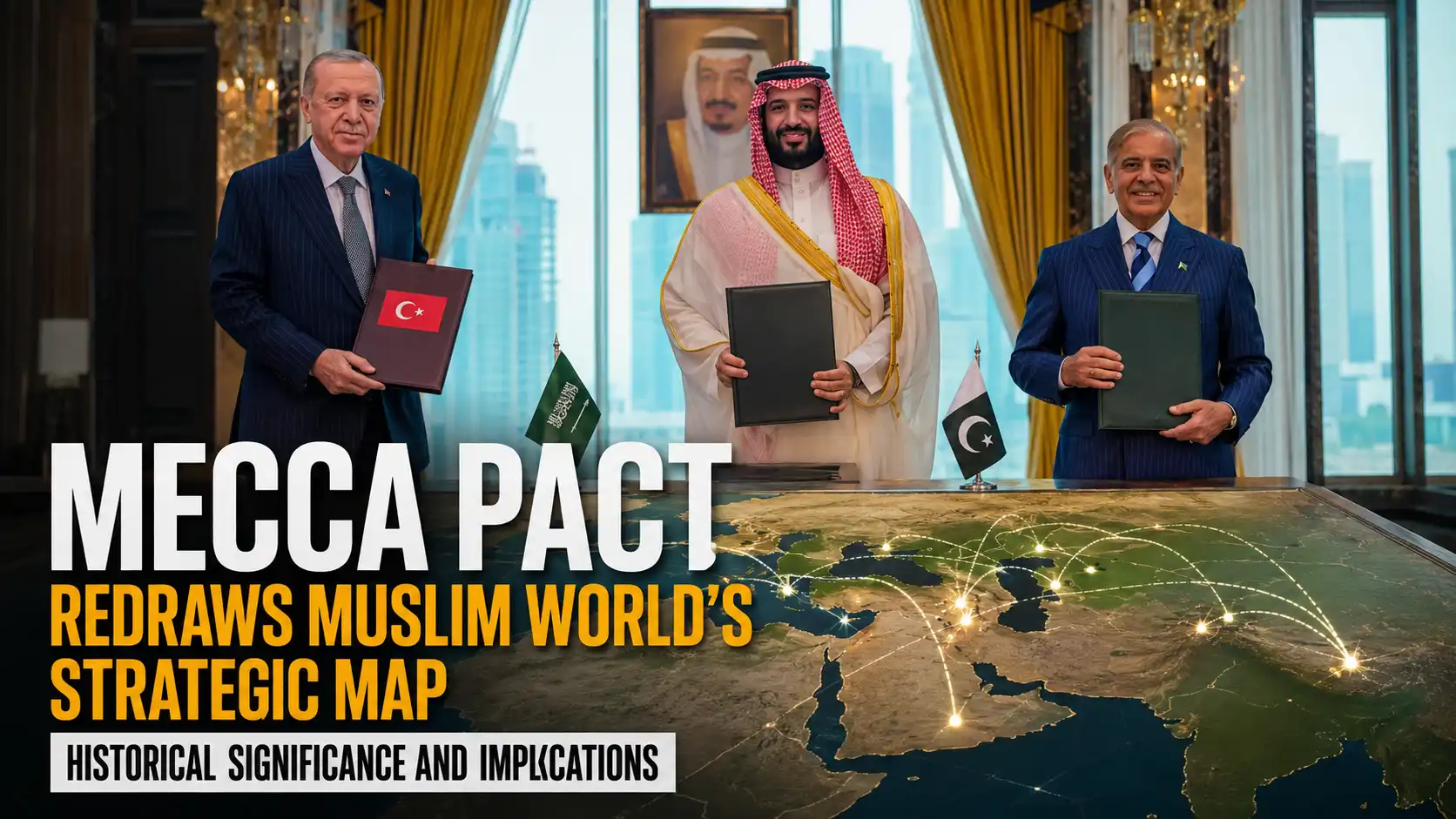
The recently established pact that redraws the Muslim world’s strategic map is a groundbreaking shift in global geopolitics. For the first time, Muslim nations have come together to form an institutionalized collective security structure aimed at promoting regional stability and cooperation. This development signifies not only a collective acknowledgment of shared vulnerabilities but also a strategic reorientation towards mutual defense and collaborative engagement among Islamic states. Historically, the Muslim world has been fragmented along cultural, sectarian, and political lines, but this emerging collective security architecture holds the potential to unify disparate nations and enhance their collective power on the international stage.
Pact Redraws Muslim World’s Strategic Map: Historical Context
To fully grasp the significance of this pact, we must explore the historical context of Muslim unity and discord. In the wake of colonialism, many Muslim nations struggled to establish their identities, often leading to internal conflict and rivalry. The Arab Spring exemplified this fragmentation, as various nations within the Muslim world exhibited unique trajectories towards democratization or authoritarianism. For decades, the absence of a unified approach to security has left nations vulnerable to external threats and internal strife, exacerbated by the rise of extremist factions. The new pact is, therefore, an attempt to rewrite this narrative by fostering a cooperative security framework that transcends national interests.
In this time of increasing geopolitical tensions, especially with the rise of global powers such as China and Russia, this new institutionalized security pact could act as a counterbalance. Historically, Islamic nations have often found it difficult to present a united front, making them susceptible to manipulation by more powerful states. Understanding this historical cycle of fragmentation and division is critical to appreciating the potential for unity that this new pact represents.
Furthermore, this collective security architecture is not entirely unprecedented; organizations like the Organization of Islamic Cooperation (OIC) have previously vied for a united Muslim front. However, those efforts lacked a binding commitment to collective defense. The current pact seeks to address that gap, thereby offering a legitimate platform for cooperation in security matters, ultimately redrawing the Muslim world’s strategic map.
Moreover, the historical significance of unity efforts among Muslim nations can also be traced to earlier periods, such as the pan-Islamism movement in the late 19th and early 20th centuries. The movement aimed at unifying all Muslims across national boundaries, a formidable challenge back then as it is now. However, today’s technology and globalization present new opportunities for overcoming these historical hurdles. Understanding these historical influences adds depth to the current pact’s intentions and challenges.
Analyzing the Implications of the Pact on Regional Stability
The implications of this pact could be far-reaching, especially concerning regional stability. With a robust security commitment, member states will likely feel a stronger sense of security, discouraging unilateral military actions or aggressions among them. The pact facilitates collaborative efforts against common threats, such as terrorism, state-sponsored malfeasance, and economic sanctions imposed by external powers. The potential for reducing conflict rates and fostering a more stable environment creates opportunities for economic growth and social progress.
Moreover, a united front based on mutual security interests could ensure member nations better protect their sovereignty against foreign interventions. Historical instances of foreign interference be it through military actions or economic sanctions have often destabilized the Muslim world, causing significant humanitarian crises. By institutionalizing their collective security agreements, member states can better defend their interests and achieve long-term stability.
The pact may also pave the way for enhanced trade relations among member nations, which have long been hindered by regional tensions. With security concerns mitigated, nations can engage more freely in trade partnerships, fostering economic interdependence a key factor in ensuring long-term peace and cooperation. The possibilities for collaborative infrastructure projects, technological exchange, and multilateral trade agreements become increasingly viable under a collective security framework.
Additionally, regional stability achieved through this pact could serve as a model for other regions facing similar sectarian and political conflicts. The collaborative approach in addressing security challenges might inspire other international blocs to reconsider their strategies. This positions the Muslim world not just as a geopolitical player, but as a potential leader in fostering global peace.
The Role of Global Powers in Shaping the New Pact
The pact also arrives at a time when global powers are realigning. The strategic interests of nations like the United States, Russia, and China invariably impact the political landscapes of the Muslim world. These powers have historically had a complicated relationship with various Muslim nations, swinging between alliances and adversarial positions depending on geopolitical circumstances.
By instituting a collective security pact, member states may be sending a signal to these global powers that they are now more self-reliant and prepared to address their security needs independently. This shift could dilute the influence of external powers, enabling member nations to pursue options that align more closely with their interests rather than those dictated by external actors. This newly acquired agency could embolden nations to participate in regional issues from a more assertive position.
Moreover, while the pact aims to unify the Muslim nations, it also reflects a broader skepticism towards the West, particularly in light of historical grievances simply exacerbated by corporate hegemony and the politicization of religion. Establishing a more collaborative security effort thus becomes essential in redefining relationships with these global powers while mending rifts within their collective fabric.
It’s also important to note that existing international relations and alliances may undergo a transformation in response to this pact. Countries in the West, particularly those with significant arms deals or economic ties to the region, might need to reassess their foreign policies. This reassessment could either be in galvanizing support for or against specific elements of the pact, thereby significantly impacting global geopolitical strategies.
Challenges to Implementation and Internal Dynamics
Despite the optimistic outlook, the successful implementation of this pact depends on various internal dynamics and challenges. One of the primary obstacles lies in the political complexities and differing priorities among member states. National interests can be deeply entrenched, and countries may prioritize their sovereignty over collaborative obligations. Hence, consensus-building will be paramount to ensuring coherence in objectives and strategies within the framework.
Moreover, the sectarian divides among the Sunni and Shia communities could pose significant hurdles. Countries like Iran and Saudi Arabia, representing major sectarian divides, have historically faced challenges in reconciling their interests. A unified defense posture demands not only political commitment but also a cultural acceptance of cooperation among varied viewpoints. Understanding historical grievances and taking collaborative steps towards fostering unity could mitigate some of these divisive issues.
The bureaucratic layers involved in multilateral agreements can often lead to stagnation and inefficiency. Mechanisms for swift decision-making will be critical to avoid ambiguity in defense commitments, especially in times of real-world crises. If countries find themselves at loggerheads during critical moments, the pact could falter, reducing the anticipated benefits and undermining its objectives.
Addressing ethnic, cultural, and linguistic diversity could also play a role in the successful implementation of this pact. The vast multicultural landscape of the Muslim world could be a boon or a burden, based on how effectively communication and mutual respect are fostered across these lines. The challenge lies in turning this diversity into a strength, fostering inclusiveness, and ensuring that the pact benefits all nations involved.
Potential Economic Implications of the New Pact
Economics undeniably plays a crucial role in the success and longevity of any political or security pact. Given that economic interdependence fosters stability, this new pact could pave the way for unprecedented economic cooperation among Muslim nations. The economic framework could encourage investment flows among member countries, permit collaborative development projects, and help unlock the significant resource potentials of member states.
Emerging economic alliances, especially in the fields of agriculture, energy, and technology, could create a more robust intra-regional economic network. By uniting economically, these nations stand to gain leverage in international negotiations, using their collective economic clout to achieve favorable terms in trade agreements and partnerships.
Furthermore, a more secure environment facilitates foreign direct investment, as potential investors often shy away from economies perceived as unstable. Prioritizing joint economic initiatives within the promise of security will help legitimize and reinforce this collective security architecture, ultimately ensuring that it holds relevance beyond mere political rhetoric.
In addition, the economic implications extend to potential job creation and poverty reduction across the region. As trade barriers lower and economic activities diversify, member nations could experience a boost in employment opportunities. This economic uplift has the potential to elevate living standards, reduce poverty levels, and create a cycle of prosperity that supports the overall goals of the pact.
The Role of Youth and Civil Society in Shaping the Future
Another vital aspect to consider is the role that youth and civil society will play in shaping the pact’s future. With a large portion of the population in many Muslim nations comprising youth, their engagement in the process of peacebuilding, dialogue, and cooperation will be instrumental. As digital natives, young people are empowered to participate in discussions and mobilizations, utilizing social media platforms to advocate for greater intergovernmental cooperation and human rights.
The collective security pact may stimulate grassroots movements focused on regional peacebuilding initiatives. Civil society organizations can create space for dialogue and engagement on diplomatic solutions to longstanding conflicts, helping to form a bottom-up approach that complements the top-level agreements produced by national leaders. Youth movements can champion issues that affect them while holding their governments accountable to the commitments made under this new pact.
This intersection of youth engagement and civil society’s role can ensure that the collective security architecture remains relevant and adaptable to the evolving needs of Muslim nations in the 21st century.
Moreover, empowering youth and civil society could lead to a more participatory form of governance. By fostering an environment where civic engagement is encouraged, member states may nurture a generation of informed and active citizens, prepared to contribute to both national and regional stability. The long-term benefits of such engagement could lead to a more harmonious and unified approach to governance across member states.
Global Reactions to the Pact
As nations across the globe watch the developments unfold, reaction to this pact has been mixed. While many Muslim-majority countries are optimistic about the prospect of uniting for a common cause, global powers like the United States and European nations have expressed ambivalence. Their strategic interests in the region could lead to questions about how this pact will influence existing alliances, especially concerning arms sales, economic partnerships, and military cooperation.
Critics argue that the formation of this collective security architecture could further polarize international relations, escalating tensions between Islamic nations and non-Muslim powers. Proponents, on the other hand, view it as a necessary recalibration of geopolitical dynamics, enabling Muslim nations to engage with each other on their own terms.
The media’s portrayal of the pact is equally telling. Some outlets herald it as a new dawn for unity, while others express skepticism about its feasibility and commitment among nations with complicated histories. This dual narrative reflects broader anxieties about the implications of this new collective security pact on the existing geopolitical framework.
Additionally, the perceptions of non-Muslim neighbor countries are crucial. Nations that share borders with multiple pact members might reassess their diplomatic and military strategies. Whether these nations choose to engage positively with the pact or adopt a more cautious approach could significantly affect regional peace efforts. Potential for misunderstanding and miscommunication should be minimized through ongoing diplomatic dialogue.
Future Prospects: What Lies Ahead?
As we contemplate the future prospects stemming from this pact, it becomes crucial to assess how effectively the Muslim nations can navigate the complexities of this new reality. Will they capitalize on this collective opportunity to shore up their defenses and economic stability while promoting peaceful relations among themselves? Or will historical divisions rear their heads, creating obstacles that hinder the overall objective of collective security?
The ability to respond to immediate crises, such as external threats or economic challenges, will heavily dictate the maturation of this security alchemic experiment. There will also be questions surrounding the long-term viability of this architecture as global power dynamics continue to shift. For instance, the relationships between member states and major powers will likely dictate how effective their collective security mechanisms can be.
Ultimately, the success of the pact rests on the balance between cooperation and individual sovereignty. If members can find common ground while respecting their national interests, they might usher in a new era of cohesion, reflecting a strategic reimagining of the Muslim world and encouraging convergence towards shared goals.
Looking ahead, the potential for evolving this initial agreement into a broader coalition of cooperative efforts exists. This expansion could include areas like cultural exchange and educational initiatives. By broadening the agenda, member nations can strengthen their ties beyond security, creating lasting partnerships that can withstand political fluctuations.
Conclusion
In summary, the pact that redraws the Muslim world’s strategic map marks a significant departure from the status quo of disunity and discord among these nations. This unprecedented step toward collective security is laden with potential but is accompanied by challenges that will need addressing if it is to achieve sustainable objectives. The historical context provides valuable lessons, reminding us that while aspirations for unity and collective action are noble, successful implementation will require overcoming entrenched divisions and divergent national priorities.
The implications of this pact extend beyond regional stability; it could catalyze economic cooperation and inspire youth engagement in shaping a peaceful future. However, the reactions from global powers and how they interact with this newly formed collective will ultimately influence its long-term efficacy. As Muslim nations embark on this new chapter, the world watches, eager to see whether this collective effort will lead to an era of increased stability, economic prosperity, and mutual respect among its member states.
Frequently Asked Questions
What is the significance of the pact that redraws the Muslim world’s strategic map?
The significance of the pact lies in its establishment of an institutionalized collective security framework among Muslim nations, marking a significant turning point in how these nations approach security and cooperation.
How does this pact affect regional stability?
The pact has the potential to enhance regional stability by providing a structured means for member nations to address shared threats and reducing the likelihood of unilateral military actions.
What challenges may arise in implementing the collective security pact?
Challenges could include political complexities, differing national priorities, and historical sectarian divides among member states, which may complicate consensus building.
How can economic cooperation arise from the new pact?
The new pact could foster economic cooperation by uniting member nations around shared economic interests, encouraging trade partnerships and investment opportunities.
What role do youth play in shaping the pact’s future?
Youth engagement is crucial, as young people can advocate for collaborative dialogue and participate in creating a peaceful future by holding their governments accountable to the goals of the pact.




 Muhammad Abdullah |
August 8, 2026
Muhammad Abdullah |
August 8, 2026