







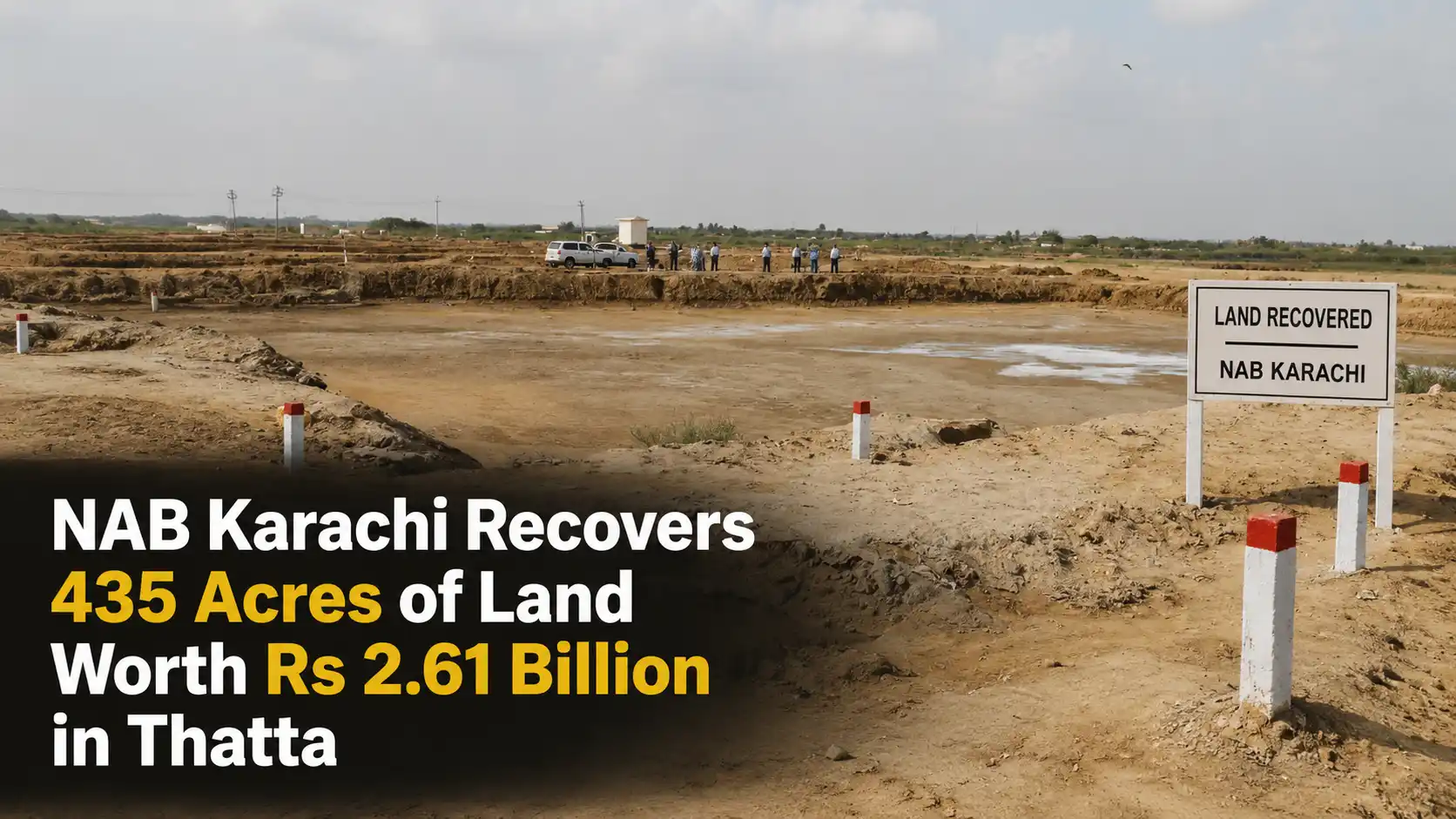

NAB Karachi land recovery is a commendable achievement that highlights the organization’s sustained efforts against illegal land encroachments and corruption. Recently, the National Accountability Bureau (NAB) Karachi made headlines after successfully recovering a staggering 435 acres of land in Thatta district, valued at an impressive Rs 2.61 billion. This operation was part of a larger initiative aimed at curbing illegal land grabbing that has plagued numerous regions across Pakistan.
The recovery not only underscores NAB’s commitment to enhancing accountability but also raises important questions about land management, governance, and the implications for local communities. In this article, we will delve into various aspects surrounding this monumental recovery, exploring its significance, the broader context of land corruption in Pakistan, and what it means for the future.
Understanding NAB’s Role in Land Recovery Efforts
The National Accountability Bureau (NAB) plays a crucial role in Pakistan’s fight against corruption. Established to eradicate corruption in public and private sectors, NAB’s mandate includes investigating fraudulent practices, holding accountable those engaged in corrupt activities, and recovering assets acquired through illegal means. The NAB Karachi land recovery initiative is part of this broader mission. By successfully reclaiming 435 acres, NAB not only recovers tangible assets to the state but also sends a strong message to perpetrators of the land fraud. Such actions reinforce the public’s trust in the agency and demonstrate its ability to uphold the rule of law.
NAB operates within a framework that empowers it to function independently, allowing for prompt and decisive action. It utilizes a multi-faceted approach involving various departments such as legal, enforcement, and community outreach to ensure the fair processing of land recovery initiatives. The bureau’s strategic collaborations with local authorities and regional governance help create a cohesive front against land encroachments, ensuring that investigations are thorough and guided by legal precision.
NAB’s multi-faceted approach to land recovery includes rigorous investigations, collaboration with local authorities, and legal action against offenders. The bureau identifies areas prone to land grabbing, assesses ownership documents, and establishes the legitimacy of claims. In many cases, their efforts involve engaging with community leaders and residents to uncover the truth behind land disputes. By doing so, NAB seeks to ensure that rightful owners reclaim their properties, thus restoring justice and enhancing community relations.
This recent recovery can also be seen as a landmark case in NAB’s ongoing efforts in Thatta district. The agency’s initiative not only reflects its commitment to accountability but also sets a precedent for future actions aimed at curbing land corruption in Pakistan. By reclaiming this significant expanse of land, NAB proves its effectiveness in tackling one of the nation’s most persistent challenges.
The Historical Context of Land Grabbing in Pakistan
To understand the importance of the NAB Karachi land recovery, one must analyze the historical context of land grabbing in Pakistan. Land disputes have a long history in the country, with various socio-economic and political factors contributing to widespread illegal encroachments. Following the partition of India in 1947, issues surrounding land ownership became particularly contentious, leading to uncertainties that have persisted for decades.
The lack of a robust land administration system, coupled with inadequate enforcement of land laws, has facilitated rampant illegal land acquisition. Powerful individuals and entities often take advantage of legal loopholes or leverage political connections to seize valuable land without repercussions. Consequently, communities suffer, losing their rights to land that is rightfully theirs. This dynamic has led to social unrest and exacerbated poverty in many regions.
Traditional land tenure systems and colonial-era laws have left a legacy of complex legal challenges that often obstruct fair resolution of land disputes. Over time, land has become an instrument of power and economic control, manipulated by those with influence, further complicating efforts to ensure equitable access. In rural areas, land grabbing contributes significantly to the socio-economic hardships faced by smallholder farmers and indigenous communities, highlighting the urgent need for reforms.
In the context of this historical backdrop, NAB’s recovery of 435 acres in Thatta represents a vital step towards rectifying these long-standing injustices. While one recovery may seem like a drop in the ocean, it constitutes a significant victory against entrenched interests that benefit from corruption. By addressing these systemic issues, NAB Karachi land recovery not only fights corruption but also contributes to creating a framework for future reforms that prioritize equity and justice.
Analyzing the Financial Impact of the Recovery
The financial implications of NAB Karachi’s land recovery extend beyond mere valuation. Recovering 435 acres worth Rs 2.61 billion has profound ramifications for local economies and the Pakistani state at large. On a broader level, such recoveries can stimulate economic development by allowing for the redistribution of land to its rightful owners, potentially enhancing agricultural production, local investment, and entrepreneurship.
The monetary value of the recovered land signifies potential revenue for the state. When land is returned to rightful owners or allocated for public projects, the government can harness its economic capacity. Furthermore, this recovery underscores the importance of transparent land ownership records and the role of efficient land management practices.
Moreover, the financial benefits do not solely relate to government revenues; families and communities that regain their lost assets can begin to rebuild their lives. Given that land has cultural significance and intrinsic value in Pakistan’s societal fabric, reclaiming it alleviates the socio-economic burdens faced by marginalized communities. The NAB Karachi land recovery, therefore, fosters both morale and economic growth.
Beyond immediate economic impacts, the broader economic system benefits from reduced corruption, enhancing investor confidence and attracting both domestic and international investments. Ensuring clear and enforceable land rights positions Pakistan as a more attractive environment for global business ventures, paving the way for infrastructure development and modernized industry sectors.
By addressing land corruption head-on, the state can convert these assets into functional resources that nurture economic resilience and growth, particularly relevant in regions like Thatta that face developmental challenges. The infusion of reclaimed land into the economy often results in job creation and overall socio-economic upliftment, proving the NAB’s strategic role in broader financial health.
Implications for Local Communities in Thatta
The local communities of Thatta have faced several challenges stemming from illegal land acquisition. The recent NAB Karachi land recovery provides hope to those who have been displaced or affected by corrupt practices. By reclaiming land that has been unjustly taken, NAB plays an essential role in empowering these communities and restoring their livelihoods.
This recovery may serve as a catalyst for property rights awareness among local residents. As community members witness positive outcomes from NAB’s actions, they may become motivated to report future encroachments rather than suffer in silence. The culture of silence that often enables land grabbing activities can begin to dissipate, leading to increased community vigilance against corrupt practices.
Furthermore, the recovery encourages the involvement of civil society organizations and local activists who advocate for rights to land and fair practices. Enhanced collaboration between NAB and non-governmental organizations (NGOs) might lead to further initiatives that would not only strategize against future encroachments but also offer educational resources to communities about protecting their land rights.
The psychological impact on local communities should not be underestimated. Successful land recovery initiatives instill a renewed sense of trust and hope, highlighting the power of justice and resilience against unethical practices. This shift in mentality can transform societal approaches to governance, foster unity, and encourage proactive community engagement in various social justice issues beyond land rights.
Moreover, the restored land provides agricultural opportunities and sustenance for many rural families. The availability of productive land can lead to increased agricultural outputs, ensuring food security and community-centric economic stability. In essence, NAB Karachi land recovery reconstructs the socio-economic fabric of the region, promoting sustainable development.
Also Read This Article : PIA Selects New Chief IT Officer as Restructuring Efforts Continue
The Legal Framework Concerning Land Recovery in Pakistan
The legal framework in Pakistan regarding land ownership and recovery is intricate, often entangled with various laws and regulations. The Proclamation of 1960 and land revenue laws uniquely govern land transactions and ownership. Over the years, numerous amendments and policies have shaped how land is managed, often leaving space for exploitation and manipulation.
NAB operates within this complex legal landscape, leveraging existing laws to hold offenders accountable while also navigating the intricate bureaucratic processes involved in land recovery. Legal provisions allow NAB to enforce ownership rights, seize illegally acquired land, and prosecute individuals engaged in land fraud.
Understanding this legal system’s intricacies is essential for effective land recovery. Legal loopholes and bureaucratic challenges can impede the efficacy of investigations and prosecutions. Therefore, eliminating these obstacles must remain a priority for policymakers to streamline NAB’s land recovery efforts, ultimately allowing for greater accountability and justice in land matters.
Given the scale of land disputes, reforming outdated legal processes can enhance NAB’s efficiency, streamline judicial outcomes, and create preventive measures against future land corruption. Potential legal reforms might include digitizing land records, updating land laws, and instituting more accessible dispute resolution mechanisms.
The integration of modern legal concepts with traditional practices represents an opportunity to evolve Pakistan’s judicial system. Encouraging partnerships between legal professionals, policymakers, and community advocates can lead to innovative solutions that effectively address land issues while maintaining cultural and historical integrity in land governance.
Challenges Ahead for NAB and Land Recovery Efforts
While NAB Karachi’s recent land recovery is commendable, various challenges still threaten its efficacy. One significant concern is the deep-rooted nature of corruption in Pakistan. Land grabbing is often facilitated by local elites who hold considerable political influence. Tackling this elite class poses a considerable barrier to genuine accountability efforts.
Additionally, the bureaucratic landscape can significantly delay land recovery processes. The administrative hurdles often expose deep-seated inefficiencies that hinder NAB’s actions. There are instances where investigations have been stalled due to lack of coordination among departments, further complicating the resolution of land disputes.
Furthermore, public perception of NAB can fluctuate. Trust levels may waver if citizens feel that the organization is ineffective or biased. Building sustained public confidence is critical for NAB to encourage the community to report illegal land acquisition and collaborate effectively. Addressing these challenges will necessitate consistent dedication, strategic planning, and public engagement from NAB moving forward.
NAB must also navigate issues within its internal structure to enhance operational transparency and address potential biases or misconduct proactively. Periodic audits and evaluations of NAB’s processes can enable deeper adherence to ethical standards and ensure that the organization’s actions are continuously aligned with public welfare.
The integration of civic participation and community involvement is essential. Establishing feedback mechanisms that allow community members to contribute their insights and experiences can provide NAB with additional layers of understanding and help refine strategies that resonate with public needs and realities.
The Role of Technology in Land Management
Technology has emerged as a powerful ally in the fight against land corruption, making it integral to NAB’s land recovery strategy. Geographic Information Systems (GIS), for example, can significantly aid in mapping land boundaries, ensuring accurate assessments, and maintaining databases of ownership records. Incorporating technology can streamline operations, allowing for improved tracking of land transactions and easier access to comprehensive records.
Digital systems can also promote transparency, which is essential for reducing corruption. By allowing public access to land records, local communities can hold authorities accountable for any irregularities in land transactions. For example, GIS can provide a visual representation of encroachments, making it easier to identify and rectify injustices.
Furthermore, educational outreach initiatives using technology can empower local communities to understand their land rights. This approach fosters awareness regarding their rightful ownership, even sending advisory alerts when fraudulent activities are detected. Therefore, adopting emerging technologies and tools is crucial for enhancing NAB’s effectiveness as part of its land recovery initiatives.
Technology adoption also fosters collaboration at multiple levels of governance, creating an interconnected system that links governmental agencies, enforcement bodies, and local communities. Open-source platforms for public land data can invite academic research and technological innovations that address specific challenges related to land management.
Furthermore, blockchain technology offers exciting potential to revolutionize land transactions. By maintaining immutable records of ownership, blockchain can prevent tampering or unauthorized changes, significantly reducing the risk of fraud and corruption within land registries and enhancing trust among all stakeholders involved.
Global Perspectives on Land Recovery Initiatives
Looking internationally, myriad examples of land recovery initiatives reveal diverse approaches to addressing land grabbing and corruption. Countries across Africa and Latin America face similar challenges and have undertaken various strategies to reclaim lost land. For instance, land tenure reforms that enhance the legal frameworks surrounding property rights have been successfully implemented.
In the Philippines, the government has focused on community land titling to combat illegal settlements. By formalizing land ownership, security is enhanced among local populations, minimizing the risk of encroachments. Other countries have employed land audits and conflict resolution mechanisms that involve local communities in decisions regarding land use and rights.
These global perspectives provide valuable lessons for Pakistan, suggesting that tailored strategies that consider local socio-economic conditions can yield fruitful results in reclaiming land. Integrating successful insights can enhance NAB’s practices and continually work towards a future absent of land corruption.
By observing these international experiences, Pakistan can refine its strategic framework, integrating best practices with its unique regional context. Tailored implementations that involve localized reforms and adaptations can allow NAB to spearhead initiatives driven by genuine inclusivity and contextual relevance.
International cooperation and experience-sharing platforms enable cross-pollination of ideas and innovations. Engaging with international organizations specializing in land rights can broaden the understanding of best approaches, making ongoing efforts more successful in achieving sustainable land governance and poverty alleviation.
Future Prospects for Land Management in Pakistan
The NAB Karachi land recovery can serve as an important pivot point for addressing land corruption moving forward. Looking ahead, there must be an enhanced focus on establishing robust land management policies that address the root causes of illegal encroachments. This includes creating a transparent land registration system, improving legal frameworks, and promoting awareness campaigns regarding land rights.
Furthermore, incorporating community participation through regular consultations can empower locals and foster a sense of ownership over land management practices. Creating synergies between government bodies, civil society, and local communities is critical for ensuring that land-related issues are effectively addressed.
There is also a growing need for capacity-building targeted towards enforcement agencies involved in land recovery. Skill development and adequate resources allow NAB and similar organizations to operate efficiently while promoting a culture of accountability within the system.
Investment in infrastructure and capacity for land management can pave the way for sustainable and inclusive growth. By aligning national land policies with digital advancements and community-driven approaches, Pakistan can foresee an era where land is equitably distributed and efficiently utilized, fostering wider economic and social benefits.
The integration of ethical, transparent, and responsive governance into land management offers an achievable vision for future-oriented progress. Consistent engagement with international norms and empowerment of regional bodies can render Pakistan a beacon of effective land governance, resonating globally and locally.
Conclusion
The NAB Karachi land recovery of 435 acres worth Rs 2.61 billion in Thatta marks a significant milestone in the battle against land corruption in Pakistan. This operation not only emphasizes NAB’s commitment to accountability and justice but also sheds light on the broader implications of land management issues facing communities across the country. As discussions surrounding land governance continue to evolve, the need for transparent systems, robust legal frameworks, and community involvement will be crucial in curbing corruption effectively.
While challenges remain formidable, the potential for hope and transformation exists. Each successful recovery paves the way for a renewed sense of justice for marginalized communities and serves as a reminder that accountability can indeed triumph over corruption. Moving forward, the lessons learned from this recovery will be essential for framing future strategies against rampant land grievances and ensuring sustainable land management practices across Pakistan.
Frequently Asked Questions
What led to the NAB Karachi land recovery in Thatta?
The NAB Karachi land recovery occurred as part of ongoing efforts to combat illegal land encroachments and corruption. The agency identified 435 acres of land that had been unjustly seized, leading to this significant recovery.
How does land corruption impact local communities?
Land corruption devastates local communities by depriving them of their rightful property, exacerbating poverty, and contributing to social unrest. NAB Karachi land recovery aims to restore lost rights and improve community livelihoods.
What steps are being taken to prevent future land encroachments?
Preventative measures include establishing transparent land registration systems, engendering community awareness about land rights, and intensifying NAB’s investigative efforts in collaboration with local populations.
What is NAB’s role in land management?
NAB’s role in land management includes investigating fraudulent land activities, recovering illegally acquired land, and holding accountable individuals engaged in land corruption. The NAB Karachi land recovery exemplifies this mission.
How can technology improve land recovery processes?
Technology can enhance land recovery processes by streamlining data management, ensuring accurate assessments of land transactions, and promoting transparency in ownership records, thereby reducing the chances of corruption.