






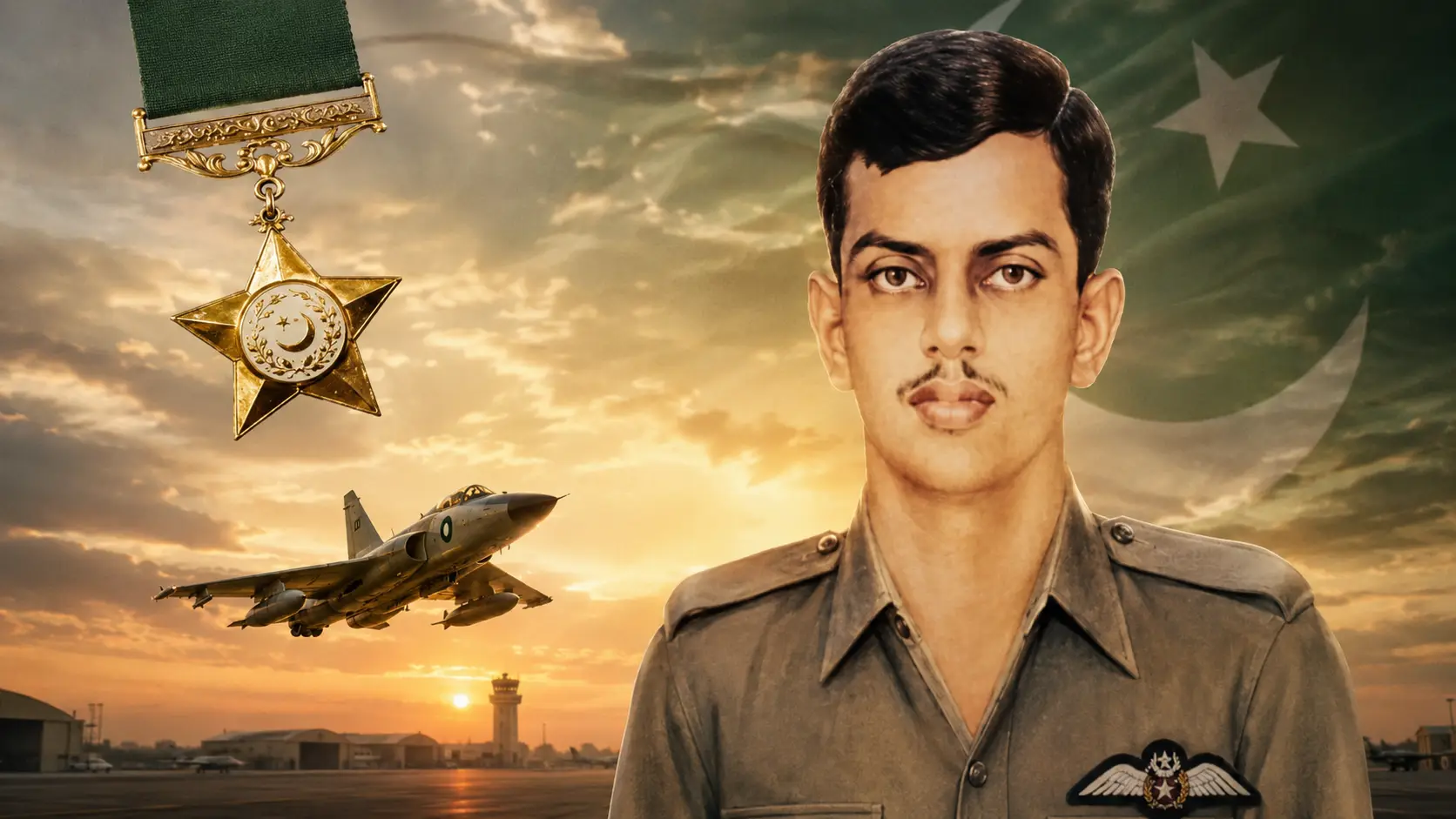

Rashid Minhas martyrdom is a poignant reminder of bravery, sacrifice, and patriotism in Pakistan’s history. On Thursday, the nation paused to pay tribute to Pilot Officer Rashid Minhas Shaheed (Nishan-i-Haider) on the 55th anniversary of his martyrdom, celebrating the ultimate sacrifice he made in the defense of his country. Minhas, a young pilot with boundless potential, exemplified the spirit of heroism that the Armed Forces of Pakistan uphold and cherish. His dedication and valor not only serve as a source of inspiration but also highlight the profound sacrifices made by countless individuals throughout the nation’s military history.
Understanding Rashid Minhas’ Legacy
Rashid Minhas’ martyrdom is not merely a date on the calendar but a story that embodies the essence of valor and selflessness. Born in Karachi on February 17, 1951, he pursued a career in aviation and quickly rose to prominence within the Pakistan Air Force (PAF). His journey through military training showcased his incredible skill, ambition, and deep-rooted love for his nation. However, it was his tragic fate during his first operational flight on August 20, 1971, that secured his place in Pakistan’s annals of bravery.
On that fateful day, Minhas was tasked with a routine training mission when his aircraft was hijacked by a renegade pilot attempting to defect to India amid the backdrop of the Bangladesh Liberation War. Despite the imminent threat and the possibility of death, Minhas made a decisive choice: he would not allow the aircraft to be used against his beloved homeland. In a show of unyielding courage, he maneuvered the aircraft aggressively, ensuring it would not reach the enemy’s territory. The crash that followed cost him his life, but his actions prevented a dire situation from worsening, illustrating the immense sacrifice he made for his country.
As one reflects on Rashid Minhas’ martyrdom, it becomes clear that his contribution transcends the act itself; it symbolizes the sacrifices that countless servicemen and women make in the face of danger. The legacy of Rashid Minhas lies not only in his actions but also in the lessons they impart about loyalty, bravery, and the enduring spirit of Pakistani nationalism.
Minhas’ story is also a testament to the intricate web of ethics and responsibilities soldiers navigate. It prompts us to ponder the difficult choices military personnel often face, emphasizing duties that extend beyond the mere call of duty. His decision on that day was not just a reflection of immediate bravery but a calculated measure rooted in a profound sense of patriotic duty and moral obligation.
The impact of Rashid Minhas’ actions resonates within the soul of Pakistan’s military ethos, often cited in military academies as a classic example of selflessness. His legacy serves both as a cornerstone of public memory and as an educational paradigmin understanding the human facets of warfare.
The Significance of the Nishan-i-Haider
The Nishan-i-Haider, Pakistan’s highest military honor, serves as a solemn token of acknowledgment for those who have laid down their lives for the country. The significance of this award cannot be overstated; it embodies the highest ideals of heroism and sacrifice. Rashid Minhas was posthumously awarded the Nishan-i-Haider for his extraordinary courage during the hijacking incident, highlighting the exceptional nature of his conduct under extreme duress. He is one of the very few individuals to receive this honor, which places him amongst an elite cadre of military heroes in Pakistan.
The award ceremonies are steeped in tradition and significance. The Nishan-i-Haider is a cherished emblem that not only commemorates the services rendered by valiant soldiers but also serves as a connecting thread among generations of Pakistanis. Minhas’ father, who was a military officer himself, expressed profound pride upon hearing the news of his son’s highest accolade an acknowledgment that resonated deeply within the military community and the populace alike.
Furthermore, the celebration of the Nishan-i-Haider each year during commemorative events reinforces its importance in Pakistan’s military fabric. The stories of those who received this honor, including Rashid Minhas, become oral histories that inspire new generations of military personnel to uphold the values encapsulated in their sacrifices.
The significance of the award also broadens the narrative around military honors in Pakistan, encouraging discussions about recognition beyond the battlefield. It emphasizes valor as a transformative legacy that extends into the realms of public consciousness and cultural heritage, bridging military accolades with civilian appreciation.
Receiving the Nishan-i-Haider is not merely about heroism on the field; it is an embodiment of a lifetime of service, valor, and dedication that inspires generations. This award immortalizes the sacrifice of those like Minhas, making their name synonymous with national pride and loyalty, virtues that are essential for the cohesion of any society.
Main Events of the Commemoration Ceremony
The 55th anniversary of Rashid Minhas’ martyrdom was commemorated with a series of events organized by the Pakistan Armed Forces, attended by distinguished military personnel, politicians, and citizens. The ceremonies included a solemn tribute, wreath laying at Minhas’ memorial, and speeches echoing themes of valor and sacrifice that define the Armed Forces. The passage of time does not diminish the significance of these commemorations, which serve as an annual reminder of the need to honor those who have given their lives in service to the nation.
During the ceremony, several key figures spoke about the lasting impact of Rashid Minhas’ bravery. They emphasized the importance of nurturing a sense of duty and patriotism among today’s youth. The 55th anniversary was not only a moment of remembrance but also a call to action, inspiring the current and future generations to embody the same courage that Rashid Minhas displayed.
In addition to speeches, participants took part in various activities such as parades and military displays that paid homage to the legacy of Minhas. Such displays showcase the prowess of the Pakistan Armed Forces while simultaneously reiterating their commitment to ensuring national security and integrity, thereby cementing the relevance of Rashid Minhas’ legacy in the present day.
Another essential component of the commemorative events is community engagement. By involving local organizations and educational institutions, the ceremony becomes more than just a military tribute; it enriches the cultural fabric, allowing citizens to participate in honoring a national hero.
These ceremonies work as important historical markers, capturing the essence of collective memory while encouraging societal dialogue on the importance of military service. They serve to remind everyone that the principles for which Rashid Minhas stood are as relevant today as they were over five decades ago, urging reflection and commitment at a personal and communal level.
Rashid Minhas in Popular Culture
The story of Rashid Minhas extends well beyond the confines of military history, finding resonance in popular culture, literature, and media. His valor has inspired poems, songs, and documentaries that serve to keep his memory alive among Pakistanis of all ages. These cultural artifacts contribute to the narrative of what it means to be a patriot in Pakistan and serve to engage younger generations with a legacy they may not have witnessed firsthand.
Documentaries showcasing Minhas’ life and heroic deeds enrich the collective understanding of what sacrifice truly entails. Many schools incorporate his story into their curriculums as a way to instill values of bravery and nationalism among students. Rashid Minhas has become a symbol of youthful patriotism, embodying the belief that age is no barrier to making a significant impact on your country.
Moreover, the artistic representation of Minhas’ story allows for nuanced discussions about broader themes of courage, sacrifice, and the human experience during times of conflict. His experiences, immortalized through film and literature, promote emotional engagement while educating subsequent generations about the historical realities of sacrifice and national pride.
Popular culture has also served as a vital medium for connecting diasporic communities with their heritage. Through music, theater, and film, Rashid Minhas’ legacy finds contemporary expressions, ensuring that his story is proliferated, adapted, and creatively revisited by artists, playwrights, and filmmakers.
In addition, the representation of Rashid Minhas in popular culture often intersects with discussions on identity and patriotism, exploring how his sacrifice has impacted national and cultural consciousness. His story not only enriches historical awareness but also shapes evolving dialogues on citizenship, duty, and belonging in modern Pakistan.
Also Read this Article : Sub-Inspector Suspended on Citizen Complaint Over Registering False Case in Rawalpindi
Lessons from Rashid Minhas’ Martyrdom for Future Generations
Rashid Minhas’ martyrdom offers invaluable lessons for current and future generations, particularly in a time where the concept of patriotism is often challenged by various social and political dynamics. His unwavering commitment to his nation, even in the face of death, serves as a compelling case study for students and professionals aiming for excellence in their respective fields. It underlines the importance of taking a stand for one’s beliefs, recognizing that sacrifices are often necessary for the greater good.
Moreover, the ethical dilemmas faced by Rashid Minhas during the hijacking provide fodder for discussions on moral courage. His actions underline the notion that one’s duty to country often comes with immense responsibility, and sometimes, exercising that duty may lead to personal sacrifice. This realization can foster a culture of resilience, encouraging young people to rise above challenges and work collectively for the nation’s betterment.
In addition, the narrative surrounding his bravery encourages the pursuit of passion-driven careers. Rashid Minhas was committed to aviation, demonstrating that passion can lead to excellence. His life can serve as a motivational story for aspiring pilots and those in similar professions, illuminating the path toward achieving one’s dreams while remaining committed to the interests of the country.
As future challenges and complexities arise, Rashid Minhas’ legacy continues to shed light on the virtues needed to navigate them. His life illustrates the balance between personal aspirations and the call of duty, granting a framework for ethical decision-making and civic responsibility.
Furthermore, discussing Rashid Minhas’ story within educational settings encourages critical thinking and civic activism. Encouraging youth to embody these values can result in a collective intellectual and moral upliftment, driving movements towards national cohesion and progress. His legacy, hence, becomes a catalyst for personal and communal growth.
Commemorative Initiatives and Their Impact
Various governmental and non-governmental organizations engage in initiatives to commemorate Rashid Minhas’ martyrdom each year, reinforcing not just his legacy but also the importance of military service in Pakistan. These events serve as platforms for discussions about national security, the role of the military, and the need for unity among Pakistanis in the face of adversity.
The commemorative initiatives also inspire charitable projects aimed at celebrating military families. Scholarships, healthcare initiatives, and support for veterans and their families are some of the ways that organizations continue to honor Minhas’ legacy while serving the community. These projects contribute to building a sense of belonging, reminding people that the sacrifices of soldiers like Minhas are integral to the national identity.
Additionally, educational campaigns aimed at informing the public, especially the youth, about Rashid Minhas’ sacrifices promote a culture of acknowledgement and gratitude. These initiatives help cultivate respect for military personnel and underscore the importance of honoring their service through tangible actions.
Tangible commemorative efforts extend beyond ceremonial events, manifesting in infrastructural developments such as the establishment of schools, hospitals, and parks bearing Rashid Minhas’ name. These entities stand as living legacies, integrating his sacrifice into the daily lives of communities across Pakistan.
Civic engagement through commemorative initiatives also encourages a participatory approach, allowing citizens to contribute to societal welfare. By honoring the legacy of Rashid Minhas, these initiatives foster an inclusive environment where sacrifice is remembered and celebrated as a shared cultural heritage.
International Perspective on Rashid Minhas’ Martyrdom
Rashid Minhas’ martyrdom holds significance not only within Pakistan but also in international discussions regarding sacrifice and valor in military service. Countries across the globe grapple with the challenges of conflict, often echoing similar stories of selflessness. The narrative surrounding Minhas has been recognized in international military communities, fostering discussions about ethical dilemmas faced by soldiers worldwide.
Comparisons can be drawn between Rashid Minhas and other international figures commemorated for their extraordinary acts of bravery. Such discussions can serve to enhance relations between military organizations across nations, establishing a sense of universal admiration for those who risk their lives to protect their homeland.
Further, Rashid Minhas’ story could provide a platform for discussions around international military ethics, exploring how contemporary soldiers navigate dilemmas in the face of conflict. It presents an opportunity for educational exchanges, fostering a deeper understanding of military sacrifices while also revealing commonalities that unite soldiers globally.
Through international collaboration, Rashid Minhas’ legacy also propels conversations about global peace and security, highlighting shared values and experiences that transcend national borders. His story offers a narrative that links universal themes of bravery and sacrifice, inviting a reflective and collaborative approach to global challenges.
International conferences and seminars can further examine the implications of his valor, leveraging Rashid Minhas’ story to advocate for cultural diplomacy and collective security efforts. By transforming personal sacrifice into a shared international narrative, the global community can explore avenues for cross-cultural dialogue and conflict resolution.
The Continuing Relevance of Rashid Minhas’ Martyrdom
As Pakistan commemorates the 55th anniversary of Rashid Minhas’ martyrdom, it is clear that his legacy remains deeply pertinent in today’s socio-political climate. His story serves as a reminder of the virtues of bravery and sacrifice, encouraging the nation to uphold these principles in the face of ongoing challenges. Moreover, as new complexities and challenges arise globally, the foundational values embodied by Minhas are essential for fostering unity and resilience among Pakistanis.
In a world marked by rapid change and unpredictability, recalling heroes like Rashid Minhas can instill hope and encourage a collective spirit of excellence and patriotism. Each anniversary serves as an opportunity to reaffirm commitment to national integrity and acknowledge the sacrifices made by so many in the name of security and peace.
Moreover, the enduring lessons from Rashid Minhas’ life and sacrifice guide military strategies and discussions surrounding national defense, serving as a perennial source of inspiration for Pakistan’s Armed Forces. It emphasizes the timeless notion that valor knows no bounds and that true patriotism often requires ultimate sacrifice.
Commemorating Rashid Minhas’ efforts presents not only a historical celebration but an ongoing conversation, reflecting how shared memories can influence future paths. By integrating his narrative into national consciousness, his legacy grows as an evolving source of motivation.
At the heart of Rashid Minhas’ continued relevance is the universal pursuit of peace, truth, and unity. His story invites reflections on how individual sacrifice feeds into broader aspirations, compelling society to evolve towards collective welfare, security, and shared prosperity.
Conclusion
The commemoration of Rashid Minhas’ martyrdom on its 55th anniversary presents an important occasion for reflection, gratitude, and inspiration. Minhas’ life story, marked by courage and sacrifice, exemplifies what it means to be a true patriot. As Pakistan continues to honor his legacy, it also engages in sincere discussions about the responsibilities and sacrifices necessary for national integrity.
The story of Rashid Minhas is not just a reminder of the past it resonates with the contemporary ethos of sacrifice and dedication, forming a moral compass for future generations. Through thoughtful reflection and commemorative initiatives, Pakistan can ensure that the spirit of Rashid Minhas persists, inspiring millions to forge a path of dedication and service for their nation. As more individuals learn about his story, his contributions to Pakistan will remain alive in the hearts and minds of the people for many generations to come.
Frequently Asked Questions
Who was Rashid Minhas?
Rashid Minhas was a Pilot Officer in the Pakistan Air Force, recognized for his ultimate sacrifice during a hijacking incident on August 20, 1971. His actions have made him a national hero, posthumously awarded the Nishan-i-Haider.
What does the Nishan-i-Haider represent?
The Nishan-i-Haider is Pakistan’s highest military honor awarded for acts of bravery and sacrifice in defense of the country. Rashid Minhas received this honor for his courageous action during the hijacking attempt.
Why is Rashid Minhas’ martyrdom commemorated annually?
Rashid Minhas martyrdom is commemorated annually to honor his sacrifice, instill patriotism, and teach future generations the values of bravery and duty toward the nation.
What impact did Rashid Minhas have on Pakistan?
Rashid Minhas’ actions during his martyrdom have inspired countless individuals in Pakistan to embody bravery and commitment to their country. His legacy continues to resonate deeply among military personnel and civilians alike.
How can young people learn from Rashid Minhas’ legacy?
Young people can learn from Rashid Minhas’ martyrdom by understanding the values of courage, sacrifice, and service to the nation. His story serves as a motivational example for those pursuing careers in the military and beyond.