





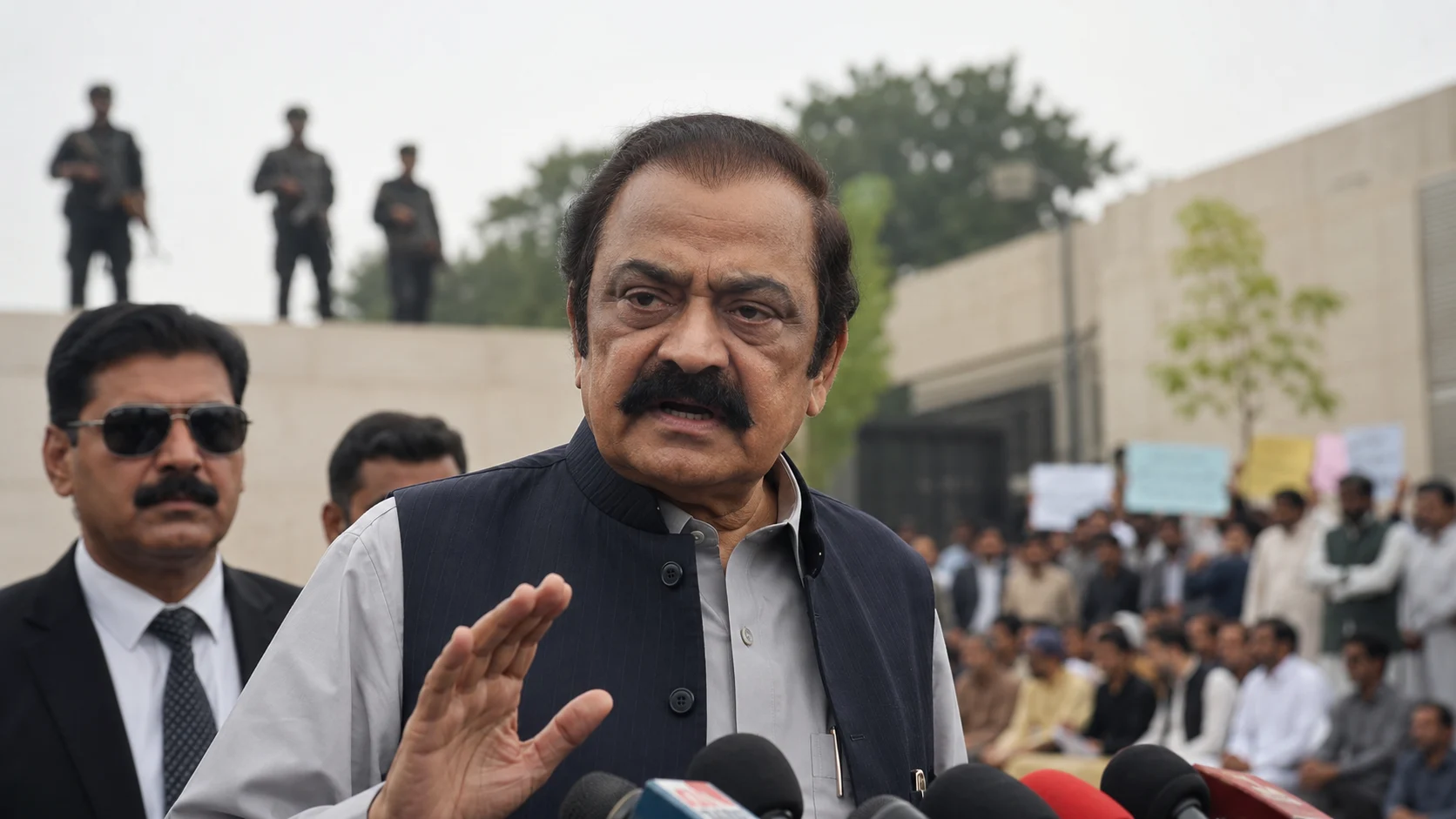

Rana Sanaullah recently emphasized that initiating talks with the Joint Action Committee (JAAC) is out of the question unless they unequivocally distance themselves from armed groups. This statement underscores the complexities inherent in achieving peace in regions where armed factions often hold significant influence. Sanaullah’s declaration reflects a crucial aspect of diplomatic efforts aimed at stabilizing volatile zones. Such statements are pivotal in understanding the dynamics of conflict resolution and the challenges faced by political leaders attempting to restore harmony.
The Historical Context of JAAC
The Joint Action Committee (JAAC) has been a notable entity in political discourse. Formed with the intention of unified action, it represents varied interests that often seek to address socio-political grievances. Historically, such coalitions emerge when there’s a perceived marginalization of certain groups, inevitably leading to friction with more established political powers. Understanding the origins and motivations behind JAAC provides insight into why distancing from armed factions is contentious yet essential.
Political groups like JAAC typically arise in response to a call for change. They mirror the collective sentiment of disparate groups who believe their voices are overlooked in larger national conversations. Often, their objectives include addressing local issues such as economic disparities, ethnic or tribal rights, and governance reforms. Nevertheless, the involvement of armed factions complicates these objectives, turning dialogue into a delicate balancing act of negotiation and security posturing.
The presence of armed groups within such coalitions is both a barrier and an accelerant. While they bring leverage, their methods often provoke state backlash. Rana Sanaullah’s stance finds its roots in this paradox. Without clear differentiation from militancy, genuine dialogue risks being overshadowed by issues of security, thus stalling potential progress.
Furthermore, the dynamics within JAAC-like organizations are complex. These coalitions face internal challenges, such as aligning diverse member agendas and ensuring cohesive strategies while dealing with external pressures from governments demanding demilitarization. Understanding these pressures is key to appreciating the full scope of Sanaullah’s insistence on distancing from violence.
International experiences show that when groups align closely with militancy, their larger agendas often face derailment. By examining the roots and impacts of militant affiliations, political stakeholders like Sanaullah emphasize a return to non-violent pursuits, ensuring these movements remain politically viable and aligned with peaceful governance.
Rana Sanaullah: A Political Profile
Rana Sanaullah, a prominent political figure, serves as a seasoned politician with deep-rooted experience in governance and conflict resolution. His political career has been marked by various roles, including his tenure as the Law Minister. These roles bestowed upon him a nuanced understanding of the intricate relationship between political movements and security concerns.
Throughout his career, Sanaullah has been recognized for his firm stance against militancy. His approach combines diplomatic engagement with stringent security measures, aimed at fostering peace and stability. This background informs his current position on the JAAC discussions, emphasizing the refusal to engage in talks until their separation from armed entities is evident.
His insistence on this precondition underscores a commitment to pursuing a security-centric approach. It reflects a broader strategy where governance is interlinked with both the resolution of political grievances and the maintenance of law and order, ensuring that peace talks are underlined by genuine stability.
His experience also highlights the importance of having leaders who can effectively manage both internal and external narratives. Sanaullah’s career offers an exemplary lens into how political figures can balance diplomacy with firm security policies, showcasing that a multi-pronged approach is necessary in geopolitical landscapes marked by militant-political overlaps.
Sanaullah’s strategies can be seen as a blueprint for others facing similar challenges. His focus on legal frameworks and clear policy delineation ensures that political dialogue remains a credible force for change, while undermining the justifications often used by armed groups to perpetuate their existence.
The Role of Armed Groups in Political Negotiations
Armed groups have long been a complicating factor in political negotiations. The presence of these factions within political coalitions often leads to disputed motives and aims. On one hand, they can lend strength to negotiations through intimidation and leverage; on the other hand, their involvement can undermine political legitimacy and peace efforts.
In scenarios like the one faced by Rana Sanaullah and JAAC, the armed elements are often viewed as impeding meaningful dialogue. They inject an element of uncertainty that can derail peace talks and hinder trust-building efforts. The challenge lies in separating genuine political discourse from the potentially destabilizing influence of violence and militancy.
Ensuring that political movements distance themselves from armed factions is critical not just for the credibility of negotiations, but also for the long-term stability of the region. It reflects a commitment to peace processes that are rooted in dialogue rather than coercion or force, paving the way for sustainable resolutions.
Successful historical negotiations illustrate that sidelining militancy requires intricate balancing acts. The overarching goal during dialogue must be achieving consensus without reliance on coercion, thereby preserving the political integrity of the involved entities.
Moreover, the effectiveness of political negotiations often hinges on how successfully they can assure disarmament without alienating armed voters who see their representation in these groups. This dichotomy serves as a continuous chasm that negotiators must mindfully bridge.
International Perspectives on Armed Political Movements
Globally, the interaction between political movements and armed groups has been a subject of extensive debate and policy-making. Many nations grapple with similar challenges where armed factions either originate from or infiltrate political coalitions, affecting national and regional stability.
Comparative studies have shown that successful peace initiatives often require the unequivocal denial of violence as a political tool. Countries that have managed to cultivate peaceful cohabitation often do so by systematically disarming factions and fostering dialogue free from the shadow of militancy.
The international community typically advocates for de-escalation through diplomatic channels, urging disarmament as a precursor to genuine negotiation. In reflecting on Rana Sanaullah’s position, such global perspectives underline the importance of unilateral disavowal of violence to achieve universally recognized governance norms and peace.
Insights from global conflict zones reveal the power dynamics within armed movements and political entities. They underline the need for comprehensive international strategies that not only encourage demilitarization but also offer socio-economic alternatives to engagement in militancy.
Success stories from around the world reiterate that government-backed educational initiatives, employment programs, and community resources play essential roles in mitigating armed factions’ influence over time, creating pathways for sustained peace within politically tumultuous regions.
Also Read This Article: LA-6 Bhimber-2: Unofficial Election Results Analysis
Challenges in Distancing from Militant Groups
Separating political aims from militant tactics presents numerous challenges. For groups like the JAAC, this process involves not only organizational changes but also shifting public perceptions and internal dynamics. Disarmament is a physical and ideological journey.
Internally, the complexities are multifaceted. Leaders must navigate differing internal opinions and potential backlash from armed factions resistant to change. Successfully achieving this requires credible leadership and a robust strategy to realign priorities without losing the support of their base.
Externally, there are pressures from government bodies and international stakeholders who watch closely for signs of genuine intent to distance from militancy. This aspect involves an intricate dance of public declarations, tangible actions, and continual negotiation to foster trust among all parties involved.
One of the prominent challenges is the integration of former combatants into civilian life. Returning to peace often demands reintegration programs that address the socio-economic upliftment of members who might otherwise revert to militancy. Furthermore, public perception plays a key role in evaluating the success of these distancing efforts. Transparent communication and demonstrable commitment to demilitarization are vital in garnering public trust and showcasing genuine moves towards peaceful resolutions.
Implications for Regional Stability
Rana Sanaullah’s announcement highlights significant implications for regional stability. As talks with JAAC remain stalled, the broader regional landscape remains in a state of flux. Stability hinges not just on successful negotiations but also on the ability to address underlying socio-political issues.
The prolonged impasse affects not only political coalitions but also everyday life in regions where these groups hold sway. Economic activities, social cohesion, and governance structures are all influenced by the tension between political intentions and armed realities.
Long-term regional stability is contingent upon resolving such impasses through comprehensive socio-political strategies that engage all community facets. This includes leveraging education, economic opportunities, and social reform to diminish the allure of militancy and foster a cooperative political environment.
Reflecting on regional history, stalled negotiations without resolution historically lead to economic stagnation and increased local unrest, reinforcing the cycle of violence and undermining governance systems. Understanding this cyclical nature is key for future peace-building efforts.
Regional actors must therefore engage in holistic political dialogues, synchronizing efforts with international bodies to ensure the implementation of frameworks that prioritize comprehensive peace over short-lived political gains.
The Path Forward for Peace Talks
Exploring viable pathways forward, political analysts suggest adopting a multi-faceted approach that intertwines political dialogue with tangible security initiatives. Parsing out militant elements from political negotiations is essential to clear the way for constructive and meaningful peace talks.
Building from grassroots engagement, there must be a concerted effort to involve local communities in peace processes. This approach fosters a sense of ownership and investment in outcomes, which reinforces commitments to peace from the ground up.
Additionally, international mediators could play a proactive role in bridging dialogues, ensuring that communication lines remain open and grounded in peaceful tenets. This would align with efforts to create a sustainable and inclusive framework for negotiations, enhancing the prospects for enduring peace.
Incorporating stakeholders from educational, economic, and civil sectors also allows for a broader discourse that can address the societal grievances that fuel armed movements, offering holistic solutions that extend beyond simple disarmament.
Political leaders need to encourage transparency and trust by engaging openly with both domestic and international audiences, illustrating their dedication to peace through consistent policy directions and open lines of communication that welcome varied viewpoints.
Comparative Cases of Similar Political Situations
Examining other regions that have faced similar dilemmas sheds light on potential outcomes and strategies. Instances in Northern Ireland and Colombia showcase how decades-long conflicts transitioned into peace through arduous negotiation processes that required demilitarization.
Such transformations did not occur overnight. Incremental disarmament, trust-building initiatives, and significant policy restructuring formed the backbone of these successful transitions. They demonstrate that patience and a comprehensive, multifaceted approach are critical in navigating complex socio-political landscapes.
In each instance, political willpower combined with clear demarcations between militants and political factions facilitated paths toward more stable futures, offering lessons for current and future negotiations involving entities like JAAC.
These historical comparisons illustrate the potent role of sustained international support, where global communities back educated initiatives designed to understand and diffuse militant ideologies without infringing upon socio-political sovereignty.
Moreover, these case studies highlight the importance of culturally sensitive negotiation strategies, underpinned by empathy and a deep understanding of the historical contexts which drive current conflicts lessons that could greatly inform JAAC’s ongoing and future engagements.
Public Perception and Media’s Role
The media wields considerable influence in shaping public perception, making it a vital player in this dynamic. Coverage of political negotiations and leaders’ statements, such as those by Rana Sanaullah, helps frame how audiences understand the intricacies and stakes involved.
Media has the responsibility to present balanced coverage that accurately portrays the situation’s complexities. By elevating diverse voices and expert opinions, media can contribute positively by informing and educating the public, thereby indirectly influencing negotiation processes.
Understanding public sentiment is crucial for political leaders. They must harness media channels to communicate their positions clearly and foster trust among constituents and stakeholders alike, while also countering misinformation that could derail peace efforts.
Critical analyses by media outlets can expose underlying tensions and potential solutions, providing a platform for dialogue that extends beyond political rhetoric to include societal contributions toward lasting peace.
As a mediator of public discourse, media efforts that maintain focus on hope-driven narratives may bolster support for peace talks, urging citizens and politicians to actively participate in cultivating atmospheres where peaceful resolutions can be envisioned and achieved.
Conclusion
The road to peaceful resolutions, as highlighted by Rana Sanaullah’s stance on JAAC, is fraught with challenges. Distancing political movements from armed groups requires nuanced strategies encompassing negotiation, public engagement, and a steadfast commitment to peace principles. While the path forward may seem daunting, historical precedents and international practices offer viable pathways.
In navigating these complex dynamics, stakeholders must remain vigilant in fostering dialogues hinged on non-violence, supported by robust governance reforms. As political leaders like Sanaullah engage with these intricacies, the focus remains on balancing security imperatives with the broader goals of socio-political stability and development.
Achieving such objectives will demand unwavering dedication to peace processes and constructive collaboration across all societal segments, paving the way for enduring and inclusive peace.
Frequently Asked Questions
Why is it important for JAAC to distance itself from armed groups?
Distancing from armed groups is crucial for JAAC to gain political legitimacy and ensure that any negotiations are based on peaceful resolutions, reducing the risk of violence undermining efforts.
What are the potential outcomes if JAAC fails to distance itself?
If JAAC does not distance itself, it risks stalled negotiations and increased tensions, potentially leading to heightened conflict and instability within the region.
How can historical examples help in this situation?
Historical cases, like Northern Ireland, offer lessons in managing the transition from conflict to peace, emphasizing the need for disarmament and inclusive dialogue.
What role does media play in conflict resolution?
Media shapes public perception by providing information and framing the discourse, thus influencing the negotiation process and public sentiment.
What challenges do political leaders face in such negotiations?
Leaders face challenges in navigating internal factional opinions, managing public expectations, and ensuring that armed groups do not derail peaceful dialogues.