







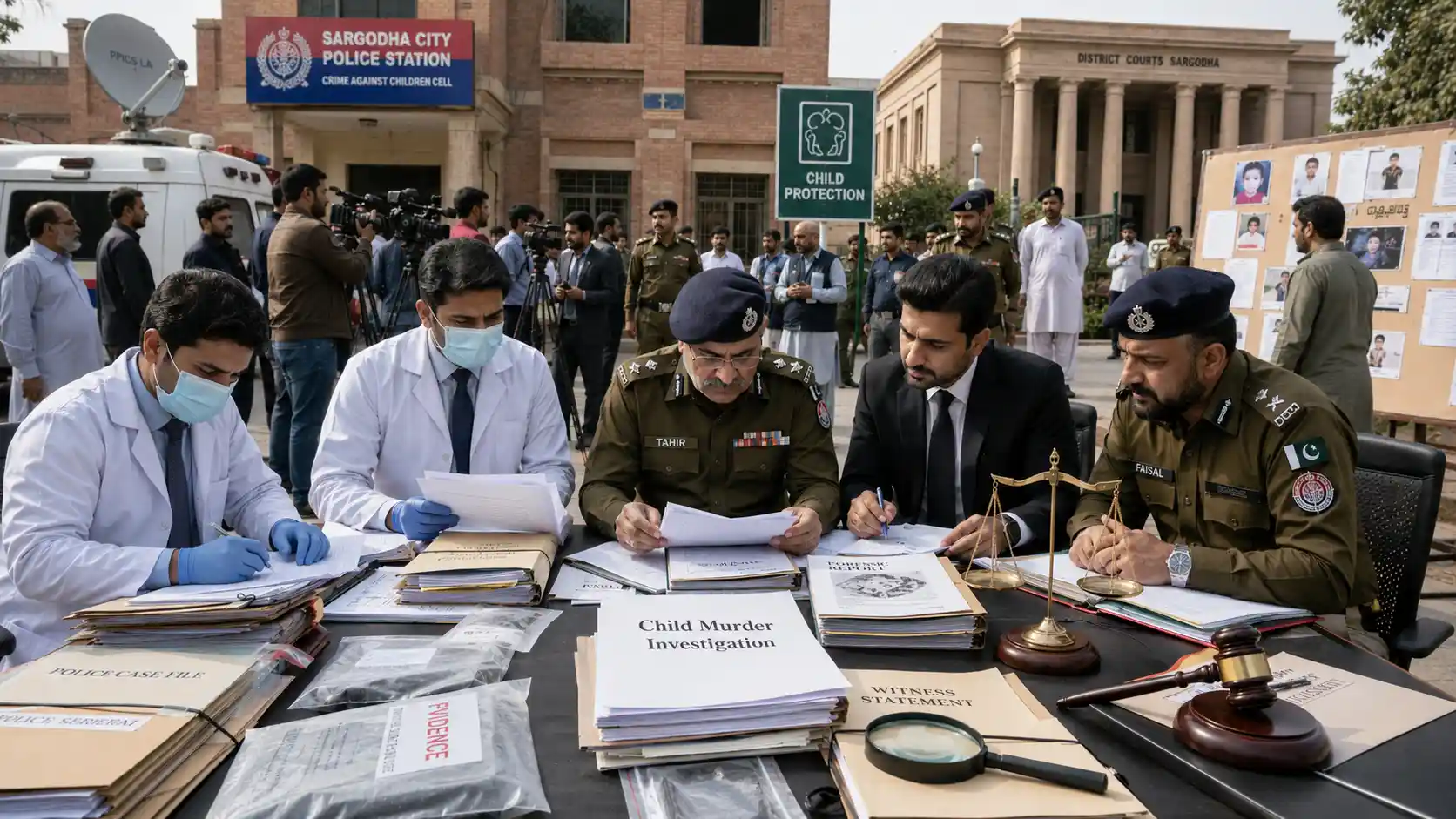

The Sargodha child murder case has gripped the nation with shock and sorrow, as unfolding events reveal chilling details about the crime and its aftermath. At the heart of this case lies the suspect, Arslan, who was recently killed during a Counterterrorism Department (CCD) encounter. This incident not only marks a pivotal turn in the investigation but also raises several questions about justice and law enforcement practices. Understanding the gravity of the Sargodha child murder and its implications is crucial for both the local community and the broader society.
The Sargodha Child Murder Case Unfolded
The Sargodha child murder case first came to public attention when the body of a young child was discovered in the vicinity of Sargodha, a city known for its historical and cultural significance. The community was immediately thrown into turmoil as the grim reality of the crime began to set in. People were horrified by the brutality of the act and anxious about their safety and that of their children.
Authorities quickly launched an investigation, mobilizing local police forces and other agencies to identify the perpetrator. The incident drew widespread media coverage, with detailed reports highlighting the urgency and severity of the case. Public rallies and protests were organized, demanding swift justice for the victim and harsher punishments for those who commit such heinous crimes.
As the investigation progressed, Arslan emerged as a primary suspect. The narrative surrounding him was fraught with tension, as law enforcement officials pieced together evidence linking him to the crime. With the community on edge, the situation demanded decisive action from the authorities.
Adding to the complexity of the case was the socio-economic backdrop of Sargodha. The city, while rich in history, faces challenges including limited resources and under-staffed law enforcement agencies. These systemic issues highlighted the difficulties in managing a high-profile investigation under significant public pressure. The involvement of multiple law enforcement bodies underscored the need for a coordinated effort in handling such sensitive cases.
Further complicating matters, misinformation and rumors circulated rapidly within social media channels. This spread of unverified information contributed to heightened tensions and led to misgivings about the direction and effectiveness of the investigation. Authorities had to contend not only with resolving the case but also with managing public perception and regaining community trust.
The Role of the Counterterrorism Department
The involvement of the Counterterrorism Department (CCD) in the Sargodha child murder case added a layer of complexity to the unfolding events. Typically tasked with handling cases involving terrorism, the CCD’s engagement underscored the perceived threat level posed by the suspect and the broader implications of the crime.
By deploying the CCD, authorities emphasized the need for a tactical and strategic approach to apprehending Arslan. The decision was likely influenced by concerns over public safety and the possibility of Arslan having ties to larger criminal networks. This reflects a growing trend where specialized agencies are called upon to support traditional law enforcement efforts.
The presence of the CCD in this case also sparked discussions about resource allocation and priorities within law enforcement agencies. Critics argued whether deploying specialized units in non-terrorism related cases could detract from their core mission. Nonetheless, supporters contended that such collaboration was essential in achieving justice swiftly and effectively.
Their involvement brought into focus the evolving role of counterterrorism units. In a world where the lines between traditional crime, organized syndicates, and potential terror threats are increasingly blurred, the utilization of CCD resources indicated a proactive stance. The integration of intelligence units and forensic experts from CCD demonstrated how complex cases necessitate multi-disciplinary approaches, blending tactical enforcement with meticulous investigative work.
This case also prompted the evaluation of the legal frameworks guiding collaborations between various branches of law enforcement. By leveraging the CCD’s capabilities, authorities were able to access advanced technological support and enhanced operational planning, which, despite controversy, potentially expedited the resolution of a gravely serious crime. However, it further elucidated the pressing need for clarity in jurisdictional boundaries and the circumstances under which cross-agency involvement is deemed appropriate.
The Encounter: Arslan’s Final Stand
The CCD encounter that resulted in Arslan’s death was a dramatic and controversial event. This encounter, occurring during what the police described as an attempt to capture the suspect, swiftly ended in violence, raising numerous questions about the procedure and rationale behind such operations.
Details of the encounter were sparse, with initial reports providing limited insight into how the situation escalated. Eyewitness accounts varied, with some suggesting that Arslan had resisted arrest, while others speculated about the possibility of a premeditated confrontation.
The use of lethal force by the CCD has sparked a debate about the principles of due process and human rights. Human rights organizations and legal experts have called for transparency in the investigation of the encounter, insisting that any breach of protocol be held accountable. This occurrence highlights ongoing challenges in balancing public safety with the rights of suspects.
Furthermore, the encounter shed light on the necessity of documenting police operations through body cameras and other recording technologies. Such measures could provide accountability and help ascertain the truth in situations fraught with conflicting narratives. In situations where an incident escalates rapidly, documented evidence could serve as an invaluable resource in subsequent investigations and legal challenges.
The psychological impact on the officers involved also deserves attention, as high-stakes operations carry the burden of split-second decision-making under distressing circumstances. Proper mental health support and post-operation analysis should be standard protocol to ensure law enforcement personnel are adequately supported. This blend of technical and human elements is crucial, not only for the officers involved but also in maintaining public trust in law enforcement practices.
Community Reaction to Arslan’s Death
The news of Arslan’s death elicited a mixed response from the Sargodha community and beyond. Many expressed relief, feeling that justice had been served swiftly. For those who had been following the case closely, the removal of the suspect provided a sense of closure and reaffirmed their belief in the efficacy of law enforcement.
Conversely, others were critical of the method and circumstances of Arslan’s death. They argued that the violent end precluded the possibility of a fair trial and denied any potential insights that could have been gained from a thorough investigation and interrogation of the suspect.
The community’s divided reaction underscores the complex interplay between emotional responses to crime and principled beliefs about justice. This scenario serves as a microcosm of broader societal debates on law enforcement’s role and methodologies.
The case also catalyzed discussions about community policing practices and the role citizens play in supporting law enforcement. Grassroots organizations began advocating for police-community dialogue sessions, aiming to foster a better mutual understanding of roles and expectations. Building trust between the community and police forces is imperative for compliance with law enforcement efforts and for ensuring that justice is both served and perceived as fair.
Moreover, socio-cultural factors within Sargodha may have played a role in shaping the community’s reactions. The region’s diverse population spans various ethnic and socio-economic backgrounds, each with their potentially distinct perspectives on justice and governance. Understanding these nuanced dynamics is crucial for stakeholders to effectively engage with the community and craft policies that respect cultural sensitivities while upholding law and order.
Implications for Law Enforcement Practices
The Sargodha child murder case and the subsequent CCD encounter have broader implications for law enforcement practices in the region. Law enforcement agencies are now faced with the task of reviewing their engagement procedures, especially when involving high-profile cases that invoke public interest and scrutiny.
This incident has initiated calls for improved training programs focused on de-escalation and conflict resolution. Such programs aim to equip officers with the skills needed to handle confrontational situations without resorting to lethal force, thereby reducing the likelihood of similar outcomes in the future.
The case also reinforces the necessity for clear policy guidelines governing the collaboration between local police and specialized units like the CCD. Establishing well-defined roles and response protocols can prevent overlap and ensure that both entities operate within their areas of expertise.
The repercussions from the case have stirred dialogue concerning the integration of advanced technology in policing, particularly in surveillance and forensic analytics. As the technological landscape evolves, employing AI-driven tools and predictive analytics can drastically improve investigative effectiveness by identifying threat patterns before they escalate into violent crimes. However, this also introduces privacy considerations that must be balanced against the benefits of enhanced policing capabilities.
In addition to operational adjustments, community outreach and engagement strategies could be revitalized to enhance trust and cooperation with the public. Education campaigns, open days at police stations, and joint community initiatives can break down barriers and promote transparency, encouraging citizens to play an active role in the safety and well-being of their communities. By establishing such constructive engagements, authorities can mitigate the fallout from contentious cases and build resilient partnerships with the populations they serve.
Media’s Role in Framing the Narrative
Throughout the Sargodha child murder case, media outlets played a crucial role in shaping public perception and narrative. The coverage provided real-time updates, analyses, and expert opinions that kept the public informed and engaged.
However, the media’s portrayal of events also had the potential to influence public sentiment and sway opinions, sometimes prioritizing speed over accuracy. This dynamic underscores the responsibility of journalists to adhere to ethical reporting standards, especially in emotionally charged cases.
The case serves as a reminder of the media’s power to inform and influence, highlighting the need for balanced reporting that distinguishes between substantiated facts and speculative assertions.
The influence of social media cannot be underestimated, as it acts both as a magnifier and accelerator of news dissemination. Unlike traditional media, social platforms facilitate instant public discourse, often serving as the first point of contact for breaking news. The rapid spread of information—both accurate and misleading—warrants a responsible approach from social media enterprises to prevent unfounded claims from gaining traction.
This incident opens a broader dialogue on media accountability and consumer literacy, urging stakeholders to focus on educating audiences on critical consumption of news content. This involves fostering an understanding of news biases, corroborating reports from multiple sources, and resisting the allure of sensationalism. Informed consumers, coupled with ethical journalism, create a media ecosystem where the accuracy and integrity of information can be preserved, especially in sensitive legal and criminal matters.
Legal Consequences and Judicial Perspectives
The legal ramifications of the Sargodha child murder case continue to unfold as judicial bodies examine the conduct of law enforcement during the CCD encounter. Questions about the adherence to legal standards and safeguards against unlawful actions are at the forefront of discussions.
The outcome of legal proceedings related to the encounter could set precedents for future cases, impacting how encounters are conducted and reviewed. Any deviation from prescribed legal frameworks could have consequences for the credibility and accountability of law enforcement agencies.
The judiciary’s involvement underscores the importance of upholding the rule of law, ensuring that even in complex cases, the principles of justice are not compromised. The proceedings aim to safeguard citizens’ rights and uphold the highest standards of legal conduct.
Moreover, this case highlights the role of judicial activism in evaluating and critiquing existing legal frameworks. By scrutinizing the actions of law enforcement, courts play a pivotal role in ensuring that constitutional safeguards are respected and that justice mechanisms remain equitable and transparent. Such judicial assessments also offer an opportunity to propose amendments or legislative improvements to current protocols, ensuring they align with evolving societal values and expectations.
Further, this incident holds significance for law schools and legal scholars as a case study, encompassing complex themes of human rights, procedural transparency, and the balance of power between law enforcement and judicial entities. Enhanced academic focus on these areas can cultivate a new generation of legal professionals adept in navigating the nuanced challenges present in modern law enforcement paradigms.
Historical Context of Child Murders in the Region
To comprehend the full significance of the Sargodha child murder case, it’s essential to consider the historical context of child murders in the region. Unfortunately, this is not an isolated incident, with past cases revealing similar patterns of violence against vulnerable populations.
One notable case involved a child abduction that led to a nationwide outcry, prompting legislative changes to enhance child protection measures. Such cases have historically highlighted deficiencies in early intervention programs and the need for comprehensive child welfare frameworks.
The repeat occurrence of such crimes necessitates a critical assessment of existing protective measures and the effectiveness of enforcement strategies. It emphasizes the importance of community vigilance and proactive approaches to safeguard children.
The frequency of child-related crimes reflects underlying socio-economic issues, including poverty, lack of employment opportunities, and limited access to education, which can foster environments where such tragic events are more likely to occur. Addressing these root causes through comprehensive policy reform is essential for lasting change and child welfare improvement.
Community-driven initiatives have also emerged as a powerful vehicle for change, involving the establishment of support groups and child advocacy organizations. These entities work collaboratively with governmental bodies to create robust ad-hoc networks addressing the immediate and long-term needs of affected families, while acting as watchdogs to ensure that child protection efforts remain a priority for governance structures.
Comparative Analysis with Similar Cases Globally
The Sargodha child murder case can be compared with similar incidents from around the world, providing insights into common challenges and effective prevention strategies. In many countries, news of child murders often evokes widespread public distress and demands for action.
For instance, cases in developed countries have shown the benefits of advanced forensic technology and data-driven policing in identifying suspects quickly and efficiently. These methods, when applied in regions with limited resources, can greatly enhance investigative capabilities.
International cooperation and knowledge sharing are essential in tackling such global issues. By learning from successes and failures in other jurisdictions, law enforcement agencies can adopt best practices that improve both preventive and responsive measures.
The sharing of methodologies across borders has led to several successful international collaborations, leveraging technologies like DNA forensic databases and digital tracking systems. Law enforcement agencies in resource-limited regions can benefit significantly by forging alliances with counterparts worldwide, thus gaining access to innovative solutions that would otherwise be prohibitively expensive to develop independently.
Case studies focusing on successful detection and prevention frameworks can inspire legislative reforms in regions like Sargodha. Collaboration with global watchdogs and alignment with international child protection laws can strengthen local policies, bringing them up to par with established global standards. Such efforts foster an iterative learning environment, where shared knowledge leads to a profound cumulative effect on child protection strategies worldwide.
Looking Forward: Preventive Measures and Community Involvement
The complex nature of the Sargodha child murder case highlights the urgent need for preventive measures and greater community involvement. Strengthening neighborhood watch programs, enhancing parental guidance, and fostering open communications between law enforcement and the community are fundamental steps.
Educational initiatives focused on raising awareness about child safety and online risks can empower communities to actively participate in safeguarding their children. Schools, local organizations, and police departments must collaborate to create a supportive ecosystem that prioritizes the well-being of young ones.
Policymakers are also called upon to ensure that legislative frameworks are robust enough to deter criminal activities and support victims’ families. Striking a balance between enforcement and community engagement can pave the way for safer societies where such tragedies become rare exceptions.
Introducing digital literacy programs specifically geared towards young audiences can help in mitigating risks associated with the virtual realm. These initiatives should aim to educate parents and children on the potential dangers of online interactions, providing them with tools and techniques to discern between safe and unsafe digital environments. By incorporating cyber safety modules in school curricula, the next generation can grow up with an intrinsic understanding of maintaining personal safety online.
Additionally, community outreach efforts can harness the power of narrative storytelling, sharing real-life experiences and lessons with the goal of preventing future tragedies. Communities can draw upon cultural practices, art, and theater, employing these mediums to communicate powerful messages of vigilance and solidarity. Such endeavors can establish a strong cultural groundwork that places child safety at the fore, nurturing a cohesive, aware, and vigilant society that collectively guards the well-being of its most vulnerable members.
Conclusion: Reflecting on the Sargodha Child Murder Case
The Sargodha child murder case, culminating in the unfortunate death of suspect Arslan, serves as a pivotal moment for reflection and reassessment in both societal and law enforcement practices. The case has highlighted the intricacies of managing high-profile criminal investigations, the role of specialized agencies like the CCD, and the impact of media narratives.
The lessons learned from this case underscore the necessity of transparent legal procedures, the importance of community trust, and the urgency of establishing more effective child protection measures. The path forward requires collective effort from all stakeholders, committed to preventing future tragedies and ensuring that justice is served with integrity and fairness.
By examining and addressing the multifaceted issues that emerged during this case, society can work towards achieving lasting change, honoring the memory of the innocent victim, and fostering a safer environment for all children.
Strategically, the case emphasizes the demand for inter-agency cooperation within the realm of law enforcement—a model that prioritizes holistic approaches while leveraging diverse expertise. It also places greater focus on continuous evaluation and adaptation of legal and procedural frameworks, ensuring they remain relevant and effective in dynamic environments.
Above all, proactive community involvement remains a cornerstone in mitigating the risk of such tragedies. By embracing an ethos where community welfare is intrinsically linked to each citizen’s responsibility, societies can create environments that deter violence, while simultaneously instilling hope and resilience among their members. Nurturing these values ensures the foundations of a society built not just on statutes and rules, but on a shared commitment to safety, justice, and compassion for all.
Frequently Asked Questions
What prompted the involvement of the CCD in this case?
The CCD was involved due to the suspected danger posed by Arslan and concerns over potential links to broader criminal networks. This was seen as necessary to ensure a strategic response.
How has the community reacted to the incident?
The community’s reaction has been mixed, with relief at swift justice and concern over the lack of a trial. These responses reflect broader societal debates on law enforcement practices.
What are the implications of Arslan’s death during the encounter?
Arslan’s death raises questions about the use of lethal force and due process. It highlights the need for transparent investigations and adherence to human rights principles.
How does this case compare to similar incidents globally?
Similar cases worldwide reveal common challenges and suggest that adopting international best practices can improve investigative and preventive measures in child murder cases.
What preventive measures can be implemented to protect children?
Enhancing community vigilance, improving child safety education, and fostering collaboration between law enforcement and the public can help prevent future incidents of child abuse and murder.