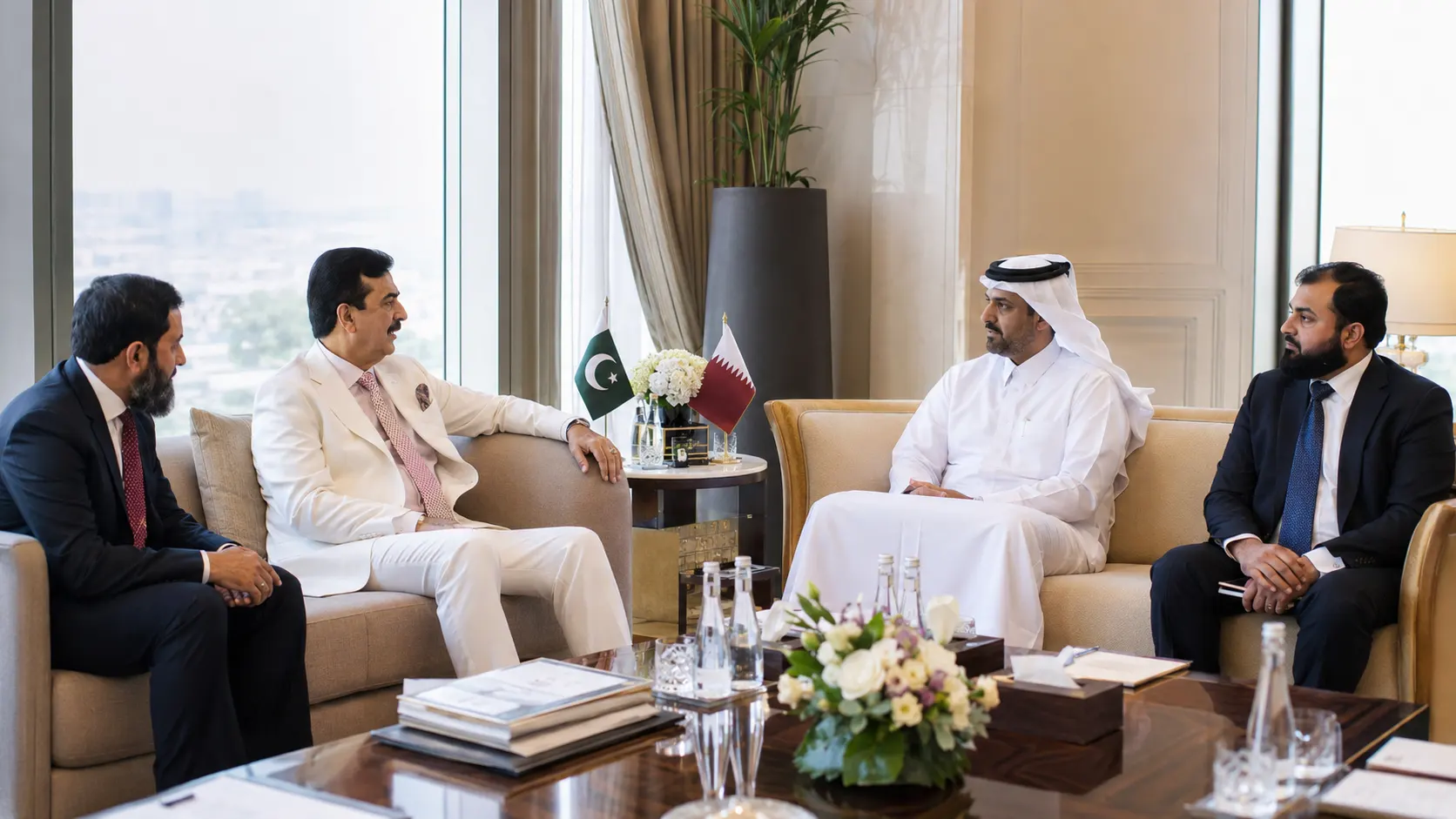
Enhanced trade investment ties with Qatar are becoming increasingly vital as countries seek to bolster their economic relations amid a rapidly changing global landscape. Recently, Syed Yousaf Raza Gilani, the Chairman of the Senate of Pakistan, met with a high-profile delegation from Qatar, led by Sheikh Nayef Bin Eid Al Thani. This meeting signifies a crucial step towards reinforcing trade links between Pakistan and Qatar. As both countries explore opportunities for collaboration, the focus on enhancing investment ties could lead to mutually beneficial outcomes. The economic landscape, shaped by modern trade agreements and investment strategies, provides a fertile ground for these discussions, marking an essential chapter in the diplomatic narrative between the two nations.
Understanding the Current Economic Landscape
Before delving deeper into the specifics of enhanced trade investment ties with Qatar, it is essential to understand the current economic landscape of both countries. Pakistan, with its strategic geographical position, is critically placed for trade routes between Central Asia, the Middle East, and beyond. Its burgeoning population and growing middle class further enhance its appeal as a market for investment. Meanwhile, Qatar, with its wealth derived from natural gas exports and a strong financial sector, presents numerous opportunities for partnerships, particularly in sectors like infrastructure, technology, and agriculture.
This strategic geography and economic prowess make both Pakistan and Qatar prime candidates for expanded trade relations. The global economy, specifically since the COVID-19 pandemic, has prompted countries to collaborate closer than ever, especially in sectors that ensure food security, energy security, and economic resilience. In this context, enhancing trade investment ties with Qatar can pave the way for increased bilateral cooperation and growth.
Moreover, the political will from both sides, as demonstrated by the recent discussions, underscores the importance placed on nurturing these relations. As Gulf nations continue to diversify their economies, Pakistan could play a pivotal role in delivering products and services that aid these transitions, highlighting the symbiotic nature of such enhanced trade investment ties with Qatar.
In addition to the geopolitical significance, the economic benefits of cultivating strong ties cannot be overstated. Pakistan stands to benefit from Qatar’s robust economic position, leveraging partnerships to gain access to new technologies and market insights. By sharing expertise, both countries can further enhance their global competitiveness.
Furthermore, the global pivot towards sustainability and environmental consciousness creates a shared interest. Both Pakistan and Qatar have vested interests in advancing their green technologies, a sector that could benefit from joint ventures and long-term investments, setting an example for other nations to follow.
The Role of the Qatari Delegation in Strengthening Relations
The meeting with Sheikh Nayef Bin Eid Al Thani represents a deliberate effort on Qatar’s part to improve its overseas trade and investments. The Qatari delegation included various businessmen and senior officials, highlighting the commitment of both nations to explore economic opportunities. Sheikh Nayef’s prominent role as a member of the Qatari royal family adds an essential layer of significance to the discussions, suggesting that the potential for investment ties is being taken very seriously.
During the meeting, specific sectors were likely highlighted as priorities for collaboration. Qatar’s ongoing infrastructure projects, fueled by its preparations for the FIFA World Cup and Vision 2030 initiatives, can serve as a platform for Pakistani firms to participate. Additionally, sectors such as information technology, education, and healthcare can benefit from increased cooperation, facilitating enhanced trade investment ties with Qatar. By engaging with a high-profile delegation, Pakistan demonstrates its intent to foster meaningful business relationships and capitalize on Qatar’s substantial investment capacity.
Furthermore, this meeting signals a shift towards more investment-driven engagement as opposed to merely trade. While trade is critical, the potential long-term gains from foreign direct investments, joint ventures, and partnerships can help stabilize the economies of both nations, leading to sustainable growth. As such, the implications for enhanced trade investment ties with Qatar go far beyond immediate economic benefits.
The cultural exchange accompanying this engagement cannot be overlooked. By fostering interpersonal connections through trade missions and joint initiatives, both nations can cultivate a more profound understanding of one another’s business practices and cultural traditions, laying the foundation for robust collaboration.
Additionally, the success of this delegation could signal to other Gulf nations the benefits of deeper engagement with Pakistan. This could encourage a wider spectrum of economic diplomacy efforts, leveraging the positive outcomes to inspire similar collaborations with neighboring countries.
Key Sectors for Collaboration
With the enhancement of trade investment ties with Qatar in focus, several key sectors emerge as viable areas for partnership. Firstly, the energy sector, particularly renewable energy, presents exciting opportunities. Pakistan is making strides in solar and wind energy, while Qatar is rich in natural gas resources. Collaborations in this area could promote energy security and sustainability.
Secondly, agriculture presents another sector ripe for collaboration. Qatar has an interest in food security, especially given its geographic constraints. Pakistani agricultural products such as fruits, vegetables, and livestock can meet Qatari requirements, tapping into Qatar’s desire to diversify its food supply sources. Enhancing trade in this sector provides mutual benefits while also supporting Pakistan’s agrarian economy.
Moreover, the technology sector is crucial for both nations as they move toward increasing their digital economy footprints. Joint ventures in tech startups, software development, and IT services can reflect the ambitions of both countries to innovate and compete in the global marketplace. Enhanced trade investment ties with Qatar in technology can create synergies that foster innovation and business growth.
The education sector also emerges as a promising area. Qatar’s investment in educational infrastructure creates an avenue for Pakistani institutions to collaborate, offering academic exchanges and professional training. This paves the way for a more informed workforce capable of meeting future challenges.
In infrastructure, Pakistan’s strategic projects under the China-Pakistan Economic Corridor (CPEC) align well with Qatar’s investment ambitions. By participating in these projects, Qatari entities can gain substantial returns while helping to develop crucial infrastructure within Pakistan.
Geopolitical Implications of Strengthening Ties
Strengthening ties with Qatar through enhanced trade investment ties holds significant geopolitical implications for Pakistan. Qatar has emerged as a key player in the Gulf, often navigating diplomatic waters between major powers. By aligning more closely with Qatar, Pakistan positions itself strategically within the context of Gulf Cooperation Council (GCC) dynamics.
This move could serve to improve Pakistan’s standing in the Middle East, making it a more attractive destination for collaboration and investment. Additionally, enhanced trade investment ties with Qatar may also provide Pakistan with leverage in its dealings with other Gulf countries, where economic relations could be contingent on broader regional considerations.
Furthermore, a closer partnership with Qatar, particularly in terms of energy and trade, could help Pakistan mitigate some of the economic pressures it faces from traditional partners. Given Qatar’s influence and substantial financial resources, the potential for Qatari investment in crucial sectors of the Pakistani economy can ensure greater financial stability and confidence in Pakistan’s economic outlook.
Moreover, developing these ties may also facilitate stronger cooperation in regional security initiatives, enhancing stability in a frequently volatile region. Such alliances could also play a role in conflict resolution and peace-building efforts, given the often-complicated regional geopolitics.
The partnership can also help forge new alliances within broader international frameworks, as both countries champion similar causes on global platforms, ranging from environmental sustainability to digital innovation, showcasing a united front in navigating future challenges.
Also Read This Article : Army Deployed in Rawalpindi for Six Months
Challenges to Overcome
While there are significant opportunities related to enhanced trade investment ties with Qatar, several challenges remain. One critical challenge is the bureaucratic and regulatory environment in Pakistan, which can sometimes impede foreign investments. Streamlining processes and ensuring a transparent regulatory framework is essential to attract Qatari investors effectively.
Moreover, there exists a level of competition for investment dollars among various countries vying for Qatari investments. Nations within the region, as well as outside of it, are also pursuing the same goal, necessitating that Pakistan presents itself as a uniquely attractive option for diversification of Qatari investments.
Furthermore, there may be cultural and operational barriers arising from differing business practices. Bridging these gaps through mutual understanding and education can assist in ensuring that collaborations between the two nations are successful. Addressing these challenges proactively will be crucial for realizing the vision of enhanced trade investment ties with Qatar.
Another potential hurdle is the volatility of global markets, which can affect investment confidence. Political stability and sound economic management within Pakistan are crucial to maintain a conducive environment for foreign investments.
The reliance on a few strategic sectors could also pose a risk, highlighting the need for diversification in both nations’ investment portfolios. By expanding focus to emergent industries, the collaboration can ensure resilience against economic downturns.
The Path Forward: Strategies for Success
To capitalize on the potential benefits of enhanced trade investment ties with Qatar, strategic efforts from both sides will be essential. Firstly, establishing dedicated working groups focused on specific industries can facilitate greater dialogue and collaboration. These groups can bring together industry leaders, government officials, and business interests, forming an ecosystem that promotes sustainable partnerships.
Additionally, investment promotion measures, such as trade fairs and business expos, should be organized to showcase Pakistani potential directly to Qatari investors. Bridging business networks will enable greater collaboration and open avenues for Qatari entities to explore business opportunities in Pakistan.
Moreover, leverage educational opportunities for exchange programs can facilitate knowledge transfer, enhancing skills which are pivotal for growth in technology and agriculture sectors. The goal would be to foster a shared understanding that can underpin the enhanced trade investment ties with Qatar.
Building on existing international agreements and treaties will bolster cooperative efforts, ensuring clear guidelines and mutual benefit. Transparent frameworks and mutual accountability will strengthen trust, minimizing risks associated with cross-border investments.
Lastly, there must be a consistent focus on innovation and future-ready solutions. Encouraging research and development collaborations, fostering tech-driven initiatives, and exploring sustainable practices can ensure both nations lead and prosper in the evolving global market.
Potential Economic Impact on Pakistan
The potential economic impact of enhanced trade investment ties with Qatar is significant. Increased foreign direct investment can stimulate economic growth, create jobs, and improve living standards in Pakistan. Furthermore, the inflow of capital can boost infrastructure development, transforming the economic landscape of the nation.
This partnership can also enhance Pakistan’s export capabilities. As Qatari investments focus on key sectors, this can potentially lead to export-oriented growth strategies which benefit the overall economy. As Pakistan integrates more closely with the Qatari economy, the benefits could create a ripple effect, leading to ancillary industries flourishing as well.
Moreover, the partnership can foster innovation and technological advancements in Pakistan. Collaborations in the technology and education sectors can yield human capital development, allowing Pakistan to move up the value chain. This could reshape sectors, from manufacturing to service delivery, empowering a new generation of entrepreneurs and innovators.
The improvement in GDP figures and reduction in unemployment levels as a result of these ties can create a more stable societal structure, reducing poverty and enhancing welfare. This social upliftment, driven by economic empowerment, can also contribute to long-term political stability within the country.
Additionally, as infrastructure improves, Pakistan could witness increased tourism and international interest, branching out economic benefits beyond immediate trade relations to stimulate a more diverse economic expansion.
Conclusion: The Importance of Enhanced Trade Investment Ties with Qatar
In conclusion, the call by Senate Chairman Syed Yousaf Raza Gilani to enhance trade investment ties with Qatar represents a progressive step toward economic collaboration between these two nations. It reflects a broader recognition of the changing dynamics in international trade and investment, where nations are increasingly looking to form strategic partnerships that drive mutual growth.
The meeting with Sheikh Nayef Bin Eid Al Thani sets a precedent for future collaboration, emphasizing the importance of building strong business relations. As both countries focus on leveraging their respective strengths, the enhanced trade investment ties with Qatar could lead to a new era of cooperation, providing avenues for economic upliftment for both nations.
Moving forward, addressing challenges, fostering robust collaboration, and engaging in strategic initiatives will be crucial for realizing the potential of these ties. As the global economic landscape evolves with rapid changes, ensuring that both nations are adaptable and resilient can help harness this opportunity effectively.
This partnership, grounded in shared values and mutual respect, provides a template for other nations to pursue similar collaborations, highlighting the potential of regional alliances in addressing global challenges. By focusing on long-term strategies and cohesive structures, Qatar and Pakistan can confidently stride into the future.
Frequently Asked Questions
What are the main goals of enhancing trade investment ties with Qatar?
The primary goals include bolstering economic cooperation, increasing foreign direct investment, and exploring new markets for mutual growth.
How can Pakistan benefit economically from enhanced trade investment ties with Qatar?
Pakistan can experience job creation, improved infrastructure, and modernization in various sectors due to increased foreign investment from Qatar.
What sectors are most promising for collaboration between Pakistan and Qatar?
Sectors like energy, agriculture, technology, and infrastructure are identified as meaningful areas for collaboration within enhanced trade investment ties with Qatar.
What challenges could hinder the enhancement of trade investment ties with Qatar?
Challenges include bureaucratic hurdles, competition with other nations, and operational differences. Addressing these proactively is vital for success.
How can both countries ensure the success of these new trade initiatives?
Establishing dedicated working groups, organizing trade fairs, and facilitating educational exchange programs can help ensure the success of enhanced trade investment ties with Qatar.




 Muhammad Abdullah |
August 24, 2026
Muhammad Abdullah |
August 24, 2026