






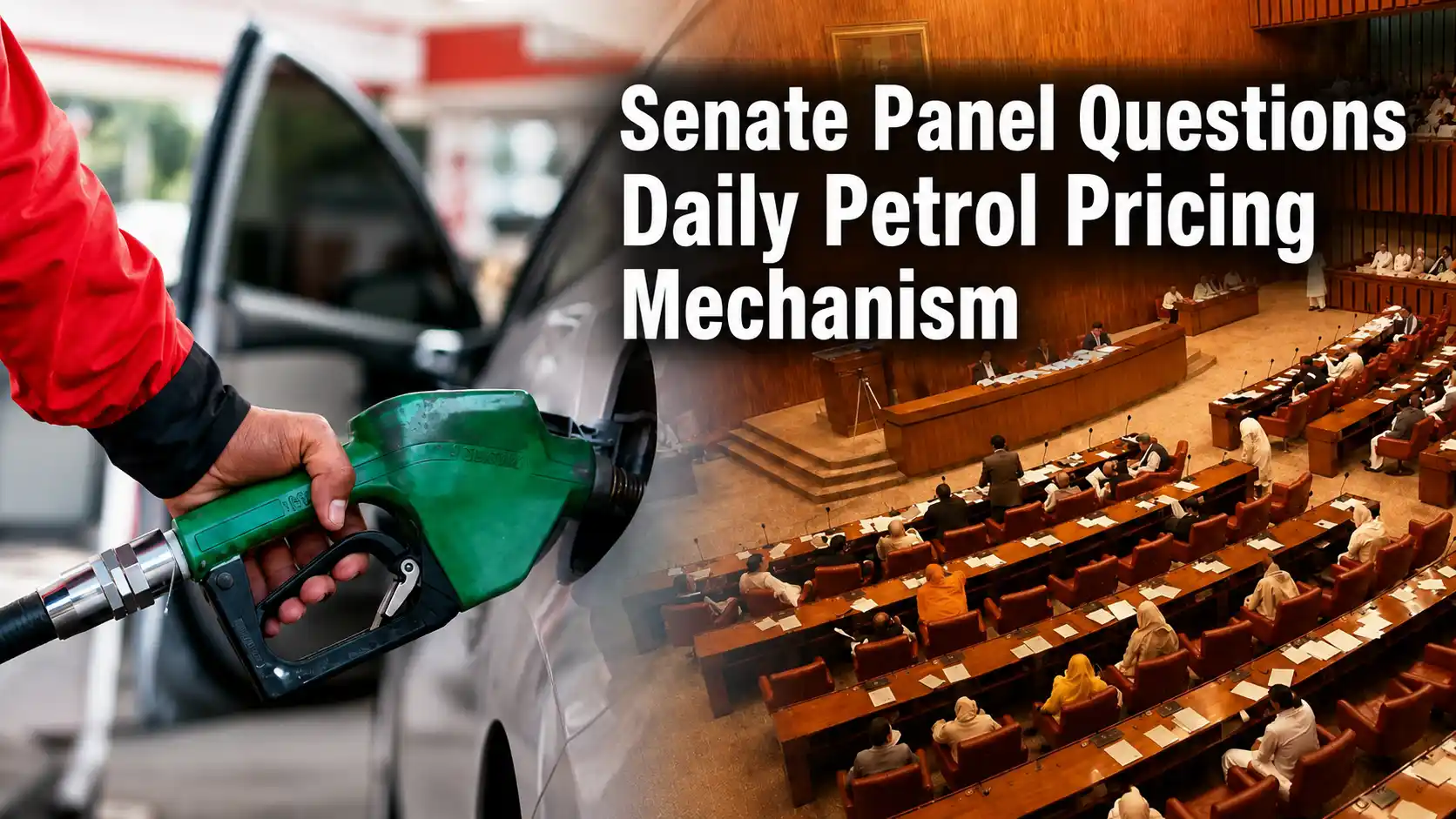

The Senate panel recently initiated a thorough examination of the daily petrol pricing mechanism, questioning the necessity and implications of this frequent adjustment. The daily petrol pricing strategy has been a subject of controversy, affecting both the economy and consumers across the nation. By scrutinizing the justification behind the current method, the Senate aims to determine whether it benefits the common citizen or merely serves corporate interests. This discussion is pivotal, with far-reaching implications for policy-making, consumer confidence, and economic stability.
Background of Daily Petrol Pricing
The daily petrol pricing mechanism was initially introduced as a means to better align domestic petrol prices with global oil fluctuations. It intended to ensure transparency and smooth fluctuations in fuel costs. By updating prices daily, the goal was to eliminate sudden, large hikes or cuts that didn’t reflect global trends promptly.
Historically, petrol prices have been a critical concern for many governments due to their direct impact on inflation and public sentiment. Countries like India, for instance, adopted dynamic pricing to keep up with the volatile global oil markets. The decision to implement daily pricing involved significant analysis of global market trends.
Despite its intention for transparency, the mechanism has faced criticism for being overly reactive to minor global shifts, creating an unstable pricing environment for consumers. Critics argue that daily adjustments can lead to uncertainty and potential price gouging, particularly when these changes do not always correlate visibly with international oil price movements.
An additional layer of complexity arises from the varied impact on different demographic groups. Urban and rural consumers experience price shifts differently due to variations in local economies and distribution networks. This raises questions about fairness and equity in the application of daily pricing.
The policy is also a reflection of broader economic philosophies regarding the balance between market forces and regulatory intervention. Understanding these ideological underpinnings is crucial in assessing the merits and challenges of daily petrol pricing.
Current Concerns and Criticisms
The Senate’s current concern revolves around the efficacy and fairness of the daily pricing strategy. A primary criticism is the potential for manipulation by major oil companies, who may adjust prices not solely based on international fluctuations but also to boost profits. This suspicion arises from the opacity surrounding the computation of petrol prices by private companies.
There is also a question of volatility. Daily updates can lead to public uncertainty and financial planning challenges for businesses that rely heavily on fuel, such as logistics companies and public transportation services. These sectors argue for more predictable pricing models to better forecast and manage their operational costs.
Furthermore, the system seems to neglect the consumer’s perspective. Rapid price changes, although reflecting global standards, can disproportionately affect consumers, especially during periods of global crisis or economic downturns, putting additional strain on lower-income households.
Critically, there is a trust deficit amid the opacity, with consumers questioning the integrity of unexplained fluctuations. Enhanced transparency and accountability could potentially address these trust challenges, promoting a pricing mechanism perceived as more equitable and just.
In the political arena, the issue also serves as a battleground for different economic ideologies. Debates on regulation versus free-market solutions add another dimension, often influencing the public policy direction and perception of daily petrol pricing.
Economic Impacts of Daily Petrol Pricing
From an economic standpoint, frequent price fluctuations can significantly impact national inflation rates. Since petrol is a major commodity that influences the price of goods and services, unstable pricing can lead to an unpredictable inflationary environment. This can put pressure on the central bank to adjust interest rates in response, affecting the broader economy.
The mechanism also affects consumer spending patterns. With unpredictable fuel costs, consumers may alter spending habits, potentially reducing expenditures on non-essential goods and services. This adjustment can slow economic growth, especially in sectors dependent on discretionary spending.
Additionally, the policy influences the foreign exchange market. As petrol imports form a considerable part of international trade equations, frequent pricing adjustments can affect foreign currency reserves and exchange rates, adding another layer of complexity to economic planning and stability.
Moreover, the impact on businesses varies significantly. Companies with high fuel dependence might reallocate resources towards fuel efficiency innovations, whereas smaller businesses might struggle with the added cost volatility. This unequally distributed effect calls for a nuanced policy response that takes varying business sizes and sectors into account.
Furthermore, the influence extends to fiscal policies, where government subsidies and taxes are shaped by petrol pricing strategies. The interplay between taxation, subsidies, and pricing creates intricate economic scenarios requiring careful assessment to avoid unintended fiscal pressures.
The Global Perspective on Petrol Pricing
Looking at a global scale, countries adopt varying strategies when it comes to managing petrol prices. The United States, for example, leans towards a more market-driven approach, which allows prices to respond swiftly to global trends. However, unlike daily adjustments, changes are often more gradual, balancing responsiveness with stability.
European nations often incorporate higher taxes on petrol, creating a buffer that can help moderate price volatility. This also encourages reduced consumption, aligning with broader environmental goals and reducing the impact of price swings on consumers.
The Senate’s inquiry into daily pricing echoes debates in several other countries wrestling with the balance of competitive, transparent pricing mechanisms while ensuring economic stability and consumer protection are maintained.
Additionally, some countries have established strategic reserves and stabilization funds to cushion the impact of global oil price fluctuations. These mechanisms aim to provide a more stable and predictable pricing environment for consumers and businesses alike.
International cooperation and knowledge sharing can play a vital role in optimizing petrol pricing strategies. Countries can look to examples of best practices, adapting successful elements to fit their unique contexts while addressing specific national challenges.
Consumer Perspective on Daily Petrol Pricing
From a consumer perspective, the daily changes in petrol prices present significant challenges. For daily commuters, these shifts can alter their monthly budgets and impact overall household financial planning. The uncertainty creates anxiety, affecting consumer confidence levels.
Many consumers argue for a more stable pricing model that allows them to forecast fuel costs with greater accuracy. The unpredictability can also discourage the use of petrol, pushing consumers to seek alternatives such as electric vehicles or public transportation, options that may not be feasible for all due to availability and infrastructure.
There’s also a cultural dimension to consider. In many societies, petrol prices carry symbolic significance, often reflecting broader economic health. Drastic fluctuations can thus contribute to a general unease about economic security and lead to decreased public trust in policy-making.
Furthermore, the psychological impact of constantly fluctuating prices can not be understated. Regular changes erode predictability, a cornerstone of consumer decision-making, leading potentially to reduced mobility and lifestyle changes aimed at minimizing fuel consumption.
Consumer advocacy groups often highlight these challenges, advocating for greater transparency and stable pricing mechanisms. Their input is crucial in policy formulation, ensuring that consumer voices are adequately represented in the decision-making process.
Environmental Implications
The dynamic pricing mechanism can indirectly impact environmental policies. Frequent price shifts influence consumer behavior, with prolonged high prices potentially accelerating the shift towards renewable energy sources and electric vehicles as consumers seek long-term stability and cost efficiency.
However, critics note that these price fluctuations can also temporarily reduce focus on environmental goals if short-term petrol prices drop, potentially slowing momentum towards sustainable energy transitions.
The Senate’s evaluation of daily petrol pricing could consider aligning the mechanism with broader sustainability goals, balancing economic needs with environmental responsibilities.
A focus on sustainable frameworks could integrate carbon pricing or incentives for cleaner fuel alternatives within the petrol pricing system, linking economic and environmental objectives more tightly.
Such integration could position daily petrol pricing as a lever for environmental reform, encouraging shifts to sustainable practices and technologies while maintaining economic equilibrium.
Potential Policy Recommendations
Amid the scrutiny, several policy recommendations could emerge to address the concerns associated with daily petrol pricing. One suggestion could be implementing a hybrid model that offers a blend of daily responsiveness and periodic stability assessments, ensuring that prices reflect international trends without the volatility.
Establishing clear guidelines and public oversight on how prices are calculated could also enhance transparency and regain consumer trust. Transparency in underlying algorithms and market considerations can dispel fears of manipulation by large oil entities.
Policies encouraging the development of alternative energy sources and public transportation infrastructure could also mitigate dependency on petrol, allowing for more consumer choice and less impact from daily price changes.
Additionally, implementing educational initiatives about the factors influencing petrol prices could empower consumers, providing them with understanding and insights into the pricing dynamics that affect their daily lives.
Collaborative discussions between government, industry, and consumer representatives might yield innovative solutions, creating a pricing model that aligns commercial practices with public interests, addressing both economic and social welfare needs.
Technological Advancements and Their Impact
Technology plays a crucial role in modern petrol pricing strategies. The use of advanced data analytics, AI, and machine learning could improve responsiveness and accuracy in pricing based on real-time data inputs and predictive analytics.
The integration of blockchain technology could further enhance transparency, allowing public access to price adjustment methodologies and reducing risks of data tampering or manipulation.
As the Senate evaluates the daily pricing mechanism, understanding and harnessing technological advancements could lead to more informed and efficient pricing strategies, benefiting both consumers and the economy.
Moreover, embracing digital platforms for price dissemination can increase accessibility and immediate outreach, ensuring that consumers are quickly informed about price changes to plan their consumption accordingly.
The symbiotic relationship between technology and policy reform represents a frontier for innovative petrol pricing solutions, potentially setting new precedents in economic management and transparency.
Case Studies from Other Nations
Several international case studies highlight different approaches to petrol pricing. In Brazil, for instance, a buffer mechanism smooths out daily price impacts by using a stabilization fund. This approach helps mitigate sharp price increases, offering lessons for other regions.
Another interesting case is Singapore, where petrol pricing also considers environmental taxes, reflecting a balanced approach to consumer pricing and sustainability.
These examples provide valuable insights that the Senate panel might examine to craft policies that could address current challenges while meeting unique national objectives. Insights from these countries underscore the importance of adaptability in policy design, showcasing how customized approaches catering to specific national contexts can effectively balance economic, consumer, and environmental needs.
By studying international precedents, policymakers can craft tailored solutions that reflect both global best practices and local priorities, enhancing the efficacy of petrol pricing models.
Conclusion: The Road Ahead for Petrol Pricing
The Senate’s questioning of the daily petrol pricing mechanism highlights an essential dialogue on balancing economic, consumer, and environmental needs. As policymakers review current practices, the focus remains on achieving a fair, transparent, and predictable pricing model that supports stability and growth.
Aligning petrol pricing strategies with innovative technologies, broad-based policy frameworks, and consumer interests will be critical in navigating these complex dynamics. The outcome of this examination could redefine petrol pricing norms, establish more sustainable practices, and potentially set new standards globally.
Ultimately, the Senate’s insights, combined with global knowledge, could create a blueprint that ensures fairness, transparency, and economic well-being for all stakeholders involved.
As petrol remains a linchpin of modern economies, the evolving pricing mechanisms should seek to optimize market efficiencies while safeguarding consumer interests, achieving harmony between the demands of the market and the well-being of citizens.
Frequently Asked Questions
What is the daily petrol pricing mechanism?
The daily petrol pricing mechanism is a strategy where petrol prices are adjusted each day to reflect changes in global oil prices. This method aims to ensure that domestic prices are aligned with international market trends.
Why is the Senate questioning this mechanism?
The Senate is questioning the daily petrol pricing system to assess its fairness, transparency, and overall impact on consumers and the economy. Concerns include potential price manipulation and instability caused by frequent changes.
What are the potential impacts of daily price changes?
Daily price adjustments can lead to consumer uncertainty, affect economic planning, and impact inflation rates. They may also alter spending habits and influence the broader market and consumer trust in pricing policies.
How could technology improve petrol pricing?
Technology, such as AI and blockchain, can improve petrol pricing by enhancing data accuracy and transparency. These advancements provide real-time insights and prevent manipulation, potentially leading to more stable pricing models.
What are some international approaches to petrol pricing?
Different countries adopt various strategies. For instance, Brazil uses a stabilization fund to smooth price fluctuations, while Singapore’s model includes environmental taxes, balancing consumer costs with sustainability goals.