





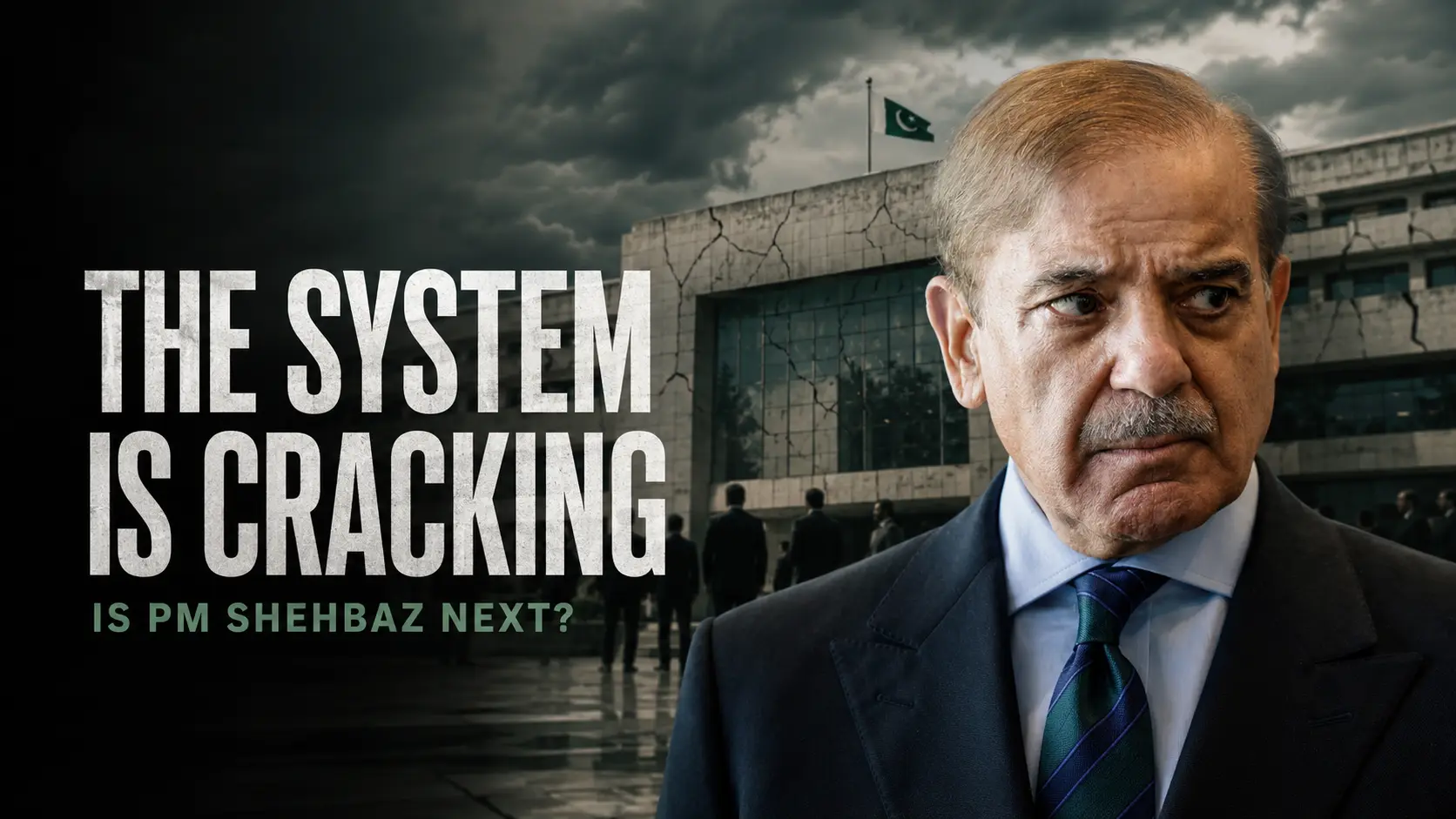

The system is cracking in Pakistan, and as PM Shehbaz Sharif sits firmly in the seat of power, the implications of this phrase could not be more poignant. Over the past few months, Pakistan’s political landscape has undergone dramatic upheavals, revealing rifts within the ruling coalition and society at large. While Prime Minister Shehbaz faces no immediate threat to his survival in office, the vibrations of political discontent and unrest could suggest a volatile future. In this comprehensive analysis, we will explore the myriad factors contributing to this scenario, shedding light on why observers believe that the fabric of governance may be fraying. What does this mean for PM Shehbaz and the broader political context in Pakistan? Join us as we delve into the complexities of governance, party dynamics, and the citizen response that many say signals impending challenges for the prime minister.
The Political Landscape: What Does it Mean?
The phrase “the system is cracking” holds a multifaceted significance in the context of Pakistan’s political tumult. Historically, Pakistan has experienced cycles of military coups, civil unrest, and periods of democratic governance that often feel precarious. In analyzing whether PM Shehbaz is next in line for potential ousting or upheaval, it is essential to scrutinize the existing political alliances and oppositional forces at play.
Pakistan’s parliamentary system is inherently characterized by a coalition-based governance model, which often leads to tenuous alliances. Shehbaz Sharif’s administration, which came into power after the ousting of former Prime Minister Imran Khan, is based on a coalition of diverse parties with varying ideologies. In the current scenario, any internal dissent or dissatisfaction within these coalition partners could trigger instability. The fluid nature of such partnerships presents an environment where ‘the system is cracking’ could easily evolve from a mere phrase to a harsh reality.
Furthermore, public sentiment serves as a crucial barometer for political stability. With economic downturns, rising inflation, and public protests against the government’s perceived inaction, Shehbaz’s retention of power may hinge on his ability to navigate these challenges effectively. Should civil unrest deepen, opposition factions may exploit this vulnerability, and soon we could witness increased calls for his resignation. Thus, the term “the system is cracking” is not merely rhetorical; it represents an immediate concern that weighs heavily on the office of the Prime Minister.
In addition to direct challenges, there’s also the broader global political context to consider. As Pakistan looks to international allies for support, instability within the country can affect its standing on the global stage. Countries watching the unfolding drama may become wary of engaging in long-term commitments, which adds a layer of complexity to governing. Thus, PM Shehbaz’s leadership is not only scrutinized at home but also by the international community, creating a dual front of challenges.
The Coalition Dynamics: A Fragile Alliance
The primary foundation of PM Shehbaz Sharif’s administration is the coalition formed with multiple parties primarily opposed to Imran Khan’s rule. While this partnership enabled a successful transition of power, it also embedded potential fractures within the system. Each coalition partner ranging from the Pakistan Peoples Party (PPP) to the Muttahida Qaumi Movement (MQM) enters the alliance with distinct agendas, priorities, and concerns.
This diversity of interests creates a landscape fraught with potential conflict. If any single party begins to reevaluate its commitment to the coalition whether due to party position changes or political maneuverings the entire government could find itself at risk. Political analysts have speculated about dissent within the ranks of the ruling coalition, arguing that if one partner perceives a lack of progress on their key issues, discontent would inevitably surface, leading to calls for PM Shehbaz’s resignation.
Additionally, recent political maneuvers, including calls for snap elections, indicate that tensions exist beneath the surface. For instance, the MQM has previously indicated dissatisfaction with the current governance structure. If such trends continue, the phrase “the system is cracking” could take on a more tangible meaning for Shehbaz and the current government. Understanding the fragility of this coalition is paramount to prognosticating Shehbaz’s political future.
Strategically, it is imperative for PM Shehbaz to foster dialogue among coalition partners, aiming for consensus-driven approaches to policy-making. By implementing collaborative decision-making frameworks, the administration might reduce factionalism and align diverse goals. Furthermore, transparent communication can aid in maintaining this fragile alliance, potentially mitigating the risks that arise when differences remain unaddressed.
Economic Challenges: The Pressure Mounts
The economic backdrop against which political maneuvering occurs cannot be overstated. Pakistan is grappling with rampant inflation, currency devaluation, and burgeoning public debt all of which exacerbate public discontent and place immense pressure on the government’s ability to lead effectively. The ramifications of these economic issues further illuminate why many believe that the system is cracking.
Recent data reveals that inflation has reached alarming levels, with essential commodities becoming increasingly unaffordable for the average Pakistani. When economic hardship materializes, it sets the stage for political backlash. Citizens expect their leaders to produce not just political stability but also economic solutions that are tangible and effective. In this context, PM Shehbaz’s leadership is scrutinized as citizens question the viability of his policies and their impact on day-to-day life.
Moreover, with the looming threat of global economic uncertainties, Pakistan’s fiscal policies may become increasingly vulnerable. Critics argue that the current government’s approach has been reactive rather than proactive, raising concerns over whether it has the capacity to mitigate future financial crises. Consequently, if PM Shehbaz fails to demonstrate a credible plan for economic revival, the very people who supported his ascent to power could turn against him, leading to further instability and reinforcing the idea that the system is cracking.
Another dimension to consider is the lack of diversification in Pakistan’s economic policies, which heavily rely on agriculture and textile sectors. A strategic revamp that includes investment in technology, education, and infrastructure could be imperative for long-term growth. By addressing systemic weaknesses, PM Shehbaz can work toward minimizing crises. Moreover, establishing a conducive environment for foreign investment may present opportunities to alleviate economic pressure. However, systemic corruption and bureaucratic inefficiencies pose significant barriers to these reforms, requiring robust action and commitment from the government.
Opposition Strategies: Capitalizing on Discontent
With PM Shehbaz’s coalition facing increasing challenges, opposition parties are more than ready to capitalize on any sign of weakness. Political dynamics in Pakistan are notoriously competitive, and the existing dissent provides fertile ground for opposition groups to leverage public dissatisfaction. The Pakistan Tehreek-e-Insaf (PTI), led by the ousted Imran Khan, stands as a prominent force seeking to regain political ground.
The PTI has effectively framed its narrative around the economic pain felt by ordinary citizens, emphasizing a return to its governance to remedy these issues. They have organized protests and rallies, pointing fingers at Shehbaz’s perceived failures while rallying supporters disillusioned with what they view as ineffective governance. Khan’s charisma and ability to mobilize a robust base adds an extra layer of pressure on Shehbaz, increasingly taut between his administration’s need for stability and the call for accountability by the public and opposition alike.
The challenges for PM Shehbaz are multi-layered; as opposition parties hone their strategies to paint the ruling government as ineffective, they also grab headlines and public interest. If the opposition manages to unify their tactics into a credible threat, the implications for PM Shehbaz could become dire, signaling that the system is cracking at its core. Understanding the narrative and tactics being employed by opposition parties will be essential for anyone trying to forecast the prime minister’s political future.
The opposition’s strategy often utilizes digital platforms to amplify their voice and create momentum. By running targeted campaigns through social networking sites, the opposition can reach a larger audience and spread their message effectively. The ability to adapt to the digital age is increasingly crucial as it allows rapid mobilization of protests and coordinated efforts against the current government. Recognizing this threat, PM Shehbaz’s administration must enhance its digital engagement and counteract misinformation with transparency and effectiveness.
Also Read This Article : Iran Downplays Concerns Over Makkah Pact
Public Sentiment: The Voices of the People
One cannot overlook the pivotal role of public sentiment in shaping political outcomes. Current protest movements, calls for change, and social media critiques bring a palpable sense of urgency to the political scene. The phrase “the system is cracking” is not just a statement of fact; it mirrors the public’s growing awareness of governance shortcomings. PM Shehbaz must acknowledge this growing sentiment that is feeding into skepticism regarding his administration.
Social media platforms serve as modern town squares, where voices of discontent often gain traction and influence public opinion. With hashtags like #ShehbazMustGo trending online, the ruling coalition is under constant scrutiny, where missteps are amplified in real-time. This rapid dissemination of information creates an environment where PM Shehbaz must remain vigilant, adapting to the public’s demand for transparency and accountability.
Additionally, the youth demographic an increasingly politically aware group plays a significant role in shaping future narratives. Engaging effectively with their concerns is crucial; failure to do so may lead to further estrangement from the governing body. PM Shehbaz must not only be cognizant of the voices emerging from these platforms but actively engage with them to retain credibility. Without addressing these sentiments, he risks more than just losing public support; he could find that the cracks in the system widen dangerously.
Moreover, grassroots movements often emerge as powerful forces for change. Their demands typically focus on immediate, local issues such as corruption, education, and employment. For PM Shehbaz to address these grassroots concerns effectively, it is essential to implement policies that resonate with diverse segments of society. By recognizing the power of community-driven initiatives, the government can foster collaboration, potentially transforming avenues of dissent into channels for constructive dialogue and reform.
Geopolitical Influence: A Double-Edged Sword
PM Shehbaz Sharif is also navigating complex geopolitical waters. Pakistan sits at a critical crossroads, with significant relationships to manage, including those with China, the United States, and neighboring India. How he handles foreign relations can influence domestic politics significantly. Governments often leverage foreign alliances for economic support or military collaboration; a misstep in these arenas could tighten the grip of opposition factions or boost disapproval ratings.
As Pakistan seeks aid and trade partnerships, the stakes for PM Shehbaz are high. Increased scrutiny from global partners regarding governance, human rights, and economic policies can exacerbate the internal perception of failure. If international allies express doubts about his administration, public confidence may also wane, contributing to the sentiment that indeed the system is cracking.
Moreover, should tensions with international partners heighten—due to issues such as trade agreements or military actions the subsequent political ramifications could be far-reaching. The Prime Minister must manage geopolitical relationships astutely, ensuring they bolster his agenda rather than undermine it. Balancing external pressures while maintaining domestic stability will be a monumental task for Shehbaz, especially in a climate where political discontent is already bubbling beneath the surface.
Pakistan’s strategic alliances, particularly with major powers like China and the United States, have profound implications on national policies. These relations could offer crucial economic or technological assistance, but they require careful balancing to avoid dependency or diplomatic fallout. Therefore, PM Shehbaz’s navigation of these alliances must encompass long-term vision, whether negotiating trade deals or cultivating diplomatic channels, thus ensuring that Pakistan’s sovereignty is reinforced and its global standing maintained.
The Role of Media: Shaping Narratives
In contemporary politics, the role of the media cannot be underestimated. Journalists and news outlets serve as watchdogs, scrutinizing the actions of public officials and often molding public perception. The very phrase “the system is cracking” becomes a headline, drawing attention to potential vulnerabilities in governance. PM Shehbaz must be keenly aware of how media outlets frame his administration, particularly in times of crisis.
Investigative journalism, opinion pieces, and even social media commentary can create a narrative that shifts public sentiment rapidly. Shifts in media portrayal can accelerate political crises; thus, the Prime Minister’s office must engage transparently with media outlets, ensuring that their story is told fairly and accurately. The media can amplify citizen grievances while also serving as a platform for supportive narratives that counteract dissent.
As a tool for influence, media shapes not just opinion, but political landscapes. PM Shehbaz Sharif must actively manage his image and collaborate with media organizations to promote positive narratives while addressing negative coverage effectively. If he fails to control the narrative surrounding his administration, the phrase “the system is cracking” may become a prelude to his political downfall.
Effective media management involves understanding the power of storytelling and persuasion. By leveraging media channels, PM Shehbaz can disseminate his government’s achievements and future plans, ensuring that the public remains informed. Engaging with traditional and new media can broaden his reach, allowing him to engage with a diverse audience. Implementing regular press conferences and transparent communication strategies may help to mitigate rumors and speculation, reinforcing trust in his leadership.
Future Implications: The Road Ahead for PM Shehbaz
The challenges PM Shehbaz faces are formidable, yet they are also accompanied by opportunities for reform and engagement. The idea that the system is cracking should be a call to action; an opportunity for the Prime Minister to pivot his policies, engage in dialogue with the public, and bolster alliances within his coalition. Where leaders may falter, they can also rise by embracing change.
Reassessing governance strategies, improving economic conditions, and finding ways to engage with dissenting voices could be pivotal in restoring confidence in his administration. Whether it means addressing inflation, bolstering economic initiatives, or enhancing public welfare programs, these steps could stabilize his government and reassure the populace that he is capable of effective leadership.
Ultimately, the message of “the system is cracking” serves as both a warning and a guide for PM Shehbaz. It is a stark reminder that political dynamics can shift swiftly, but it also opens the door for transformative governance that could restore faith in leadership. The road ahead will demand careful navigation, strategic foresight, and an unwavering commitment to the principles of democracy and accountability to ensure that the cracks do not lead to a collapse.
Beyond immediate solutions, PM Shehbaz must focus on sustainable development pathways that align with Pakistan’s long-term growth objectives. By investing in human capital, fostering innovation, and ensuring responsible governance, the administration can create a resilient, adaptive system capable of addressing future challenges. Engaging in international dialogues on sustainability and regional cooperation might further enhance Pakistan’s role in the global community, forging pathways for progress and stability.
Conclusion
The phrase “the system is cracking” has evolved from a mere description of the challenges confronting PM Shehbaz Sharif to a lens through which the broader political situation in Pakistan can be interpreted. While he currently faces no immediate threats to his office, the various dimensions of political dynamics, economic challenges, public sentiment, and geopolitical influences create an environment where vulnerability is palpable.
The coalition’s fragility, compounded by opposition strategies and public discontent, underscores the importance of decisive leadership in curbing potential unrest. In this intricate web of relationships and expectations, failure to adapt could lead to severe consequences for the Prime Minister, compelling him to act swiftly lest he finds himself ensnared by the very fractures of the system he oversees. The future of PM Shehbaz Sharif depends on whether he can transform the narrative from one of instability to one of resilience. Only time will tell if he can indeed navigate these turbulent waters successfully.
Frequently Asked Questions
What does “the system is cracking” mean for PM Shehbaz?
The phrase indicates underlying fractures within the political landscape, suggesting that Prime Minister Shehbaz Sharif may face challenges ahead due to coalition dynamics and public dissatisfaction.
How does public sentiment affect PM Shehbaz’s governance?
Public sentiment plays a pivotal role in shaping governance, as discontent can lead to increased opposition and protest, illustrating that if the system is cracking, PM Shehbaz needs to address citizen concerns effectively.
What role do economic challenges play in the current political climate?
Economic challenges exacerbate public discontent, raising questions about PM Shehbaz’s leadership and making it crucial for him to implement effective economic policies to stabilize his government amid fears that the system is cracking.
Are there any immediate threats to PM Shehbaz’s position?
Currently, there are no immediate threats to PM Shehbaz, but the combined pressures of coalition dissatisfaction and public unrest indicate that the system is cracking and could lead to political vulnerability.
What steps can PM Shehbaz take to ensure stability?
To ensure stability, PM Shehbaz could focus on economic reform, rebuilding coalition relationships, and addressing public concerns, which may help counter the perception that the system is cracking.