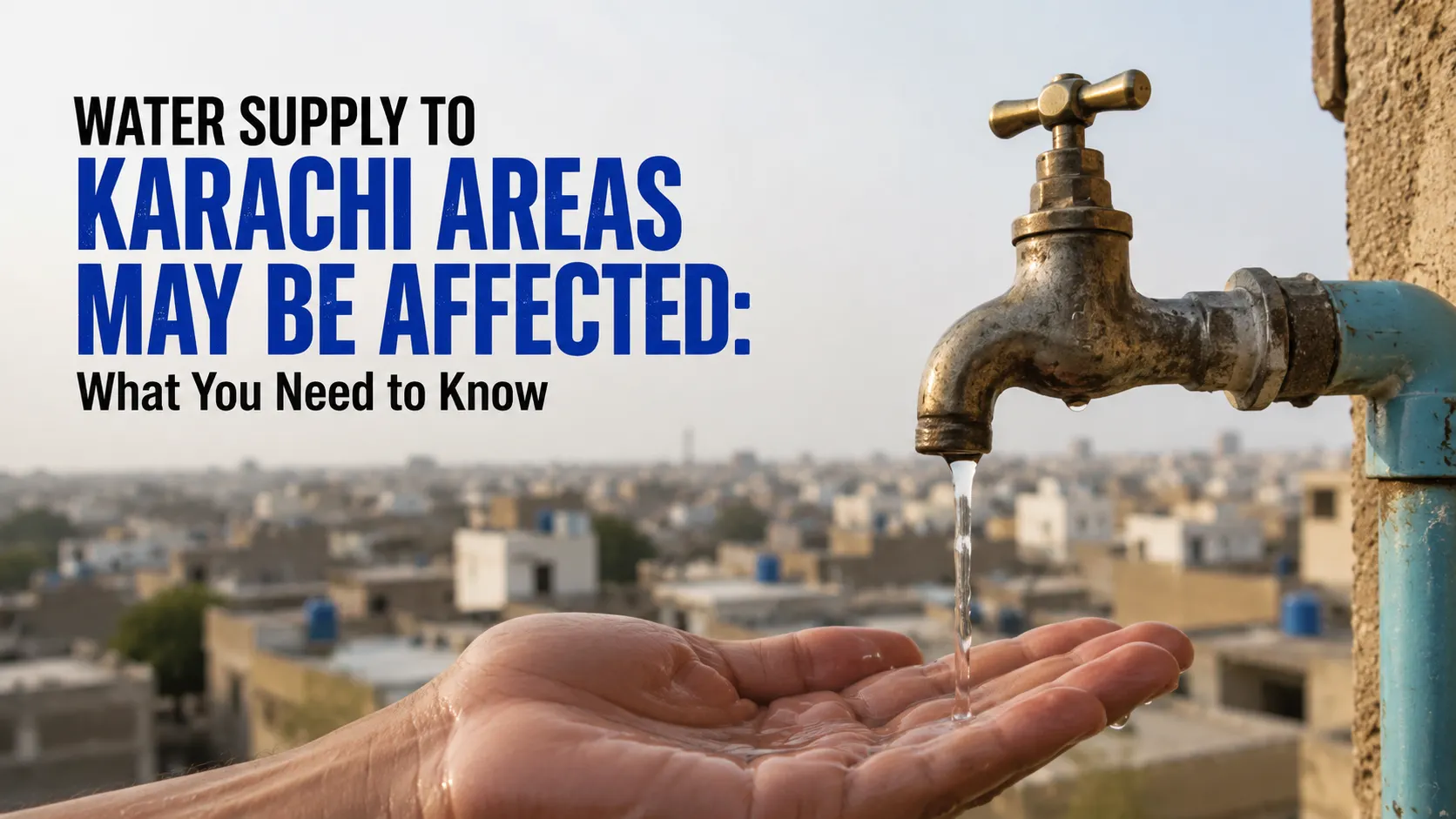
Water supply to Karachi areas may be affected in the coming days, causing concern for residents dependent on consistent access to clean water. Karachi, the largest city in Pakistan, struggles with various infrastructural challenges, including water scarcity and distribution issues. Ensuring the well-being of approximately 16 million people, it is vital to understand the implications of any disruption to the water supply and how this can impact daily life, sanitation, and health. This article delves into the specific areas that may be impacted, the reasons behind these potential disruptions, and what residents can do to prepare for these challenges.
Understanding the Current Water Situation in Karachi
Karachi faces a multitude of issues concerning its water supply system. With a population density that ranks among the highest in the world, the demand for water in Karachi often outweighs the available supply. Many areas receive only limited water supply, often forcing residents to rely on tankers or alternative sources. Understanding this context is essential for comprehending how disruptions can have significant ripple effects throughout the city.
The water supply issue is not merely an infrastructural flaw; it also highlights a severe governance challenge. Various governmental agencies are often involved in water management, and discrepancies between them can lead to mismanagement. Additionally, issues such as illegal water connections and wastage due to leaks further exacerbate the situation. Consequently, when maintenance work is scheduled, it can create a bottleneck that affects numerous households.
Furthermore, Karachi’s water supply is heavily reliant on seasonal rainfall patterns. The scarcity of rainfall can lead to significant drought scenarios, which, in conjunction with infrastructural challenges, puts enormous pressure on the already stressed water supply system. Understanding this interplay of factors can help residents better navigate the challenges ahead.
A historical perspective adds another layer of complexity. Karachi’s rapid urban expansion over the decades has outpaced infrastructure development. The city’s original water supply systems were not designed to accommodate its current population. This disconnect between historical planning and present-day realities creates mounting pressure on outdated systems.
Affected Areas: Where Will the Water Supply Be Disrupted?
Residents should be acutely aware of the specific areas of Karachi that may face water supply disruptions. Local authorities have announced several neighborhoods where the water supply may be affected due to necessary maintenance and repair work. The neighborhoods range from densely populated urban locales to less developed suburban regions. Detailed knowledge of these areas is crucial for preparing ahead of time.
Some of the primary areas reported to face water disruption include densely populated locales such as Korangi, Landhi, and Gulshan-e-Iqbal. These neighborhoods not only house significant populations but are also places where access to clean water is critical for daily survival. Landhi particularly is known for facing severe water shortages even in normal circumstances, and any disruption can lead to dire consequences for its residents.
In addition to these neighborhoods, peripheral areas, such as Malir and certain sections of North Nazimabad, are also set to experience fluctuations in water supply. These regions, usually neglected in terms of urban planning and infrastructure, often face greater challenges when it comes to accessing basic services. Being aware of which specific areas are affected enables residents to take precautionary measures in their homes.
Moreover, it’s essential to consider the socio-economic dynamics of these areas. Residents in affected neighborhoods often belong to lower-income brackets, making them more vulnerable to water shortages. The lack of financial resources reduces their ability to purchase alternative water supplies, further compounding their struggles.
Reasons for the Planned Disruption in Water Supply
The reasons behind the upcoming disruption in water supply are mainly attributed to maintenance and repair work that has become essential for the aging infrastructure of Karachi’s water supply system. The city has grown exponentially, but the water supply infrastructure has not kept pace, leading to frequent breakdowns and malfunctions.
Furthermore, certain pipelines are outdated and prone to breaks, necessitating urgent repairs before larger catastrophes occur. This preventative maintenance, while crucial, can lead to short-term interruptions. It is often a challenge for the authorities to strike a balance between immediate solutions and long-term planning in such a vast urban environment.
The situation is further complicated by the fact that Karachi’s water supply is managed by multiple departments and agencies. Coordination among these departments is crucial but often lacking. The lack of a unified approach can sometimes result in mixed messages to the public regarding disruptions, creating further confusion. Understanding these complexities can provide context for residents as they navigate the expected changes.
Additionally, the lack of investment in new technology to manage water resources efficiently has led to over-reliance on outdated methods. For instance, manual valve operations, instead of automated systems, increase the likelihood of human error, further complicating an already precarious situation.
The Health Implications of Limited Water Access
The potential impact of water supply disruptions extends far beyond inconvenience. Limited access to clean water can produce significant health concerns, particularly in densely populated areas. Health professionals often warn that water scarcity can lead to increased risk of waterborne diseases such as cholera and dysentery, which are especially concerning in urban settings where sanitation may already be compromised.
In addition, mental health is affected when families are unable to access adequate water supplies. Stress and anxiety can peak when daily routines are disrupted, making everyday tasks, such as cooking and bathing, considerably more challenging. Understanding these health implications serves as a reminder that water supply issues are not just logistical; they impact the well-being of the community as a whole.
Moreover, the local healthcare system is already strained, and an increase in water-related health issues can compound existing problems. The authorities must be prepared to address these health risks proactively, rather than reactively, to mitigate the effects on an already taxed healthcare system.
Water scarcity also affects nutrition and food safety. With limited clean water, food preparation becomes risky, potentially leading to contaminated meals. For communities relying on local produce, irrigation issues can result in reduced food availability, further affecting health outcomes.
Also Read This Article : Arshad ‘Chaiwala’ Seeks Passport Renewal: A New Chapter
What Residents Can Do to Prepare: Practical Steps
When facing potential water supply disruptions, residents must take proactive steps to prepare themselves and their families. Planning can significantly mitigate the negative impacts of these disruptions. The first and most immediate action should be to store adequate water supplies ahead of the disruptions. Using clean containers, residents can fill buckets, jugs, or water tanks to hold as much water as possible.
Furthermore, residents should maintain an awareness of the scheduled disruptions and stay updated on any changes. Following local news outlets, government announcements, and social media platforms can provide timely updates on the ongoing situation and emerging developments. Being informed allows for more effective planning.
Additionally, it may be advantageous for residents to connect with neighbors or community groups to assess collective strategies for dealing with the disruptions. Engaging the community can create a support system for sharing resources, information, and coping methods during challenging times. Taking such steps can not only make preparing for the disruptions easier but can also strengthen community bonds.
On a more technological front, investing in household water purification systems can offer a safety net against potential contaminants. These systems provide an additional level of security by ensuring that stored water remains safe for consumption over longer periods.
Long-term Water Management Strategies for Karachi
The ongoing issues with water supply in Karachi expose an urgent need for improved long-term management strategies to ensure a sustainable water future. Solutions must encompass infrastructural improvements, policy changes, and more responsible consumption habits among residents.
Government agencies must prioritize upgrading outdated water supply infrastructure, ensuring resilient systems reflective of current demands. Investment in modern technology such as smart meters and leak detection systems can significantly reduce wastage and enhance efficiency.
On the policy side, initiatives aimed at promoting rainwater harvesting, wastewater recycling, and extensive public awareness campaigns can fundamentally change how Karachi manages its water resources. By empowering citizens and encouraging responsible usage, communities can also play a pivotal role in alleviating some of the challenges. The integration of community-driven initiatives into governmental strategies can yield significant benefits in the long run.
Emerging technologies, such as artificial intelligence and data analytics, offer promising solutions for optimizing water distribution networks. By predicting demand patterns and identifying leak points, these technologies can streamline water management, saving valuable resources.
The Broader Narrative on Water Scarcity in Urban Environments
The water crisis in Karachi is not an isolated case; it mirrors a broader global narrative surrounding water scarcity in urban environments. Many megacities worldwide experience similar issues due to rapid urbanization, population growth, and climate change, which compound the ability of existing systems to deliver essential services.
Understanding the plight of Karachi can bring attention to the pressing need for enhanced water management not only locally but globally. Various cities have adopted innovative approaches, such as decentralized water systems and integrated water resource management policies. Learning from these examples can inspire local leaders in Karachi to consider new paradigms solving enduring water crises.
Furthermore, the global community must recognize that water scarcity issues disproportionately affect the poorest segments of society. As such, any strategies to combat water shortages must be inclusive, promoting equity and accessibility. Communities worldwide can no longer afford to ignore the interconnectedness of urban environments regarding resources such as water.
International collaboration is vital. Global networks of researchers, policymakers, and city planners can share insights and best practices, collectively advancing solutions that transcend borders. Such partnerships promote innovation and pool resources to address water scarcity holistically.
Community Responses to Water Supply Challenges
As water supply disruptions impact various neighborhoods in Karachi, community responses will play a crucial role in mitigating the worst effects. Collective collaboration among residents can lead to innovative solutions and foster a sense of solidarity. Organizing community meetings to discuss shortages and strategize resource-sharing can empower residents to take ownership of their situation.
Grassroots initiatives can also emerge as powerful tools for change. Community-led campaigns advocating for responsible water usage and the importance of reporting leaks or illegal connections can significantly influence residents’ behaviors. Platforms that provide information on community service, such as local NGOs, can also empower residents to engage in advocacy for better infrastructure and support for affected communities.
Moreover, social media can effectively disseminate critical information during water supply disruptions. By establishing online community groups, residents can share experiences, tips, and resources in real-time. Such cooperative approaches can alleviate individual burdens while fostering a stronger community spirit.
Education plays a pivotal role in these efforts. Workshops and public forums about water conservation and efficient usage practices can equip residents with valuable skills. Informed communities are empowered to advocate effectively and implement sustainable practices.
Looking Toward a Sustainable Water Future for Karachi
Ultimately, preparing for water supply disruptions is essential, but it is equally important to envision a long-term, sustainable water strategy for Karachi. Leaders must grapple with complex challenges that involve not only the availability of water but also the quality and accessibility of it. Strategic planning and global cooperation are vital elements in developing a sound infrastructure that can withstand the tests of time and climate change.
Implementing sustainable practices such as green infrastructure, stormwater management, and pollution reduction measures can significantly improve water supply health. Furthermore, it is crucial for governmental agencies to engage in collaborative endeavors with local communities and stakeholders to create tailored solutions that fit the distinct characteristics of Karachi’s ecosystems and cultural framework.
Never has the time been more pressing for Karachi to undergo a paradigm shift regarding water management. By bringing together multiple sectors, communities, and experts, the city can pave the way towards a future where water is abundant, accessible, and sustainably managed. The aim remains not just to address immediate concerns but to leverage lessons learned to shape a healthier and more sustainable water future for all residents.
Research institutions can provide valuable support by studying the specific water challenges Karachi faces. Their assessments can inform evidence-based strategies, guiding policymakers towards effective solutions that are scientifically grounded and culturally resonate.
Innovative Solutions for Urban Water Issues
In the quest for a sustainable water future, innovative solutions offer promising pathways. Concepts like urban farming and community gardens not only help with local food production but also integrate rainwater harvesting systems that supply irrigation needs while conserving water.
Desalination technologies are beginning to play a role in providing fresh water, particularly in coastal cities like Karachi. While energy-intensive, advancements in renewable energy can make desalination a viable option, reducing dependency on traditional water sources.
Fostering a Culture of Conservation
Building a culture of water conservation in Karachi necessitates a shift in mindset. Encouraging schools to incorporate water education in their curricula can inspire younger generations to prioritize sustainability. Public campaigns that celebrate and reward conservation efforts can create a communal ethos that values resource management.
By making conservation a community endeavor, Karachi can transform its water challenges into opportunities for innovation and cohesiveness.
Frequently Asked Questions
What specific areas of Karachi will experience water shortages?
Water supply to Karachi areas may be affected in neighborhoods such as Korangi, Landhi, and Gulshan-e-Iqbal due to maintenance work. It’s crucial for residents to stay updated.
How can residents prepare for water supply disruptions?
Residents can prepare by storing water ahead of time, staying informed about local announcements, and connecting with neighbors to share resources during disruptions.
What are the long-term solutions for Karachi’s water issues?
Long-term solutions include upgrading infrastructure, promoting responsible water consumption, and implementing innovative policies such as rainwater harvesting.
What are the health risks associated with water shortages?
Limited access to clean water heightens the risk of waterborne diseases and health complications, adding stress and anxiety to affected families during shortages.
How can the community respond to water challenges?
Community initiatives can play a vital role in sharing resources, advocating for better water management, and creating a support network among residents facing disruptions.




 Muhammad Abdullah |
August 10, 2026
Muhammad Abdullah |
August 10, 2026