






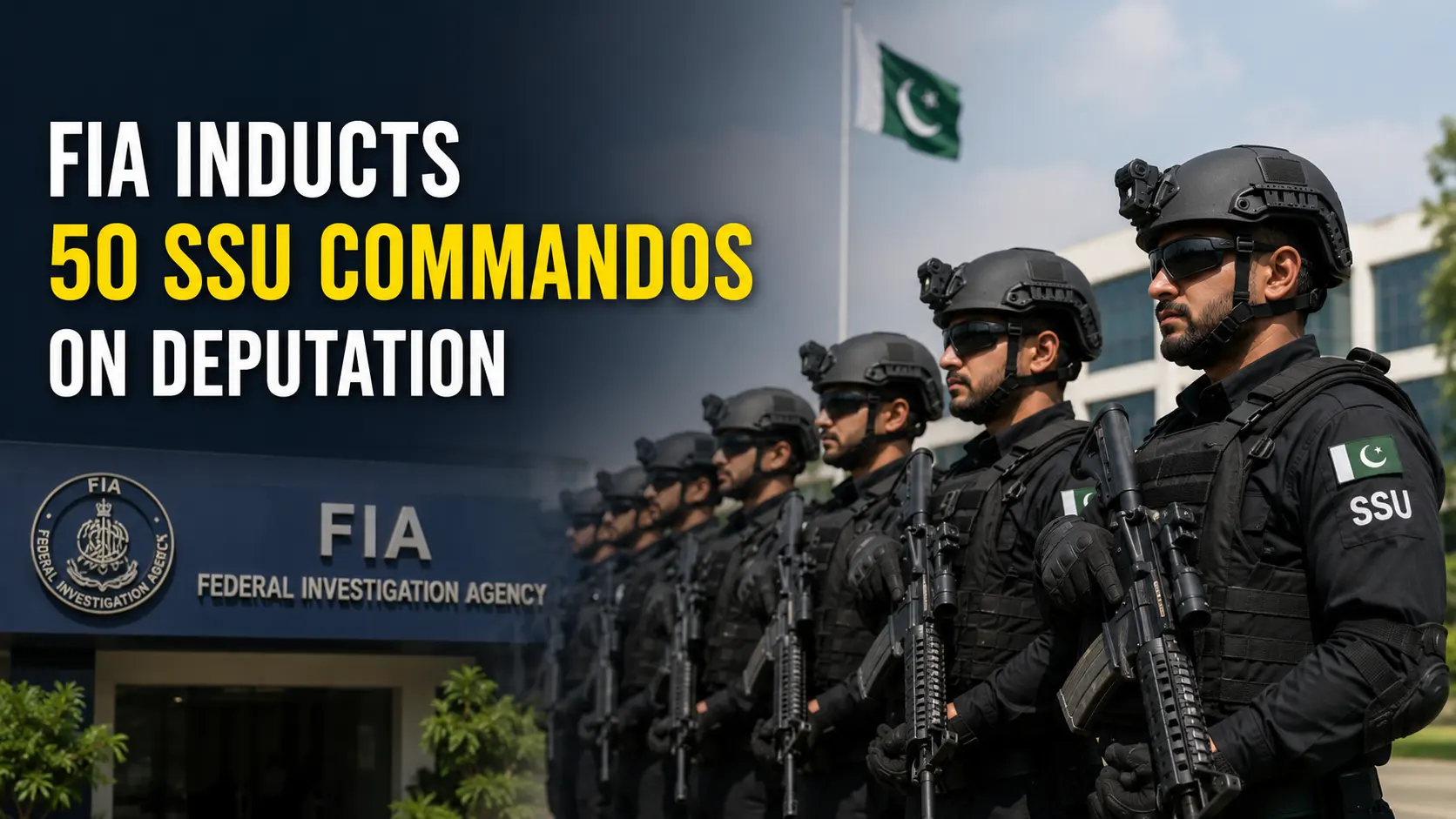

The Federal Investigation Agency (FIA) has taken a significant step by inducting 50 SSU commandos on deputation. This decision underscores the agency’s strategic move to bolster its operational capabilities and ensure heightened security across various missions. By integrating highly trained personnel from the Special Security Unit (SSU), the FIA aims to address emerging threats more effectively. The addition of these commandos not only strengthens the agency’s resolve but also demonstrates a proactive approach towards safeguarding national interest in these rapidly changing times.
The Role of FIA in National Security
The Federal Investigation Agency (FIA) plays a pivotal role in upholding national security. As Pakistan’s principal investigative body for transnational crimes and internal threats, its responsibilities include counter-terrorism, cybercrime prevention, and immigration enforcement.
The agency operates under the Ministry of Interior and collaborates with both national and international entities to combat multifaceted threats. By embracing new operations, including deputation of SSU commandos, the agency seeks to enhance its effectiveness and operational reach.
The FIA’s commitment to continual improvement reflects the dynamic nature of security threats in the modern era. With increased digitalization, issues such as cybercrime present new challenges, demanding a robust and responsive agency. The induction of SSU commandos serves as a strategic response to these evolving challenges, ensuring the FIA remains a formidable force in national security.
In addition to its enforcement duties, the FIA plays a critical educational role in raising public awareness about security threats. By organizing workshops and collaborating with educational institutions, the agency empowers citizens to recognize and report suspicious activities, thus contributing to a more secure society.
Furthermore, the FIA’s integration of SSU commandos is not just about increasing manpower; it’s about embedding a culture of excellence and advanced tactical awareness within the agency. The decision also signals to potential adversaries that the agency is capable, prepared, and evolving to meet new demands. This evolution is crucial in a world where both national and international threats continuously morph, requiring ever more sophisticated responses.
Special Security Unit: An Overview
The Special Security Unit (SSU) is renowned for its elite training and specialized operations. Initially formed for the protection of Karachi during heightened security threats, the SSU has evolved to become a key player in Pakistan’s overall security apparatus. Commandos undergo rigorous training that covers counter-terrorism, hostage rescue, and crisis management.
SSU’s adaptability and preparedness make it an ideal unit for deputation to the FIA, especially when addressing critical security missions. Its commandos are equipped with advanced tactics and technology, ready to deploy swiftly in volatile situations. The unit’s strong emphasis on discipline, physical fitness, and strategic planning makes it a valuable asset for any agency looking to enhance its security capabilities.
Given the SSU’s prestige and operational success, its commandos’ deputation to the FIA signifies an acknowledgement of the unit’s capabilities and the confidence placed in their expertise to handle strategic missions effectively.
The SSU also plays a vital role in developing leadership qualities and fostering a spirit of resilience and determination among its members. This psychological fortitude is essential in high-pressure scenarios, making the commandos an indispensable part of the FIA’s tactical units. Their presence is expected to inspire and motivate existing FIA personnel, fostering a robust team spirit that can translate into more effective missions and operations.
Implications of the Commandos’ Induction
The induction of SSU commandos into the FIA carries significant implications for the agency’s operational framework. Primarily, it enhances the FIA’s ability to respond to high-stakes, sensitive situations with greater precision and tactical acumen. The integration showcases a synergistic approach to national security, where specialized skills from various units are pooled together to maximize efficacy.
This move is likely to increase the operational confidence of FIA personnel and contribute to a productive organizational culture. The presence of commandos with advanced training can stimulate knowledge transfer within the agency, promoting skill enhancement and professional development among FIA staff.
Furthermore, the deputation could set a precedent for similar collaborations between different security forces within the country. Such cross-departmental partnerships could lead to a more integrated and cohesive national security framework, where knowledge and resources are shared to tackle complex threats more efficiently.
This initiative might also influence public perception, portraying the FIA as a proactive and dynamic entity committed to continuously improving its operations. A strong and capable national security agency boosts citizens’ confidence, and such symbolic gestures contribute positively to national morale. The move strengthens not only the FIA’s operational prowess but also its image as a forward-thinking organization dedicated to protecting its citizens and maintaining peace and security.
Challenges in Implementation
While the induction of SSU commandos into the FIA is a strategic move, it does come with its own set of challenges. Integrating personnel from different backgrounds requires careful planning to ensure cohesive operations. Organizational culture, communication styles, and strategic priorities can differ, necessitating a smooth transition process to prevent operational friction.
Additionally, there might be logistical challenges related to resource allocation and chain of command clarity. Having commandos on deputation means that their operational alignment and reporting structures must be clearly defined to maintain streamlined operations.
Addressing these challenges involves robust planning, effective leadership, and open communication channels. The FIA’s management team must ensure that all stakeholders are aligned with the common goal of enhancing national security through seamless integration and cooperation.
To address these integration issues, comprehensive training programs and workshops can be implemented to ensure that all members of the FIA and SSU understand each other’s operational methods and protocols. Team-building exercises may also play a crucial role in fostering mutual respect and understanding. Such initiatives can significantly reduce friction and help merge diverse strategies and operational methodologies into a cohesive operational framework.
Also Read That Article: Motorway Police Urge Caution During Monsoon Rains
Strategic Benefits of the Deputation
The strategic benefits of deputing SSU commandos to the FIA are manifold. This collaboration not only brings fresh perspectives to the agency but also injects a level of agility and responsiveness that is crucial in today’s complex security landscape. With commandos trained in specialized operations, the FIA can execute sophisticated missions with higher success rates.
The knowledge transfer between SSU commandos and regular FIA personnel can drive innovation in operational tactics and strategies. This cross-pollination of ideas is essential for keeping pace with the ever-evolving nature of security threats. Furthermore, the reputation of the FIA could receive a significant boost, as the public perceives the agency to be more competent and prepared to handle critical security challenges.
The move may also foster broader inter-agency cooperation within the region, laying the groundwork for collaborations that transcend national borders. Such partnerships could be invaluable in dealing with issues that require international collaboration, such as terrorism and organized crime.
The collaboration between the SSU and the FIA also paves the way for a culture of continuous learning and adaptation. By consistently pushing the boundaries of traditional security strategies and embracing specialized knowledge and skills, the FIA and SSU lay a foundation for future advancements in security operations. The agility to adapt rapidly to new threats will continue to be a critical advantage as security challenges become more sophisticated.
The Significance of Specialization in Security Forces
Specialization within security forces is increasingly important in meeting the multifaceted challenges of modern security threats. The deputation of SSU commandos exemplifies the emphasis on specialized skills and tactical expertise to tackle high-stakes missions that require precision and rapid response.
By leveraging specialized units like the SSU, the FIA positions itself to handle complex situations that may be beyond the scope of typically trained personnel. This strategic integration of specialized skills aligns with global best practices in security management, where specialized units are often called upon to address unique challenges such as counter-terrorism and cyber threats.
Moreover, specialization fosters innovation and adaptability within security agencies, allowing them to remain resilient in the face of emerging threats. The presence of SSU commandos in the FIA not only strengthens its operational capabilities but also reinforces the significance of specialized training and expertise in achieving national security objectives.
Specialized training, like that provided by the SSU, also leads to enhanced problem-solving skills and decision-making capabilities, which are critical in crisis situations. By having a diverse pool of skills and expertise at its disposal, the FIA can better anticipate, prevent, and respond to threats, thereby optimizing its overall mission effectiveness. In this way, the focus on specialization is not merely about tactical proficiency; it’s about cultivating a workforce that can think critically and strategically in volatile environments.
International Context of Security Collaborations
The practice of deputing specialized personnel within security agencies is not unique to Pakistan but is a global strategy employed across various nations. Countries like the United States and the UK frequently engage in such practices, where specialized units are integrated with conventional teams to enhance operational proficiency.
International collaborations often lead to joint training exercises and shared operational insights, which are crucial in addressing transnational threats. The induction of SSU commandos into the FIA can be seen as part of this larger trend towards gaining operational excellence through partnerships and collaborative strategies.
In today’s interconnected world, national security is increasingly seen as a collective effort, requiring inputs and collaboration from multiple agencies. The FIA’s strategic move positions Pakistan to engage more effectively in international dialogues on security, potentially paving the way for more robust international partnerships and information-sharing agreements.
These collaborative efforts are essential in efficiently neutralizing threats that transcend borders, such as global terrorism networks, drug trafficking syndicates, and cyber warfare activities. By aligning itself with international security practices and fostering a global mindset within the FIA and SSU, Pakistan enhances its position on the global stage as a committed player in the fight against international crime and threats. Such strategic positioning can further catalyze economic ties and international diplomatic relations, benefiting the country beyond just security aspects.
Future Prospects for Security Strategies
Looking ahead, the deputation of SSU commandos into the FIA could be a precursor to a broader shift in how security strategies are developed and implemented in Pakistan. The move highlights the need for adaptable and forward-thinking security policies that leverage specialized skills to address diverse challenges.
As security threats continue to evolve, the importance of dynamic strategies and rapid adaptability becomes paramount. Future security strategies might see an increase in such deputations, fostering a more integrated security framework where inter-agency cooperation is the norm rather than the exception.
This approach could also stimulate the development of new training modules, emphasizing cross-functional expertise and inter-agency collaboration as critical components of national security training programs. Through such initiatives, Pakistan can enhance its preparedness and resilience against both conventional and unconventional security threats.
The focus on future strategies will likely also embrace technological advancements, employing tools like AI and machine learning to predict and counter threats more effectively. Embracing technology alongside specialized human expertise ensures that Pakistan stays at the cutting edge of global security developments. As threats diversify, the amalgamation of technology with expertly trained personnel will become a vital aspect of national defense infrastructure.
The Public Perception of Security Initiatives
Public perception plays a crucial role in the success of security initiatives. The induction of SSU commandos into the FIA is likely to enhance public confidence in national security efforts. It sends a strong message that the government is committed to bolstering security and actively taking steps to improve operational capabilities.
A transparent approach in communicating these developments to the public can further strengthen trust in the agency’s efforts. Public engagement initiatives, such as informational campaigns or media broadcasts, could help demystify such strategic moves and emphasize their significance for national security.
Ultimately, positive public perception can lead to greater community cooperation, which is invaluable in identifying and addressing potential threats. By fostering a sense of shared responsibility among citizens and the government, the overall security framework becomes more robust and sustainable.
Moreover, when citizens see tangible steps being taken to enhance security, it can lead to an increase in civic pride and national unity. This societal cohesion becomes particularly important during times of crisis, where public support and cooperation can significantly impact the effectiveness of response strategies. Public awareness campaigns and educational programs can further empower citizens, making them active participants in maintaining national security.
Conclusion
The deputation of 50 SSU commandos into the FIA marks a significant step in enhancing Pakistan’s security capabilities. This strategic move not only boosts the operational effectiveness of the FIA but also sets a precedent for future inter-agency collaborations. With the integration of specialized skills and advanced training, the agency is better positioned to respond to complex security challenges with agility and precision.
The move underscores the importance of innovation, specialization, and collaboration within security forces. As the global security landscape evolves, the need for adaptable and resilient strategies becomes increasingly apparent. The FIA’s initiative in inducting SSU commandos is a forward-thinking approach that aligns with international best practices and highlights a commitment to comprehensive national security.
Going forward, fostering public trust and encouraging a culture of cooperation among security agencies will be critical in realizing the full potential of such strategic initiatives. By doing so, Pakistan can enhance its security posture and ensure the safety and well-being of its citizens in the face of diverse and dynamic threats.
In this complex interplay of human resource enhancement and strategic foresight, the role of technology and innovation cannot be overstated. Continued investment in these areas, supported by international cooperation and community engagement, provides a roadmap for a secure and prosperous future. By embracing such comprehensive strategies, Pakistan commits itself to not only confronting challenges head-on but also shaping the future landscape of national and global security initiatives.
Frequently Asked Questions
What is the significance of the SSU commandos’ deputation to the FIA?
The deputation of SSU commandos to the FIA strengthens the agency’s operational capabilities, enabling it to address high-stakes security challenges with specialized skills and tactics.
How will the deputation affect the FIA’s operations?
The integration of SSU commandos will enhance the FIA’s ability to respond to complex situations with greater precision and efficiency, fostering a culture of innovation and skill enhancement.
What are the challenges involved in this integration?
Challenges include managing diverse organizational cultures and ensuring clear communication and coordination between the integrated teams to avoid operational friction.
Can this move lead to more collaborations within security forces?
Yes, the successful integration of SSU commandos could pave the way for greater inter-agency collaborations, promoting a more integrated national security framework.
How does this move fit into the global context of security strategies?
Internationally, militaries often collaborate like this to leverage specializations. This move aligns Pakistan’s security strategy with global best practices by emphasizing specialization and cooperation.