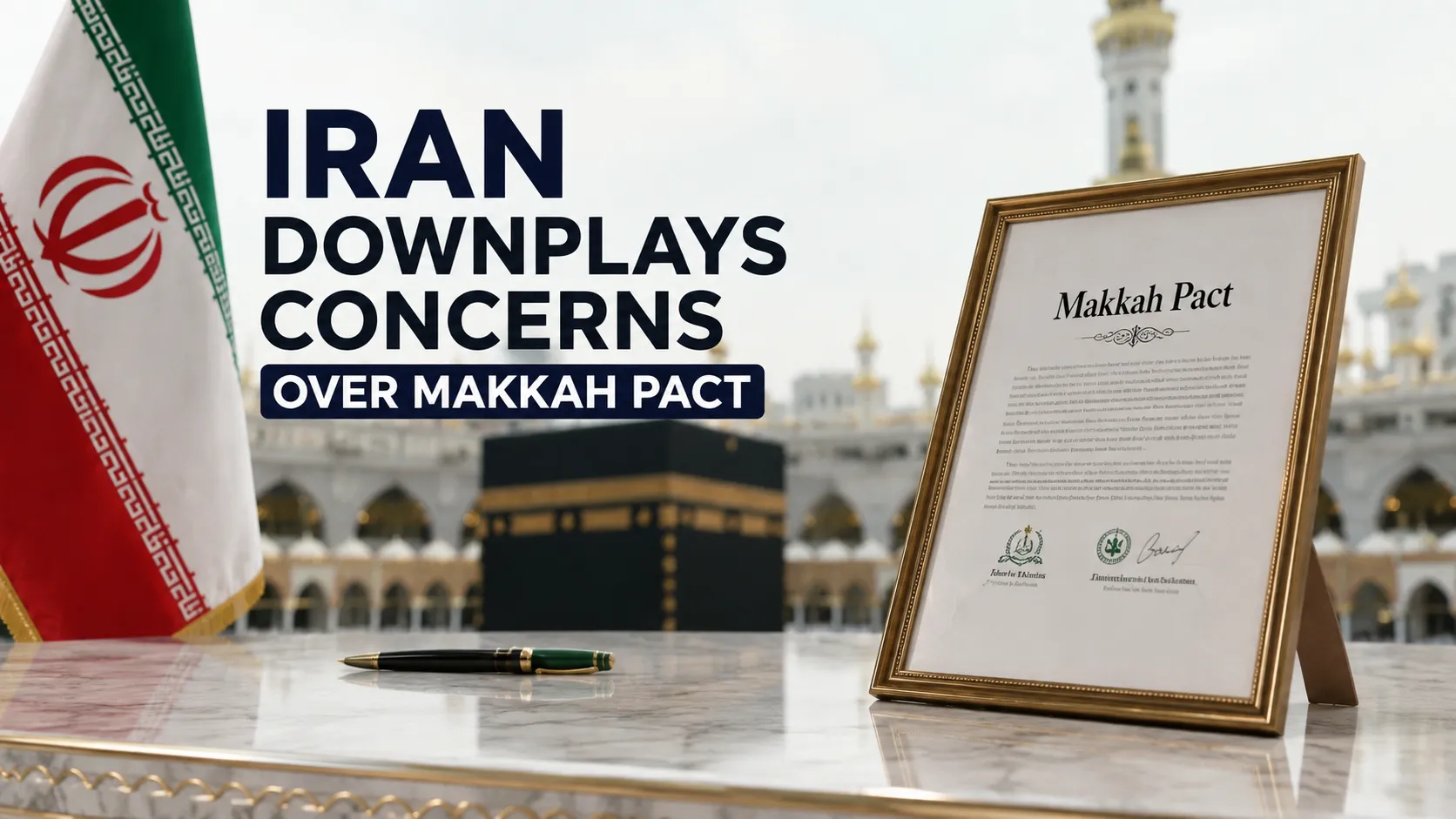
Iran downplays concerns over Makkah pact, emphasizing that the agreement represents a larger shift in the Middle Eastern geopolitical landscape. Recent communications from Iranian officials highlight a recalibration of regional attitudes toward longstanding power dynamics, particularly in relation to U.S. influence. The Makkah pact, while initially met with skepticism, is now being framed in Tehran as a constructive step toward regional solidarity. This newfound perspective could signify a transformative moment in Middle Eastern politics, echoing through diverse alliances, trade agreements, and international relations. As the complexities of these shifts unfold, the implications for both regional and global stability become critical, inviting scrutiny from various geopolitical stakeholders.
Understanding the Makkah Pact
The Makkah pact has emerged as a cornerstone document representing a new chapter in Middle Eastern cooperation. Initiated in Makkah, this agreement aims to address various issues that have historically divided Arab states, with particular focus on security, trade, and political stability. At its core, the Makkah pact is an effort to foster a unified front among Arab nations in response to external pressures, particularly those exerted by nation-states such as the United States and Israel. Iran’s downplaying of concerns regarding this pact suggests a recognition of the shifting political tides throughout the region, indicating Tehran’s willingness to engage in a dialogue rather than retreat into isolation.
Moreover, the Makkah pact is characterized by distinct elements that cater to the diverse issues facing the region. One significant aspect is its focus on terrorism and extremism, with member states pledging to cooperate in intelligence-sharing and joint military initiatives. The aim is to bolster both domestic and regional security, curbing threats that not only affect individual nations but also undermine broader collective stability. Iran’s position, amidst this focus, reflects a nuanced understanding of the ongoing challenges, suggesting that Tehran sees the value in collaboration despite its traditionally adversarial relationships with many signatories of the pact.
Critically, the Makkah pact does not just serve immediate security interests; it also lays the groundwork for future trade opportunities and economic partnerships among signatory nations. By addressing economic disparities that have fueled tensions, the Makkah pact recognizes that sustainable peace cannot exist without tangible developmental progress. Iran’s stance allows it to engage with neighboring countries on these fronts, potentially easing longstanding grievances and creating paths for mutual benefit.
In addition to these facets, the pact’s commitment to environmental cooperation is notable. Given the region’s environmental challenges, including water scarcity and climate change, the treaty encourages members to collaborate on sustainable practices. This illustrates a broader understanding that geopolitical stability is intertwined not only with military and economic factors but also with environmental stewardship.
Regional Realignment and U.S. Influence
In the context of Iran downplaying concerns over the Makkah pact, it is essential to explore the larger geopolitical shifts that are taking place in the Middle East. The U.S. has long held considerable sway in the region, but that influence is increasingly challenged by emerging alliances and diplomatic efforts championed by local actors. This ongoing realignment appears to stem from shared interests among Arab states, coupled with a growing disillusionment with U.S. foreign policy, particularly under successive administrations.
Many Arab nations, once heavily reliant on U.S. support, are now exploring options for sovereignty and independence in their foreign policy. This trend can be traced through various diplomatic overtures, such as the closer ties between Saudi Arabia and Iran, just as an example, as both nations navigate a landscape where U.S. reliability is in question. Iran’s comments concerning the Makkah pact reveal its interest in capitalizing on this transformation, wherein Tehran recognizes and respects regional aspirations for unity and self-determination.
The interplay between the Makkah pact and U.S. influence raises important questions about the future of American foreign policy in the region. As local alliances strengthen, the feasibility of U.S.-centric strategies may diminish, forcing Washington to reassess its approach. Iran’s positive reinterpretation of the pact symbolizes a larger trend where the Middle East is reassessing its relationship with the U.S. and finding strength in collective agreements.
Furthermore, this realignment could redefine the role of superpowers in the region. Other global actors, including Russia and China, are likely observing these developments keenly. Their increasing presence in Middle Eastern affairs reflects a multipolar shift that may see U.S. influence further diluted as new alliances and power centers emerge.
The Role of Iran in Regional Diplomacy
Amidst the evolving narrative surrounding the Makkah pact, Iran’s role in regional diplomacy has come under intense scrutiny. With its history of contentious relations with numerous Arab states, many observers find it paradoxical that Iran would embrace this agreement instead of opposing it outright. However, Iran’s willingness to engage constructively may signal a strategic repositioning aimed at enhancing its regional leverage.
By championing dialogue over hostility, Iran seeks to mitigate perceptions of itself as a destabilizing actor. The Makkah pact provides an opportunity for Iran to align with its neighbors on common grounds, particularly concerning economic collaborations that could benefit all parties involved. Tehran’s embrace of this pact can be interpreted as a diplomatic maneuver to elevate its influence in the Gulf region without resorting to military interventions, thus redefining relationships in a more favorable light.
Furthermore, Iran’s acceptance of the pact reflects an understanding of changing power dynamics across the Middle East. Given the absence of a singular dominant power, regional states are incrementally growing more influential in their decision-making. By downplaying concerns over the Makkah pact, Iran positions itself as a pragmatic actor who is willing to engage with an emerging reality rather than cling to old narratives of rivalry and division.
This new role in regional diplomacy suggests the possibility of mediating entrenched conflicts. For instance, Iran could play a pivotal part in negotiations around Syria and Yemen, two areas where its influence is significant. Engaging through the Makkah pact framework might open pathways to broader solutions that have eluded traditional diplomatic efforts.
Challenges Ahead for the Makkah Pact
While Iran may downplay concerns regarding the Makkah pact, significant hurdles remain as regional actors attempt to implement its ambitious goals. One of the foremost challenges lies in the deep-rooted historical grievances that have long characterized relations between many of the signatories. Despite a superficial agreement on common priorities, underlying suspicions and hostilities still linger, leading to questions about the pact’s long-term efficacy.
Another considerable barrier is the influence of extrinsic factors, primarily those orchestrated by international powers such as the United States and Russia. Both nations may have vested interests in destabilizing the pact or obstructing cooperation amongst signatories. Heightened tensions between these powers and their respective allies can easily derail any nascent progress made under the auspices of the Makkah pact.
Additionally, the internal dynamics of the member states pose a challenge. Various political factions within each nation may have diverging views on cooperation with their neighbors, complicating efforts to implement the agreement effectively. Iran’s commitment to regional diplomacy may indeed face opposition domestically, especially from hardline factions resistant to any semblance of cooperation with states traditionally viewed as rivals.
A further obstacle is the economic disparity among member states. Wealthier nations might perceive the pact differently from those with struggling economies, leading to conflict over priorities and resource allocation. Aligning economic goals to benefit all signatories equitably will be a critical but challenging task.
Also Read This Article : Kundi Condoles with Barrister Gohar Over Mother’s Demise
The Historical Context of Regional Agreements
To grasp the significance of Iran downplaying concerns over the Makkah pact, one must consider the historical context of regional agreements in the Middle East. Over the decades, several notable pacts and treaties have aimed to promote cooperation among nations, yet many resulted in limited success due to various factors, including external interference and lack of trust among signatories.
The failure of previous attempts, such as the Arab Detente and various ceasefire agreements, serves as a cautionary tale about the complexities involved in fostering unity. These historical precedents emphasize that regional agreements must be rooted in genuine trust-building measures, which are often difficult to achieve in a landscape characterized by prolonged conflict and power imbalances.
With this understanding, Iran’s measured response to the Makkah pact can be viewed as a strategic recognition of the need for a different approach. Rather than viewing the pact with skepticism, Iran appears committed to treating it as an opportunity for engagement, thus breaking from the historical cycle of enmity that has defined regional relations to date.
Interestingly, the Makkah pact’s approach seems influenced by past failures, integrating lessons learned to create more comprehensive frameworks that address not only security but broader socio-economic issues. This holistic view could pave the way for unprecedented levels of cooperation, promoting resilience against the divisive forces observed in previous agreements.
Potential Economic Implications of the Makkah Pact
The economic ramifications of the Makkah pact cannot be overlooked, particularly in the context of Iran downplaying concerns regarding the agreement. As the pact seeks to promote trade and economic collaboration, it opens the door for neighboring nations to enhance their economic resilience through collective efforts. Economic integration is paramount for countries facing various challenges, ranging from sanctions to scarcity of resources.
For Iran, embracing the Makkah pact creates avenues for economic partnerships that could alleviate some of the challenges posed by international sanctions. Engaging with neighboring countries in mutually beneficial trade could provide a buffer against external pressures while simultaneously boosting domestic growth through diversified economic interactions. This could lead to more robust economic ties between Iran and its neighbors, fostering an atmosphere of cooperation that may eventually extend beyond the initial objectives of the Makkah pact.
Beyond immediate economic gains, the pact can help establish frameworks for longer-term collaborative projects in areas such as infrastructure development, technology transfer, and energy cooperation. By committing to joint ventures, the nations involved can pool resources, minimize risks associated with investments, and drive growth in ways that significantly surpass individual initiatives.
The expansion of trade routes and expansion into new markets may also contribute to regional economic diversification, reducing reliance on traditional energy exports. These evolving economic structures could result in job creation and improved living standards, creating a foundation for sustained peace and reducing the propensity for conflict.
The International Response to the Makkah Pact
As Iran downplays concerns over the Makkah pact, varying international reactions further illuminate its potential impact on the geopolitical landscape. Some nations view the pact as a welcome development, expressing optimism about enhanced regional stability. Others, however, are more skeptical, questioning its longevity and real efficacy given the historical grievances and entrenched rivalries.
The U.S., long a key actor in Middle Eastern geopolitics, has observed the Makkah pact with cautious interest, analyzing how it may affect its foreign policy and relationship with regional allies. The shift towards regional cooperation, especially involving Iran, may compel Washington to engage in recalibrating its strategy, particularly if it concerns countering Iranian influence.
On the other hand, major powers like Russia and China may see the Makkah pact as an opportunity to extend their influence in the region. By supporting or aligning with member states, these countries can further solidify their roles as key actors amidst changing dynamics. International perspectives will be crucial in shaping the viability and effectiveness of the Makkah pact as it unfolds within the complex global landscape.
Additionally, European nations are also following these developments closely, as they see potential for stability that aligns with their strategic interests in energy security and counterterrorism. Their engagement or lack thereof could play an influential role in shaping the pact’s trajectory and contributing to a balanced geopolitical environment.
The Future of the Makkah Pact: Opportunities and Risks
Looking ahead, the future of the Makkah pact appears fraught with both opportunities and risks. As Iran downplays concerns regarding the agreement, a strategic opportunity arises for fostering a new era of collaboration in the Middle East. This cooperation could redefine relationships, strengthen regional identities, and bolster economic resilience.
However, numerous risks remain. The challenge of implementation amidst deeply rooted political divides may thwart otherwise progressive initiatives. Moreover, external influences from global powers, who may not support the pact, could significantly impact its sustainment. The intricate relational dynamics within each member state will also determine chances for successful collaboration.
In conclusion, while Iran’s perspectives on the Makkah pact indicate a willingness to engage with its neighbors constructively, the road ahead will require vigilance, restraint, and a commitment to longstanding cooperation. The Makkah pact holds promise, but its success hinges on concrete action and sustained participation from all involved parties.
The pact’s success will ultimately depend not only on political goodwill but also on tangible advancements in economic collaboration and overcoming environmental challenges. By cultivating an environment where differences are set aside in favor of collective growth, the Middle East might experience a new chapter characterized by unity and prosperity.
Conclusion
In summary, Iran’s downplaying of concerns over the Makkah pact signifies a pivotal moment in the region’s geopolitical trajectory. By framing the agreement as an opportunity for collaboration rather than contention, Tehran is making a calculated move that aligns with broader shifts in regional sentiment. As nations navigate their complex histories and contemporary challenges, the Makkah pact emerges as a potential vehicle for stability and economic growth in a landscape fraught with insecurity. Yet, as history reminds us, the path to meaningful cooperation is often jagged and unpredictable.
Moving forward, Iran’s role in promoting cooperative frameworks will be critical. The utmost success of the Makkah pact relies on the commitment to overcome historical grievances and to cultivate an environment conducive to dialogue. The broader implications also extend beyond the immediate region, influencing global dynamics as various powers reassess their strategies in light of evolving partnerships.
As we reflect on these developments, it becomes clear that the Makkah pact presents both a chance for an era of solidarity and a test for resilience among its signatories. In a time marked by uncertainty, the possibilities for mutual growth and understanding may very well hinge on the courage of these nations to embrace a collective future.
Frequently Asked Questions
What is the Makkah pact?
The Makkah pact is an agreement among several Arab states aiming to foster regional cooperation on security, trade, and political stability.
Why is Iran downplaying concerns over the Makkah pact?
Iran downplays concerns over the Makkah pact to signal its willingness to engage in regional diplomacy and embrace new cooperative frameworks amidst changing geopolitical dynamics.
How does the Makkah pact affect U.S. influence in the region?
The Makkah pact may challenge U.S. influence as Arab states increasingly seek autonomy from American support, reshaping regional alliances in the process.
What are the potential risks of the Makkah pact?
Potential risks of the Makkah pact include deep-rooted historical grievances, external pressures from global powers, and political dynamics within member states that could hinder cooperation.
What economic implications does the Makkah pact have for Iran?
The Makkah pact offers Iran opportunities for economic collaboration with neighboring countries, potentially alleviating challenges posed by international sanctions and fostering economic growth.




 Muhammad Abdullah |
August 11, 2026
Muhammad Abdullah |
August 11, 2026