





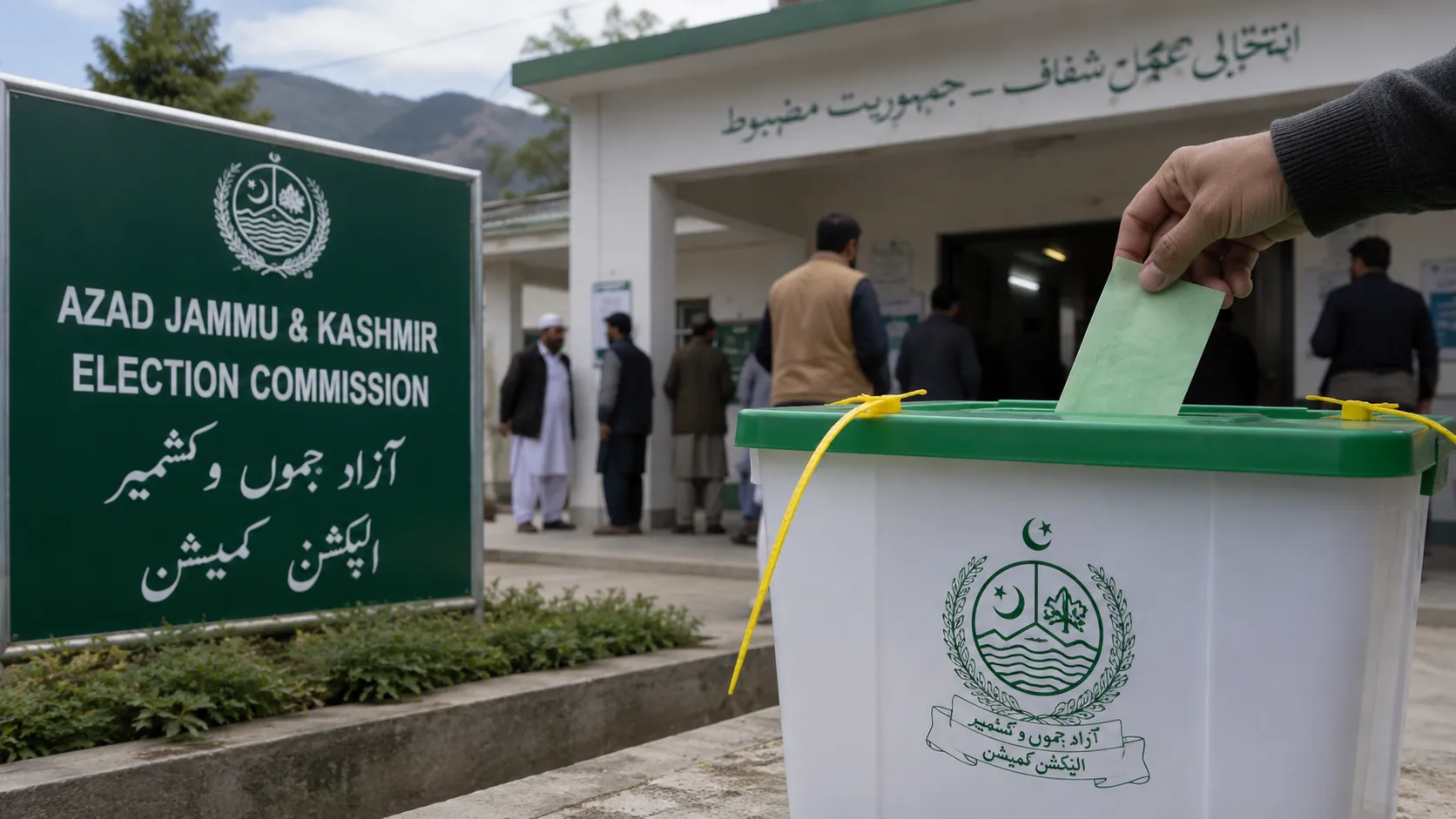

The AJK Election Commission has unveiled a meticulously planned three-phase poll schedule, marking a significant event in the region’s electoral landscape. This development is expected to influence socio-political dynamics, engaging political analysts, stakeholders, and citizens alike. The announcement has triggered a wave of analyses and predictions about electoral outcomes and logistical execution, emphasizing the critical role these elections play in shaping Azad Jammu and Kashmir’s (AJK) governance framework.
Understanding the Election Schedule
The three-phase poll strategy announced by the AJK Election Commission is a tactical decision aimed at ensuring logistical efficiency and effective management of resources. Each phase focuses on different geographical and administrative segments, ensuring comprehensive electoral coverage. This approach not only facilitates smoother logistics and reduces potential electoral fraud but also helps in security deployment, which is crucial amidst political tensions.
Phase one encompasses regions with higher voter density, demanding meticulous planning for crowd management. The subsequent phases systematically cover regions varying in accessibility and population density. The aim is to maintain a continuum from densely populated areas to more remote locations, ensuring that every vote holds equivalent significance in the democratic process.
Moreover, by adopting a phased approach, the commission considers the unique socio-political variables present in each region, thereby customizing its strategies to effectively address diverse challenges. For instance, areas with distinct cultural norms or historical political skepticism may require additional engagement strategies to boost democratic participation. This comprehensive strategy underlines the AJK Election Commission’s dedication to a transparent and adaptive electoral process.
This methodology also promotes a sense of clarity and predictability among voters, offering them insights into when and where they can participate in the democratic process. Such clarity helps mitigate voter confusion and enhances turnout, ensuring a more representative outcome. Additionally, phased elections can act as a pilot test for newer logistics or technological implementations, offering lessons that can be adapted in later phases for improved efficiency and security.
Impact on Political Parties
The announcement of the poll schedule sets the stage for political parties to strategize their campaigns and outreach efforts meticulously. With the schedule in place, parties can better align their political maneuvers and outreach with the phases, allowing them to concentrate resources and efforts in a focused manner.
For established political entities, the phased elections provide an opportunity to solidify their influence across different regions by tailoring messages to local needs and sentiments. This phased strategy necessitates agile political campaigns capable of dynamic adjustments based on evolving political landscapes discovered during earlier phases.
Emerging parties may face challenges due to resource constraints but can leverage the phased elections to build momentum gradually. By prioritizing key districts per phase, these parties have the opportunity to focus efforts strategically and potentially disrupt the political status quo.
Additionally, the phased approach empowers political parties to analyze voter behavior in earlier phases, adjust their messaging, and adjust resources dynamically. This constant iterative feedback loop allows them to refine strategies for subsequent phases, enhancing their effectiveness on the campaign trail. Moreover, this structure can potentially democratize campaigning, giving smaller parties a clearer strategic framework to challenge established players by focusing intensively on regions where they have better prospects.
This system can also foster healthy political competition by encouraging parties to address region-specific issues more attentively. Political manifestos might see a rise in localized content, with parties engaging directly with the distinct needs of rural and urban constituents alike. Such granular focus could lead to more responsive and representative governance post-elections.
Logistical Challenges and Solutions
Conducting elections in multiple phases entails a set of logistical challenges, including secure transportation of electoral materials, management of polling stations, and deployment of sufficient personnel across varying terrains and political climates. The effectiveness of this logistical network is pivotal to the neutrality and credibility of the elections.
The AJK Election Commission is expected to implement stringent measures to address these challenges, such as employing digital tools for real-time monitoring and communication across dispersed polling stations. Incorporating technology not only promotes efficiency but also enhances transparency, building public trust in the electoral process.
Additionally, partnerships with local administrative bodies and international observers could play an instrumental role in facilitating smooth conduct and oversight. Such collaborative efforts are crucial to preempt and mitigate unforeseen disruptions, ensuring that the electoral process runs smoothly and securely.
Furthermore, logistical success hinges on thorough training programs for electoral staff, ensuring they are well-equipped to manage polling stations and troubleshoot issues on election day. Sophisticated supply chain mechanisms guarantee the timely delivery of materials, with contingency plans in place for adverse weather or other disruptions. The AJK Election Commission also places a premium on mobility solutions, employing local transport networks efficiently to ensure swift setting up and dismantling of polling infrastructure.
The use of digital tools to ensure consistent voter registration processes across phases is another logistical consideration. Real-time data analysis allows the commission to make informed decisions rapidly, adapting to any evolving logistical needs. These proactive technological integrations play a crucial role in delivering smooth electoral operations across the phased timeline.
Security and Electoral Integrity
Security remains a paramount concern in any electoral process, particularly in regions with heightened political tensions. The AJK Election Commission’s phased election schedule enables more manageable and targeted security deployments, aligning personnel and resources with regional needs.
Working closely with law enforcement agencies and deploying specialized units to sensitive areas ensures that peace is maintained throughout the election timeline. Such strategic deployments can deter electoral malfeasance and instill voter confidence, crucial for robust voter turnout.
Beyond physical security, the commission’s commitment to maintaining electoral integrity involves stringent validation processes and mechanisms for addressing grievances. Creating transparent, accessible channels for voters to report issues enforces accountability and fortifies the integrity of the electoral process.
Additionally, the phased schedule offers law enforcement the ability to focus resources judiciously, providing adaptable responses as situations arise. This targeted allocation of security personnel minimizes the chances for disturbances, allowing the electoral process to proceed uninterrupted.
Addressing security concerns also involves embedding rigorous checks and balances within the system. Utilizing biometric identification and secure digital records helps minimize fraudulent activities, such as double voting or impersonation, enhancing overall transparency. These measures reassure the electorate of the fairness and authenticity of the elections, thus promoting public confidence in the results.
Also Read This Article : Leopard Killed in Bajaur: Wildlife Department Launches Probe
Voter Engagement and Participation
The phased election process presents an opportunity to amplify voter engagement and boost participation. By strategically scheduling polling dates, the AJK Election Commission can address regional diversity, ensuring every voter has the opportunity to cast their ballot without logistical hindrances.
Public awareness campaigns facilitated by both governmental and non-governmental organizations can significantly enhance voter participation. These campaigns should focus on educating voters about the importance of each phase and the practical details of casting a ballot.
Furthermore, phased elections allow for tailored voter outreach programs that consider the cultural and linguistic nuances of various regions, thus working towards inclusive political participation across all demographics.
Targeted voter engagement strategies also provide an opportunity to bridge gaps between the electorate and the electoral system. By creating platforms that foster dialogue between voters and political candidates, the electoral process encourages a more participatory democracy. Voters familiarized with their role in the broader democratic narrative are more inclined to participate actively in elections.
In addition, special attention to first-time voters and marginalized groups ensures that their voices are heard, enhancing the representative nature of the electoral outcomes. Tailored outreach initiatives focused on educating these demographics about their rights and the election process can foster a sense of belonging and civic responsibility.
Technological Integration in Elections
The inclusion of technology in the electoral process marks a progressive step in facilitating transparent and efficient elections. The AJK Election Commission can leverage technological tools like electronic voting systems and biometric verification to expedite processes and enhance accuracy.
Digital platforms can serve as efficient conduits for voter education, spreading crucial information on voting procedures and schedules. Utilizing social media and dedicated apps allows the electorate to access up-to-date information, encouraging informed voting.
Furthermore, technology combats electoral fraud by ensuring secure and verified voter identification, maintaining the legitimacy and fairness of the electoral outcome. As technology evolves, its integration into the electoral process becomes a cornerstone for future elections, promising advancements in governance and democratic integrity.
Beyond mechanical efficiency, technology also offers platforms for transparency and accountability. Enabling live streaming from polling stations, for instance, can increase public confidence in the electoral process by providing real-time surveillance. This not only discourages malpractice but also actively involves citizens in safeguarding democratic principles.
Moreover, technology facilitates rapid data processing, allowing results to be collated swiftly and accurately. This enhanced speed coupled with accuracy ensures timely declarations of results, reducing post-election tension. As digital literacy improves, such innovations will play an increasingly pivotal role in shaping future electoral landscapes.
Historical Comparisons and Lessons
To understand the impact of the current phased election schedule, it is instructive to examine historical precedents both within AJK and globally. Historical elections provide valuable insights into the successes and pitfalls experienced by previous commissions that can guide contemporary planning and execution.
Analyzing past electoral outcomes and logistical challenges helps identify best practices and inform current strategies. For example, lessons from past voter turnout and fraud prevention efforts can shape more effective approaches in the current elections.
Globally, phased elections have often been adopted in large democracies to effectively manage complexity and logistics. The AJK Election Commission’s decision aligns with these established practices, suggesting a shift towards more sophisticated and strategic electoral management methodologies.
This historical perspective provides a rich tableau of experiences from which the AJK Election Commission can draw guidance. For instance, previous instances of delayed polling in adverse weather conditions reinforce the importance of flexible and robust logistical planning. Similarly, voter engagement strategies learned from earlier initiatives underscore the necessity of bridging communication gaps with grassroots communities.
Moreover, examining global case studies offers a glimpse into innovative solutions for common electoral challenges. The utilization of mobile voting units in remote areas in other countries, for example, might inspire adaptations suitable for AJK’s unique geographic and cultural landscape.
The Road Ahead for AJK’s Governance
The phased election schedule not only influences the immediate electoral process but also sets a trajectory for AJK’s future governance framework. The choices made during these elections resonate through legislative assemblies, impacting policy directions and regional governance strategies.
Successful execution of these elections can bolster trust in democratic institutions, encouraging progressive policies and comprehensive development programs that address the diverse needs of AJK’s citizenry. Conversely, challenges encountered can serve as catalysts for electoral reforms, prompting improvements for subsequent elections.
Ultimately, these elections are pivotal in defining AJK’s political narrative, shaping its interaction with neighboring regions, and determining its role in broader geopolitical contexts.
The future of AJK’s governance will be significantly influenced by how successfully the key pillars of democracy—transparency, accountability, and inclusivity—are upheld during these elections. A robust and inclusive electoral process strengthens the democratic fabric, enabling the formulation of more representative policies and effective governance.
Moreover, the phased elections present an opportunity to rally for socio-political cohesion within AJK, encouraging collaborative governance across party lines for more resilient long-term development. Future legislative outcomes and reforms stemming from these elections will offer insights into the evolving democratic maturity of the region.
Conclusion: Implications of the AJK Election Commission’s Phased Approach
In conclusion, the AJK Election Commission’s announcement of a three-phase poll schedule is a significant move towards ensuring thorough, free, and fair elections. By strategically segmenting the electoral process, the commission aims to enhance logistical efficiency, security, voter engagement, and technological integration.
This strategic approach provides both opportunities and challenges for political entities, voters, and administrative bodies alike. Its successful implementation can foster trust in democratic practices, strengthen institutional credibility, and pave the way for more robust governance in AJK.
As the process unfolds, stakeholders must remain adaptable and responsive to emerging challenges, working collaboratively to uphold the principles of democracy and integrity. This election could set a precedent, offering valuable lessons for future electoral processes in both AJK and similar administrative contexts.
The ultimate success of these phased elections will play a crucial role in signaling AJK’s readiness to embrace more comprehensive and nuanced approaches to governance. If implemented effectively, this election can serve as a blueprint for electoral excellence, paving the way forward for transformative governance initiatives in the region.
Frequently Asked Questions
What are the key phases of the AJK election schedule?
The AJK election schedule consists of three phases, each strategically covering different geographical regions to ensure comprehensive electoral participation.
How will security be managed during the elections?
Security during the elections will be reinforced through targeted deployment of forces based on regional needs, ensuring peace and preventing electoral malfeasance.
What role does technology play in the elections?
Technology facilitates efficiency and transparency through electronic voting systems and digital platforms, enhancing voter education and reducing fraud.
How might this election impact AJK’s political landscape?
The phased election can redefine AJK’s governance framework, influencing policy directions and regional political dynamics significantly.
What challenges might arise from a phased election schedule?
Logistical complexities, ensuring seamless coordination across phases, and maintaining voter engagement are potential challenges of the phased election approach.