





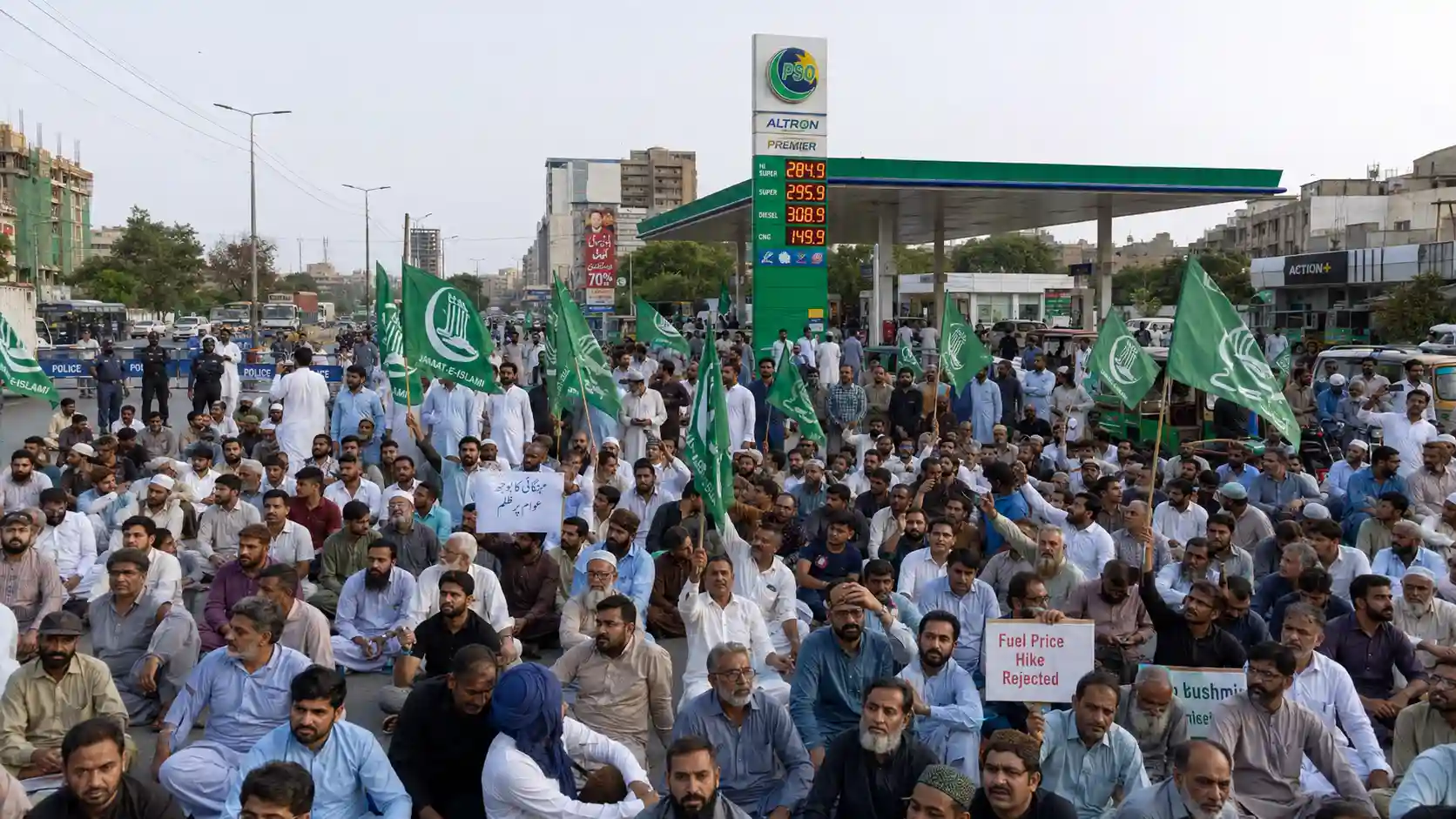

The recent nationwide sit-ins fuel prices campaign organized by Jamaat-e-Islami (JI) has drawn attention to the escalating economic crisis affecting citizens throughout Pakistan. The political party has taken to the streets in notable cities like Karachi, Lahore, and Peshawar, spearheading protests against the government’s taxation policies and the impact of soaring inflation. The ongoing sit-ins are a response not just to rising fuel prices, but to an overall feeling of economic distress that has gripped the nation. Citizens are becoming increasingly frustrated as their purchasing power declines while basic necessities become more expensive. For many, this sit-in serves as a platform to voice their discontent, urging policymakers to reconsider their approach to fuel taxes and economic management.
The Context of Rising Fuel Prices in Pakistan
Fuel prices are a critical economic indicator, and their rise often reverberates through the economy. In Pakistan, the situation is particularly challenging. The past months have seen a steep increase in fuel costs, driving transportation and goods prices up significantly. This inflationary spiral has intensified public discontent. The mechanisms governing fuel pricing are complex, often tied to international oil markets and government policy, creating a distressing situation for consumers who feel the pinch at the gas pump. Experts argue that the government needs to find a balance between revenue generation through taxes on fuel and protecting citizens from unbearable economic pressure.
The increase in petroleum levies, coupled with other taxation measures, has left citizens feeling cornered. With many relying on fuel for their daily commutes and livelihoods, such hikes affect not just individual families but the entire economy. Additionally, the rising inflation rates have reduced disposable income, exacerbating the challenge for ordinary people. As JI’s protests unfold, they are accompanied by a call for more transparent and fair policies governing fuel pricing.
Furthermore, the comparison to previous years highlights alarming trends. The historical fluctuations in fuel prices reveal a pattern that is often driven by global oil prices, but the local government’s approach to managing these changes can either mitigate or worsen public discontent. The historical context serves to underscore the urgency of JI’s message as they mobilize citizens to push for meaningful policy reforms.
Fuel prices also influence broader economic sectors. The transportation industry, crucial for a nation’s supply chain, directly feels the brunt of such increases, which can subsequently affect agricultural distribution, manufacturing, and other critical sectors. The cascading effect of heightened transportation costs escalates food prices, making essentials less accessible to the average citizen, compounding the public’s grievances.
Moreover, the geopolitical tensions and the dependency on imported oil further complicate the scenario. As global politics affect oil prices, the volatility creates an unpredictable environment for local economies that lack sufficient energy autonomy. This reliance can stymie long-term economic strategies and calls for a reevaluation of energy policies to enhance resilience against global fluctuations.
Public Reaction to the Protests
The public reaction to the nationwide sit-ins has been mixed. For many citizens, the demonstrations symbolize a collective stand against economic challenges that seem insurmountable. Thousands have turned out in major cities, chanting slogans and carrying banners that highlight their grievances regarding exorbitant fuel prices and excessive taxes. On social media platforms, support for JI’s campaign has surged, showcasing a growing trend of civic engagement and political awareness among the populace.
Various segments of society are participating, ranging from students and workers to families and activists. For many of the younger generation, this movement represents an avenue for change, expressing their frustrations regarding economic instability. The participation of diverse groups amplifies the message of solidarity, showing that the call for justice transcends individual interests and reflects widespread dissatisfaction with the status quo.
However, there are those who view the protests with skepticism. Some argue that while the rising fuel prices are indeed a pressing issue, the methods employed by JI could lead to disruptions that affect the daily lives of citizens in other ways. Criticism arises over potential traffic congestion and disruptions in city operations due to the sit-ins. Balancing the urgency of the message with the practicality of protest raises questions on how best to advocate for change while minimizing trouble for innocent bystanders.
The role of youth in these protests cannot be overstated. With social media as their battleground, younger generations are pushing narratives of accountability and reform, demanding a future that offers economic stability and opportunity. This empowerment through digital activism marks a shift in how political discourse unfolds in the nation, potentially reshaping civic engagement for years to come.
Another perspective considers the psychological impact on citizens. Prolonged economic hardship and protests can lead to a general sense of fatigue, affecting public health and social morale. This feedback loop of economic struggle and protest-driven stress underscores the need for timely and effective policy responses from leadership to restore confidence and hope among citizens.
The Political Landscape and Its Implications
The nationwide sit-ins fuel prices protests come at a pivotal time in Pakistan’s political landscape. With upcoming elections on the horizon, political parties face increasing pressure to address citizens’ concerns. JI’s protests have positioned the party as a key player in highlighting issues that matter to the electorate, especially concerning everyday economic challenges. The broader implications of the protest reach into future political strategies. Many party officials are aiming to galvanize support based on popular discontent, positioning themselves as the champions of the people.
Furthermore, the sit-ins offer a lens through which to view public sentiment towards the current government. As citizens express their dissatisfaction with soaring fuel prices and inflation, government officials may have to reconsider their policies or risk losing support. Such protests serve as reminders that economic mismanagement could have dire political repercussions, fostering an environment where citizens demand accountability.
Moreover, the relationship between government and civil society is at stake. The response from the government to these protests could either quell the unrest or fuel further discontent. How government officials articulate their understanding of the situation and propose solutions will be critical in shaping public opinion. The stakes are high as the interplay between policy and public sentiment unfolds, with significant outcomes possible for both the government and opposition parties.
Analyzing the international political sphere, the ability of Pakistan to navigate these domestic issues will influence its reputation abroad. A country fraught with internal strife may experience diminished foreign investment and strained diplomatic relations, highlighting the interconnected nature of domestic political health and international standing. Thus, how these protests are addressed holds broader implications for Pakistan’s role on the global stage.
The local political ramifications extend to party dynamics as well. Internal party strategies, leadership decisions, and policy proposals in response to the crisis reflect a test of political efficacy. Parties that can successfully propose viable solutions and dialog with civil society may strengthen their standing in the political arena, influencing elections and future governance.
Economic Analysis of the Situation
The economic analysis surrounding the nationwide sit-ins fuel prices protests indicates a complex web of factors contributing to the current crisis. The government’s revenue collection strategies heavily rely on fuel and energy sectors, yet these sectors are increasingly becoming burdened by rising costs. High taxation on fuel has perpetuated inflation, leading to increases in transportation and food prices. Economists warn that these dynamics could spiral unless corrective measures are taken.
Rising fuel prices not only affect direct consumers but also inflate the costs of businesses, potentially leading to layoffs and reduced economic activity. The ripple effects of the protests can lead to a heightened focus on alternative energy policies and shifts in government strategy regarding taxation and economic relief measures. The pressing need for structural reforms in the energy sector is evident; otherwise, Pakistan risks remaining trapped in this cycle of inflation and discontent.
Furthermore, discussions around international factors such as global oil prices and trade agreements should not overshadow local political decisions that contribute to these economic struggles. Pakistan’s government must balance its approach by considering global influences while remaining attuned to local needs and sentiments. Only through cohesive strategies can Pakistan pave the way towards an economically stabilized future.
In the broader economic context, the reliance on imported oil creates vulnerability. As international markets fluctuate, the price shocks can disrupt local economies, disproportionately affecting vulnerable communities. Structuring long-term energy strategies that include renewable sources can help insulate the country from such global price mechanisms.
Considerations for future economic policies may include diversification of the economy to lessen the dependency on traditional fuel sources. Investing in technology, education, and infrastructure can stimulate different sectors, reducing the intensity of how fuel prices affect the national and personal economic well-being.
Also Read this Article : Gul Plaza Case: IO Fails to Submit Challan, Hearing Adjourned to Sept 5
The Role of Media in Shaping Public Opinion
The role of media in the context of the nationwide sit-ins fuel prices protests cannot be overstated. Coverage of these protests offers a glimpse into the public sentiment surrounding economic challenges faced by ordinary citizens. Traditional media, social media, and citizen journalists are all playing a role in shaping how the narrative unfolds these diverse sources of information can amplify voices or create misconceptions.
Videos and images from the demonstrations are circulating widely, invoking sympathy and urgency among viewers. The ability of media platforms to provide real-time updates influences audience perceptions, often rallying more support for the cause. However, the challenge remains in ensuring that coverage remains objective and fair. Misinformation can easily spread, complicating an already charged atmosphere.
Moreover, the media’s framing of the protests can significantly impact public opinion. By focusing on suffering families and disrupted daily life, media outlets can effectively evoke empathy and action from both the public and policymakers. As the protests continue, the media will remain a critical actor in the unfolding drama of economic discontent and public mobilization.
Exploration into digital media’s influence highlights the transformative power of platforms like Twitter and Facebook, where real-time conversations shape discourse. These platforms have democratized information dissemination, enabling grassroots mobilization and elevating voices that might have remained unheard in traditional media paradigms.
Moreover, media ethics and responsibilities are increasingly under scrutiny. Staying true to factual reporting while avoiding sensationalism remains a challenge, yet it is essential for maintaining credibility and public trust in media institutions. In doing so, the press can become an effective bridge between the populace and policymakers, fostering dialogue and understanding.
Potential Solutions and Government Accountability
In light of the ongoing protests, it is crucial for the government to explore viable solutions to address the grievances expressed during the nationwide sit-ins fuel prices protests. Engaging in dialogue with JI and other stakeholders is vital to foster a collaborative approach towards finding solutions that benefit citizens without compromising revenue needs. Implementing a tiered fuel tax system that accounts for economic disparities could provide immediate relief.
Additionally, increasing transparency in government spending and tax collection can help restore public trust. Citizens are more likely to support policies if they understand how tax revenues are allocated and the logic behind them. Leveraging open data platforms can allow citizens to track government expenditures, thereby fostering accountability.
Moreover, investing in alternative energy sources and public transportation could lessen dependence on petroleum fuels, leading to long-term sustainability. As discussions around economic resilience gain traction, the government has an opportunity to reshape its policies to reflect the needs of its constituents while emphasizing sustainable growth. Current discontent can be a catalyst for change, leading to transformative policies aimed at creating a more equitable society.
Research into best practices from international examples may uncover innovative approaches to similar challenges. Countries that have managed to balance taxation with growth have done so by cultivating diverse energy sources, capitalizing on technological advancements, and prioritizing education and skills development.
Long-term strategic planning requires governmental commitment to exploring the complex interplay of policy, economics, and social welfare. Building infrastructures that promote renewable energy, fostering public-private partnerships, and investing in education about energy efficiency are pivotal steps towards addressing the root causes of the present dissatisfaction.
Impact on Everyday Citizens
Perhaps most importantly, the nationwide sit-ins fuel prices protests highlight the daily struggles faced by citizens in a rapidly transforming economic landscape. As prices rise and wages stagnate, ordinary Pakistanis grapple with making ends meet. The sit-ins serve as a mirror reflecting their anger and hopelessness, demanding attention from the state and society.
Families are increasingly faced with tough choices, such as whether to buy food or pay for transportation. The economic burdens have tangible impacts on mental and physical health, leading to a rise in anxiety and uncertainty. Social fabric is stretched, as community support structures are tested under the strain of financial pressures. The protests are a rallying cry for those who feel voiceless in an environment that often overlooks their challenges.
To understand the sit-ins fully, one must grasp the human dimension behind them. The voices echoing through the streets are not just political slogans; they represent real lives, each with stories of resilience and struggle. The ongoing protests can thus be viewed not merely as angry outcries, but as powerful testimonies to the collective demand for change in an increasingly fractured economic landscape.
From a community perspective, the social dynamics of protests offer insights into resilience and solidarity. Neighborhoods come alive with shared purpose, providing a sense of belonging amid adversity. Such communal responses foster an environment where ideas and solutions proliferate, encouraging collaborative approaches to systemic challenges.
At the individual level, manifestations of hardship reflect stories of resilience. Voices that demand attention echo the universal desire for justice, dignity, and opportunity. As such, these protests symbolize both struggle and hope, idealistically pushing for progress that matches the aspirations of every citizen.
Conclusion: The Road Ahead
The nationwide sit-ins orchestrated by Jamaat-e-Islami signal a significant moment in Pakistan’s ongoing economic dialogue. As citizens come together to demand action against rising fuel prices and oppressive taxation, they ignite a flame of political activism that transcends beyond immediate economic grievances. While the protests pose challenges to government operations and urban management, they also present an opportunity for policymakers to critically reflect on failing initiatives.
What remains to be seen is how these sit-ins will influence future political dynamics and governance strategies in Pakistan. Will the government respond positively to the demands, recognizing the deep-rooted discontent and facilitating constructive dialogue? Or will they take a more autocratic approach, dismissing the protests as mere disruption? The citizenry’s patience is thinning; important choices must be made if the government is to regain legitimacy and accountability.
As the protests linger, we find ourselves at a crossroads facing a critical question: How does a nation reconcile its economic challenges with its political realities? The situation is tenuous, but the spirit of unity displayed during the protests may serve as the foundation for a brighter future. There is a glimmer of hope that these expressions of dissent may pave the way for a more equitable society one that prioritizes the needs of all its citizens and invests in sustainable growth.
Ultimately, these protests epitomize the nation’s potential to galvanize change and foster productive discourse. They offer Pakistan an avenue to confront systemic issues with creativity and resolve, striving towards a more inclusive and just society. Thus, understanding and addressing the deeper implications of this civic activism remains an urgent and essential task.
Frequently Asked Questions
What sparked the nationwide sit-ins in Pakistan?
The nationwide sit-ins were sparked by Jamaat-e-Islami’s protests against rising fuel prices, high taxation, and soaring inflation that have made life increasingly difficult for ordinary citizens.
How have citizens reacted to the protests?
Public reaction has been mixed; many citizens express solidarity with the protesters, seeing them as voices for much-needed economic change, while others worry about the disruptions these protests may cause in daily life.
What are the government’s responsibilities amid the protests?
The government is responsible for addressing the grievances raised during the nationwide sit-ins fuel prices, considering transparent economic policies and engaging stakeholders in open dialogue.
How can the protests influence policy-making?
The ongoing protests can significantly influence policy-making by highlighting the need for reform in fiscal and energy policies, urging the government to prioritize citizen needs amid rising costs.
What future challenges lie ahead for Pakistan’s economy?
Future challenges may include managing consumer discontent and balancing revenue generation without creating undue burdens, especially amid ongoing economic inflation and public unrest.