


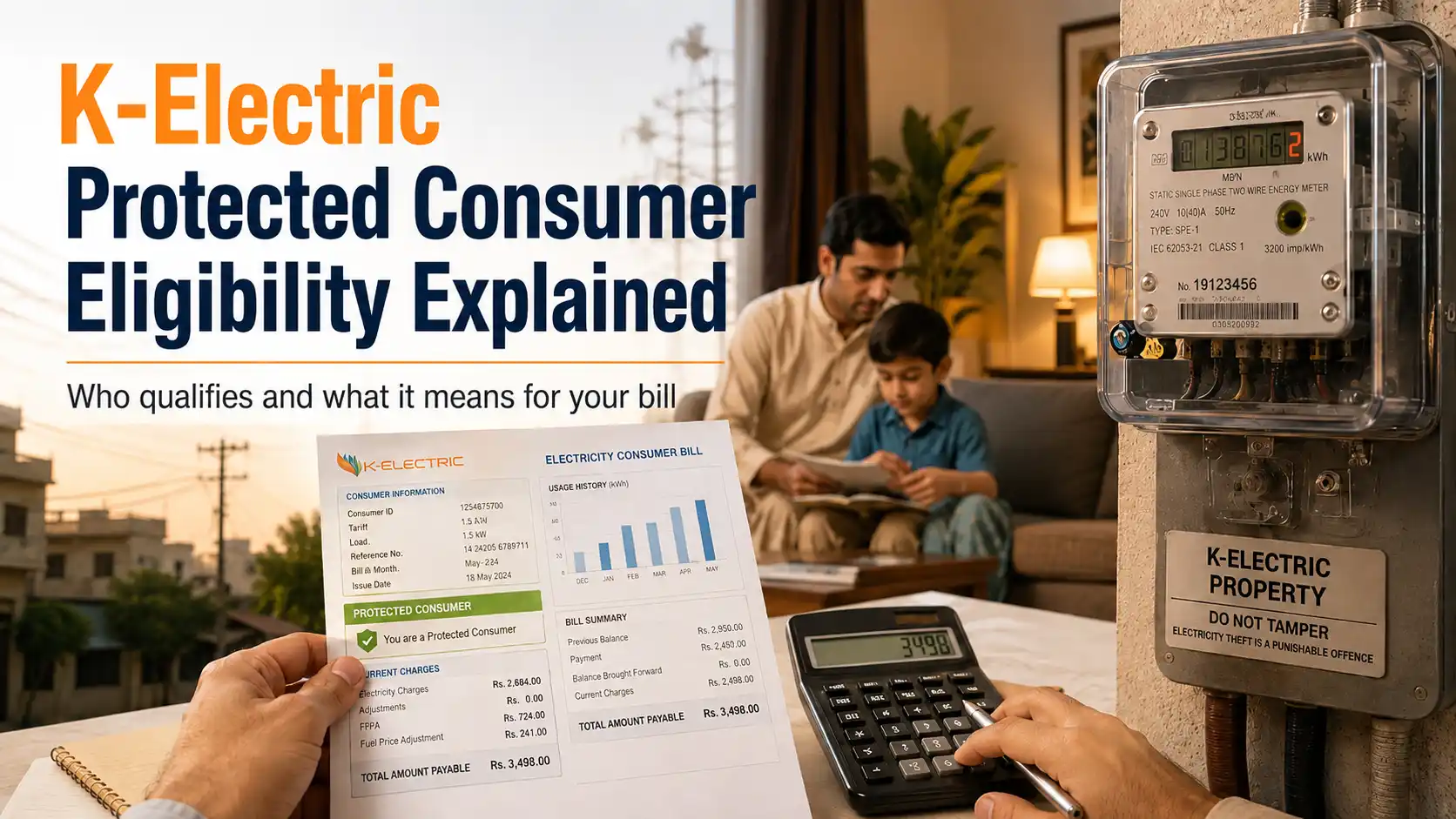

K-Electric, a major power utility in Pakistan, has recently clarified its guidelines on consumer eligibility for protection, a topic that has generated much discussion among stakeholders. Understanding K-Electric consumer eligibility is crucial for consumers to know their rights and the benefits available to them. As the landscape of energy consumption evolves, it’s essential to stay informed about who qualifies as a protected consumer and how these standards are being set.
Understanding K-Electric’s Role in Pakistan
K-Electric serves as a critical infrastructure component in the Pakistani energy sector. With an extensive network, it supplies power to millions of consumers in Karachi and surrounding areas. The company’s role is pivotal in driving local economic growth and ensuring that everyday activities, from household chores to industrial manufacturing, can proceed without interruption. Service reliability is a key concern for both the provider and its users. By addressing consumer eligibility, K-Electric seeks to improve service transparency, instill consumer confidence, and ensure fair access to energy resources.
The company’s operations are deeply intertwined with regulatory guidelines set forth by the National Electric Power Regulatory Authority (NEPRA). Compliance with these rules mandates K-Electric to clarify who qualifies as a protected consumer, a status that comes with notable financial and logistical advantages, particularly for low-income households. This assurance holds significant implications for social equity and accessibility, extending the advantages of electricity to broader segments of society.
Beyond its immediate functional duties, K-Electric plays a strategic role in fostering sustainable development. Aligning consumer eligibility criteria with socio-economic goals enables the company to contribute positively to the community it serves. By ensuring that the eligibility guidelines are clearly communicated and understood, K-Electric demonstrates its commitment to both regulatory compliance and customer welfare.
K-Electric’s long-standing presence in the market also underscores its impact on the socio-economic fabric of the region. The ability to reflect community needs and adapt to rapid urbanization trends places K-Electric in a unique position to influence policy and drive innovation in energy management. The dual focus on economic gains and societal impact ensures that K-Electric stands as a progressive force in the nation’s journey towards energy equity and sustainability.
Consumer Categories and Eligibility Explanation
Understanding the different categories of consumers is essential to grasp the nuances of K-Electric consumer eligibility. The company categorizes its consumers into residential, commercial, industrial, and agricultural sectors, each with specific eligibility requirements that determine their qualification for protection. These distinctions are made to tailor energy solutions according to the needs of each consumer type.
Primarily, the protected consumer category emphasizes low-income households. Such households are given priority due to the societal benefits that arise from providing equitable access to essential resources. Eligibility guidelines are finely tuned to minimize disparity and promote inclusivity, which are central themes in the company’s broader corporate social responsibility initiatives.
Explicitly, residential consumers who consume below a certain threshold of energy units per month are frequently classified under this protective umbrella. The exact eligibility criteria are laid out in the company’s policy documents and are aligned with overarching energy conservation and efficiency strategies. This classification exists not just as an initiative of local importance but as part of a global paradigm addressing energy consumption fairness.
Furthermore, the wide range of consumer categories allows K-Electric to address energy distribution challenges uniquely faced by different segments. For instance, agricultural consumers might be provided with specialized programs that acknowledge their seasonal usage patterns, thereby ensuring their needs are met without disruption. Such targeted strategies highlight K-Electric’s commitment to the diverse nature of its consumer base and the dynamic energy demands it must meet.
The Process of Determining Eligibility
Eligibility determination is a detailed process involving several procedural steps aimed at ensuring transparency and fairness. It involves an evaluation of consumer data against the set threshold criteria, taking into account consumption patterns over a predetermined period. K-Electric utilizes this comprehensive approach to ensure that the right consumers receive protection.
Initial assessments are made through the collection of billing data, which is closely analyzed to determine compliance with eligibility requirements. This data-driven approach also helps in identifying any discrepancies or unusual consumption patterns that might hint at fraudulent practices. K-Electric places significant importance on protecting the integrity of its system against such vulnerabilities.
Further verification processes are often necessary to validate consumer claims. This can involve on-site inspections and personal visits by K-Electric representatives to verify the living conditions and actual consumption needs of the household in question. Through these diligent efforts, K-Electric aims to maintain fairness and accuracy in the eligibility determination process.
The emphasis on data accuracy, coupled with robust system checks, enables K-Electric to uphold its commitment to equality and justice. By leveraging a combination of automated processes and human interventions, the company enhances its ability to manage an equitable energy distribution landscape effectively, underscoring its dedication to each consumer’s specific need.
Technological Advances in Eligibility Verification
To maintain accuracy and efficiency, K-Electric has integrated advanced technology solutions into its eligibility verification processes. The adoption of smart meters and AI-driven data analysis tools has revolutionized how consumer data is collected, monitored, and analyzed.
Smart meters play a crucial role in providing real-time data on energy consumption, enabling precise assessments and timely adjustments. These devices not only streamline data collection but also enhance the accuracy of eligibility confirmations, reducing discrepancies and consumer disputes.
AI-driven tools analyze consumption patterns, offering insights that guide decision-making and policy adjustments. The integration of these technological tools underscores K-Electric’s commitment to operational excellence and continuous improvement, reinforcing consumer trust in the process.
Additionally, the incorporation of blockchain technology stands as a veritable frontier for K-Electric to explore. Blockchain’s immutable ledger system can ensure secure and transparent transactions, enabling K-Electric to maintain a tamper-proof record of eligibility verifications. Such innovation can potentially redefine energy management, fostering greater transparency and enabling real-time responsiveness to consumer needs.
Also Read the Article: Understanding Water Park Safety: A Tragic Incident
The Impact of Protected Consumer Status
The designation of protected consumer status comes with substantial benefits, particularly for economically vulnerable groups. The primary advantage is financial relief in the form of subsidized rates, which can considerably reduce monthly electricity bills. This relief is instrumental in supporting low-income families who might otherwise struggle to meet their energy needs.
Moreover, receiving protection status fosters a sense of equity and inclusion, as it acknowledges the diversity of consumer needs within the supply network. This recognition aligns with broader goals of social justice and sustainable development, emphasizing K-Electric’s role in fostering a fairer energy distribution landscape.
The impacts of protected consumer status can also be seen in increased consumer satisfaction and loyalty, as customers perceive these initiatives as tangible efforts by K-Electric to prioritize their needs. This perception can lead to enhanced consumer-provider relationships and greater community engagement in energy-saving programs.
Furthermore, the ripple effects of granting protected status extend beyond immediate financial relief. Enabled consumers, who experience reduced financial strain from energy costs, can channel their resources into other areas like education, nutrition, and housing, contributing to a broader socio-economic upliftment. By empowering consumers through thoughtful policies, K-Electric lays the groundwork for a resilient and inclusive future.
Challenges and Criticisms
Despite the benefits, the protected consumer eligibility framework is not without its challenges and criticisms. One of the most significant obstacles is ensuring the accuracy of eligibility determinations amidst resource constraints and operational challenges.
Instances of misclassification can lead to unfair advantages or disadvantages, which could undermine the intended equitable distribution of resources. K-Electric faces the constant challenge of refining its systems and processes to minimize such errors.
Critics also point to potential bureaucratic hurdles that could hinder the timely processing of applications, leading to delays in granting protected status to deserving candidates. These challenges require ongoing attention and improvements in infrastructural and procedural aspects.
Beyond technical challenges, cultural perceptions also pose significant implications. Consumer skepticism about the efficiency and fairness of eligibility processes can hinder program success. Therefore, addressing these perceptions through active community engagement and transparent communication channels remains critical for K-Electric.
K-Electric’s Communication and Awareness Efforts
Effective communication and awareness-building are integral to the success of K-Electric’s consumer eligibility criteria. The company employs various communication channels to disseminate information, including digital platforms, customer service centers, and community outreach initiatives.
Through these efforts, K-Electric aims to ensure that consumers are well-informed about their rights, the application process, and the benefits of protected status. This transparency is crucial in fostering trust and encouraging eligible customers to seek protection.
A pivotal element of these communication efforts is user-friendly information dissemination, utilizing clear and accessible language to ensure that all consumer segments can understand and act upon the information provided.
Additionally, partnerships with local community leaders have proven effective in transcending linguistic and cultural barriers. By tapping into trusted local networks, K-Electric can more effectively tailor its message, enhancing outreach effectiveness and driving higher engagement rates with underserved communities.
Comparison with Global Practices
Examining K-Electric’s approach to protected consumer eligibility in the context of global practices offers valuable insights into both the challenges and best practices in the sector. Globally, utility companies face similar challenges in ensuring equitable access to resources while maintaining operational efficiency.
Many international frameworks employ tiered pricing models, varying tariffs based on income brackets or consumption levels. K-Electric’s eligibility criteria mirror such models, emphasizing social responsibility and economic inclusivity.
Global comparisons reveal that while the challenges are universally shared, the solutions can be tailored to local socio-economic contexts. This alignment allows for an adaptive approach that respects cultural and economic diversities and enhances the framework’s effectiveness.
Moreover, lessons from international utilities highlight the potential of public-private partnerships in addressing energy accessibility. Collaborative efforts can mobilize additional resources, access technological innovations, and broaden stakeholder engagement, which can be instrumental for K-Electric in refining its eligibility framework with inclusive policies.
The Future of Protected Consumer Policies
Looking forward, the future of protected consumer policies at K-Electric is poised to evolve alongside technological advancements and policy shifts. Increased integration of digital tools will streamline processes and enhance accuracy.
Policy adaptations in response to changing economic conditions and consumer needs will likely shape the trajectory of protected consumer criteria. K-Electric is anticipated to remain adaptive, fine-tuning its strategies to address emerging challenges and opportunities.
As part of its commitment to sustainable development goals, K-Electric is expected to continue prioritizing equitable access to energy, ensuring its policies align with broader domestic and international commitments to environmental and social governance.
The advent of renewable energy and decentralized power generation models offers new opportunities for K-Electric to consider. By integrating renewable solutions within the protected consumer framework, K-Electric can enhance resilience, reduce reliance on traditional energy sources, and contribute to environmental conservation, positioning itself at the forefront of innovation in energy equity.
Conclusion
The clarity around K-Electric consumer eligibility is not just a matter of policy, but a reflection of the company’s commitment to equitable energy access. By ensuring that the eligibility criteria are precise and fair, K-Electric reinforces its role as a responsible provider dedicated to the welfare of its consumers.
Continued improvement in policy implementation and consumer education will enhance the impact of such initiatives, fostering a more inclusive and sustainable energy landscape. As the company navigates the complexities of eligibility determination, commitment to transparency and consumer engagement remains key to its success.
In summary, K-Electric’s efforts to refine consumer eligibility criteria highlight the evolving dynamics of the energy sector in Pakistan and underscore the importance of making energy policies accessible and beneficial to all societal layers.
Frequently Asked Questions
What is K-Electric consumer eligibility?
K-Electric consumer eligibility refers to the criteria used to determine which consumers qualify for protected status, providing them with benefits such as subsidized rates.
Who is considered a protected consumer under K-Electric?
Protected consumers are generally low-income residential households that use electricity below a specified unit threshold per month, as determined by K-Electric’s eligibility criteria.
How does K-Electric verify eligibility?
K-Electric verifies eligibility through data analysis of billing records and may conduct on-site inspections to ensure accurate classification.
What benefits do protected consumers receive?
Protected consumers receive financial relief through subsidized electricity rates, aiding in lowering their monthly energy expenses and supporting economic equity.
How can consumers apply for protected status?
Consumers can apply for protected status by contacting K-Electric through their customer service centers or digital platforms, where they can receive guidance on the application process.