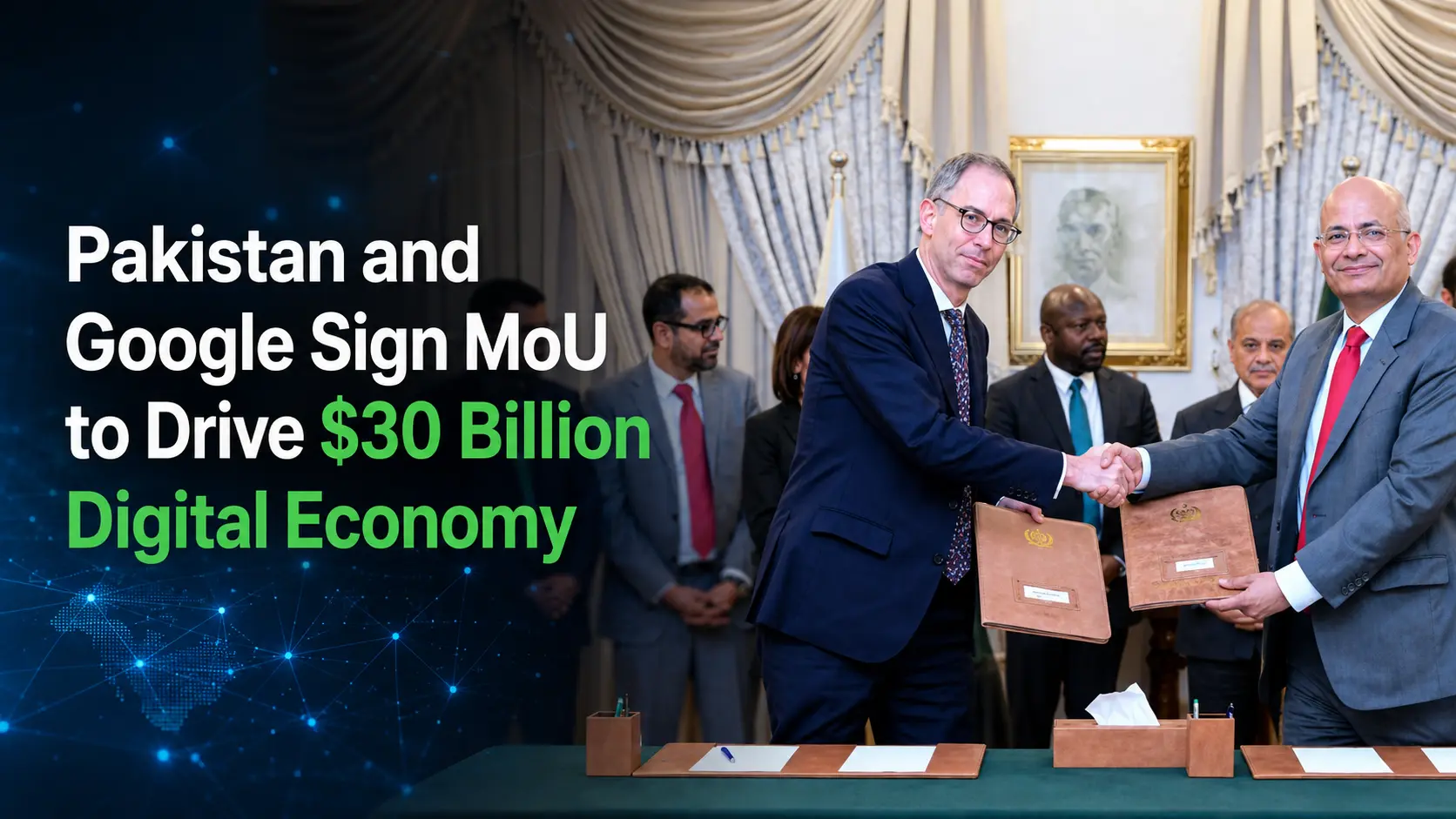
Pakistan Google MoU digital economy marks a significant milestone in the nation’s trajectory toward a more digitally advanced future. The recent signing of a Memorandum of Understanding (MoU) between Pakistan and Google is expected to forth a transformative leap in the technological landscape of the country. This initiative, valued at an impressive $30 billion, aims not just to modernize the existing digital framework but also to empower the youth of Pakistan, who are seen as pivotal agents of change in reshaping the nation’s economic fortunes. Prime Minister Shehbaz Sharif, who hailed the ceremony as a ‘wonderful day for Pakistan,’ emphasized the critical importance of collaboration and innovation in countering the multifaceted challenges that the country faces today.
Understanding the Significance of the Pakistan Google MoU Digital Economy
The signing of the Pakistan Google MoU digital economy is a landmark event with considerable implications for Pakistan’s socio-economic fabric. At its core, this partnership represents a strategic alliance that is anticipated to create a plethora of opportunities across various sectors, such as education, entrepreneurship, and technology development. By facilitating knowledge transfer and capacity building, Pakistan is set to harness Google’s vast resources and expertise. This relationship stands as a testament to the significance of fostering international partnerships that resonate with the country’s developmental goals.
The MoU is likely to include various initiatives aimed at increasing technological literacy among the youth, thereby enabling them to better integrate into the global digital economy. The future generations will benefit from improved access to advanced tools and platforms that can augment their creative and entrepreneurial endeavors. With a substantial portion of Pakistan’s population under the age of 30, the collaboration with Google comes at a pivotal moment where innovation and digital entrepreneurship can flourish.
Furthermore, the economic prospects set forth by the partnership cannot be overstated. The projected $30 billion value of the digital economy is not limited to mere numbers; it reflects an optimistic vision for sustainable growth, job creation, and improved living standards for thousands, if not millions, of Pakistanis. This optimistic economic landscape is vital for attracting further investment, both from within the country and abroad, reinforcing the importance of this partnership in contemporary economic discourse.
This partnership also positions Pakistan within a global context where digital economies are rapidly evolving. International confidence in Pakistan’s potential is growing, and this MoU could catalyze similar partnerships with other tech giants, broadening the horizon for the country’s technological advancement.
Empowering Youth Through the Pakistan Google MoU Digital Economy
The youth of Pakistan are stepping into the role of torchbearers in this new digital economic landscape, which is precisely why this Pakistan Google MoU digital economy initiative is so pivotal. By engaging young minds with cutting-edge technology, Google and the Pakistani government are not merely providing tools they are igniting a movement toward self-reliance and innovation. The investment in digital skills training can empower the youth to take initiative in varied fields including software development, digital marketing, and e-commerce.
Additionally, the partnership may lead to the establishment of innovation hubs and training programs that are tailored to meet the needs of a fast-evolving job market. Such resources would enable budding entrepreneurs to explore opportunities that might otherwise remain inaccessible. By guiding them through the complexities of the digital landscape, this initiative will pave the way for numerous startups and tech companies.
The increased accessibility to platforms provided by Google will also stimulate greater competition. Many young tech enthusiasts could potentially develop applications or platforms that solve local problems, thus significantly impacting their communities. As innovation flourishes, so too will the potential for cross-border collaborations and partnerships, which can only serve to enhance the visibility of Pakistan on the global stage.
Moreover, this initiative can help address the skill gap currently present in the country. With specialized training programs, the youth will be better prepared to meet the demands of international markets, contributing to a more competitive national economy.
Addressing Challenges with Dialogue: A Statement by Shehbaz Sharif
During the ceremony, Prime Minister Shehbaz Sharif used the platform to address not only the potentials of the MoU but also the pressing issues confronting the country. He specifically condemned acts of violence and encouraged a culture of dialogue, particularly regarding the ongoing grievances in regions like Balochistan. The call for dialogue is significant in a nation grappling with multifaceted issues that often stem from misunderstanding and lack of communication.
The Prime Minister’s remarks echo the sentiment that while economic development is crucial, it is equally important to foster unity and understanding within the society. This multidimensional approach to governance, which balances technological advancement with social coherence, underscores the strategic focus of the current administration. A digitally empowered youth could drive a national dialogue that integrates diverse perspectives, leading to sustainable solutions for the socio-economic challenges of the country.
Moreover, by investing in the digital economy, Pakistan can potentially alleviate some of the social tensions that arise from economic disparity. The promise of jobs and entrepreneurship can serve as a unifying force, directing energies toward constructive endeavors rather than destructive ones. This is a critical aspect of the discussion that transcends mere economic indicators and moves into the realm of societal well-being.
This approach also serves as a mechanism for harnessing the collective intelligence of the populace. By linking digital empowerment with dialogue and inclusion, the government aims to create a more cohesive national identity.
The Global Context: Comparisons with Regional Initiatives
The Pakistan Google MoU digital economy can be put into perspective when compared with similar initiatives in neighboring countries. For instance, India has been actively working with global tech giants to facilitate a digital revolution that has resulted in significant advancements in various sectors. The successful implementation of initiatives like ‘Digital India’ showcases the transformative power of technology driven by robust public-private partnerships.
Countries like Bangladesh have also made strides in developing their digital economies with similar alliances, often focusing on microfinance and e-commerce. When compared and contrasted with these initiatives, the MoU signed between Pakistan and Google takes on added significance. Given that Pakistan has a fertile ground for tech growth with a young population, the opportunity exists to leapfrog into a new era of digital capabilities swiftly.
However, these comparisons also bring to light the challenges Pakistan must overcome. Nations with established tech ecosystems often benefit from pre-existing infrastructures and a more conducive regulatory environment, which Pakistan will need to develop in tandem with this new partnership. Therefore, while optimism is warranted, careful planning and execution will be crucial for the digital economy to flourish successfully.
Pakistan can learn from these examples by focusing on bespoke solutions tailored to its unique challenges, ensuring that growth is sustainable and inclusive. This strategic insight is vital in building a resilient digital economy.
Also Read This Article : Imran Khan Taken to PIMS for Medical Examination: Insights and Implications
Potential Impact on Education Through the Pakistan Google MoU Digital Economy
Education stands as one of the most critical sectors that could be significantly transformed due to the Pakistan Google MoU digital economy. With Google’s extensive resources and platforms, educational institutions can leverage technology to enhance both teaching and learning experiences. Incorporating tools such as Google Classroom or digital learning applications could empower educators while giving students access to high-quality knowledge.
The trend toward hybrid learning models, which were hastened by the COVID-19 pandemic, could become a mainstay in Pakistan. This MoU could accelerate the adoption of digital curricula, making education more accessible to remote areas where traditional learning faces challenges. In these regions, the integration of digital tools can bridge the educational gap and foster inclusivity.
Moreover, educational partnerships with Google may yield research opportunities that could transform universities into centers of innovation. By focusing on emerging fields like artificial intelligence and data analytics, educational institutions can produce a workforce that is better equipped for the digital economy. This transformation has the potential to create a cycle of growth wherein a highly skilled workforce attracts investment and fosters economic development.
Expanding on these prospects, the collaboration may involve localized educational content tailored to meet national standards and cultural nuances. This ensures that technology enhances, rather than disrupts, traditional educational values.
Fostering Innovation: Startups and Entrepreneurship
Entrepreneurship has become a buzzword globally, and the Pakistan Google MoU digital economy has the potential to provide a substantial boost to local startups. By tapping into Google’s resources, emerging entrepreneurs can gain access to mentorship, funding opportunities, and essential networking channels. Initiatives focused on fostering innovation are crucial for local startups, which often find themselves limited due to lack of funding or resources.
In the culturally diverse ecosystem of Pakistan, fostering innovation requires understanding local needs and challenges, which Google’s extensive experience can help navigate. The partnership may also involve the establishment of accelerator programs that can assist early-stage startups in scaling their businesses. Such initiatives would not only drive economic progress but also nurture a culture of entrepreneurship that can result in job creation.
Here, the role of tech incubators cannot be overstated. The establishment of these incubators in urban and rural areas alike can stimulate local economies by providing budding entrepreneurs with the tools they need to succeed. The flow of knowledge, resources, and supportive networks can generate a ripple effect in the community, leading to long-term sustainable development.
By creating success stories within the local context, this partnership could inspire future entrepreneurs and build resilience against economic volatility. The ripple effects will likely expand beyond immediate financial gains.
The Role of Infrastructure in Driving the Digital Economy
While the Pakistan Google MoU digital economy presents numerous opportunities, the success of this initiative is inherently tied to the state of digital infrastructure within the country. For the partnership to realize its full potential, substantial investments in internet connectivity and telecommunications will be essential. High-speed internet is not merely beneficial for urban centers but is a necessity for supporting a digitally inclusive economy.
The development of physical and digital infrastructures will create a foundation upon which the digital economy can grow. Rural areas have been neglected in terms of digital connectivity, and addressing this issue can unlock untapped potential in these regions. With better internet services, individuals and businesses will be empowered to engage in e-commerce, education, and telehealth, driving development from the ground up.
Ultimately, this infrastructure investment needs to be well-coordinated with policy-making and incentives that encourage investment in both the private and public sectors. To create a closely knit ecosystem, the government, tech giants like Google, and local enterprises must work together seamlessly. The symmetrical growth of infrastructure and digitalization will set the precedent for sustainable economic development.
Collaboration in developing infrastructure will also involve policy alignment that encourages innovation while safeguarding consumer interests. Such a balanced approach will foster a dynamic yet accountable digital economy.
What the Future Holds: Policy Recommendations
Looking ahead, policymakers in Pakistan must focus on harnessing the momentum generated by the Pakistan Google MoU digital economy to create an enabling environment for tech innovation. Clear regulations that govern the digital economy will be vital in fostering an atmosphere that attracts investments and encourages startups. Additionally, collaboration with international partners will help propagate best practices that have been successful in other nations.
Investments in research and development will also play an integral role in the future of this partnership. Policymakers should allocate funding for projects that focus on leveraging technology to solve local challenges. By aligning research agendas with industry needs, both government and educational institutions can contribute to a thriving digital ecosystem.
Moreover, continuous monitoring and evaluation mechanisms must be established to assess the progress and impact of this MoU over time. By analyzing the efficacy of various initiatives, stakeholders can optimize strategies to ensure that the digital economy is genuinely responsive to the needs of its populace. This vigilant approach will be critical in ensuring the long-term sustainability of this partnership.
Building partnerships with other tech leaders and nations will further enhance strategic insights, ultimately ensuring that Pakistan’s digital economy is competitive on a global scale.
Conclusion
In conclusion, the signing of the Pakistan Google MoU digital economy marks a transformative journey for Pakistan. It represents not just a financial commitment but also a shared vision for a digitally empowered future. By harnessing the capabilities of its youth and fostering partnerships with global leaders, Pakistan has the potential to unlock economic growth, create jobs, and elevate its global standing in the digital arena.
However, this journey is not devoid of challenges. The successful implementation of this MoU will require cohesive efforts from the government, corporations, educational institutions, and civil society. By promoting inclusive dialogue and addressing the socio-economic grievances of various communities, the nation can pave the way for a more equitable society.
The future may hold significant promise, but realizing that potential will take dedication, collaborative spirit, and continuous effort. Ultimately, the collaboration with Google can serve as a catalyst for comprehensive change, propelling Pakistan toward a robust and resilient digital economy.
Recommendations for Continuous Growth
While the MoU sets a robust foundation, sustaining growth will require ongoing evaluation and adaptation. One crucial recommendation is to establish cross-sector committees that can monitor technological trends and offer agile responses to emerging challenges. Such bodies would ensure that policy-making remains dynamic and relevant.
Furthermore, fostering a culture of public-private dialogue can invigorate the digital ecosystem, encouraging new investment and innovation. Regular forums and workshops that bring together stakeholders from various sectors can contribute to a collective understanding and shared strategic vision.
Finally, establishing long-term goals that transcend immediate economic indicators will foster a deeply rooted commitment to national development. By aligning these goals with the UN’s Sustainable Development Goals, Pakistan can ensure its digital economy contributes to a broader narrative of global development.
Frequently Asked Questions
What is the significance of the Pakistan Google MoU digital economy?
The Pakistan Google MoU digital economy is significant as it represents a strategic partnership aimed at propelling the country’s digital economy to a $30 billion valuation, empowering the youth, and fostering technological advancements.
How will this MoU impact the youth of Pakistan?
This MoU will significantly impact the youth of Pakistan by providing access to advanced technological resources, training programs, and opportunities for entrepreneurship—enabling them to contribute positively to the nation’s economy.
What areas will the partnership focus on?
The partnership is expected to focus on various areas including education, entrepreneurship, and technological infrastructure, ultimately aimed at creating a holistic digital ecosystem within Pakistan.
How does this partnership address socio-economic challenges?
The Pakistan Google MoU digital economy aims to address socio-economic challenges by driving job creation, providing educational access, and engaging in dialogue to resolve grievances, thereby fostering a more equitable society.
What lessons can be learned from other regional initiatives?
Pakistan can learn valuable lessons from other regional initiatives by fostering public-private partnerships, enhancing regulatory frameworks, and investing in infrastructure to support its growing digital economy.




 Muhammad Abdullah |
August 22, 2026
Muhammad Abdullah |
August 22, 2026